Global Dashboard – Blog covering International affairs and global risks

What the World Bank Does Not Understand About “Doing Business” Seth Kaplan

World Bank Doing Business

In its 10-year history, the World Bank’s Doing Business Report has achieved enormous influence. The annual study, one of the flagship knowledge products of the World Bank, is the leading tool to judge the business environments of developing countries, generating huge coverage in the media every year. Several countries—such as Rwanda—have used it as a guide to design reform programs. For its part, the Bank has advised over 80 countries on reforms to regulations measured in the DB. Its influence stretches even to academia, with over 1,000 articles being published in peer-reviewed journals using data in the index.

But does it focus on the most important issues for companies in less developed countries?

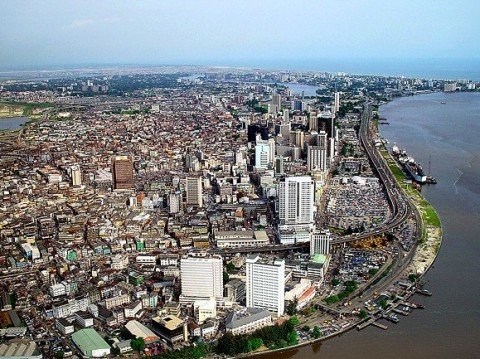
Based on my own almost 20 years of experience doing business in places such as Nigeria, Turkey, and China, the answer is no. (more…)

May 2, 2013 at 10:23 pm | More on Economics and development | Comments Off

Social Covenants: The Missing Ingredient in State Building Efforts Seth Kaplan

Loya Jirga

Political theorists have for the most part focused on the state when thinking about how to make countries work better for their populations. This has naturally led to a concern with state-society relations, how governments are chosen and run, and institutions. There is wide consensus that social contracts play the central role in state building.

This thinking has heavily influenced how the international community approaches fragile states, post-conflict situations, and transitions as well as development in general. As the OECD/DAC explained in Concepts and Dilemmas of State Building in Fragile Situations:

Fragility arises primarily from weaknesses in the dynamic political process through which citizens’ expectations of the state and state expectations of citizens are reconciled and brought into equilibrium with the state’s capacity to deliver services. Reaching equilibrium in this negotiation over the social contract is the critical if not sole determinant of resilience, and disequilibrium the determinant of fragility. [page 7]

This focus on the state shapes responses to crises in places such as the Democratic Republic of the Congo, Libya, Syria, and Afghanistan, compelling the international community to prioritize the establishment of a transitional regime and fast track elections under the belief that this is the sole way to create legitimacy no matter the circumstances or the context.

But many of these countries have deeply-entrenched problems that a focus on the state cannot solve. Different religious, ethnic, and clan groups do not work together well, and see any competition for power as a zero sum game for exclusive control of the state. Government is weakly institutionalized, and unable to act as an independent, equitable arbitrator between different interests. Judges and officials are beholden to personal relationships, power politics, or money (and sometimes all three). In such places, winners of elections rarely see it as their duty to serve all their people, and often define their rights as whatever they can get away with—negating whatever social contract the process was supposed to establish. (more…)

March 31, 2013 at 5:48 pm | More on Conflict and security, Economics and development | Comments Off

What the OECD Does Not Understand About Fragile States Seth Kaplan

OECD fragile states

The Organisation for Economic Co-operation and Development (OECD) Development Assistance Committee (DAC) and its International Network on Conflict and Fragility (INCAF) do an admirable job bringing together policymakers, collecting and synthesizing information, and helping set the agenda for donors.

But, as exemplified by Emmanuel Letouzé’s (lead author) and Juana de Catheu (co-author)’s recent report Fragile States 2013: Resource Flows and Trends in a Shifting World, its analysis of fragile states is flawed in a couple of important ways. (more…)

February 3, 2013 at 6:42 pm | More on Conflict and security, Economics and development | 2 Comments

Discordant Development – Can Progress Increase Instability? Seth Kaplan

Discordant development, imbalanced development, unequal development

Samuel Huntington argued in his 1968 classic Political Order in Changing Societies that rapid development could be highly destabilizing:

Social and economic change—urbanization, increase in literacy and education, industrialization, mass media expansion—extend political consciousness, multiply political demands, broaden political participation. These changes undermine traditional sources of political authority and traditional political institutions; they enormously complicate the problems of creating new bases of political association and new political institutions combining legitimacy and effectiveness. The rates of social mobilization and the expansion of political organization are high; the rates of political organization and institutionalization are low. The result is political instability and disorder. The primary problem of politics is the lag in the development of political institutions behind social and economic change.

Richard Joseph, a Senior Fellow at the Brookings Institution and a Professor at Northwestern University, discusses a similar point in a recent article on Africa. In it, he introduces the very useful phrase “discordant development,” defining it as:

More than just “unequal development,” but rather how deepening inequalities and rapid progress juxtaposed with group distress can generate uncertainty and violent conflict.

This is a common problem in fragile states. One area moves forward while another area does not — or worse. And because countries are weakly unified, such development is highly discordant, increasing instability by how it increases the exclusion — and feelings of exclusion — of certain groups. (more…)

January 16, 2013 at 8:33 pm | More on Africa, Conflict and security, Economics and development | Comments Off

Do development indicators deceive us? Here is a better approach Seth Kaplan

Measuring politics and Political Development indicatorsMeasuring how countries perform is all the rage. Everyone from the World Bank to Bertelsmann to Africa’s most famous entrepreneur does it, producing indices on things like how competitive economies are, how hungry populations are, how free the press is, how risky investments are, and how corrupt public sectors are.

Many of these indices are directly relevant for people working in development. They help countries determine how they compare with other states and where they ought to improve their performance. And they help aid agencies decide where and how to invest their resources.

Indicators tracking everything from GDP per capita to poverty to governance are ubiquitous across the field, especially among international professionals. Such numbers are used to determine need, priorities, and strategies (such as whether a government ought to be funded directly).

But do the indicators that have the greatest influence measure the right things? Are they focused on the issues that are most important to development? Can they predict how governments work or how countries will evolve in the future?

Too often, developing countries are assessed on a very narrow set of indicators, leading to an overemphasis on certain programs and “results” that have little to do with their prospects. Reducing poverty and hunger are worthwhile goals but may not reflect how well a country is doing (aid can reduce both without helping a state function better). “Good governance” may indicate good prospects, but bad governance certainly does not point to the reverse, as a long string of countries can attest to (including China, Indonesia, Cambodia, and Vietnam). GDP per capita is widely used to assess how well countries are doing (not least by the World Bank and many leading poverty analysts), but may actually be saying very little about the subject (such as when only elites benefit from natural resource wealth, as in Nigeria, Libya, and Angola).

Indicators on state fragility can easily miss the mark. The Failed States Index, for instance, completely failed to pick up the fault lines that threaten many Middle Eastern countries before the Arab Spring brought them into the open. The 2011 FSI ranked Syria as the 48th most fragile state in the world, but its complex ethnic and religious landscape has always made it far more fragile than it appeared. In 2012, Syria plummeted down to 23rd in the FSI. Next year, it will inevitably be much worse. Bahrain and Libya did not even make the ranking before 2011.

Many of the most important development issues are not included in major indices because they are not easily measured or are simply not considered as important as they ought to be.

In Fixing Fragile States, I wrote:

Development describes a complex process that transforms both the way people think and behave and the system of how they work together. Although economics drives development, politics plays a far greater role in the key take-off stages, with social, business, and government modernization inextricably linked as the process advances.

Do we ever measure how well a people work together? How institutionalized politics is (something quite different than democracy and “good governance”)? How cohesive a population is?

Assessing a country’s political dynamics may not be easy—especially if the goal is to measure it numerically—but is arguably more important than the majority of the indicators we currently use. The right kind of assessment ought to better gauge how resilient a country is, how prone to conflict it is, how stable its current political system is, how likely its elites are to work together to promote progress. All these things help us understand a country’s overall prospects in a way that few existing indicators can.

Measuring politics and political development requires creating a set of indices that reflect—or at least depend upon—the nature of sociopolitical dynamics, the degree of social / political / economic inclusiveness, the institutionalization of the state, the robustness of the rule of law, the level of social capital, the capacity of societies to create wealth (separate from natural resources), and the ability of government to get things done (which may not reflect existing governance scores).

What would these indicators look like? The new assessment criteria would seek to answer questions such as:

1) How great are group-based (ethnic, religious, caste, clan, etc.) economic, political, and cultural horizontal inequities?

2) How equitable is public spending?

3) How equitable are markets?

4) How equitable is the rule of law? Do elites or particular groups have systemic advantages over others?

5) How effective is public authority and the rule of law (taking into account a variety of mechanisms to achieve these)?

6) How inclusive is the concept of citizenship?

7) How equitable is the system of property rights?

8 ) How inclusive and poverty reducing is growth?

9) How diversified is the economy and exports (which depends on the robustness of institutions)?

10) Is political succession institutionalized and predictable?

11) How much does politics revolve around political parties and policies (rather than ethnicity and patronage)?

12) How much do political leaders depend on group identities to gain, hold onto, or compete for power?

13) How well do formal institutions (such as laws) reflect informal institutions? How widely accepted are these? How well do they penetrate society (as opposed to existing above it)?

14) How much investment is going into large factories (which are more risky than other investments)?

15) What is the level of political risk to invest in labor-intensive businesses (which require more effort and are more beneficial to a population)?

16) Is the economy producing an adequate number of jobs for young people?

17) How well can the government implement the policies it puts into place (if a road is supposed to be built, does it? How good is it?)?

18) How well can the government project authority across distance (is it as effective in outlying districts as it is in the capital)?

19) Are the government’s capacity and the country’s economic prospects keeping up with increases in education, urbanization, and the expectations of the population?

20) Are levels of dissatisfaction/frustration rising among powerful out of power actors (elites, identity group leaders, youth leaders, religious leaders, etc.)?

Some of these questions could be turned into indicators very easily (the data is available). Others could be turned into indicators by substituting another data source (for instance, tracking how well a government delivers public services at various distances from the capital will give a decent account of how well it projects authority). Many may be hard to assess, and require a more a concerted effort involving more spending on research and analysis.

If politics and political development mattered as much as they should, more effort would be made to create and use such indicators. Without these, we are flying blind, trying to understand the terrain using the wrong instruments.

November 5, 2012 at 1:59 am | More on Conflict and security, Economics and development | 6 Comments

The problems with economists: they don’t understand development Seth Kaplan

Economists Cannot Do Development

Economists dominate the development field, but politics is more important to promoting it. This contradiction explains why the policies often recommended by international institutions (such as the World Bank) do not sufficiently take into account the local political, social, and institutional context.

The problem is echoed in other fields, with some blaming the inability of economists to understand institutions and politics as a contributing factor to the 2008 financial crisis. (more…)

September 19, 2012 at 6:39 pm | More on Conflict and security, Economics and development | 3 Comments

Can Foreign Aid Improve Pakistan ’s Political Economy? Seth Kaplan

Pakistan Political Economy Foreign AidLike many struggling countries, Pakistan’s two most critical problems are feckless leaders and a feeble state. Can donors do anything to help get such countries’ political economy moving in the right direction?

I recently convened a working group of leading Pakistani development professionals and outside experts at the Global Economic Symposium (GES) to discuss just such this question. (more…)

September 5, 2012 at 7:25 pm | More on Economics and development, South Asia | 1 Comment

Course on Fragile States in Washington, DC Seth Kaplan

I will be teaching a course this fall (780.718 Promoting Development in Fragile States) in the Paul H. Nitze School of Advanced International Studies (SAIS) at Johns Hopkins University:

Hindered by weak institutions, social divisions, and difficult historical legacies, fragile states face fundamentally different challenges than other countries. This course focuses on understanding the drivers of state fragility and what steps might counteract these. It encourages participants to think deeply about the nature of development, political incentives, the role of geography in governance, social identities, the nature of public authority, and a variety of other issues relevant to state building in difficult circumstances. It will be of interest to students working on African and Middle Eastern issues, conflict management, comparative politics, and economic/political development.

The syllabus for the course provides a good reading list for anyone wanting to understand the problems facing fragile states and what policies might deal with their unique problems.

If you want more information, contact me at seth@sethkaplan.org.

August 24, 2012 at 12:44 am | More on Africa, Economics and development, Middle East and North Africa | Comments Off

Are Language Policies Increasing Poverty and Inequality? Seth Kaplan

African Languages

Language is one of the most neglected areas in the development field. It barely registers on any agenda to help poor countries despite its importance to a number of crucial areas and it being a barrier to progress in many fragile states. Why is this? (more…)

July 25, 2012 at 2:41 pm | More on Africa, Economics and development, South Asia | 3 Comments

Promoting Human Rights in Less Developed Countries Seth Kaplan

Human Rights Developing CountriesA key challenge faced by those engaged in international human rights policy and practice is adopting an effective framework for protecting and promoting human rights around the world in a way that preserves and articulates their universal nature, while at the same time respecting local values and practices.

One way to approach this challenge is to examine values, norms, customs and practices in non-Western cultures which can act as ‘receptors’ for human rights principles and practice. A new Dutch collaborative research project adopts just such an approach (and is thus called the ‘Receptor Approach’). It brings together experts from around the world and from a variety of disciplines – law, anthropology, sociology, political science, international relations and philosophy among others. (more…)

July 9, 2012 at 2:21 pm | More on Africa, Economics and development, Middle East and North Africa, South Asia | Comments Off

Improving the Rule of Law in Fragile States Seth Kaplan

fragile states legal law think tankMany fragile states suffer from incoherent legal systems. Whereas in developed countries, one single system exists and is effectively enforced, in fragile states multiple systems work side-by-side, each weakly enforced, and often operating in contradiction with each other. Creating a unified and robust system of law is one of the biggest challenges these countries face.

In most cases, this incoherence is a direct product of colonialism. One system, often with the greatest relevancy to local populations, has roots in the precolonial system of governance. It may have evolved a lot since then, but is still based on local circumstances and institutions. The state, itself a product of foreign rule, follows another system, based on Western legal tradition, imported from abroad. Neither is consistently or equitably implemented. Corruption distorts outcomes. Officials (whether those of the state or local leaders) lack training. Favoritism is common. (more…)

July 3, 2012 at 12:46 am | More on Africa, Economics and development, Middle East and North Africa, South Asia | Comments Off

Why We Blog Seth Kaplan

Why We Blog

Why do you blog ?

From the New York Times Book Review.

June 26, 2012 at 12:21 am | More on Off topic | Comments Off

Do We Understand the Difference Between Fragile States and Transition Countries? Seth Kaplan

Fragile States Transition Countries Differences

The term “fragile states” is much abused.

Policymakers, development researchers, politicians, and the media seem to think that every country experiencing a period of instability or bothered by certain governance problems is “fragile.” As a result, they group a wide range of countries experiencing vastly different types of problems together—creating a mass of confusion in the process.

Such thinking means that the term as currently used has very little value as an analytical tool. Instead it has become a catchall phrase to explain any situation that seems “fragile” even if the fragility is likely to be ephemeral. It also means that states that are structurally fragile but that have none of the most obvious symptoms of fragility (such as Syria before 2011) do not get considered as one. (more…)

June 20, 2012 at 4:53 pm | More on Conflict and security, Economics and development | 2 Comments

Are Europeans Scared of China? Seth Kaplan

China’s economy remains less than half the size of the United States’. Yet Europeans believe that China is the world’s leading economic power. Few other people make this mistake. What explains this perception–anxiety about the future?

China USA economy GDP comparison perceptions

June 15, 2012 at 8:10 pm | More on Economics and development | Comments Off

What Does it Mean to Work Politically in Development? Seth Kaplan

Adrian Leftwich gives a great description of what it means to work politically in the development field in a recent publication Politics, Leadership, and Coalitions in Development for the Developmental Leadership Program:

There is understandable caution and reserve about the idea of ‘working politically’, or for donors trying to address ‘the political dimensions of development’ – and for good reason. The phrase itself is easily misinterpreted as insensitive interference, as an invasion of sovereignty and a disregard for principles of ownership and endogenously driven developmental processes. It may sound like ‘regime change’. Given those many cases of bullying or intervention by conditionality of the international community in developing countries, there is good reason for such caution, as the very idea of working politically might seem to suggest a flagrant violation of the principles of Accra and Paris. (more…)

May 31, 2012 at 1:03 am | More on Economics and development | Comments Off
Seth Kaplan

Seth Kaplan is a Professorial Lecturer in the Paul H. Nitze School of Advanced International Studies (SAIS) at Johns Hopkins University. He is the author of Fixing Fragile States: A New Paradigm for Development (Praeger Security International, 2008) and a forthcoming book on poverty and state governance. He founded and edits the Fragile States Resource Center website. A Wharton MBA and Palmer scholar, Seth has worked for several multinationals and founded four companies. He speaks fluent Mandarin Chinese and Japanese.

Subscribe to Seth's RSS feed   Email Seth   Visit Seth's webiste   Follow Seth on Twitter


20/05/13 fragile_states: Egypt, Turkey, and Tunisia Are All Slowly Islamizing - Steven A. Cook - The Atlantic http://t.co/9QSGHNATMC
20/05/13 fragile_states: Challenges in Measuring Violent Conflict -- How Data Sources May Be Biased @jay_ulfelder http://t.co/FaZjcQcUTV
19/05/13 fragile_states: Who's who in Syria's battlefield http://t.co/9GrzP7NcKl Good read
17/05/13 fragile_states: A revealing map of the world’s most and least ethnically diverse countries http://t.co/Hi96qur8bw
13/05/13 fragile_states: Famine mortality: A history of global famine deaths http://t.co/GdEwI0uNJR Good read
13/05/13 fragile_states: African Development Revisited -- What is ought to mean http://t.co/dPF4MOfVON
12/05/13 fragile_states: What Next for Nigeria’s Oil Patch? http://t.co/SNkdnHCKgm
12/05/13 fragile_states: Improving Education in Pakistan -- How it was Achieved | CFRhttp://on.cfr.org/12jiYm8 via @CFR_org
10/05/13 fragile_states: Ending Syria’s Agony: Lessons from Other Civil Wars http://t.co/ilVxBBa7Xl via @CFR_org
05/05/13 fragile_states: Libyan Congress Blunders Constitutional Moment -- what will the consequences be? http://t.co/rDZpYrz968
03/05/13 fragile_states: Is Assad Winning? http://t.co/ucX1VsmCYg via @jonathan_spyer
03/05/13 fragile_states: Katanga’s Quest for Autonomy from Kinshasa http://t.co/GUw93LMrzW via @CFR_org
03/05/13 fragile_states: Analyzing adaptive capacity at the local level: focus not on assets, but various intangible and dynamic processes | http://t.co/paXzu40Ai3
03/05/13 fragile_states: London conference awaits 'vision to take Somalia forward' | Mark Tran http://t.co/CRTXFOJjbq via @guardian
03/05/13 fragile_states: China Reaches Out to India on Afghanistan -- the country very much needs a regional approach | CSIS http://t.co/jf4X26aA7D via @sharethis
03/05/13 fragile_states: Rethinking and Expanding the Peace Corps is Win Win http://t.co/8BdJT1auh5 via @BrookingsInst
02/05/13 fragile_states: Ethnic diversity and public goods provision in Africa http://t.co/54jzxHuRED via @evlieb
02/05/13 fragile_states: Adhoc local governance on display in Syrian liberated areas - http://t.co/F4uv6KbGUq http://t.co/3Setq3n10R via @FT
01/05/13 fragile_states: How Different States of India Have Performed Economically — lots of maps http://t.co/yXI8lWHOTu via @GeoCurrentsLive
01/05/13 fragile_states: New Study Shows What Muslims What from Religion / Think about Islam | The Economist http://t.co/gTLwQmUF9a