Global Dashboard – Blog covering International affairs and global risks

Exactly 0

Steve Richards:

For all the specific reasons that explain the destabilising crises that unnerve Prime Ministers, there is one constant factor. No 10 is under-powered. This townhouse, with its tiny units of advisers and officials, cannot cope with the modern demands of leadership. When the then Prime Minister of France Lionel Jospin visited London, he was introduced to Blair’s economic adviser. Jospin asked Blair where the rest of the adviser’s department was. He was told that he had only one economic adviser. Jospin thought he was joking.

There needs to be a big, well-resourced highly political Prime Ministerial department to reflect the responsibilities of a modern Prime Minister. Precisely because of all the weekly crises, Prime Ministers quickly become too weak to establish a proper department, fearful they will look too arrogant. The move can be made only at the beginning, when Prime Ministerial popularity is fleetingly high. The next Prime Minister should announce his plans to appoint political advisers, top officials, and party-based people in a big new department on Day One – before the crises erupt.

May 23, 2013 at 9:51 am | More on Cooperation and coherence, Influence and networks | No comments

“We’ll stop hurting our brothers and sisters” – What success at the G8 would look like 0


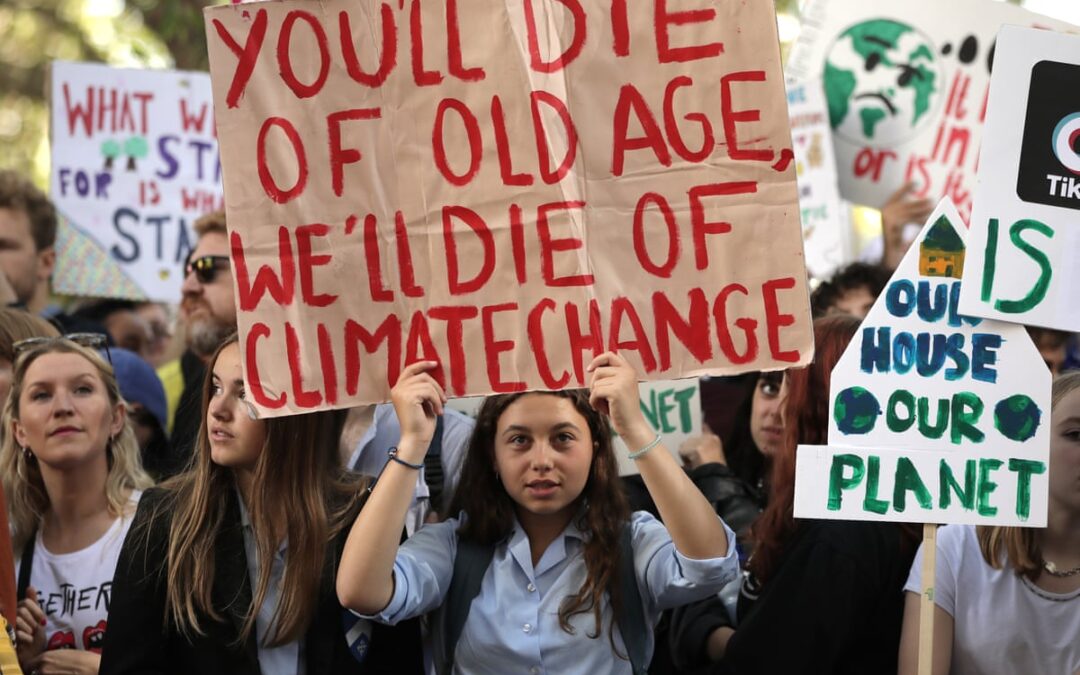
Protesters in London call on G8 leaders to beat hunger

It has become to fashionable to say that G8 meetings never achieve anything. It is also incorrect. Civil society campaigners have made use of G8 meetings in the past to achieve major steps forward on debt, on access to HIV/AIDS treatment, and on maternal and child health. But whereas, in the past, campaigners have tended to focus on urging leaders getting out their cheque books, and though money can and does save lives, this year campaigners are much more focused on calling on the G8 to rewrite their rule book, to address the causes of hunger and not only the symptoms. 

The G8′s role is not to decide for the world, only to agree what they will do themselves. And so it is right that the UK hosts have described the meeting as about “Putting our own house in order”. And the UK, to their credit, have taken on serious core issues in putting the problems of land grabs and tax dodging at the heart of the discussions, and highlighting transparency as key to the solution. But to actually help poor people the leaders will need to take bold action. And what is on the table at present is not ambitious enough to offer real hope to the millions of people whom land grabs and tax dodging leave impoverished and hungry.

Of course, it’s easy for NGOs to call for more ambition. As a British Government official once joked to me, “even when we deliver a massive result, Oxfam say we need to achieve 10% more.” (To which my initial reaction was to think: “Oh no! Only 10%?”) So rather than just call out “Higher, Higher!” it’s only fair that we campaigners say what success would look like.  Here then is a sketch of what I think success would mean on two of the big issues, land grabbing and tax dodging. By this I don’t mean what is needed to fix these challenges – I mean only what the G8 meeting would need to do to start to fix them.

On land, success at the G8 would include a land transparency initiative, and regulatory guidance to G8 companies and investors, so that the G8 is not complicit in land grabbing. As French Development Minister Pascal Canfin said this week, “Without transparency and without protections, land investment can end up as looting. Where the Voluntary Guidelines are not being followed, land investment shouldn’t follow.”

On tax, success at the G8 would include a public registry of the ultimate owners of offshore assets, a deal on sharing of tax information not only between rich countries but with the poorest countries too, and – as they hold one third of the offshore wealth – these agreements must include, in full, all the British Overseas Territories and Crown Dependencies. If the British Prime Minister and other G8 leaders deliver on this they will have sided with tax justice.

At the kids’ group I teach in church, I asked everyone what they could do to help other people. “I’ll share my stuff,” said one; “I’ll help with the cooking,” said another. Then one boy said, “I’ll stop hurting my brothers and sisters.” It wasn’t the answer we’d expected, but reflecting on it, it was an excellent one. And, on land grabbing and tax dodging, an appropriate ambition for the world’s richest countries, one that will need a step up in the negotiations to achieve. “Primum non nocere.” First, do no harm.

First-Do-No-Harm

May 22, 2013 at 9:50 pm | More on Key Posts | No comments

Nuclear war called off in Korea – time to relax? 0

Something quite significant happened this week– though you may have missed it.

It seems the US military doesn’t think there will be nuclear war with North Korea.

A few weeks ago, you could have been forgiven for thinking we were on the brink of something similar to the Cuban Missile crisis of 1962. Pyongyang was threatening a nuclear strike on America and the US – in an unusual move – publicly announced nuclear-capable stealth bombers were taking part in joint military exercises with South Korea.

But then this Monday, unreported by most media, the US Army commander in the Pacific, Lt. Gen. Francis Wiercinski, said he thought ‘the current cycle of provocation (by the North) has come to its end point’.

Things have probably quietened down because the joint exercises are over and the leadership in the North feel they’ve achieved whatever it is they set out to do.

For instance, also this week, the North Korean Defence Minister was replaced . Although we don’t know for sure why he was given the push, there‘s speculation it’s part of efforts by the isolated communist state’s young leader, Kim Jong-Un, to consolidate his hold on power.  Kim is the grandson of the North Korea’s founder, Kim Il-sung; but at only 30 he’d had very little time to build a power base of his own when he inherited the leadership on the sudden death of his father, Kim Jong Il, 18 months ago. Indeed, many North Korea watchers attribute the recent nuclear sabre-rattling to Kim’s attempt to build support inside the corridors of power in Pyongyang by appearing strong and martial.

Whatever the reason, the North has also removed missiles it had deployed on its east coast near the border with the South.

So we can breathe a sigh of relief then? more »

May 17, 2013 at 3:10 pm | More on Key Posts | No comments

Obama – inevitable lame duck 0

Tweet on election night:

It took a few months but the Guardian is finally on it today:

Obama lame duck

It is not a comparison that many people thought would ever get much traction.

But, assailed this week by multiple scandals and at the mercy of a furious press, President Obama has endured a legion of pundits wondering if he is the 21st-century Richard Nixon – and whether his second term is already a lame-duck disaster.

May 17, 2013 at 2:29 pm | More on North America | No comments

The worst corporate scandal you never heard of 0

Like many people, I have grown blasé about the successive waves of corporate scandal that have broken since the financial meltdown of 2008, but Fortune’s account of the crimes of Indian generic drug maker, Ranbaxy, is quite astonishing.

Ranbaxy boasts that it ”is a research based international pharmaceutical company serving customers in over 150 countries… providing high quality, affordable medicines trusted by healthcare professionals and patients across geographies.” Its business is conducted with the “highest standards of professional integrity and ethical behavior,” it says.

What a joke.

According to Fortune, Ranbaxy deliberately and systematically faked quality tests in order to gets its products licensed across the world. Here’s what a new Ranbaxy employee, Dinesh Thakur, found when he investigated his employer’s fraudulent behaviour:

The company manipulated almost every aspect of its manufacturing process to quickly produce impressive-looking data that would bolster its bottom line. “This was not something that was concealed,” Thakur says. It was “common knowledge among senior managers of the company, heads of research and development, people responsible for formulation to the clinical people.”

Lying to regulators and backdating and forgery were commonplace, he says. The company even forged its own standard operating procedures, which FDA inspectors rely on to assess whether a company is following its own policies. Thakur’s team was told of one instance in which company officials forged and backdated a standard operating procedure related to how patient data are stored, then aged the document in a “steam room” overnight to fool regulators.

Company scientists told Thakur’s staff that they were directed to substitute cheaper, lower-quality ingredients in place of better ingredients, to manipulate test parameters to accommodate higher impurities, and even to substitute brand-name drugs in lieu of their own generics in bioequivalence tests to produce better results.

Thakur reported his findings to the company’s bosses, who took no action. Another executive – Kathy Spreen – found that Ranbaxy was submitting patented drugs – the ones it was copying – for testing, not its own. She too reported her concerns:

In a conference call with a dozen company executives, one brushed aside her fears about the quality of the AIDS medicine Ranbaxy was supplying for Africa. “Who cares?” he said, according to Spreen. “It’s just blacks dying.”

Both ended up resigning.

In recent years, USA regulators have made some attempts to pursue Ranbaxy and while no individual has yet been prosecuted (how can that be?), the company recently agreed to pay a huge fine ($500m or so), with Thakur receiving in excess of $48m as a whistle-blower. Ranbaxy is still in business, however, and is strengthening its position in drugs markets around the world.

Why hasn’t this been a bigger story? The BBC gave it a couple of hundred words. I think the Guardian may have briefly carried the wire story but, if so, it’s now gone from its website. The FT managed a blog post which focused mainly on whether the settlement would be good for the company’s share price. In the grand scheme of things, that’s diddly-squat.

Two reasons for the radio silence, I think. The current media narrative focuses heavily on the myriad of sins of Western companies – if this had been GlaxoSmithKline, you can be sure it would have dominated the front pages. There’s much less interest in how lax regulation elsewhere in the world is corrupting globalisation.

Second, many – me included – are heavily invested in generic drugs as a vital weapon in the battle to improve health standards in the poorest countries. In 2004, the Guardian carried an interview with Dr Brian Tempest, a Brit who was then Ranbaxy’s CEO (and who Fortune puts at the heart of the company’s reckless cover-up). For the generics industry, AIDS drugs were a route to respectability, with Ranbaxy swiftly becoming an aid industry favourite.

“We don’t make a lot of money out of selling our Aids treatments cheaply. I tell all the analysts that this is really out of social responsibility because we are based in the developing world and have all its issues on our doorstep.”

We can’t be sure that Tempest knew his company’s drugs were dirty when he gave the Guardian that quote, but later that year, Fortune reports that he attended a meeting of its scientific committee and heard that “the company had simply not tested the drugs and had invented all the data” for entire markets, including Brazil, Kenya, Ethiopia, Uganda, Egypt,  and Thailand.

Perhaps it is time for Randeep Ramesh, the Guardian’s social affairs editor, who talked to Tempest in 2004, to follow up on his story. After all:

  1. Ranbaxy’s drugs continue to be consumed by British patients – in just twelve months, the NHS saved £350m by using a generic cholesterol-reducing drug it buys from the Indian firm. Last year, it was forced to admit that it had shipped batches of the drug contaminated by fragments of glass.
  2. The British regulator seems to have taken barely any action against Ranbaxy when compared to its American counterpart. Parliament has also ignored the scandal, although ministers have met regularly with Ranbaxy both in the UK and in India.
  3. The American investigation tells us nothing about the standard of drugs sent to Africa and other developing countries, including those funded by the British taxpayer. In 2011, for example, DFID lauded Ranbaxy for its “leadership and foresight” in driving down the price of anti-AIDS drugs for the poor. Can we be sure the generic drugs it is now buying are safe?
  4. We also don’t know whether this is a one-off or other generic manufacturers have indulged in similar behaviour. The pattern in banking and other industries, however, suggests that if one company can evade regulation, then others will also have been up to the same tricks. That’s extremely worrying, given that the generic drug industry is expected to be worth $169bn in 2014.
  5. It would be good to hear more about Tempest – dubbed the ‘benign buccaneer’ in the Guardian profile. He was with Ranbaxy until 2008 and now holds a string of non-executive directorships. He is still involved with Ranbaxy’s founding family, serving on the board of Fortis Healthcare, which is chaired by Malvinder Mohan Singh, one of India’s richest men, who sold out his Ranbaxy shareholding to a Japanese drug-maker as scandal engulfed the company. He also chairs the advisory board of Lancaster University Management School. Tempest was too busy to speak to Fortune’s reporter.

Maybe the Fortune story is overblown. I hope it is. But eight Food and Drug Administration inspectors went to look at Ranbaxy factories in India. All of them came back saying they would never, ever, take a Ranbaxy drug.

May 17, 2013 at 11:46 am | More on Key Posts | No comments

What is a progressive foreign policy anyway? 0

Labour left office three years ago this month and may return to it just two years from now. That’s not a very long time in which to formulate a distinctive foreign policy for government, nor to game out responses to the massive shifts in the global strategic context in which the next Prime Minister will be operating.

To lend a hand, Labour think tank/ pressure group Progress have commissioned a series on progressive dilemmas in foreign policy, addressing the 12 big questions where the tensions between different left-of-centre first principles are most acute. Whatever your politics, we hope seeing how that debate plays out inside what could be the next governing party of Britain will be of interest.

May 16, 2013 at 4:02 pm | More on Cooperation and coherence, Global system | No comments

How to Start Development’s Gutenberg Revolution 2

gutenberg

As a schoolboy I was troubled to learn about medieval Europe where a narrow elite maintained unaccountable power by controlling access to information; and I delighted in the heroic story of how Johanes Gutenberg’s humble printing press began a revolution that brought an end to the unchecked control of knowledge and power by a few. I loved stories of the fearless folk who refused to accept, even under torture, that information was best kept hidden, and cheered the fall of the men who thought that ordinary people were best left ignorant.

Then I ended up as a development worker, asking governments how much they were spending on health, education and hunger. And alongside the late, incomplete, and plain wrong answers that followed, I felt I could hear faintly the all-powerful medieval cardinals of my school history classes laughing at me.

We sometimes talk of how people in power “fail” to put out timely and accurate information. But just as failed states are often terribly lucrative for those in charge of the failing, so too a cynic might ask what incentives there are for elites to fix “information failures” which prevent citizens from seeing what they’re doing.

We need another Gutenberg Revolution – not just the technology of online whizzes (Printers 2.0) but the kind of free-thinking insubordination that made the renaissance and reformation possible. To exhalt the humble, we’re going to have to humble the exhalted.

That’s why charities are so focused on getting the G8 to deliver on transparency in land investments and in taxation – because knowledge is power, because stealing is harder in broad daylight. The G8 would, no doubt, prefer if we only asked them to beneficent. But we’re insisting, most of all, that they are transparent, and end their role in providing shadowy corners for shady characters to hide their dodgy deals.

For development to succeed in ending extreme poverty and extreme inequality, transparency will be needed not only from the governments of rich countries but from the governments of developing countries too. That’s why it’s such important news to see the launch today of Government Spending Watch which monitors spending in 52 low income countries, an NGO initiative that provides the most up-to-date and comprehensive data we’ve ever had. It reveals, for example, that fewer than a quarter of countries are spending what is needed to deliver education for all or to meet targets on water and sanitation; that declining aid is leading to rising borrowing and increasing debt burdens; and that the global rhetoric on investing in social protection and gender equality is backed by very little actual money. But most importantly, it helps puts power in the hands of citizens to know what their governments are spending, and to hold them to account. There’s a lot of money in keeping people ignorant. Which is why we need to know.

knowledge-is-power3

May 16, 2013 at 11:13 am | More on Key Posts | 2 Comments

Britain’s dirty secret – the island havens that make life hell for the world’s poor -

david

The G8 agenda on tax is getting increasingly radical, and much of the credit on that must go to to the UK Government hosts. Issues that were off the table months ago are now up not just for discussion but for decision. The agenda has moved beyond tax evasion to the kind of tax avoidance that has been able up to now to squeak through as legal. The UK is serious, not just in its public statements, but, representatives of other governments have confirmed to me, in the private intergovernmental discussions too. As one official from a European country told me, “We couldn’t believe it when the UK put tax on the agenda. For years, whenever we tried to put even a sentence on tax into communiques, the British got out their red pen. And now it is they who are leading the call for action. So thanks to them, to you NGOs … and to Starbucks.”

But a contradiction lies at the heart of the UK’s action on tax dodging, one that could both hold back progress in itself and undermine the UK’s ability to get others to act. The UK is a haven for havens. Whilst the government talks of “tough negotiations” with the Lichtensteins of the world, it has power, through the Crown, to stop some of the most egregious havens and yet is holding back. The claims that these British treasure islands are independent sovereign states over whom the UK has no power is a fiction that collapses under a few minutes of scrutiny. The Kilbrandon Commission confirmed in 1973 that “The United Kingdom parliament has the power to legislate for the islands.” In 2009, the UK suspended the government of the Turks and Caicos Islands to deal with a corruption crisis. The notionally independent decisions of some of the islands to make some concessions last week were all announced on a single day by a UK Treasury press notice. When you read about “British Virgin Islands”, “British Overseas Territories” and “Crown Dependencies”, the clue is in the name. If UK tax havens fail to adequately tackle the secrecy and other practices that facilitate tax dodging it is ultimately because the UK allows it.

The impact of tax dodging on poverty is massive. Tax dodging deprives poor countries of the revenues they need to tackle poverty and to stand on their own two feet. As Jeff Sachs notes today, “The IF campaign makes a basic point: poverty can be fought, and austerity overcome, IF taxes are properly paid by those who owe them.”  Zambia would have 46% more money to invest in schools, health clinics, child nutrition and agricultural development if it could prevent tax dodging by multinationals. In a world where 2 million kids die before the age of five from malnutrition, tax dodging is literally fatal.

So why is the UK protecting its tax havens? It’s hard to know. I’ve heard, informally, from well-meaning people, arguments like “the money would just be moved elsewhere” and “it’s the only business they know”. Yet these are, sadly, no different in logic to the arguments made by drug dealers’ mums about their errant sons. I’ve heard “we can’t force them to behave”, which is flat out wrong. And “it’s OK, we’ve sorted it,” which is to mistake some minimal progress with a proper solution. Whatever the reason, it must be a very challenging cognitive dissonance, to lead an international negotiation to eradicate something which – unhappily, uneasily – you ultimately let your own people get away with. Especially when the mantra of the G8 is “Getting our own house in order.” And the dirty secret isn’t even secret any more. It’s a huge hulking big elephant in the room.

elephantintheroom

May 9, 2013 at 1:20 pm | More on Key Posts | Comments closed

The African Exodus: A View from the Ground -

 busstation

Sunday’s El País carried a surprising article detailing the increase in immigration from Africa to Spain in the past two years.

Although Spain is in the midst of a debilitating economic crisis, with an unemployment rate of over 27%, the number of would-be migrants crossing the Strait of Gibraltar from Morocco in the first quarter of 2013 has quadrupled compared with the corresponding period in 2012. Alarmingly, the proportion using inflatable rubber dinghies – the kind your kids play on at the beach – has risen from 15% to 90% in the past year. These dinghies are designed to be used by two people, but in the Strait they are often intercepted with up to ten on board (Spain’s coastguard has yet to hear of one that has completed the fourteen kilometre journey – the lucky ones are rescued before they sink). In Morocco, the market in these vessels is thriving – a 2-3 metre boat that can be had for €300 in the Spanish beach resorts will set you back over €600 in Tangiers.

This continued flow of migrants from Africa to Europe gives the lie to the “Africa Rising” story peddled by some Western media outlets of late. Although GDP is growing in many parts of the continent, most Africans see nothing of this. The millions who have migrated from villages to cities in search of a better life too often end up with nothing to do, and in their desperation are forced to look further afield, to Europe, for a way out of poverty (as the chief prosecutor in the Spanish port town of Algeciras noted, ‘many people would love to have our crisis’).

While researching my new book, The Ringtone and the Drum: Travels in the World’s Poorest Countries, which as well as analysing the great social upheavals the developing world is going through as it modernises is an attempt to give voice to the people experiencing these changes on the ground, I observed this frustration at first hand. The population of Bissau, the capital of the tiny West African nation of Guinea-Bissau which was the first stop on my trip, has quadrupled in the past thirty years. Whole villages in the interior have emptied out as the land has become too crowded to farm and the lure of modernity entices people to the cities. My wife Ebru and I spent a few weeks in one of Bissau’s poorest districts, where, as the excerpt below shows, urbanisation’s losers face a constant dilemma over whether they too should undertake the perilous journey to the West:

Since there is no power and the heat quickly rots anything perishable, Bissau’s residents must lay in a new supply of food each day. Every morning, therefore, we walk down the paved but potholed road that leads from our bairro to Bissau’s main market at Bandim. The market is a labyrinth, its narrow dark lanes winding between rickety wooden stalls whose tin roofs jut out threateningly at throat height. A press of brightly-dressed shoppers haggles noisily over tomatoes, onions, smoked fish and meat. The vendors know their customers – you can buy individual eggs, teabags, cigarettes, sugar lumps and chilli peppers; bread sellers will cut a baguette in half if that is all you can afford; potatoes are divided into groups of three, tomatoes into pyramids of four; matches are sold in bundles of ten, along with a piece of the striking surface torn from the box. In the days leading up to Christmas and New Year, which all Guineans celebrate regardless of their religious persuasion, the market is crowded and chaotic, but after the turn of the year, when all the money has been spent, it is empty and silent.

Only the alcohol sellers do a year-round trade. On a half-mile stretch of the paved road there are thirteen bars or liquor stores. They sell cheap Portuguese red wine, bottled lager, palm wine and cana, a strong rum made with cashew apples. Bissau has a drink problem. Its inhabitants’ love of alcohol is well-known throughout West Africa. Back in Senegal, a fellow passenger on one of our bush taxi rides had warned us that Guineans ‘like to drink and party but they don’t like to work.’ Later in our trip, on hearing we had spent time here, Sierra Leoneans would talk in awed tones of Guineans’ capacity for alcohol consumption. The liquor stores near our bairro are busy at all hours of the day and night. Christians and animists quaff openly, Muslims more discreetly.  more »

May 7, 2013 at 10:21 am | More on Africa, Economics and development | Comments closed

A Balkan success for EU soft power? -

Serbian leaders will make another attempt this week to convince Serbs in northern Kosovo to accept last month’s deal between Belgrade and Pristina to normalise relations between Serbia and its former province.

The April 19th agreement was  hailed in the much of the western media as a great success for the EU’s soft power and its oft-criticised Foreign Policy chief, Catherine Ashton. Veteran Balkan watchers, like Misha Glenny and Tim Judah have both penned pieces lauding the potentially historic deal that took several rounds of tortuous negotiations mediated by Baroness Ashton.

The EU can be forgiven for celebrating a rare success given the unremitting gloom that has enveloped the European project as it struggles to find a way out of economic slump and the financial crisis threatening the Euro.

Furthermore, the agreement is certainly the closest the region has come to a comprehensive settlement of the Kosovo dispute since the violent break-up of Yugoslavia ended with NATO expelling Serbian security  forces from the province in 1999, and it was reached through talks hosted in Brussels, not decided on the battlefield. But was it really a victory for soft power?

True, most Serbian politicians see positive reasons for their country to join the EU. To them it represents a route to prosperity, modernisation and the restoration of the country’s reputation, blackened as it was by the repression and violence that marked the rule of its former leader, Slobodan Milosevic.  So the hope in Belgrade is that the deal will clear the way for Brussels to name a date for the start of full membership talks early next month.

Catherine Ashton and her team appear to have displayed diplomatic skill, tenacity and a good deal of imagination in crafting mutually acceptable wording to the fifteen point agreement .

But it was not skilful diplomacy that persuaded Belgrade to retreat so far from the deal it would have wanted. Before Kosovo unilaterally declared independence five years ago, there was another round of talks between the two sides led by the UN mediator, Martti Ahtisaari. Belgrade rejected the deal on offer then because Mr Ahtisaari never made any attempt to persuade the Kosovo Albanians to remain part of Serbia, instead offering a plan that would give Serbs in an independent Kosovo considerable autonomy with some links with Serbia.  The deal Belgrade has now accepted may not be called the Ahtisaari Plan. but it looks very much like it.

The key to getting Serbia to give so much ground – literally – is the German stick behind the Brussels  diplomats. Berlin has taken an increasingly hard line with Belgrade over the past few years and made it clear to Serbia there would be no EU membership talks if it didn’t normalise relations with Kosovo. Also, it is not lost on Belgrade that there are still more than five thousand NATO-led troops in Kosovo and the German contingent is by the far the largest. Ostensibly, they are there to keep the peace and their presence ensures Serbia hasn’t been able to resort to force to prevent Kosovo’s secession, even if it had had the will to do so. But in 2011 and 2012, these troops were deployed to try to face down resistance by Serbs in north Kosovo to an ultimately failed attempt by Pristina to unilaterally impose its rule there – an action that sent a clear message to Belgrade.

This looks more like the exercise of smart, than purely soft, power; something that may surprise many observers of EU foreign policy. But, as the two sides prepare to start discussing implementation, it is by no means certain the deal will stick.

For starters, it is only an outline and there will be plenty of potential pratfalls when working out the details – as the wrangling over interpreting and implementing a previous limited agreement on joint administration of customs and disputes over details as apparently mundane as car number plates, shows.

Then there are the conflicting meanings the two sides attach to the deal. For Pristina it represents de facto – if not de jure – recognition of its independence by Belgrade, but Belgrade insists it is no such thing, preferring to characterise it as a practical agreement to ensure the interests of Serbs living in Kosovo.

But most importantly, there is the attitude of the Serb majority who live in northern Kosovo. Even during the period of UN rule in Kosovo  from 1999-2008, Pristina’s writ never ran in northern Mitrovica and the three municipalities abutting central Serbia, and there is no sign that is about to change. Since the deal was signed, local Serb leaders who, crucially, were not involved in the talks have refused to accept the agreement, and there have been large protests suggesting most of the Serb population back them and are not reconciled to accepting having to live in an independent Kosovo.

Even if Belgrade withdraws its financial and political support from the Serbs in the north, they may take a leaf out of their opponent’s playbook by boycotting Kosovo’s institutions and looking after their own education and health needs, much as the Albanians did under Milosevic in the 1990s.

None of this is to say that the deal won’t eventually take root and the western Balkans will find the long-term stability it has lacked since the Ottoman Empire went into decline two centuries ago. But, as even Francis Fukuyama now acknowledges, history doesn’t end, and there is no guarantee that this deal marks the final resolution of the struggle between Serbs and Albanians for control of Kosovo.

For now, Kosovo’s Albanians have got their independence and are set to extend their control over all the territory claimed by Pristina, not because they are more powerful than their Serbian rivals, but because they have the support of the United States and the EU’s most influential states; while Serbia’s refusal to recognise Pristina’s UDI has support from Russia and other BRICS.

And, as the global power balance shifts over time, there is no guarantee the new status quo is immutable.

May 6, 2013 at 9:35 pm | More on Key Posts | Comments closed

What the World Bank Does Not Understand About “Doing Business” -

World Bank Doing Business

In its 10-year history, the World Bank’s Doing Business Report has achieved enormous influence. The annual study, one of the flagship knowledge products of the World Bank, is the leading tool to judge the business environments of developing countries, generating huge coverage in the media every year. Several countries—such as Rwanda—have used it as a guide to design reform programs. For its part, the Bank has advised over 80 countries on reforms to regulations measured in the DB. Its influence stretches even to academia, with over 1,000 articles being published in peer-reviewed journals using data in the index.

But does it focus on the most important issues for companies in less developed countries?

Based on my own almost 20 years of experience doing business in places such as Nigeria, Turkey, and China, the answer is no. more »

May 2, 2013 at 10:23 pm | More on Economics and development | Comments closed

Stuart Hall – The danger of anonymity for rape defendants 1

When the UK’s coalition government came to power, Conservatives and Liberal Democrats promised that they would increase ‘fairness in the justice system’ by providing defendants in rape cases with anonymity. This had been Lib Dem policy since 2006, while the coalition’s Justice Minister, Crispin Blunt, had supported anonymity while a Conservative backbencher.

Subsequently, however, Blunt was forced to drop the proposal after a MoJ report found a lack of evidence on the likely impact on convictions. According to the minister:

Evidence is lacking in a number of key areas, in particular, whether the inability to publicise a person’s identity will prevent further witnesses to a known offence from coming forward, or further unknown offences by the same person from coming to light.

Today’s conviction of veteran BBC broadcaster, Stuart Hall, for 14 counts of indecent assault on young girls demonstrates this was the right decision. Hall was also accused of rape (the charge remains on file), so would have been able to keep his name away from the media.

But we now have testimony from one victim, assaulted by Hall when she was 17, that she only came forward because she heard that he was being investigated.

After the Jimmy Saville case came out, I said to family I wouldn’t be at all surprised if Stuart Hall would be next and, within three weeks, it was coming out…

Hearing it on the radio I said to my husband: “What do I do? What do you think’s best?” My husband has known for thirty-six years what happened. When I heard it on the radio, I then got in touch with the local police.

Independent statements from victims who did not know each other was vital to building a case against Hall after so many years had passed. Anonymity would have stopped that happening. While terrible for the innocent, those accused of sex offences must continue to be named.

Update: An opinion poll published today reveals strong support for anonymity:

Three out of four people believe that people accused of rape and other sexual assaults should have their identities protected until they are convicted.

A ComRes survey for The Independent found strong public support for the controversial view expressed by Maura McGowan, chairman of the Bar Council, who argued that suspects in sex cases should enjoy the same right to anonymity as defendants.

In this case, 76% of the public, and the head of the Bar Council, are wrong.

May 2, 2013 at 3:21 pm | More on UK | 1 Comment

Post-2015: is there any point? 5

This month, the UN High-level Panel on the Post-2015 Development Agenda moves in to the home straight, with its report due to be submitted to the Secretary-General on the 1st of June. So is it going to amount to anything? Well, Duncan Green certainly isn’t holding his breath:

The post-2015 discussion typifies the kind of ‘magical thinking’ that abounds in aid circles, in which well-intentioned developmentistas debate how the world should be improved. These discussions and the mountains of policy papers, blogs etc that accompany them, are often based on what I call ‘If I ruled the World’ (IRW) thinking. IRW, then I would do X, Y, Z – Rights for (disenfranchised group of your choice)! More Infrastructure! Better Data! Jobs!

Owen Barder, for his part, observed a month ago that “it would simplify my twitter timeline if people would tweet things they think should NOT be a central plank of the post 2015 framework”.

And it is indeed becoming increasingly apparent that in NGOs, UN agencies, foundations and, yes, governments all around the world, a coterie of aid industry hacks is having a lovely time playing ‘fantasy development goals’ without feeling any particular pressure to consider what exactly is supposed to happen as a result of a glossy new set of targets.

This irks Duncan, who observes acidly: ”What, after all, is the point of the post-2015 process, beyond creating (another) international forum for debating development?”

This is what the NGOs like to call ‘good challenge’, and this is the right moment to be asking it. The post-2015 agenda needs (more development jargon incoming) a theory of influence. So here for what they’re worth are five possible (and not mutually exclusive) answers to his question. more »

May 1, 2013 at 7:23 am | More on Economics and development, Global system, Influence and networks | 5 Comments

Wow (updated x2) -

UK Secretary of State for International Development Justine Greening in a speech today:

“South Africa has made enormous progress over the past two decades, to the extent that it is now the region’s economic powerhouse and Britain’s biggest trading partner in Africa. We are proud of the work the UK has done in partnership with the South African government, helping the country’s transition from apartheid to a flourishing, growing democracy.

“I have agreed with my South African counterparts that South Africa is now in a position to fund its own development. It is right that our relationship changes to one of mutual co-operation and trade, one that is focused on delivering benefits for the people of Britain and South Africa as well as for Africa as a whole.”

Media release from South African Department for International Relations and Cooperation, a few hours later:

UK unilateral decision to terminate Official Development Aid to SA

The South African government has noted with regret the unilateral announcement by the government of the United Kingdom regarding the termination of the Official Development Aid to South Africa as from the year 2015.

This is such a major decision with far reaching implications on the projects that are currently running and it is tantamount to redefining our relationship.

Ordinarily, the UK government should have informed the government of South Africa through official diplomatic channels of their intentions and allowed for proper consultations to take place, and the modalities of the announcement agreed on. We have a SA/UK Bilateral Forum which is scheduled for some time this year and the review of the SA/UK strategy which includes the ODA, would take place there and decisions about how to move forward were expected to be discussed in that forum.

This unilateral announcement no doubt will affect how our bilateral relations going forward will be conducted.

What the hell happened?

Update: the Guardian has this from a DFID press officer:

Today’s announcement comes after months of discussions with the South African government. DfID ministers and senior officials have met with the South African government on many occasions to discuss our decision.

An observation: this looks like a retreat from the original wording of Greening’s speech: calling it “our decision” sounds rather different (read: unilateral) from Greening’s argument that she and her South African counterparts had “agreed” that SA was now in a position to fund its own development.

Update 2: Foreign Secretary William Hague has now entered the fray, intoning magisterially that ”I am not going to fling accusations” while making clear – in the same sentence, no less – that the whole kerfuffle is the result of “bureaucratic confusion, perhaps on the South African side”. But here’s the key quote:

“We don’t continue to give aid to countries that are raising their incomes, that have growing economies.”

Surely this bold new doctrine rules out most – or possibly even all – of the countries that DFID spends money on? I love policy made up on the hoof. It’s always such fun.

April 30, 2013 at 8:26 pm | More on Africa, Economics and development, UK | Comments closed

The future of global poverty: What if there were multiple horizons for aid post-2015? -

future2

A Brookings paper out this week (here) does something a set of papers have sought to do recently – that is make projections about the future of global poverty.

These kind of papers have significant policy implications because it is only by understanding both the future scale and anticipated locations of poverty that properly informed debates can be had on the scale and objectives of future international aid. And of course the whole post-2015 debate is mushrooming (see the latest here).

In a new paper, we, meaning Peter Edward and myself, add to the debate by looking across a wide range of scenarios and methods to see the level of uncertainty and bias built in to these kind of forecasts.

We have three conclusions across a range of scenarios and approaches that somewhat tally with the Brookings paper but with some quite important differences.

First, ending extreme poverty is plausible but the level of uncertainty is enormous.

Across a wide range of scenarios, using different assumptions and methods, we find that it is plausible that $1.25 and $2 global poverty will reduce substantially by 2030. However this is by no means certain.

Different methods of calculating and forecasting poverty numbers give very different results as do an approach which takes account of changes in inequality.

Uncertainties over future, and even current, poverty levels are especially high for India and China (where half of the world’s poor people currently live).

While it is likely that poverty in those countries will reduce dramatically by 2030 it is difficult to have much certainty over just how large those reductions will be. Because of these uncertainties it is possible to conceive, under different growth scenarios and different assumptions about future inequality, that $2 poverty could be eradicated in India and China by 2030 or that it could be at or above current levels.

Second, don’t get too hung up on fragile states (at least not as the OECD defines them) because global poverty may well not be concentrated in such countries in the future – at least it is not a given.

Depending on what happens to inequality much of world poverty could still be in Middle Income Countries (MICs) but better still maybe it’s time to dump such aggregate classifications by income and fragility (both conflate so many different types of countries it raises questions about their usefulness).

If we take the groupings for a moment, currently most poverty is in middle income countries (MICs) and even when China and India are removed from the picture poverty is still more or less evenly divided between MICs and low income countries (LICs). Even with those two countries excluded the forecast poverty reductions in the remaining MICs are not so large, nor so certain, as to justify in themselves the view that poverty in the future will be a matter for LICs primarily.

In fact, once recategorisations are taken into account it seems that poverty outside India and China will remain roughly evenly distributed across MICs and LICs in 2030.

And looking to other possible classifications it may be that the World Bank’s shorter list of ‘fragile situations’ that emphasizes conflict/post-conflict countries is more useful but even then the UN’s widely used Least Developed Countries (LDCs) categorization might be just as useful or more so.

Further, we find certain kinds of method produce a bias towards moving global poverty into fragile states simply by the approach taken.

Third, it is startling just how much difference changes in national inequality could make – suggesting support for greater attention to this is the key implication of all these future projections.

Forecasts of global poverty are very sensitive to assumptions about inequality. In one scenario, we found that the difference between poverty estimated on current inequality trends versus a hypothetical return to ‘best ever’ inequality for every country could be an extra billion $2 poor people in 2030.

Taking a different scenario  - one of optimistic economic growth, $2 poverty could fall from around 2 billion today to 600m by 2030 – if every country returned to ‘best ever’ inequality.

However, if recent trends in inequality continue it could rise there could be an additional 400m $2 poor in 2030 compared to today.

In sum, despite all these uncertainties there is benefit in using the available data to attempt to estimate global poverty in the future.

What actually matters is recognizing the uncertainty and bias and taking the time to look across a wide range of scenarios, approaches and assumptions for commonalities in future projections and then to be informed by that rather than the next set of poverty projections.

April 30, 2013 at 7:01 pm | More on Economics and development, Global system, Key Posts | Comments closed

Page 1 of 219123...102030...Last »

GD/Follow

The Ted-O-Matic! How to Generate Your Own, Faux-Profound TED Talk | Vanity Fair
"The art of faux profundity: nine easy steps to your own audience-flattering ted talk."

Information Is Beautiful | How Many Gigatons of CO2?
One of the best infographics on climate change I've ever seen

The Scary Hidden Stressor: Climate Change and the Arab Spring - Thomas Friedman
“The Arab Spring and Climate Change” doesn’t claim that climate change caused the recent wave of Arab revolutions, but, taken together, the essays make a strong case that the interplay between climate change, food prices (particularly wheat) and politics is a hidden stressor that helped to fuel the revolutions and will continue to make consolidating them into stable democracies much more difficult.

Fabian Society » Green Social Democracy
Michael Jacobs, former climate & energy adviser to Gordon Brown at No. 10, on the other crisis of capitalism

Jared Diamond’s Guide to Reducing Life’s Risks - NYTimes.com
On the utility of "constructive paranoia"

Secret Lives of North Korea
What it's actually like to live there - by a former British ambassador

Equitable Access to Sustainable Development: An idea whose time has come? « Hiya Maya
Required reading for anyone interested in the sustainability nexus of limits and fairness

Resources Futures | Chatham House
Big new report from Chatham House, based on 12 million data points, no less. Key message: it's the volatility that kills you.

Australia May Join Europe With Extended Kyoto Climate Pledge - Bloomberg
Tantalising remarks from Australia's Parliamentary secretary on climate change

Obama breaks silence on climate change. Does this presage action in his second term? – Telegraph Blogs
Geoff Lean reads the tea leaves - interesting historical discussion of environment in past Republican policy

Pro Bono: How rockers change the world - FT.com
Sympathetic review of BBC doc on Bono and Geldof's journey so far

The scenarios on a (large) postcard
Good futures outlook to 2025 from the Challenge Network

ICTSD • ‘One Billion Hungry’ Peak Missing From New FAO Numbers
FAO addresses criticism of its methodology and comes up with new hunger total of 870 million

A Reader's Guide to the WEF Global Redesign Initiative
A detailed online companion to the most comprehensive proposal for global governance reform since WW2

Ethiopia: navigating through the emotive, outrageous, and the subtle but dangerous narratives on the demise of Meles | African Arguments
Comprehensive and fair assessment of Ethiopia after Meles.

Upwardly Mobile Pakistan on 66th Independence Day - Haq's Musings
A Pakistan optimist celebrates the country's progress.

Niger struggles against militant Islam - The Washington Post
Situated next to Mali, Nigeria, and Libya, all of which are spreading instability across the Sahel, Niger looks increasingly vulnerable.

Crafting State-Nations: India and Other Multinational Democracies by Alfred Stepan, Juan J. Linz, Yogendra Yadav
Helps reconfigure the debate on the relationship between ethnic diversity and political institutions.

Ex WB Chief Economist makes case for manufacturing in Africa
Justin Lin discusses his new book on light manufacturing in Africa with examples from Ethiopia.

Why is Nobody Freaking Out About the LIBOR Banking Scandal? | Matt Taibbi | Rolling Stone
If collusion took place between the Bank of England and Barclays, what might have happened between Hank Paulson and US banks in 2008?

Barclays Libor scandal: how can we change banking culture? | Business | The Guardian
Outstanding broadside from Aditya Chakrabortty - who knew that each one of us in the UK has given £19,271 to the banks...

The 'Busy' Trap - NYTimes.com
Great takedown of our addiction to busyness. Citizen's income now!

Will Civil War Hit Afghanistan When The U.S. Leaves? : The New Yorker
"“The Americans have failed to build a single sustainable institution here. All they have done is make a small group of people very rich. And now they are getting ready to go."

George Monbiot – The Mendacity of Hope
Monbiot at his furious best, on the failure of Rio 2012

The Battle Over Climate Science | Popular Science
Excellent reportage from both sides of the climate war's front line

Why Women Still Can’t Have It All - The Atlantic
Must-read reflection on her time as head of policy planning at the State Dept by Anne-Marie Slaughter

Rio Minus: The End of Post Cold-War Treaty Making?
Reflections on the failure of Rio from the former head of the Sierra Club

Neal Stephenson's Past,Present, and Future - Reason.com
Great interview with Neal Stephenson from just after he published the Baroque Cycle

Pope Benedict Focuses on Legacy While Ignoring Vatican Power Struggle - SPIEGEL ONLINE
"The mood at the Vatican is apocalyptic. Pope Benedict XVI seems tired, and both unable and unwilling to seize the reins amid fierce infighting and scandal."

Trust, Democracy and Diversity - Democracy In Africa
Good introduction to a book on a key challenge for fragile states and developed countries alike.

"The End of the World as We Know It"
Great euro-driven disaster scenario from Dani Rodrik on Project Syndicate

Have we arrived at a financial singularity? - Finance Addict : Finance Addict
Are the financial algorithms, models and computers taking over from their human creators? Have we reached a financial singularity?

Exclusive: EU floats worst-case plans for Greek euro exit: sources - chicagotribune.com
European finance officials have discussed as a worst-case scenario limiting the size of withdrawals from ATM machines, imposing border checks and introducing capital controls in at least Greece should Athens decide to leave the euro.

My break with the extreme right - Politics - Salon.com
Awesomely good take down of America's new right - by one of its old right

A new Europe of competing currencies - FT.com
A thoughtful take on one possible consequence of Grexit, from Samuel Brittan

An Arab Spring south of the Sahara? - Phil Clark in Juncture
Why didn't the Arab Spring reach sub-Saharan Africa? From the first edition of IPPR's new journal Juncture.

Ideas for a Sustainable Development Outlook | International Environmental Governance
Latest thinking on the idea of a Sustainability Outlook report (one of the few useful things that might yet emerge from Rio+20), from the Mexican Mission to the UN's Jorge Laguna Celis

Greeks apologise with huge horse
Left outside the European Central Bank in the dead of night, the horse has now been moved into the ECB’s central lobby where it is proudly on display.

Fascism rises from the depths of Greece's despair - Europe - World - The Independent
"Still half-asleep, Panayiotis Roumeliotis was surprised to be asked to show his identity card by two young men with shaved heads. It was his first direct contact with the vigilante groups that have become a feature of everyday life in some areas of the Greek capital."

If you're not worried yet... you should be
Reasons to be gloomy from ZeroHedge

Articles & Publications
The United States after the Great Recession

A paper by David Steven, Joshua Meltzer and Claire Langley, published by the Brookings Institution, supported by the FutureWorld Foundation, on how the United States should respond to the aftermath of the recession in order to promote growth and sustainability in the coming years.

Goals in a Post-2015 Development Framework

An options brief by David Steven, published by New York University’s Center on International Cooperation and funded by the UN Foundation, on the role that global goals can play after the Millennium Development Goals expire in 2015. Download Report

Climate, Scarcity and Sustainability in the Post-2015 Development Agenda

What should sustainability advocates aim for in the post-2015 international development agenda – and how should they go about it?

Resources, Risk and Resilience: Scarcity and Climate Change in Ethiopia

The first in a series of CIC case studies on the challenges that resource scarcity and climate change pose to poor countries – and how they, and their international partners, can build resilience to them. The report assesses both Ethiopia’s current policies on scarcity and climate, and a range of key gaps, vulnerabilities and exogenous risks that need to be taken account of in future planning.

Post-2015: What role for business?

There’s a consensus that any post-2015 global development framework should have more to say about the role of the private sector than the MDGs have done. But what does that actually mean in practice?  This new report from the Overseas Development Institute explores some options for how the private sector might be represented in and contribute to a new set of global goals for development.

Chill Out: Why Cooperation is Balancing Conflict Among Major Powers in the New Arctic

This report addresses the Arctic’s growing strategic relevance and conflict dynamic; offers background on, and assessment of, the existing institutions, and examines ongoing risks. Ultimately, the report concludes that the prospects for cooperation outstrip the potential for conflict, and that the Arctic offers lessons for tackling evolving challenges in other regions.

Best of Times, Worst of Times

An edited and expanded version of talk given to the ‘Lessons from the Economic Troubles’ panel at an international workshop on systemic lessons from the global economic crisis, hosted by the Global Futures Forum.

Beyond the Millennium Development Goals

Debate on what should follow the Millennium Development Goals after 2015 is now underway in earnest. This briefing paper by Alex Evans and David Steven, prepared for a closed session Brookings Institution meeting organised at the request of the US government, sets out an overview of the MDGs and their expected status in 2015; describes the background to, and options for, a post-2015 framework; and discusses the political challenges of agreeing a new framework and sets out considerations for governments and other stakeholders.

Putting inequality into the post-2015 picture

There’s a growing consensus among the countries, UN agencies and civil society organisations involved in discussions on the post-2015 development agenda that equity, or inequality, needs to be somehow integrated into any new framework.  This paper considers the pros and cons of some current proposals for integrating inequality  into a post-2015 framework, and offers a tentative [...]

Sustainable Development Goals – a useful outcome from Rio+20?

Recent months have seen increasing interest in the idea that Rio+20 could be the launch pad for a new set of ‘Sustainable Development Goals’ (SDGs).  But what would SDGs cover, what would a process to define and then implement them look like, and what would some of the key political challenges be? This short briefing [...]

Creating Consensus on a post-2015 framework for development

Any global framework for development which is agreed after 2015 will be a political deal between states. This paper looks at recent trends in policy and politics in emerging economies and traditional donors to assess where a consenus might lie. It suggests some principles for a post-2015 agreement which emerge from recent policy developments

A post-2015 Global Development Agreement: why, who what?

Paper from ODI and UNDP, authored by Claire Melamed and Andy Sumner, summarising the evidence on the impact of the MDGs, and looking at current trends in poverty and in global governance that will affect the shape and the scope of any future agreement on global development.

Resource Scarcity, Fair Shares and Development

Why resource scarcity will be a game changer for global justice agendas, and what aid donors, NGOs and other development opinion formers need to do about it. WWF / Oxfam report by Alex Evans.

Making Rio 2012 Work: Setting the stage for global economic, social and ecological renewal

The Rio 2012 sustainable development summit is at risk of being the latest in a long line of damp squibs on environmental multilateralism – but could still make real progress, if it focuses on greening growth and building resilience to shocks and stresses, and above all faces up to the issues of fair shares that arise in a world of limits.

Governance for a Resilient Food System

How national and international governance systems need to be reconfigured to meet the challenges of food security in a world of tighter supply and demand balances and increasing volatility. Report for Oxfam’s new Grow campaign by Alex Evans. (May 2011)

Running out of everything: how scarcity drives crisis in Pakistan

Article on scarcity of resources in Pakistan and what it means for the country.

Economics for a world with limits

Text of speech by Alex Evans to Institute for New Economic Thinking annual conference at Bretton Woods; the YouTube video is here. (April 2011) Download Speech

Unscrambling the price spike

Article published on China Dialogue on reasons for the new food price spike, including potential implications of the current drought in China. (February 2011) Download Article

2020 Development Futures

Eight critical uncertainties for development over the next decade, and ten recommendations for what ActionAid – who commissioned this report – should do to prepare for them

American Foreign Policy in an Age of Uncertainty

Article published in World Politics Review on current American foreign policy

The World in 2020 – Geopolitical and Trends Analysis

Report asking how organisations can prosper in what will be a turbulent period for world order

Globalization and Scarcity

Center on International Cooperation report on what forms of multilateral cooperation are needed to manage scarcity of resources

Resource Scarcity, Climate Change and the Risk of Violent Conflict

Background paper on whether resource scarcity and climate change will cause increased violent conflict

Organizing for Influence: UK Foreign Policy in an Age of Uncertainty

Chatham House report on how the UK’s new coalition government should upgrade and reform the way Britain conducts foreign policy

The Long Crisis Seminar

Introductory remarks by David Steven at a Brookings Institution seminar on risk and resilience in the global system (March 2010)

Stop Betting the House talk

Talk given by David Steven at Gresham College on risk and resilience in the UK housing market, as part of a Long Finance Roundtable meeting (March 2010)

Time to Stop Betting the House: a response to the FSA

Report by David Steven in response to the FSA’s Mortgage Market Review

Confronting the Long Crisis of Globalization: Risk, Resilience and International Order

Brookings Institution report by Alex Evans, Bruce Jones and David Steven on how globalisation could fail – and how it could be made more resilient. Published to coincide with the 40th anniversary World Economic Forum in Davos.

Hitting Reboot – where next for climate after Copenhagen

Report by Alex Evans and David Steven analysing the post-Copenhagen context on climate change, including a proposed 12 point action plan. Written for the Brookings Institution / NYU Center on International Cooperation Managing Global Insecurity programme.

Climate Change and Hunger: Responding to the challenge

World Food Programme report on the state of the science on what climate change means for hunger, plus policy recommendations. Authored by IPCC Impacts Chair Martin Parry with Mark Rosengrant, Tim Wheeler and Global Dashboard’s Alex Evans (December 2009)

Scarcity, security and institutional reform

Presentation by Alex Evans to a seminar organised for the UN Department of Political Affairs by the Geneva Centre for Security Policy (August 2009)

The Resilience Doctrine

Article on risk and resilience by Alex Evans and David Steven – part of a special in World Politics Review on risk and resilience in a globalized age (July 2009)

An Institutional Architecture for Climate Change

Report by Alex Evans and David Steven exploring the future international institutional requirements for managing climate change, and including three scenarios for climate institutions between now and 2030. Commissioned by the UK Department for International Development. (May 2009)

Risks and Resilience in the New Global Era

Article by Alex Evans and David Steven exploring resilience as a political agenda – part of a special edition of Renewal on the transformation of foreign policy (February 2009)

A Tale of Two Cities

Climate and cities think piece, co-authored by David Steven and the British Council’s Peter Upton (29 January 2009)

The Feeding of the Nine Billion

Chatham House pamphlet by Alex Evans on how scarcity issues will shape the outlook for global food production, and the actions that policymakers need to take at the international level and in developing countries to ensure food security in the 21st century

2009 – A Year for International Reform

Paper by David Steven, presented to “Reforming International Institutions – Meeting the Challenges of the 21st Century,” a conference organized by the United Nations University and the British Embassy in Tokyo (Jan 2009).

Food prices: what next?

Speech by Alex Evans at the Tomorrow Network (25 November 2008)

A Bretton Woods II Worthy of the Name

Paper by Alex Evans and David Steven on financial reform and wider multilateralism, published ahead of the G20 ‘Bretton Woods II’ Summit (November 2008).

The Future of Resilience

Speech by David Steven to RUSI Conference on UK Resilience (8 October 2008)

Towards a Theory of Influence

Chapter by Alex Evans and David Steven in the Foreign & Commonwealth Office publication, ‘Engagement: public diplomacy in a globalised world’ (July 2008). Download Chapter

Multilateralism for an Age of Scarcity

Draft report by Alex Evans exploring multilateral system reforms needed in order to manage resource scarcity issues more effectively. The final version will be published in early 2010 (July 2008)

Scarcity issues and conflict in Africa

Speech by Alex Evans at UK Parliament (8 July 2008)

A Low Carbon World – Pathways to a Global Deal

Speech by David Steven at the UNU G8 Symposium (4 July 2008)

Climate, scarcity and multilateralism

Speech by Alex Evans to United Nations Association UK (7 June 2008)

The new public diplomacy and Afghanistan

Speech by David Steven to the UK Defence Academy’s Advanced Research and Assessment Group seminar on Strategic Communications, Public Diplomacy and Afghanistan (4 June 2008).

Technology and Public Diplomacy

Speech by David Steven to the University of Westminster Symposium on Transformational Public Diplomacy (30 April 2008).

Rising Food Prices: Drivers and Implications for Development

Briefing paper by Alex Evans, published through Chatham House’s food programme (April 2008).

Looking Forward: how do we build resilience?

Speech by David Steven to RUSI Conference on Critical National Infrastructure (16 April 2008).

Shooting the Rapids: multilateralism and global risks

Paper by Alex Evans and David Steven, commissioned by Gordon Brown and presented to heads of state at the Progressive Governance Summit (April 2008).

View all Articles and Publications

Key Posts
“We’ll stop hurting our brothers and sisters” – What success at the G8 would look like0

  It has become to fashionable to say that G8 meetings never achieve anything. It is also incorrect. Civil society campaigners have made use of G8 meetings in the past to achieve major steps forward on debt, on access to HIV/AIDS treatment, and on maternal and child health. But whereas, in the past, campaigners have [...]

Nuclear war called off in Korea – time to relax?0

Something quite significant happened this week– though you may have missed it. It seems the US military doesn’t think there will be nuclear war with North Korea. A few weeks ago, you could have been forgiven for thinking we were on the brink of something similar to the Cuban Missile crisis of 1962. Pyongyang was [...]

The worst corporate scandal you never heard of0

Like many people, I have grown blasé about the successive waves of corporate scandal that have broken since the financial meltdown of 2008, but Fortune’s account of the crimes of Indian generic drug maker, Ranbaxy, is quite astonishing. Ranbaxy boasts that it ”is a research based international pharmaceutical company serving customers in over 150 countries… providing high quality, affordable [...]

How to Start Development’s Gutenberg Revolution2

As a schoolboy I was troubled to learn about medieval Europe where a narrow elite maintained unaccountable power by controlling access to information; and I delighted in the heroic story of how Johanes Gutenberg’s humble printing press began a revolution that brought an end to the unchecked control of knowledge and power by a few. [...]

Britain’s dirty secret – the island havens that make life hell for the world’s poor-

The G8 agenda on tax is getting increasingly radical, and much of the credit on that must go to to the UK Government hosts. Issues that were off the table months ago are now up not just for discussion but for decision. The agenda has moved beyond tax evasion to the kind of tax avoidance [...]

A Balkan success for EU soft power?-

Serbian leaders will make another attempt this week to convince Serbs in northern Kosovo to accept last month’s deal between Belgrade and Pristina to normalise relations between Serbia and its former province. The April 19th agreement was  hailed in the much of the western media as a great success for the EU’s soft power and [...]

The future of global poverty: What if there were multiple horizons for aid post-2015?-

A Brookings paper out this week (here) does something a set of papers have sought to do recently – that is make projections about the future of global poverty. These kind of papers have significant policy implications because it is only by understanding both the future scale and anticipated locations of poverty that properly informed [...]

Brazil & the US – never on the same page?-

Relations between the two giant democracies of the Americas, Brazil and the US, should be easy, but they never seem to be -  as the recent spat over recognising Nicolas Maduro’s victory in the Venezuelan election demonstrated again. Here’s a piece I’ve done for Yale Gobal on why they don’t see eye to eye despite [...]