This week, the Foreign Office published a new collection of essays and case studies on public diplomacy edited by Europe Minister Jim Murphy. The FT had an article on it yesterday, including an interview with Jim:
“The thesis we are putting forward is that the nature of power has changed,” he said … “We therefore need to move from a one-dimensional diplomacy to something more effective, which listens to overseas publics and speaks to them.”
Among the key points that Jim makes in the book (as set out in his interview):
– “Foreign ministries must stop seeing public diplomacy as a form of public relations, shouting out core messages and top lines.”
– Governments must understand that “an old-fashioned nation-branding approach to public diplomacy doesn’t change what foreigners think of your country … It matters to us, for example, that in a madrassa in Pakistan people get an informed assessment about the world. But when people in that madrassa get that information, do they need to know it is from Her Majesty’s government? Often it is far more effective, frankly, if they don’t.”
– Foreign ministries need to engage with outside groups at all stages in the policy cycle, from research and analysis to policy implementation. “The era of generating policies in a foreign office silo has gone.” This means, he says, that UK embassies abroad will now use outside consultants in the countries where they are posted to help convey their message to the local public.
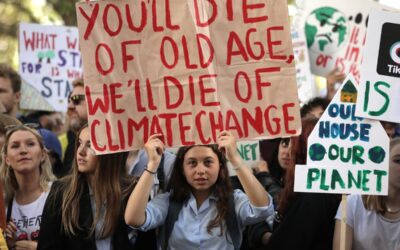
And, the article reports, a top line UK target on public diplomacy is shifting the views of foreign publics on climate change – and getting those publics to shift the views of their governments. To that end, the FCO has prepared a target list of 20 countries where the views of publics are especially critical to determining the shape of future global climate commitments. According to Murphy,
“In one country, the key constituency to engage with might be NGOs; in another, it might be the leading scientists; in another it could be the main journalists.”
David and I wrote one of the chapters for the book, entitled Towards a theory of influence for 21st century foreign policy: public diplomacy in a globalised world, and David’s been out in Washington this week to speak at the book’s US launch. I’ll also be speaking at the UK launch at the Foreign Office on 21 July.