by Mark Weston | May 27, 2014 | Africa, Conflict and security
In the post-colonial period, African politics has tended to look something like this (as excerpted from my book on West Africa, The Ringtone and the Drum):
The French anthropologist Emmanuel Terray, drawing on his experience in the Ivory Coast, identified two distinct but parallel systems of government in Africa. The first is the world of the air-conditioner. This system, which is inspired by the Western style of government, gives off an impression of bureaucratic and technocratic efficiency. It is a world of presidents, constitutions, parliaments and laws, and speaks the language of democracy, development and modernisation. It pertains to certain places and certain hours of the day, to ‘office hours (as long as one defines these relatively flexibly),’ to government buildings made of cement and steel and glass, to presidential palaces and airports with VIP lounges, to ‘glorious official soirées in illuminated gardens.’ While the air-conditioner hums in the background, the leader, in his three-piece suit and tie and speaking in fluent metropolitan French or the smooth American burr favoured by Charles Taylor, announces grand development plans to his spellbound foreign backers: hydroelectric dams, a new motorway, airports, universities – the appurtenances of a modern state. He promises elections free and fair, and looks businesslike, not awestruck, when he takes his seat at the United Nations.
But much of this is display. As Terray observed, the principal function of the world of the air-conditioner is not to govern, but ‘to show, particularly to the outside, that the country works, that it holds rank in the concert of nations’ (recall the Sierra Leone government’s gift to Haiti’s earthquake victims, and its explanation that the country needed to play its part as a member of the international community). The serious business takes place not here, but amid a second world, the world of the veranda. This is a world of palavers under baobab trees, of sharing what you have, of the impenetrable African night, of obligations – personal, not bureaucratic, obligations – to your ancestors and your community; a world, at its most extreme, of human sacrifices in sacred forests. For our leader’s real concern is not democracy, nor the provision of services to his nation, nor that nation’s prosperous future. His real concern is in meeting his obligations to his narrow band of supporters, in feeding them in the here and now so that they will sustain him in power. This second system acts as a brake on the pride and greed of the Big Men, who are allowed to enrich themselves only if part of the material and political booty they accrue is generously redistributed. Like Gulliver tied down by the Lilliputians, Terray noted, the Big Man is ‘far from being entirely the master of his choices.’ As long as he produces the goods, the little people will sing his praises, vote for him, pass on rumours and render him other services. But if he fails to deliver, and to keep delivering throughout his time in power, they will jump ship. It is a tit for tat relationship, which requires the leader to be permanently on his toes.
Some countries may have moved away from this model in recent years; a few may even have been blessed with leaders who attempt to govern for all their people. On the ground, however, this is how African governments continue to be perceived – their reputation for cronyism has yet to be shaken off.
And perception is important. In Nigeria, which has been no exception to the above rule, the perception of many people is that the informal system of rotation of the presidency between northerners and southerners that had prevailed since 1963 has been broken. It may or may not be a coincidence that the murderous activities of the northern terrorist group Boko Haram, which some influential figures believe pose an existential threat to the country, ratcheted up after the accession to the presidency of Goodluck Jonathan in 2010. Jonathan, a southerner, succeeded the northerner Umaru Yar’Adua when the latter died after just three years in office. The informal rotation had hitherto seen the eight-year tenure of a northerner followed by a roughly similar period in charge by a southerner, but Jonathan’s victory in the 2011 election meant that by the end of his term southerners would have been in power for thirteen of the previous sixteen years. That he plans to run for re-election in 2015 has exacerbated northerners’ concern.
Northern Nigeria already lags behind the south. All ten of the country’s poorest states are in the north, school attendance is lower, and infant, child and maternal mortality rates are all much higher than in southern states. With a northern president in power in a patrimonial polity, northerners at least had the hope that they would have their “turn to eat” every few years. Without that reassurance, even in the unlikely event that the gulf between north and south does not continue to widen, many northerners’ perception is that they have been cut loose, and that the ‘material and political booty’ accrued by presidents will now be the exclusive preserve of southerners.
There are a number of measures that must be taken to quell the growing anger of the north, but in a country that threatens, as Foreign Policy magazine has recently put it, to ‘come apart at the seams’, political representation is among the most important. While it waits for leaders that govern for the many rather than the few, or for institutions that force them to do so, formalising the regular geographical rotation of presidents by enshrining it in the Constitution (thereby obliging the major parties to abide by it in putting forward candidates) may help narrow Nigeria’s north-south divide. In an ideal world this would not be necessary – leaders would take into account the interests of all their countrymen and distribute resources equally. But Nigeria is not an ideal world. The north-south divide has been accentuated by the long rule of southern presidents, and has helped bring about the emergency the country is facing. Formalising the rotation of the presidency is only a patch on a wound, but it may be a necessary one for northerners again to feel that they have a future as Nigerians.
by Seth Kaplan | Feb 2, 2014 | Africa, Conflict and security, Economics and development
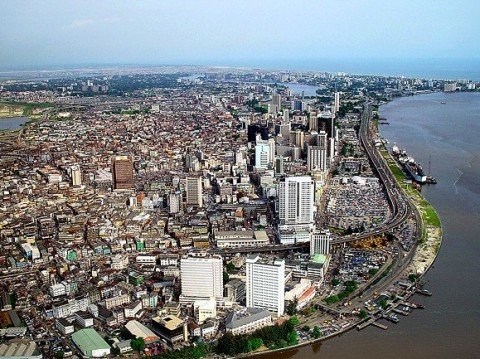
Nigeria is arguably the worst run of the world’s seven most populated countries. Despite earning hundreds of billions of dollars in oil revenue over the past decade, it is expected by 2015, by some calculations, to have the second-most destitute people in the world after India. But its largest city, Lagos, which until recently was known as one of the world’s most difficult cities to govern, seems to have turned a corner. As I argue in a recent article in the New York Times, one of the chief reasons for this better performance is the nature of incentives that elites and politicians face: (more…)
by Mark Weston | Sep 5, 2012 | Africa, Conflict and security
News is emerging that an oil tanker has been hijacked off the Nigerian coast. This appears to be part of a growing trend, and one that was predicted in these pages four years ago (even a blind pig sometimes finds a truffle). Back in December 2008 I wrote of the attractions of West Africa as a venue for piracy, suggesting that its coast ‘has many of the elements that make Somalia a good spot for a bit of buccaneering – rank poverty, lots of underemployed young men, unstable governments, endemic corruption and favourable geography.’ If ships start going the long way round the Horn of Africa to avoid the East African coast, I added, ‘they might be in for a nasty surprise when they reach the opposite side of the continent.’
A few months later I posted this map published by the International Maritime Bureau, showing the global distribution of pirate attacks in the first part of 2009:

You need only compare this with the IMB’s latest 2012 map to see how rapidly the industry has expanded in West Africa:

by Seth Kaplan | May 10, 2012 | Africa, Economics and development
 Nigeria is not known for strong governance. On the contrary, it is arguably one of worse governed countries in the world, losing hundreds of billions of dollars to corruption and waste over the past four decades. Yet, it has two important governance achievements worth emulating.
First, it has devised a system of decentralization that has sharply reduced ethnic conflict. And second it has a major metropolis that increasingly is acting like one of a handful of city development states–large urban areas in developing countries that are driving progress forward in a way typically associated with well-managed central governments.
In Nigeria’s case, the central government has worked so badly for so long and is so poisoned by its access to and dependence on oil money that state and city led development may be the only way to achieve progress. (more…)
by Mark Weston | Jan 27, 2012 | Africa, Conflict and security
Northern Nigeria is in turmoil. Last week’s attacks in the main northern city of Kano, which left at least 180 dead, are the latest in a series of bombings and shootings by the Islamist terror group Boko Haram, which demands the imposition of sharia law across the country.
There is a risk that the violence will spread southwards. A Boko Haram assault on the United Nations building in Abuja killed 21. Southern Christians have avenged their northern counterparts by burning mosques and Islamic schools. A Yoruba militia group last month marched through Lagos threatening to fight back if the south is targeted. The writer Wole Soyinka has said the nation is heading for civil war.
Nigerian president Goodluck Jonathan has responded to the escalation in violence by declaring a state of emergency in the north and announcing a massive increase in the security budget. So far this has proved fruitless, for it is not just policing that the north needs – mistrust of the security forces is so entrenched, indeed, that a response based on strengthening their power is likely to aggravate discontent.
Young northerners’ anger, whose most extreme manifestations have fuelled the unrest, is rooted less in religious sentiment than lack of opportunity. A polytechnic student I talked to in Kano in 2009 said that ‘the violence in the north is not because of religion but frustration about poverty and corruption.’ A Kano University professor agreed. ‘If we have a crisis or violence that they call religious,’ he said, ‘it’s really about poverty. It’s the poor who are easily recruited.’
Northern Nigeria lags behind the south. All ten of the country’s poorest states are in the north. The north has the lowest school attendance, lowest vaccination rates, highest infant and child mortality, and highest maternal mortality. In some instances the differences are stark. Under-5 mortality in the North West region is double that in the South East. Vaccination rates in the South East are seven times higher than in the North East. And while 90 percent of births in the South East are attended by skilled personnel, only 12 percent of northern mothers receive such care. These disparities, as the recent violence has proved, are unsustainable. In the face of glaring regional inequality, a burgeoning northern youth population will not remain placid; even if Boko Haram is defeated, others will come forward to take its place.
To neutralise the threat and dilute the appeal of extremism, Nigeria’s government needs a program for northern development – only by closing the north-south divide will deep-seated resentments be quelled. Enhanced policing in the short-term must be combined with sustained commitment to social and economic reforms. A long view is important – decades of underdevelopment will not be reversed overnight – but quick wins are also needed, to show that the government means what it says and that new promises, unlike old ones, have substance. An Agenda for the North should be based on five principles:
- An honest assessment of the problem: Goodluck Jonathan must publicly admit that the north has been left behind. He must be candid about the gaps in wealth, education and access to services, and accept that his government and its predecessors have done too little for the region. Northerners, of course, know all this already, but their cynicism will only be blunted if past errors are acknowledged.
- A grand plan for change: To begin to regain ground in the propaganda war with Boko Haram, big and well publicised commitments are needed. Raising school attendance to southern levels, matching southern infrastructure, and equalising employment rates and incomes nationwide are daunting challenges, but nothing less will be acceptable to young northerners. The north needs its own Development Goals, with ambitious deadlines, milestones and concrete investment plans.
- Youth involvement: Development Goals in obvious improvement areas like transport and power can be announced immediately, but other objectives should be developed in consultation with northern youth. The latter too want electricity and roads, but what are their other priorities? Research among young people for the British Council and Harvard’s Next Generation Nigeria project threw up widely varying demands, from agricultural extension programmes to support for small businesses to teacher training and school toilets. But unless the government engages systematically with young northerners it will not know what the region needs. Nigerian politicians have cut themselves off from the wider society – giving angry young people an outlet other than violence will help diffuse tensions and make reforms relevant.
- Small wins: Northerners, understandably wearied by years of broken promises, will have no faith in grand Development Goals unless they quickly see their fruits. While the federal government announces overarching objectives, state governments must spell out which roads will be built and when, how many teachers will be trained, how they will engage with young people, and so on. Then they must take prompt action – begin work on that road, equip a hundred schools with fans, achieve small, quick wins to show that a start has been made.
- Accountability: When they make targets, federal and state governments must stick to them. Those who fail to deliver must be held to account, making it clear that business as usual will not be tolerated. Next Generation Nigeria argued for the creation of a national youth forum that would hold regular discussions with policy makers. A Northern Forum could be charged with monitoring compliance with the Agenda for the North, and given free rein to demand action when progress slows.
Goodluck Jonathan is floundering – yesterday he feebly pleaded with Boko Haram to identify themselves and spell out their demands. He has run out of ideas. An Agenda for the North, desirable and necessary even without the emergence of the terror group to give it urgency, has the potential to break the impasse. It might be Mr Jonathan’s best hope of proving the doomsayers wrong.

