Global Dashboard – Blog covering International affairs and global risks

NATO

Libya strains NATO

May 12, 2011 | by Alistair Burnett | More on Conflict and security, Middle East and North Africa | No comments

I’ve done a piece for YaleGlobal about the implications for NATO of its operation in Libya

With Operation Unified Protector in Libya, NATO enters war for the third time in its history. And like its first-ever conflict with Yugoslavia in 1999, the alliance is anything but unified. But gone to war it has, carrying out air strikes against forces loyal to Colonel Muammar Gaddafi and more than 100 sorties on most days. The half-hearted nature of the intervention can be seen as a glass half full or half empty for the alliance. But over time the cherry-picking approach of the members could reduce it into irrelevance … Read more


Turkey – turning away from the West or rebalancing its priorities?

September 15, 2010 | by Alistair Burnett | More on Key Posts | 2 comments

Turkish voters approved a new constitution this weekend, greeted in Brussels – if not Paris and Berlin – as a key step on the road to EU membership.

But recent commentary and headlines – particularly in the US – have claimed Turkey is turning its back on the West as the rift between Turkey and Israel deepened following the killing of 9 Turkish citizens by Israeli forces when they raided a Turkish ship trying to run the blockade of Gaza in May.

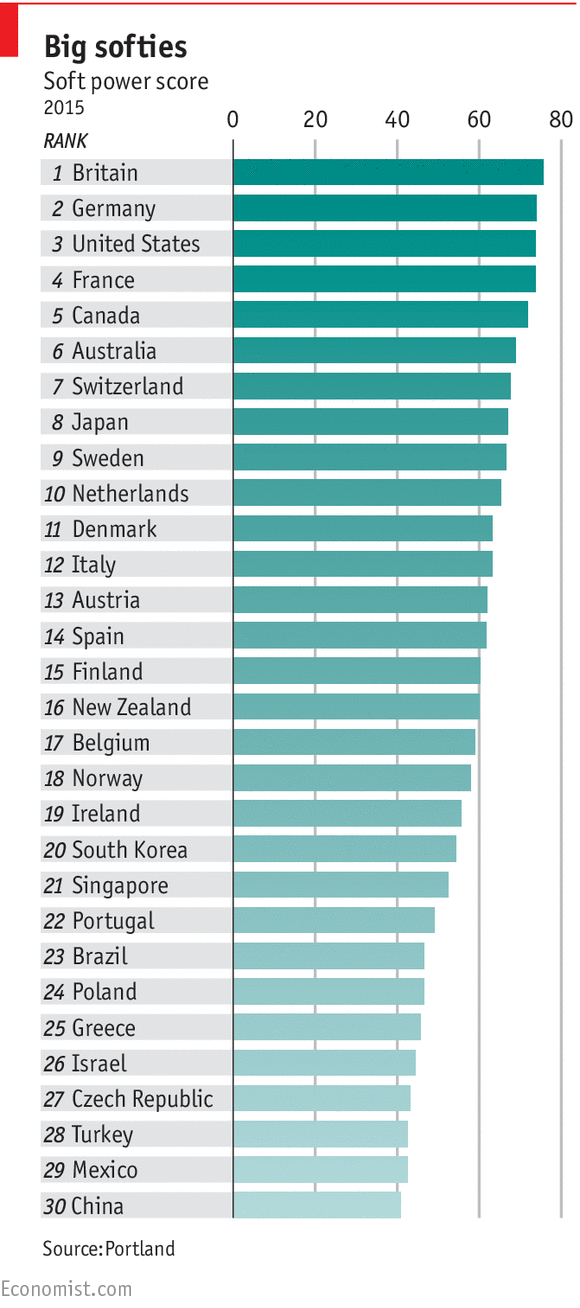
Turkey is an ally of the US and a staunch member of NATO, it has also been trying to get into the EU for more than twenty years, so why are some commentators saying Ankara is turning away from the West? (more…)


NATO to Hoon: sod off

March 24, 2010 | by David Steven | More on Conflict and security | No comments

NATO is not impressed by Geoff Hoon’s involvement in lobbygate:

NATO says it is dropping former British defense secretary Geoff Hoon from a group of experts drawing up the alliance’s new strategic concept.

Hoon is among three former Cabinet ministers who have been suspended from Britain’s ruling Labor Party over allegations they tried to trade access to government officials for cash…

NATO spokesman James Appathurai says Hoon had been nominated to the group by the British government. Appathurai says given Hoon’s suspension “he has been asked to end his participation in the group.”

Via @David_Stringer


On the web: skirmish in the Falklands, NATO futures, State Dept’s media relations, and “cloud computing”…

February 26, 2010 | by Michael Harvey | More on Conflict and security, Cooperation and coherence, Europe and Central Asia, Influence and networks, Latin America and the Caribbean, North America, UK | No comments

- As the diplomatic temperature continues to rise in the South Atlantic, Simon Jenkins suggests that the Falklands are “the Elgin marbles of diplomacy” and a “post-imperial anachronism” that should lead Britain to the negotiating table. Hugo Rifkind, meanwhile, explains why he won’t be shedding tears for Argentina’s President, Cristina Fernández de Kirchner, while The Economist highlights her failure to see the current crisis as an economic rather than a political opportunity.

- Rob de Wijk explores (pdf) the future options for NATO as it come to terms with changing geopolitics. Andrew J. Bacevich, meanwhile, cites a failure to sufficiently “reignite Europe’s martial spirit” and carve a global role for NATO in the 21st Century as cause for the US to draw back engagement in the alliance. Let it return to its origins and “devolve into a European organization, directed by Europeans to serve European needs”, he argues.

- Elsewhere, the London Review of Books blog offers reaction to plans for the new US Embassy in London. Associated Press, meanwhile, has news of an internal State Department report criticising its media operations.

- Finally, VoxEU explores the emergence of “cloud computing” and its potential impact on our lifestyles, business innovation, and economic growth. Charles Leadbeater assesses the associated rise of “cloud culture” and the importance of guarding this new space from the overbearing influence of government and big business. Elsewhere, over at Brookings Mark Muro wonders if the rise of Amazon’s Kindle could be a “symbol of American decline”.


‘Nato solidarity more important than winning in Afghanistan’ (er…)

April 9, 2009 | by Alex Evans | More on Conflict and security | 3 comments

Quentin Peel had a slightly bizarre column in the FT yesterday, bemoaning the Europeans’ paltry response to Obama’s request for more boots on the ground in Afghanistan. As he notes, European governments are “terrified of offending hostile public opinion that cannot understand – and has never understood – why their soldiers are dying in such a distant land”. He continues [emphasis added],

Part of the problem is that the Nato allies went into the war in 2003 without a common strategy, or a common narrative. Countries such as Germany and the Netherlands persuaded their parliaments that the job was about peace-keeping, not fighting Taliban insurgents. Germany and France also sent special forces to join the US in Operation Enduring Freedom – fighting the Taliban and hunting for al-Qaeda – but they kept it secret.

The British, Dutch and Danes are now much more open that it is a real war, and that Nato’s survival is on the line. Others, including the Germans, are not. There is a logical reason.

“The more the Europeans build it up as make-or-break for Nato, or suggest ‘our security is on the line’, the more they set themselves up for failure,” says a European diplomat. “By keeping it low key, they keep an exit strategy.”

The danger for Nato is two-fold. Without greater European commitment, the war will be “Americanised”, and risk becoming yet more unpopular in Europe. As for the alliance, it is becoming a “coalition of the willing” by default. The fundamental assumption of Nato solidarity is called into question. That is more dangerous than losing the war.

Um – what? How on earth can losing the war be less dangerous than erosion of Nato solidarity, given that Nato doesn’t seem to be able to find anywhere else in the world, besides Afghanistan, where it clearly still has a role?

If policymakers in Nato member states are really going to set out a compelling narrative about why we’re at war in Afghanistan, then surely that narrative needs to rest on what Nato’s trying to achieve in Afghanistan.  “Safeguarding Nato coherence” does not seem a very satisfactory answer to that question.


Civilianise ESDP

February 2, 2009 | by Daniel Korski | More on Conflict and security, Europe and Central Asia, UK | No comments

Earlier in the week, Charlie talked about the Tories’ weakness on foreign and defense policy. In many ways, he gave voice to a view felt across the British foreign and defence community. That the Tories do not have a serious and detailed set of national security policies that can be turned into government action. The contrast to the Obama administration is stark. The Democratic President has been able to populate his administration with America’s finest foreign policy thinkers, all of whom have thought deeply about what a Democratic foreign policy should look like.

The Tories are not the only ones blame for the dearth of policy thinking. The British system of government militates against party-based subject-mater expertise. Parties are meant to develop the broad strokes of ideas, which will then be developed and implemented by officials if they enter government. It is therefore very difficult for the Opposition to attract experienced foreign policy thinkers. The pay is low and the rewards are not as attractive as in the U.S. The most a future British Prime Minister can offer is junior ministerial portfolio, working to a senior politician whose background may not be well-suited for a security-related job.

But one issue can be parked at the Tories’ door. Having canvassed a wide section of the London-based foreign policy community, the one issue that keeps coming up time and again is the Tories’ euro-scepticism. As one senior (and decidedly euro-sceptic) thinker told me: “The Tories are rowing back on the pragmatic NATO-EU policy that Malcolm Rifkind developed when he was Defence Secretary.” A widely-respected senior military commander told me only two days ago: “It’s as if a veil descends across their faces when Europe comes up. They don’t even want to engage. But this is not about a European army; it’s about being able to work with allies.”

(more…)


Credit crunch = peacekeeping crunch

February 2, 2009 | by Richard Gowan | More on Africa, Conflict and security, Cooperation and coherence, Middle East and North Africa | No comments

News from Lebanon:

BEIRUT: Poland has said it may withdraw its troops from the United Nations Interim Force in Lebanon (UNIFIL), prompting fears of a “crunch” in international peacekeeping resources as governments slash spending in the face of the global financial crisis. Polish Prime Minister Donald Tusk said Saturday that his government would “certainly take a decision” this year on the continued presence of almost 500 troops that the country contributes to UNIFIL.

Last month Poland announced it would cut its contribution to a peacekeeping force in Chad in a bid to save money.  “We will consider whether it makes sense to continue certain foreign missions,” Tusk said.

His comments come as his government announced it is cutting spending by almost $5 billion as the global economic crisis deepens, and there are fears that other countries could follow suit and seek to save money by withdrawing troops from expensive overseas peacekeeping missions.

Last week France announced cuts in such missions around the world, including the withdrawal of two naval vessels from UNIFIL’s maritime contingent, which patrols Lebanese waters to prevent arms smuggling into the country by sea.

The problem stems from the way the countries are reimbursed for the peacekeepers they provide. The UN offers a fixed amount for each solider that a country contributes to a peacekeeping mission, regardless of how much it costs the country to pay the soldier.

The system means that poorer countries are able to contribute troops without cost to their domestic budget. But in richer countries, where soldiers earn more than the UN’s reimbursement, national governments are footing the bill for contributing troops to the missions.

On this reckoning, the financial crisis means that the West will increasingly demand that poor countries take on peacekeeping – more UN and AU missions, then, and less from NATO. Poor governments may well respond with enthusiasm, as UN subsidies will help keep their generals happy. Peace operations will remain low-tech and dogged by fights between “those who pay” and “those who play”… Not a happy picture.


The Conservative Party’s Achilles’ Heel: National Security and Defence

February 1, 2009 | by Charlie Edwards | More on Key Posts, UK | No comments

Once upon a time the Conservative Party was the natural home for national security policy. Not anymore. A combination of factors including the very necessary rebranding of the party; a focus on climate change, health and education has meant national security policy (in its broadest sense: defence, foreign affairs, and intelligence) is now, arguably, Cameron’s weakest policy area.

When David Cameron became leader of the Conservative Party in 2005, he deliberately set out a different vision than that of his predecessors by focusing on policy areas such as health, education and climate change. This was both a reflection of a shift in strategy – to move the Tories away from its ‘nasty party’ image but also because some of the best minds in the Conservative Party were thinking progressively on these issues (health in particular).

During this process of change national security policies largely became second order issues for the new leader. Cameron delegated these policy areas to colleagues, safe in the knowledge, he assumed, that each would be managed by a safe pair of hands. But he underestimated two forces at play. First the decline in knowledge and experience among Conservative MPs (which is still more than the Labour and the Liberal Democrats combined) in these policy areas and second; a lack of fresh and innovative thinking on national security within the party.

Arguably David Cameron’s first mistake was to assume that experience comes with expertise and sound judgement. In a speech to the think tank IISS on terrorism and national security he was quick to make reference to the ‘wealth of experience’ he had, citing numerous Lords and Dames he had recruited. The message was clear: I’m young and fresh but I have experienced politicians and practitioners on tap. But I’m reminded of a brilliant quote by Chris Donnelly, the former special adviser at NATO – who’s now at Oxford University:

In a period of stability and slow evolution our greatest asset is our experience. But at times of revolution our experiences can be fatal baggage. We can no longer assume that, because something we did worked well in the past, it is likely to continue to do so in current circumstances. If we are to survive living in a revolution, we will need to make a correspondingly revolutionary shift in the way we think about both the risk and the response.

(more…)


The more ruthless Obama gets, the more I admire him

January 30, 2009 | by Richard Gowan | More on Influence and networks, North America | No comments

From New York magazine’s blog:

During the election season we heard a lot about “60″ — that magic number of Senate seats that would allow the Democrats to block any filibuster, and, Republicans feared, tax the American people into submission. When all the votes were tallied, they came up just one seat short (assuming Al Franken eventually gets his seat). So close! Reasonably, the Democrats should be able to attract at least one measly Republican to their side, but who wants to even deal with that? Luckily, President Obama has come up with a solution: Fill the empty Commerce Secretary post with Republican New Hampshire Senator Judd Gregg. As we know, our wonderful system calls for New Hampshire’s Democratic governor to pick Gregg’s successor in such an event, and one would assume he’d choose another Democrat. And voilà, 60!

It’s a clever but slightly crass move — nobody even knows what the Commerce Secretary does anyway, so who cares who’s in there? And Obama will fundamentally alter the balance of power in the Senate in his favor with what appears to be another bipartisan gesture.


Central Europe versus Russia

January 28, 2009 | by Jules Evans | More on Europe and Central Asia | No comments

Last week, I saw the leader of the Hungarian opposition, Viktor Orban, call for a new central European security alliance against Russia.

Orban warned that the EU needed to take a tougher line with Russia. He said: “Russia has made two requirements that are not acceptable for European civilisation. Firstly, it has said it has legitimate security interests outside of Russia, so it can decide, for example, whether other countries can join NATO or not. That’s dangerous.”

He went on: “Secondly, Russia wants to buy out alternative sources of energy around the region, and to monopolise gas deliveries to the whole region, which is totally against our values.”

Orban said that the Russo-Georgian war of August 2008 testified to “the weakness of common EU security policy”, and added: “We in central Europe have a different approach to emerging Russian power, and it’s obvious that sooner or later, central Europe will emerge as an independent player in security.”

He also warned that Germany was playing a “dangerous game” with Russia, by not checking its expansionism more aggressively.

There’s some domestic politics going on here. Orban’s ouster in Hungary, Ferenc Gyurscany, has taken a much more conciliatory stance towards Russia and Gazprom, including supporting Gazprom’s Blue Stream pipeline over the EU-backed Nabucco pipeline. Gyurscany said he wanted Hungary to become an “energy hub” in Europe. You can practically smell the vodka  on his breath.

Still, now Hungary’s economy is deep in recession,  Gyurscany may be on the way out, and Orban sounds like he is likely to introduce a much tougher eastern foreign policy.


A classic viral moment

January 28, 2009 | by Alex Evans | More on Influence and networks | 3 comments

YouTube Preview Image

This video interview shows Derick Ashong, an Obama supporter, getting approached by a (presumably pro-Clinton) interviewer outside Obama and Clinton’s third debate in February last year.  Here’s how the New York Times described what happened next:

“So why are you for Obama?” he asked. It was clear from his approach that he expected a dimwitted answer, an expectation that he was about to talk to another acolyte smitten by Senator Obama’s rock star persona.

But, as it turned out, Mr. Ashong, who was raised in Ghana and elsewhere, was glad to be asked. For almost six minutes — about a century in broadcast television years — Mr. Ashong, who has an immigrant’s love of democracy and the furrowed brow of a Brookings fellow, held forth on universal health care, single-payer approaches and public-private partnerships.

“A lot of these H.M.O.’s are publicly traded companies anyway, but I don’t think we want to create a market for health care per se, like we don’t want to create a futures market in health care,” he said. And so on.

Cute stuff. Highly informative. But not the kind of political discourse that generally captures a wider audience.

But here’s the weird part. On Feb. 2, the interview of Mr. Ashong was posted on a YouTube channel called “The Latest Controversy,” where supporters of both Senator Hillary Rodham Clinton and Senator Obama are asked very aggressively to justify their choice of candidates. The video blew up, drawing more than 850,000 views. And after that huge response to his policy analysis, Mr. Ashong decided to double down and explain the emotional component of his support for Obama in a follow-up video that was posted Feb. 11 and received 300,000 views.

Taken together, that means a guy who was looking to (anonymously) show a little love for a candidate was able to look into the camera for more than 13 minutes combined and draw in more than a million clicks with an impassioned but reasoned pitch.

Ashong will be in the UK next month, and speaking at a meeting of the All-Party Parliamentary Group on Conflict Issues.  Details: 6.30pm on 26 February in the Grand Committee Room in Parliament. More from the NYT piece after the jump. (more…)


Climate’s new Stern

January 26, 2009 | by David Steven | More on Climate and resource scarcity, North America | No comments

Nick Stern isn’t going to like this, but there’s a new Stern on the climate block: Todd Stern , who is set to be announced as the US’s new climate envoy.

(Todd) Stern has set out a fairly clear road map for US engagement in the climate process (nb. these are his personal pre-appointment views, not those of Obama or Clinton). He thinks the US should:

  • Start with domestic policy - get the National Academcy of Sciences to recommend (and review on regular basis) a stablization target; legislate cap and trade, not a carbon tax; supplement with regulation on energy efficiency and tex incentives for R&D.
  • Use domestic policy as a lever in the international arena – negotiating first with a core group of countries (the ‘E8′ – Brazil, China, EU, India, Japan, Russia, South Africa and the US); then building a post-Kyoto framework on the back of their agreement, with binding long-term targets for all developed and ‘as many advanced developing countries as possible,’ and a built-in mechanism to ratchet those targets up over time (and as scientific findings dictate).

Stern is fairly tough on China. The country needs to accept targets (calculated on what basis is a question he does not address), but he makes lots of positive noises. Joint action on a climate can form the basis of a new strategic partnership between the 800-pound gorillas, but only if it is elevated from “traditional place in the second tier of mutual concerns.”

Throughout, of course, he has an eye on the US Senate and ratification. Bottom up targets and sectoral agreements should be deployed if they can suck more countries into a climate deal, as this will shut up antsy Senators. Access to carbon markets should be used as another tool that creates an incentive for developing country participation.

But there needs to be a stick too, Stern believes – and that stick is trade. Unilateral tarrifs on carbon-intensive goods would be ‘profoundly alienating’ and ‘a prescription for mutual recrimination, not progress’, especially after the US has spent so many years in the climate wilderness. But:

Considered in a mutilateral context…the idea…is more interesting. Today, the carbon content of goods is not captured in their price…If the premise of a climate regime were that countries must capture those social costs by putting a price on carbon, whether by means of a cap-and-trade program, a carbon tax, or equivalent policies to cut emissions, tarrifs could then be imposed on the exported products of any country that lacked such policies.

The Europeans will welcome Stern’s appointment with open arms – the Brits in particular.  John Ashton, the UK’s climate envoy, gets name checked by his new US counterpart – and it wouldn’t surprise me to see the two working hand in hand…


“African ownership”: an African critique

January 21, 2009 | by Richard Gowan | More on Africa, Conflict and security | No comments

Last year, I wrote a couple of posts (here and here) warning of a rift between African countries and the West over how to administer peace and justice on the continent. That was coming out into the open over Darfur and Zimbabwe, forcing Western liberals to balance a commitment to “African ownership” with their desire to stay involved in African affairs. Now, a trenchant critique of “African solutions to African problems” rhetoric comes from Tsoeu Petlane, a South African scholar:

As we enter a New Year, we have to acknowledge that the “African solutions for African problems” approach has had some glaringly painful failures. The continuing crises in Somalia, in Zimbabwe, in Darfur and in the Democratic Republic of Congo and the surrounding Great Lakes region all demonstrate the weaknesses of the way “African solutions” have been implemented in 2008.  These weaknesses must be addressed in 2009. The year ahead should be one of rethinking how Africa deals with problems in a manner that is effective and restores the continent’s image and initiative.

Petlane anatomizes the problem thus:

There are three key reasons for failure: an almost unquestioning adherence to protecting state sovereignty, dependency on forces outside the continent and lack of leadership. Together, these stifle innovation, limit the effectiveness of proposed solutions and alienate potential allies.

First, the continent’s endorsement of the leaders of collapsed or collapsing states such as Zimbabwe, Somalia and the DRC, far from promoting sovereignty, negates it.

Sovereignty resides in the people, who only delegate it to leaders. In a situation in which the expression of this sovereignty is denied the people, such as in Zimbabwe; where those entrusted with it are unable to exercise it practically, such as in the DRC; or where the institutions supporting it are in question, such as in Somalia, protecting a government makes no sense – it allows a regime to maintain a veneer of statehood only on the basis of recognition by others. Thinking beyond this paradigm is urgently needed.

Second, while African leaders appear united in calling for indigenous solutions, few have demonstrated a conceptual or practical commitment to the notion. Their initiatives and solutions have depended on Africa’s “partnership” with the nebulous “international community”. A major component of this “community” comprises the very same former colonists who, we claim, have (i) “created” Africa’s problems by colonising them, (ii) “interfered” in Africa’s internal affairs, (iii) shaped the international system to serve their own interests (in trade, economy and international relations), (iv) dictated values of good governance and economic performance that are “foreign” to Africans, and (v) “abandoned/marginalised” Africa by withdrawing aid and political support after the Cold War.

This kind of dependency – developing solutions on the basis of actions of others, and blaming them when things don’t work – points to our lack of good leadership.

(more…)


The Bush administration finally finds a treaty it likes

January 12, 2009 | by Richard Gowan | More on Climate and resource scarcity, Cooperation and coherence, Global system, North America | No comments

From the State Department (with some explanatory notes added by GD):

Statement by Secretary Condoleezza Rice
Washington, DC
January 9, 2009

January 11 marks the 100th anniversary of the Boundary Waters Treaty of 1909. We note with pride the century of cooperation with Canada in managing water quality, quantity, and environmental health along our 5,525-mile border. The Treaty also established the International Joint Commission, which has played a vital role as an independent steward of these shared resources. Comprised of Commissioners from both countries, the Commission has been an outstanding example of collaborative governance and stewardship *, facilitating cooperation, preventing and resolving water-related disputes, and approving and overseeing operation of several major dams and hydropower stations along the border.

Millions of Americans and Canadians depend on the Great Lakes-St. Lawrence River system for drinking water, trade, jobs, recreation, and more. Through the Great Lakes Water Quality Agreement and the International Joint Commission, our two nations are working diligently to restore and maintain the chemical, physical, and biological integrity of the Great Lakes Basin ecosystem.**

The Boundary Waters Treaty remains vibrant as it enters its second century. Recent International Joint Commission initiatives such as International Watershed Boards provide opportunities for local stakeholders to build networks that can prevent or resolve problems at the community level. The Treaty continues to be a model for managing shared resources***and a tribute to the enduring friendship between the United States and Canada.****

* The reference to “governance and stewardship” may signify a career State drafter trying out a few liberal, internationalist phrases so as to be ready for the next administration. Had this been drafted in 2003, it’d probably have referred to “the joint commitment of freedom-loving nations to God’s aquatic gift to mankind”.

** I’ve read this a number of times, but it does indeed appear to be a positive reference to international environmental regulation by the Bush administration. I assume they think Dick’s too busy burning stuff to get pissed about this one.

*** Well yes, it’d be easier to resolve resource conflicts if the opponent was always Canada.

**** This is most likely a coded reference to the fact that the Canadian Conservative government is one of the few regimes on earth that may actually be sorry to see the Republicans go…


All I want for Christmas: Better Oversight

December 22, 2008 | by Charlie Edwards | More on Influence and networks, UK | No comments

Last year I argued that: a quadripartite parliamentary select committee on national security should be created – bringing together existing select committees that focus on UK national interests, security and defence policy. The good news is that this idea is currently being toyed with in Westminster and Whitehall. The bad news is that I’m not sure our politicians are really up to overseeing such a complex system and ensuring it is made accountable to the British public.

I’ve been trawling through the uncorrected evidence of a session on national security and resilience. The evidence session was undertaken by the House of Commons Select Committee on Defence. In the hot seats were Rt Hon Bob Ainsworth (then a Minister at the MoD), Admiral Lord West (Minister for Security and Counter-Terrorism), and a range of senior officials from Government departments. I don’t think I have ever read a more thoroughly depressing, lightweight, evidence session, which not only fails to ask the important questions but largely fails to hold Ministers and officials to account. Below are the more amusing questions and exchanges from the session.

No.1: Know your brief (Ministers)

Chairman: National Security Strategy, who owns it?

Mr Ainsworth: The lead department for national security in the United Kingdom is the Home Office.

Mr Jenkin: (HCDC):  Does not the Home Office lead inevitably lead us to a rather narrow definition of what a National Security Strategy is, given that, for example, our foreign policy is crucial to our national security?

Lord West: If I could just clarify – the Home Office does not lead on the whole National Security Strategy. We are responsible for the counter-terrorist aspect of it and specific Home Office duties.

Mr Jenkin: That would explain why the NSS is a bit of a Christmas tree because there is no single minister responsible for creating coherence in the National Security Strategy?

No.2: Losing the war on terror.

Mr Holloway: You have got doctrines, plans, committees, initiatives, X, Y and Z and of course it all sounds absolutely marvellous, but the reality is that we are not winning the war on terror. Do you not think we could be doing rather more in terms of dealing with the drivers of radicalisation and be a little more sensitive in our foreign policy because it might actually make your job rather easier?

No.3: ‘Overarching title’ – what a great title!

Mr Jenkins: When I heard the term “overarching strategy” I thought that is a great title, a great term. Within that do we have different departments reporting, like stovepipes, up to the top, or have the departments changed their policy, and are they working closer with each other so there are departments working at every level? How has that approach changed the operation of the MoD; and has the MoD felt its role in working through the Home Office is somewhat restrained; or is it quite happy to do that; or would it like more contacts, please?

No.4: Mum’s the word

John Smith: Without giving away any secrets, can you say hand on heart that this new joined-up approach to the national security threats on our country has actually prevented or deterred actual threat of attack or security threats against us, since you have been taking this new approach?

No.5: The Government’s ‘dilusional’ talk

Mr Holloway: Admiral, I worry about this because I think some of this talk is possibly dilusional. If you talk about having a joined-up approach in Afghanistan, which I know a tiny bit about; I lose faith in everything else you are saying about what else is happening behind the scenes. As a military man you and, I guess, I, in my pathetic military career, were always told if you wanted to win an insurgency you did not need coordination forums, focus groups, secretariat, yet more self-licking lollipop process; we were told that you had to have unity of command and unity of purpose. Do we have either in the UK at the moment on this – unity of command and unity of purpose?

No.6: Where is this coordinator?

Mr Jenkin: We have mentioned Robert Hannigan a few times and he is this coordinator. Why is he not here answering for the government on this?

No.7: Red teaming for beginners

Mr Holloway: Do you have groups of people who sit around working up potential scenarios of things that terrorists might do, areas that are vulnerable?

No.8: Spot the question

Mr Jenkin: My question follows on from this which is that we all know from the polling evidence that the public does not really like being stirred up about this subject. It makes politicians get accused of trying to frighten the public for some sort of political reasons and it is regarded with great suspicion. Is there a danger that, because we all want to avoid doing that, we are actually not giving this the profile in government that it really deserves and that we do not want to have a national security minister in the Cabinet because that would add to the anxiety of people and raise people’s suspicions more, but have we actually not got to face it and have we also not got to recognise that the public need to be made aware of these dangers because, the more aware the public is of these dangers and risks, the more alive they are to those risks and in fact the safer we will be?


URBEINGRECORDED » Discontinuity & Opportunity in a Hyper-Connected World
Great discussion of complexity and network theory and its relevance to global risks, from Chris Arkenberg

The Emissions Gap Report
This publication aims to assess the following questions: are countries’ pledges of action collectively consistent with and, if implemented, likely to achieve the 2˚C and 1.5˚C temperature goals? If not, how big is the gap between emission levels consistent with these temperature goals and the emissions expected as a result of the pledges?

The Spectator runs false sea-level claims on its cover
These claims rely on misinterpretations of scientific data so grave that even an arts graduate such as Fraser Nelson should have been able to spot them.

Europe’s Insult Diplomacy - Infographic
British Prime Minister David Cameron called French President Nicolas Sarkozy “a hidden dwarf” as part of a joke told to a journalist. German Chancellor Angela Merkel referred to Sarkozy as “Mr. Bean,” while Sarkozy called her “La Boche,” or the Kraut. Spanish Prime Minister José Zapatero is “too pink” because of the high proportion of women in his cabinet, said Italian Prime Minister Silvio Berlusconi. And Berlusconi’s opinion of the euro? “A disaster,” he said, that has “screwed everybody.”

Solar Power's Good News
The White House has challenged the solar industry to produce clean electricity at $1 per watt. It has also set a national goal to achieve 80 percent clean energy use by 2035…The good news is that researchers are racing toward that goal at an impressive rate.

BBC News - Viewpoint: Is the alcohol message all wrong?
"The effects of alcohol on behaviour are determined by cultural rules and norms, not by the chemical actions of ethanol."

Something's Happening Here - NYT - Tom Friedman
When you see spontaneous social protests erupting from Tunisia to Tel Aviv to Wall Street, it’s clear that something is happening globally that needs defining

Foreign Aid Set to Take Hit in U.S. Budget Crisis - NYTimes.com
America’s budget crisis at home is forcing the first significant cuts in overseas aid in nearly two decades

Israel - Adrift at Sea Alone - NYTimes.com
Tom Friedman bemoans "the most diplomatically inept and strategically incompetent government in Israel’s history"

Eurozone: A nightmare scenario - FT.com
How it could all go pear-shaped - your cut-out-and-keep flow chart guide

Sharp fall in poor countries' dependency on foreign aid says ActionAid report
Aid dependency among 54 of the world’s poorest countries has declined by a third over the last decade, according to a new report from ActionAid.

World environment programs in budget crosshairs | Reuters
Global conservation programs are prime targets for budget-cutting: they sit at the crossroads of two things Americans dislike spending money on, aid and environment.

Attack of the Superweed - BusinessWeek
widespread use of Roundup has led to the evolution of far-tougher-to-eradicate strains of weeds

Jon Stewart Says Rick Perry Is the Candidate Republicans Want, and Deserve
Laugh out loud funny

Global reach is the prize at Busan - Resources - Overseas Development Institute (ODI)
Jonathan Glennie and Andrew Rogerson on what you need to know ahead of the big aid effectiveness summit

When Bloggers Don’t Follow the Script, to ConAgra’s Chagrin - NYTimes.com
Ha ha ha - epic PR #fail

Obama backs down on tighter smog regulations | World news | The Guardian
In case you missed it. Yes we can...

Wikileaked cable: executions of children by US forces in Iraq
Wikileaked cable with harrowing reports of  US forces handcuffing and then killing 10 people - including children aged 5 years, 3 years and 5 months.

BBC News - Tests show fastest way to board passenger planes
The way airlines board planes turns out to be the least efficient

New sources of aid: Charity begins abroad | The Economist
"The establishment donors’ aid monopoly is finished."

Who Doomed Sarah Palin's Presidential Dream? | TPMDC
Where did it all go wrong for Sarah?

The Intergenerational Foundation
"We believe that each generation should pay its own way, which is not happening at present."

Should we have a land value tax? - MoneyWeek
Discussion of pros and cons for the UK, following an article by OECD's chief economist in Prospect

Toward a Post-2015 Development Paradigm | Centre for International Governance Innovation | Centre pour l'innovation dans la gouvernance internationale
12 new development goals are proposed to replace the MDGs from 2015 - the outcome of an IFRC / CIGI conference at Bellagio

China Gets (Needlessly) Defensive Over Famine in Africa - China Real Time Report - WSJ
Germany's Africa policy coordinator causes dispute by singling out Chinese landgrabs as a culprit in the Horn of Africa famine

Latin America: A toxic trade - FT.com
Must read broadside against probably the most stupid and avoidable public policy screw-up in recent memory: the war on drugs

The intellectual collapse of left and right - FT.com
Michael Lind on how the economic inclusion narratives of centre left and centre right are simultaneously imploding - must read

Julia Gillard back to rock-bottom: Newspoll | The Australian
Bad news for supporters of green taxes and decisive action on climate change

Oxfam’s looking for a new Head of Research
A plum role is up for grabs

The global crisis of institutional legitimacy | Felix Salmon
"Our hearts want government to come through and save the economy. But our heads know that it’s not going to happen."

UBS' George Magnus On Marxist Existential Crises And The "Convulsions Of A Political Economy" | ZeroHedge
Not every day you see investment banks publishing detailed analysis of Karl Marx

Food Prices Could Hit Tipping Point for Global Unrest | Wired Science | Wired.com
New quant research on thresholds over which high food prices cause riots

Ambassador Locke Picks Up His Own Coffee, Gains 'Hero' Status Among Chinese : The Two-Way : NPR
Some pictures of the brand new U.S. ambassador to China are causing quite a stir.

Jon Stewart | Ron Paul | Michele Bachmann | Mediaite
Jon Stewart breaks down the state of play on the Republican Presidential race

The Bucky-Gandhi Design Institution › When?
Some properly out of the box thinking from Vinay Gupta. Must-read.

England’s riots: If the UK were a fragile state… | Dan Smith's blog
By the head of a leading peacebuilding NGO

Post-Traumatic Stress Disorder From 9/11 Still Haunts - NYTimes.com
At least 10,000 New Yorkers still have PTSD from 9/11

The unlikely social network fuelling the Tottenham riots « The Urban Mashup Blog
Not Twitter, not Facebook but.... Blackberry Messenger

Mapping world food price volatility | Nourishing the Planet
Clickable map of global food price hotspots

Will the 2012 Earth Summit be a flop? > From Poverty to Power
Great summary of the state of play on Rio 2012 from Oxfam's Sarah Best

Articles & Publications
Sustainable Development Goals – a useful outcome from Rio+20?

Recent months have seen increasing interest in the idea that Rio+20 could be the launch pad for a new set of ‘Sustainable Development Goals’ (SDGs).  But what would SDGs cover, what would a process to define and then implement them look like, and what would some of the key political challenges be? This short briefing [...]

Creating Consensus on a post-2015 framework for development

Any global framework for development which is agreed after 2015 will be a political deal between states. This paper looks at recent trends in policy and politics in emerging economies and traditional donors to assess where a consenus might lie. It suggests some principles for a post-2015 agreement which emerge from recent policy developments

A post-2015 Global Development Agreement: why, who what?

Paper from ODI and UNDP, authored by Claire Melamed and Andy Sumner, summarising the evidence on the impact of the MDGs, and looking at current trends in poverty and in global governance that will affect the shape and the scope of any future agreement on global development.

Resource Scarcity, Fair Shares and Development

Why resource scarcity will be a game changer for global justice agendas, and what aid donors, NGOs and other development opinion formers need to do about it. WWF / Oxfam report by Alex Evans.

Making Rio 2012 Work: Setting the stage for global economic, social and ecological renewal

The Rio 2012 sustainable development summit is at risk of being the latest in a long line of damp squibs on environmental multilateralism – but could still make real progress, if it focuses on greening growth and building resilience to shocks and stresses, and above all faces up to the issues of fair shares that arise in a world of limits.

Governance for a Resilient Food System

How national and international governance systems need to be reconfigured to meet the challenges of food security in a world of tighter supply and demand balances and increasing volatility. Report for Oxfam’s new Grow campaign by Alex Evans. (May 2011)

Running out of everything: how scarcity drives crisis in Pakistan

Article on scarcity of resources in Pakistan and what it means for the country.

Economics for a world with limits

Text of speech by Alex Evans to Institute for New Economic Thinking annual conference at Bretton Woods; the YouTube video is here. (April 2011) Download Speech

Unscrambling the price spike

Article published on China Dialogue on reasons for the new food price spike, including potential implications of the current drought in China. (February 2011) Download Article

2020 Development Futures

Eight critical uncertainties for development over the next decade, and ten recommendations for what ActionAid – who commissioned this report – should do to prepare for them

American Foreign Policy in an Age of Uncertainty

Article published in World Politics Review on current American foreign policy

The World in 2020 – Geopolitical and Trends Analysis

Report asking how organisations can prosper in what will be a turbulent period for world order

Globalization and Scarcity

Center on International Cooperation report on what forms of multilateral cooperation are needed to manage scarcity of resources

Resource Scarcity, Climate Change and the Risk of Violent Conflict

Background paper on whether resource scarcity and climate change will cause increased violent conflict

Organizing for Influence: UK Foreign Policy in an Age of Uncertainty

Chatham House report on how the UK’s new coalition government should upgrade and reform the way Britain conducts foreign policy

The Long Crisis Seminar

Introductory remarks by David Steven at a Brookings Institution seminar on risk and resilience in the global system (March 2010)

Stop Betting the House talk

Talk given by David Steven at Gresham College on risk and resilience in the UK housing market, as part of a Long Finance Roundtable meeting (March 2010)

Time to Stop Betting the House: a response to the FSA

Report by David Steven in response to the FSA’s Mortgage Market Review

Confronting the Long Crisis of Globalization: Risk, Resilience and International Order

Brookings Institution report by Alex Evans, Bruce Jones and David Steven on how globalisation could fail – and how it could be made more resilient. Published to coincide with the 40th anniversary World Economic Forum in Davos.

Hitting Reboot – where next for climate after Copenhagen

Report by Alex Evans and David Steven analysing the post-Copenhagen context on climate change, including a proposed 12 point action plan. Written for the Brookings Institution / NYU Center on International Cooperation Managing Global Insecurity programme.

Climate Change and Hunger: Responding to the challenge

World Food Programme report on the state of the science on what climate change means for hunger, plus policy recommendations. Authored by IPCC Impacts Chair Martin Parry with Mark Rosengrant, Tim Wheeler and Global Dashboard’s Alex Evans (December 2009)

Scarcity, security and institutional reform

Presentation by Alex Evans to a seminar organised for the UN Department of Political Affairs by the Geneva Centre for Security Policy (August 2009)

The Resilience Doctrine

Article on risk and resilience by Alex Evans and David Steven – part of a special in World Politics Review on risk and resilience in a globalized age (July 2009)

An Institutional Architecture for Climate Change

Report by Alex Evans and David Steven exploring the future international institutional requirements for managing climate change, and including three scenarios for climate institutions between now and 2030. Commissioned by the UK Department for International Development. (May 2009)

Risks and Resilience in the New Global Era

Article by Alex Evans and David Steven exploring resilience as a political agenda – part of a special edition of Renewal on the transformation of foreign policy (February 2009)

A Tale of Two Cities

Climate and cities think piece, co-authored by David Steven and the British Council’s Peter Upton (29 January 2009)

The Feeding of the Nine Billion

Chatham House pamphlet by Alex Evans on how scarcity issues will shape the outlook for global food production, and the actions that policymakers need to take at the international level and in developing countries to ensure food security in the 21st century

2009 – A Year for International Reform

Paper by David Steven, presented to “Reforming International Institutions – Meeting the Challenges of the 21st Century,” a conference organized by the United Nations University and the British Embassy in Tokyo (Jan 2009).

Food prices: what next?

Speech by Alex Evans at the Tomorrow Network (25 November 2008)

A Bretton Woods II Worthy of the Name

Paper by Alex Evans and David Steven on financial reform and wider multilateralism, published ahead of the G20 ‘Bretton Woods II’ Summit (November 2008).

The Future of Resilience

Speech by David Steven to RUSI Conference on UK Resilience (8 October 2008)

Towards a Theory of Influence

Chapter by Alex Evans and David Steven in the Foreign & Commonwealth Office publication, ‘Engagement: public diplomacy in a globalised world’ (July 2008). Download Chapter

Multilateralism for an Age of Scarcity

Draft report by Alex Evans exploring multilateral system reforms needed in order to manage resource scarcity issues more effectively. The final version will be published in early 2010 (July 2008)

Scarcity issues and conflict in Africa

Speech by Alex Evans at UK Parliament (8 July 2008)

A Low Carbon World – Pathways to a Global Deal

Speech by David Steven at the UNU G8 Symposium (4 July 2008)

Climate, scarcity and multilateralism

Speech by Alex Evans to United Nations Association UK (7 June 2008)

The new public diplomacy and Afghanistan

Speech by David Steven to the UK Defence Academy’s Advanced Research and Assessment Group seminar on Strategic Communications, Public Diplomacy and Afghanistan (4 June 2008).

Technology and Public Diplomacy

Speech by David Steven to the University of Westminster Symposium on Transformational Public Diplomacy (30 April 2008).

Rising Food Prices: Drivers and Implications for Development

Briefing paper by Alex Evans, published through Chatham House’s food programme (April 2008).

Looking Forward: how do we build resilience?

Speech by David Steven to RUSI Conference on Critical National Infrastructure (16 April 2008).

Shooting the Rapids: multilateralism and global risks

Paper by Alex Evans and David Steven, commissioned by Gordon Brown and presented to heads of state at the Progressive Governance Summit (April 2008).

Beyond a Zero-Sum Game on Climate Change

Chapter by Alex Evans and David Steven, as part of the British Council’s Transatlantic Network 2020 book ‘Talking Trans-Atlantic’ (March 2008).

From Bali to Copenhagen: towards an endgame for global climate policy?

Article by Alex Evans for the Environmental Policy & Law Journal (January 2008).

Climate Change: The State of the Debate

Report by Alex Evans and David Steven, written for the London Accord (December 2007).

The Post-Kyoto Bidding War: bringing developing countries into the fold

New paper by Alex Evans on climate policy after 2012 from the Center on International Cooperation (October 2007).

Alternative CSR: the Foreign & Commonwealth Office

Chapter on the FCO from Manchester University Press’s Alternative Comprehensive Spending Review, by David Steven (September 2007).

Fixing the UK’s Foreign Policy Apparatus: A Memo to Gordon Brown

Note by Alex Evans and David Steven about how to restructure the UK’s foreign policy system in order to manage trans-boundary global risks better (April 2007).

Evaluation and the New Public Diplomacy

Talk given by David Steven at the Wilton Park conference: The Future of Public Diplomacy. Focuses on strategies to drive public diplomacy to the heart of the foreign policy armoury (March 2007).

Articles and Publications

YouTube Preview Image

Gabrielle Giffords to step down | 2 Comments

YouTube Preview Image

Oh to be in the president of Turkmenistan’s entourage… | 1 Comment

YouTube Preview Image

David Carr And Danah Boyd Share Insights | Comments Off

YouTube Preview Image

Edgar Mitchell on the Overview Effect | 1 Comment

YouTube Preview Image

Presidential debate fail | 2 Comments

More What we're watching

Key Posts
Cheap food: bad. Expensive food: terrible. Why the FAO’s glass is always empty8

It’s interesting to look back a few years – to when the world was worried that food was too cheap, not too expensive. In 2004, the UN Food and Agricultural Organization looked back on a long bear market for food: forty years in which real prices of agricultural commodities had fallen 2% per year, or [...]

How many people are hungry?3

The good news: poverty is in retreat. The bad news: hunger isn’t.  That’s the headline finding for the first Millennium Development Goal , which aims to halve the proportion of people living on less than $1.25 a day and the proportion of people living in hunger between 1990 and 2015. Great strides have been made [...]

“Freeing the entire human race from want”2

The MDGs are so over Having just been rude about one World Bank report, here’s a positive review of another – the Global Monitoring Report 2011, which the Bank produces jointly with the IMF. The GMR updates progress against the Millennium Development Goals – targets that were set as the culmination of a push throughout [...]

21 years ahead of its time5

A 1989 article on ‘the global teenager’ in Whole Earth Review was way ahead of its time in identifying the crux of what today’s youth bulge means for global change

Is it time for Sustainable Development Goals?5

The pros and cons of a new global set of Sustainable Development Goals (SDGs) – and how they might work in practice

The one book you must read over the summer9

Mark Lynas’s new book The God Species is a must-read for environmentalists

Fair shares in a world of limits: the new front line for development-

Thoughts after from a joint WWF / Oxfam seminar on resource scarcity, fair shares and development.

What the ‘powershift’ narrative overlooks on US-China relations-

The ‘powershift’ narrative about US-China relations obscures how much they have in common: unsustainable growth paths, shaky financial sectors, political sclerosis, massive inequality, reliance on imported resources and above all their status as the two principal obstacles to collective action on shared global risks.