Global Dashboard – Blog covering International affairs and global risks

Mexico

“He Doesn’t Steal, But Money Sticks to Him”

January 26, 2012 | by Seth Kaplan | More on Economics and development, Latin America and the Caribbean | No comments
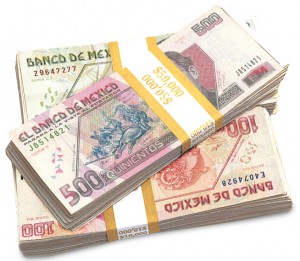
Mexico, like many places around the world, has numerous immensely imaginative one-liners to characterize corruption. Here is a sample:

  • “El que no transa, no avanza” (“Whoever doesn’t trick or cheat, gets nowhere”)
  • “No roba, pero se le pega el dinero” (“He doesn’t steal, but money sticks to him”
  • “Fulano de tal es honesto, pero honesto, honesto, honesto, ¿quién sabe?” (“So-and-so is honest; but honest, honest, honest, who knows?”
  • “Político pobre, pobre político” (“A politician in poverty is a poor politician”)
  • “No les pido que me den, sólo que me pongan donde hay” (“I am not asking for money, just to be appointed where I can get some”)
  • “Vivir fuera del presupuesto es vivir en el error” (“To live outside the federal budget is to live in error”)
  • “Amistad que no se refleja en la nómina no es amistad” (“A friendship that is not reflected in the payroll is no friendship at all”)
  • “Con dinero baila el perro, si está amaestrado” (“Properly paid and trained, a dog will dance”)
  • “No les cambies las ideas, cambiales los ingresos” (Don’t bother to change their ideas, just change their incomes”)

Source: Manana Forever?: Mexico and the Mexicans


Ciudad Juárez

February 26, 2009 | by Charlie Edwards | More on Conflict and security, Economics and development | One comment

At the end of last year I offered ten foreign policy predictions for 2009.  The first prediction was about Mexico:

The world’s leading narco state will, unnoticed, dissolve into total chaos destabilising the surrounding region.

In a early January 2009 John Robb suggested that Mexico would be an essential security threat to the United States:

The narco-insurgency in the northern provinces morphs into a national open source insurgency with thousands of small groups all willing to fight/corrupt/intimidate the government. Many, if not most, of these groups will be able to power themselves forward financially due to massive flows of money from black globalization. The result will be a diaspora north to the US to avoid the violence.

Since the beginning of 2009 more than 1,000 people have been killed in drug violence. In 2008 6,290 people were killed, double the 2007 death toll.

Since 1993 the City has been known for the violent deaths of hundreds of women – ‘las muertas de Juárez’ (The dead women of Juárez). According to Amnesty International , since February 2005 more than 370 bodies have been found, and over 400 women were still missing. Most of the cases remain unsolved.

In the next three weeks the Mexican Government is sending up to 5,000 new troops and federal police to the country’s most violent city, Ciudad Juárez , where law and order is on the brink of collapse.


Get us out of this mess…

January 21, 2009 | by David Steven | More on Climate and resource scarcity, Economics and development, Global system, Key Posts, London Summit | No comments

I’ve been in Japan today, speaking at ‘Reforming International Institutions – Meeting the Challenges of the 21st Century’,  a seminar organized by the United Nations University and the British Embassy in Japan.

You can download my talk here (with pictures, references etc) – or the text only is available below the jump. There’s a webcast too.

Headlines:

  • It’s going to be a tough year. The financial meltdown has a long way to go, and the downturn is risking turning into a global depression.
  • Trade is a bell wether. Protectionist pressures are already on the rise. If they gain traction, take that as a warning of a wider loss of confidence in global institutions.
  • The unravelling of global economic imbalances could prove corrosive to the international order. If countries start to devalue to protect exports, expect a tit-for-tat dynamic to kick in.
  • Scarcity issues (energy, water, land, food, atmospheric space for emissions) remain the key medium term driver of global change. Commodity prices will spike again as soon as there’s recovery.
  • The downturn has stemmed the uncontrolled growth of emissions, but also lessened the chance of a robust global deal on climate.
  • Economic bad times could well drive increased conflict. A major new security threat might be the fabled black swan – hitting just when the global immune system is already overloaded.
  • If we experience a long crisis (or a chain of interlinked crises), we are likely to see either a significant loss of trust in the system (globalization retreats), or a significant increase in trust (interdependence increases). 
  • You need to stretch time horizons to get the latter – shared awareness (joint analysis of risks and challenges), as a basis for shared platforms (loose coalitions of leaders), which can lobby for a shared operating system (a new international institutional architecture).
  • 2009 sets a challenging agenda for the G20 (financial reform and economic recovery – but framed by a broader vision on climate, resources, security etc.)…
  • …the G8 (caucus of rich countries able to tee up Copenhagen and kick start development assistance if developing countries begin to teeter)…
  • …the UN (especially Ban Ki-Moon’s proposed high level ‘friend’s group’ on climate, but also as a fora for getting to grips with scarcity issues)…
  • and the Bretton Woods institutions and the WTO (first of all ensuring they keep their heads above water, then looking to ‘save globalization from itself’).
  • Oh and be ready for the backlash – people are angry and rightfully so, but that may well lead us down some populist blind alleys.

(more…)


More on cash incentives for AIDS prevention

January 15, 2009 | by Mark Weston | More on Africa, Economics and development | No comments

Last May I wrote about a World Bank scheme to pay Tanzanians to test negative for sexually transmitted infections (a proxy for HIV/AIDS), and about the positive effects on health of Mexico’s Oportunidades conditional cash transfer programme (South Africa’s pension scheme has also had beneficial health impacts, as have programmes to pay US drug users not to inject).

A new study by Rebecca Thornton lends further support to the idea that financial incentives should play a part in HIV prevention. In a randomised trial of over 2,000 Malawians, she gave some participants money in return for testing for HIV and finding out their results. Those receiving the cash were on average twice as likely to turn up to be tested as those left empty-handed. Even pretty small sums, amounting to a tenth of a day’s wage, had a significant effect on the likelihood of getting tested.

Unfortunately, Ms Thornton also found that being tested didn’t have much impact on sexual behaviour (though several other studies have found that knowing you’re HIV-positive makes you less likely to indulge in unsafe sex). Still, cash incentives could be used to persuade the reluctant to adopt other preventative measures, like male circumcision, condom use or, as the World Bank hopes, to find their own ways of staying negative.

H/T Chris Blattman.


Predictions for 2009: we count our chickens before they’re hatched. Literally.

January 3, 2009 | by Richard Gowan | More on Climate and resource scarcity, Global system, North America, Off topic | No comments

Charlie has got some debate going with his ten predictions for 2009, and I’m not going to try to rival it.  But after a year of following food prices unusually closely, I’ve decided to go where even Alex Evans has not gone before in an effort to tell the future: the official US Poultry Outlook Report – December 2008.  And no, this isn’t about avian flu.  It’s about how the global downturn is going to create a rift between increasingly internationalist turkey farmers and isolationist, America-first chicken and egg producers.  Feathers will fly!

Let’s start with chickens (to the initiated, “broilers”).  For the first nine months of last year, production was growing strongly.  But as food prices slumped over the last few months, so did the number of “chick placements” – which I assume is code for “fattening the little critters up in a big shed until they can’t walk”:

Over the last 5 weeks (8 November to 6 December, 2008), the number of chicks placed for growout averaged 7.4 per cent lower than for the same period in 2007. With uncertainties about the domestic and world economies, the trend of year-over-year declines in chick placement is expected to continue well into 2009. With smaller chick placements forecast, the estimates of broiler meat production have been adjusted downward in fourth-quarter 2008 and in the first three quarters of 2009.

Who are we going to blame for this? Foreigners. Unless they like brown meat:

All the uncertainties in the global economy have combined to sharply reduce the demand for broiler exports . . . but declining exports may be slightly mitigated by lower prices for leg quarters, the primary export.

So expect the chicken farming lobby to turn inwards. Their disinterest in foreign affairs will only be compounded by increasing imbalances in the egg market:

Shipments of all shell eggs and egg products in October totaled 17.9 million dozen, down 13 per cent from the previous year. Much of the decline is due to lower shipments to Mexico and Hong Kong.

But it’s all very different on the turkey front. There’s a glut of the damn things – more and more are being put into cold storage – and production is expected to slow  as a result. With supply higher than demand, the U.S. needs to offload large quantities of its national bird. Fortunately, there are proven markets available:

Turkey exports remained very strong in October, totaling 71.8 million pounds, up 36 per cent from the previous year. Much of the increase in October’s turkey exports was due to higher shipments to the largest markets — exports to Mexico, Canada, and the combined China/Hong Kong markets were all up considerably from the previous year.

So that’s good news… but wait a minute! Not only is China propping up the U.S. economy by buying vast quantities of American bonds, but now we discover that it will start underwriting the turkey industry? What if Beijing stopped buying? Even Mexico slapped a temporary ban on birds from some U.S. plants just before Christmas on health grounds.  And last Tuesday Russia demonstrated its resurgent nationalism by slashing its total poultry import quota from the U.S. by 1.25 million metric tons to 952,000 metric tons.  So here’s my first big question for 2009: can the U.S. poultry industry adapt to a multi-polar world?

Next week: a post in which I explain the new world order by tracking trends in the price of tea-leaves.


Ten foreign policy predictions for 2009*

December 29, 2008 | by Charlie Edwards | More on Global system, Key Posts | 4 comments

  1. Mexico: The world’s leading narco state will, unnoticed, dissolve into total chaos destabilising the surrounding region.
  2. Middle East: February elections in Israel will see Binyamin Netanyahu being voted in while President Mahmoud Ahmadinejad will be voted out in Iranian elections in June.
  3. Asia: H5N1 will return with a vengeance.
  4. Bosnia: A growing culture clash between conservative Islam and the country’s avowed secularism will result in an increase in violence in the country.
  5. Africa: Robert Mugabe will be assassinated.
  6. UK: There will be no election in 2009.
  7. Turkey: Prime Minister Recep Tayyip Erdogan will abandon further attempts to join the European Union and instead turn East and focus on regional diplomacy.
  8. Iraq: Elections will be relatively peaceful in much of the country.
  9. Somalia: The US or France will be drawn into a short, intense ground war in the South West of the country.
  10. Afghanistan: In May Britain will increase the number of troops in the country. In October a European deal with the Obama administration will see France, Germany and Italy do the same.

* I will happily blog when these predictions are proven wrong.


A Bretton Woods II worthy of the name

November 13, 2008 | by Alex Evans | More on Climate and resource scarcity, Cooperation and coherence, Global system, London Summit | One comment

Ahead of this weekend’s G20 summit, David and I have published a short paper entitled A Bretton Woods II worthy of the name.  Key points:

- The summit is unlikely to be able to live up to its billing.  Leaders do not yet understand the nature of the problem well enough to be able to implement viable solutions.  However, the problem is more fundamental than a simple lack of shared awareness. 

 - History suggests that leaders will only think the unthinkable on institutional reform once the challenge they face has really hit rock bottom. But history also suggests that we are wrong to think that the worst of the crisis is now past, given that many past banking crises have taken five years or more to unravel.

 - Bretton Woods 1 looked across the whole international economic waterfront in 1944, while this weekend’s summit will be much more narrowly focused.  Leaders will make a big mistake if they try and tackle finance in isolation, given the growing impact of resource scarcity, and that 2009 is supposed to see another ambitious global deal – on climate.

 - We need to recalibrate what we expect from globalization through a serious debate about subsidiarity. Where has globalization gone too far, too fast? Where do we need more integration at a global level? These were exactly the questions that preoccupied Keynes in 1933, when he weighed the relative benefits of global versus local across a range of variables.  We need a similar debate today as a precursor to serious international economic reform.

 - Leaders need to extend their horizons in (at least) five directions: onto longer time scales; beyond financial regulation into wider resource scarcity challenges; into other international processes, especially climate; towards grand bargains with emerging powers; and beyond government, to non-governmental networks.

Full version after the jump, or better yet here’s the pdf.

(more…)


Summits, Panels everywhere – but to what end?

October 24, 2008 | by Alex Evans | More on Cooperation and coherence, Economics and development, Global system, London Summit | No comments

We are now officially beginning some sort of post-credit crunch global governance feeding frenzy.  We now have the following to look forward to:

- The report of a new High Level Commission on modernisation of the World Bank, chaired by former President of Mexico Ernesto Zedillo;

- A UN General Assembly task force on the global financial system, chaired by Joseph Stiglitz (composition and terms of reference to be announced on 30 October);

- An EU summit on the financial crisis and reform of global financial institutions on 7 November, to prepare for…

- A G20 summit on international financial institution reform in Washington DC on 15 November (though no-one seems to have told the G20 secretariat);

- A UN Financing for Development summit from 29 November to 2 December – it’s been in preparation since last year, but Ban Ki-moon has now suggested turning it into a UN summit on the financial crisis, in NYC rather than Doha as planned (Ban says:

“I strongly believe that holding the summit at the United Nations, the symbol of multilateralism, will lend universal legitimacy to this endeavour and demonstrate a collective will to face this serious global challenge…”)

I make no claim to this being a comprehensive list (and will add to it as I find more baubles to hang on the tree).  But it all invites the question: how much is really going to be achieved through all this pannelling and summitry?  As Eurodad, the civil society network on debt relief, notes on its website:

Several meetings that Eurodad staff have had in recent days reveal that senior European policy makers have few precise reform proposals for this summit meeting and have not started negotiating a common EU position. Indeed smaller European countries are unhappy that they will be excluded from the 15 November meeting. The summit – with its extravagant “Bretton Woods II” billing – may reveal a very dangerous gap between expectations and delivery,

Too right.  Over the summer, there were no fewer than three summits (FAO; G8: WTO) that claimed in advance that they were riding to the rescue on food prices, and which then failed to deliver anything interesting.  Now it looks like we’re about to do the same on the credit crunch…

Update: Eurodad have produced a helpful FAQ on the ‘Bretton Woods II’ summit – download it here. Thanks to Alex Wilks.

Update 2: David and I have published a briefing paper on the Summit.


What the credit crunch means for multilateralism

October 22, 2008 | by Alex Evans | More on Cooperation and coherence, Influence and networks | No comments

If you haven’t read it already, World Bank President Bob Zoellick’s speech on multilateral reform earlier this month is definitely worth a read.  One of best nuggets in it is his call for “a Facebook for multilateral economic diplomacy” – the rationale for which goes like this:

The G-7 is not working.  We need a better group for a different time. The G-20, though valuable, is too unwieldy in moving from discussion to action. We need a core group of Finance Ministers who will assume responsibility for anticipating issues, sharing information and insights, exploring mutual interests, mobilizing efforts to solve problems, and at least managing differences.

For financial and economic cooperation, we should consider a new Steering Group including Brazil, China, India, Mexico, Russia, Saudi Arabia, South Africa, and the current G-7. Such a Steering Group would bring together over 70 percent of the world’s GDP, 56 percent of world population, 62 percent of its energy production, the major carbon emitters, the principal development donors, large regional actors, and the primary players in global capital, commodity, and exchange rate markets. 

But this Steering Group would not be a G-14.  We will not create a new world simply by remaking the old.  It should be numberless, flexible, and over time, it could evolve.   Others may be added, especially if their rising influence is matched by a willingness to help shoulder responsibilities.

This new Steering Group should meet and videoconference regularly to foster group responsibility.  The Deputies should have frequent and informal discussions.  An active network of bilateral consultations within and beyond the group will support it.  We need a Facebook for multilateral economic diplomacy.

It’s a timely reminder that there’s no hard and fast rule to say that multilateral cooperation has to revolve around formal multilateral organisations - and especially refreshing to hear this coming from the head of the World Bank.  (And yes, he does have a Facebook page, since you wonder.)

Responses to the financial crisis over the last few weeks seem to bear out Zoellick’s point.  Although multilateral cooperation has been central, multilateral organisations haven’t been: the IMF, for example, has been largely absent from the main action, and while the EU managed in the end to be at the forefront of marshalling a collective response, it was the Council of Ministers – not the Commission – that pulled it all together.

In this light, it’s perhaps ironic that while Gordon Brown has come to be seen as one of the main organisers of this non-organisationally-based but nevertheless fundamentally multilateral crisis response, his stated vision for multilateral reform is very organisationally focussed, what with emphasis on a new Bretton Woods, an enhanced early warning role for the IMF and so on.


Monday’s map: China’s 1.3 Billion people

October 13, 2008 | by Charlie Edwards | More on Off topic | No comments

Comparisons below:
1. Guangdong (113 million) Germany plus Uganda (3)
2. Henan (99 million) Mexico
3. Shandong (92 million) Philippines
4. Sichuan (87 million) Vietnam
5. Jiangsu (75 million) Egypt
6. Hebei (68 million) Iran
7. Hunan (67 million) France
8. Anhui (65 million) Thailand
9. Hubei (60 million) U.K.
10. Guangxi (49 million) Burma/Myanmar

Brought to you courtesy of the ever excellent Strange Maps


Developing countries are not shielded from the global financial crisis

October 12, 2008 | by Leo Horn | More on Africa, Conflict and security, Economics and development, Global system | One comment

So far, many observers and experts point out, developing countries seem to be holding out quite well amidst the global financial turmoil. In reality the current global financial crisis poses multiple and profound risks to development, which I will briefly outline.

Finance ministers from 24 developing countries (the Group of 24, or ‘G-24’) meeting last Friday at the IMF, noted that:

“many emerging markets and developing economies are not immune to the spillovers of the ongoing global financial crisis”

and that:

“preventing macroeconomic volatility from financial spillovers and sustaining continuous growth were key priorities for developing countries”

See the G-24 public communiqué here.

There are several ways in which the global financial crisis can impact on development. Impacts will be highly country-specific. Key factors include:

  1. Cuts in international development aid – Jakaya Kikwete, President of Tanzania and Chairman of the African Union, expressed his ‘deep concern’ about the financial crisis dampening rich countries’ commitment to development aid (see news report here). And for good reason: development aid tends to be strongly pro-cyclical, in other words a nation’s generosity to other nations tends to be proportional to its own good fortunes.
  2. Reduced access to international financial capital markets – The impact will likely be bigger for middle-income countries and some emerging markets (excluding China, given it is a super high saver). Much of sub-Saharan Africa had limited access to international private capital to start with, and will therefore not be strongly affected by this.
  3. Possible reversals in capital inflows to developing countries – due to the global credit crunch and as investors’ appetite for risk abates.
  4. The spread of stock market turbulence to emerging markets – in one day last week, markets in Brazil, Mexico, South Africa and Turkey plunged 10%.
  5. Downturn in global demand for developing country exports.
  6. Postponement of large investment projects. There is emerging evidence that large investment plans (e.g. in India’s power sector) are being delayed or cancelled as turbulence in capital markets undermine prospects for raising funds.
  7. Remittances will be impacted by the economic downturn, as well as inflation and a weak dollar. See a recent news report on how remittances to the Caribbean are being hit.

It is of course unrealistic to expect that developing countries can be wholly insulated from the global financial crisis. However, the one very powerful instrument that rich countries do have at their disposal to help keep development on track is aid. A cutback in aid at this point can have severe impacts, as high food and oil prices justify increases in aid. Aid will be needed for countries with reduced sources of revenue and finance, as social expenditures are typically the first to get cut when fiscal resources tighten. Emergency support should be targeted to countries that are fiscally highly vulnerable (the IMF has identified 22 such countries).


Palin brushes up foreign policy credentials

October 10, 2008 | by Alex Evans | More on North America, Off topic | No comments

According to the Onion:

ORLANDO, FL—Republican vice presidential nominee Sarah Palin sought to silence those who have criticized her lack of foreign affairs experience Tuesday by announcing plans for a weeklong, 10-nation tour of Walt Disney World’s Epcot.

According to Palin, the trip—her first past Frontierland—will include speaking engagements at Norway’s famous Viking ride, sausages at Germany’s Kaufhaus, and, time permitting, a fact-finding mission to Future World.

“This ambitious trip should finally demonstrate that I am ready to assume the vice presidency, whether by standing in long lines at Morocco’s Tangierine Café or by sitting down face-to-face with Mexico’s Three Caballeros,” Palin announced during a campaign stop outside a Chinese restaurant in Tulsa, OK.

“All of our neighbors deserve good diplomacy, from the Universe of Energy down to the French pavilion.” Palin also promised a visit to the American Adventure exhibit before returning home, adding that she hoped to learn more about her own nation and the diverse peoples within.


Sarkozy’s financial summit proposal

September 24, 2008 | by Alex Evans | More on Cooperation and coherence, Europe and Central Asia, Global system, Influence and networks | No comments

Over at the UN in New York, where it’s the annual jamboree that is the General Assembly, Nicolas Sarkozy has been calling on world leaders to hold a summit later this year on building a “regulated capitalism”.  Four thoughts:

1) if this summit were to go ahead, it would mark the continuation of a trend towards head of state / government level summits on specific issues (as opposed to gatherings that cover a whole range of foreign policy issues, like the G8 or the Security Council). Earlier this year heads of government turned out in force for the FAO food summit; last year, Ban Ki-moon got a good turn out for his high level event on climate change at the UN.

But there’s only value in getting heads engaged if a) their involvement is needed in order to join up the dots between different areas of ministerial or department responsibility within their goverments (e.g. cross-sectoral bargaining that involves energy, climate and trade all at once), or b) their political clout is needed to forge a deal.  I’m not sure that either of those conditions applies here – in which case, wouldn’t it make more sense to leave such a summit to finance ministers?

2) Sarkozy also said at a press conference yesterday that “we cannot wait any longer to turn the G8 into the G13 or G14, and to bring in China, India, South Africa, Mexico and Brazil”.  Interesting to see this idea reviving; the scale of the current crisis (‘perfect storm’ etc.) might appear to militate in favour.  But as ever, the big questions are less over who would be around the table and more about what it would do, how it would work and – above all – whether it would be any more effective than the G8 (which hasn’t achieved very much lately).  More on this in a paper I wrote on new global leaders’ forums a while back.

3) While Sarkozy knows he wants a summit, it’s also clear that – so far – he doesn’t have any specific proposals for multilateral action.  You can bet this will cause a frisson or two at Number 10, given that Gordon Brown does have a set of proposals for international financial reform, but so far lacks a coalition to push them.  There might be potential for France and the UK to team up quite effectively here, not least given that Sarkozy will have recognised that without at least one major financial centre involved front and centre, his idea’s dead in the water (n.b in that regard that Sarkozy mooted London as a possible venue for the summit, along with NYC, Paris and Brussels).

4) Whether Brown’s proposals are the right ones to deal with the current crisis is, of course, a separate question.  Looking at them again, the main impression is of the lack of specificity: calling for a “common approach to handling major global market disruptions”, a “clearer, more authoritative watchdog” or “common principles, shared analyses and information and collaborative management of crises” is all very well, but if there was ever a case of the devil being in the detail, this is it.  (As for his calls for a global early warning system for financial crisis – by all means, but is now really the time to be thinking about that?)

It’s good to see that someone’s asking the big questions about long term prevention and looking to facilitate a serious high level conversation about where we go from here, and the UK should certainly get involved and think seriously about offering to host.  But it’s way too soon to be thinking about shared operating systems or even shared platforms at this point: the key tasks now are a) to put out the immediate fire and then b) to build up shared awareness of what’s happened, why, and what we want to achieve as we consider a new financial architecture.

(For explanation of shared operating systems, platforms and awareness, see here.)


Hurricane Gustav

August 30, 2008 | by Charlie Edwards | More on Conflict and security, Off topic | No comments

Hurricane Gustav has already swept through Haiti, the Dominican Republic and Jamaica. After Cuba, its projected path will take it over the Gulf of Mexico, before arriving on US shores. New Orleans has already begun a mandatory evacuation for coastal districts and parishes.

You can follow preparations for Gustav on the the Red Cross’ Twitter feed.

A wikipedia page for Gustav (2008) was created today and is being regularly updated.

The Eye on the storm blog is also offering a running commentay.

Update 1: The Gustav Information Center has been created for coordinating volunteer knowledge-sharing related to Hurricane Gustav.

Update 2: Predicted route of Gustav has been updated.

Update 3: New predicted route.


Virtual thirst

August 20, 2008 | by Alex Evans | More on Climate and resource scarcity | 3 comments

Full marks to WWF for their report on virtual water use today, which finds that when imports of virtual water – the water used to grow or manufacture goods that are then imported into the UK, sometimes from severely water-stressed countries – each Briton uses some 4,645 litres, making the UK the sixth largest net importer of water in the world.  Only 38% of the UK’s net water use actually comes from Britain’s own resources, the report adds.  (Press release; report.)

Virtual water’s a handy concept, not least in that it shows up where consumers’ real water impact takes place.  Turning off the tap while brushing one’s teeth is all very well, but if you really want to have an impact, go vegetarian: here’s the amount of water it takes to produce selected foods:

1 kg of potatoes – 500 litres

1 kg of wheat – 900 litres

1 kg of rice – 1,900 litres

1 kg of poultry – 3,500 litres

1 kg of beef – 15,000 litres

(Source: the excellent Atlas of Water. Buy one today.) Agriculture’s easily the world’s largest consumer of water, too: it accounts for 70% of global water use, compared to 20% for industry and 10% for the domestic sector.

In case you wondering, WWF says the top 5 net importers of virtual water are Brazil, Mexico, Japan, China and Italy.  And the top 5 exporters? The USA, Australia, Argentina, Canada and Thailand.  (Sixth is India, where water tables are plummeting.)


URBEINGRECORDED » Discontinuity & Opportunity in a Hyper-Connected World
Great discussion of complexity and network theory and its relevance to global risks, from Chris Arkenberg

The Emissions Gap Report
This publication aims to assess the following questions: are countries’ pledges of action collectively consistent with and, if implemented, likely to achieve the 2˚C and 1.5˚C temperature goals? If not, how big is the gap between emission levels consistent with these temperature goals and the emissions expected as a result of the pledges?

The Spectator runs false sea-level claims on its cover
These claims rely on misinterpretations of scientific data so grave that even an arts graduate such as Fraser Nelson should have been able to spot them.

Europe’s Insult Diplomacy - Infographic
British Prime Minister David Cameron called French President Nicolas Sarkozy “a hidden dwarf” as part of a joke told to a journalist. German Chancellor Angela Merkel referred to Sarkozy as “Mr. Bean,” while Sarkozy called her “La Boche,” or the Kraut. Spanish Prime Minister José Zapatero is “too pink” because of the high proportion of women in his cabinet, said Italian Prime Minister Silvio Berlusconi. And Berlusconi’s opinion of the euro? “A disaster,” he said, that has “screwed everybody.”

Solar Power's Good News
The White House has challenged the solar industry to produce clean electricity at $1 per watt. It has also set a national goal to achieve 80 percent clean energy use by 2035…The good news is that researchers are racing toward that goal at an impressive rate.

BBC News - Viewpoint: Is the alcohol message all wrong?
"The effects of alcohol on behaviour are determined by cultural rules and norms, not by the chemical actions of ethanol."

Something's Happening Here - NYT - Tom Friedman
When you see spontaneous social protests erupting from Tunisia to Tel Aviv to Wall Street, it’s clear that something is happening globally that needs defining

Foreign Aid Set to Take Hit in U.S. Budget Crisis - NYTimes.com
America’s budget crisis at home is forcing the first significant cuts in overseas aid in nearly two decades

Israel - Adrift at Sea Alone - NYTimes.com
Tom Friedman bemoans "the most diplomatically inept and strategically incompetent government in Israel’s history"

Eurozone: A nightmare scenario - FT.com
How it could all go pear-shaped - your cut-out-and-keep flow chart guide

Sharp fall in poor countries' dependency on foreign aid says ActionAid report
Aid dependency among 54 of the world’s poorest countries has declined by a third over the last decade, according to a new report from ActionAid.

World environment programs in budget crosshairs | Reuters
Global conservation programs are prime targets for budget-cutting: they sit at the crossroads of two things Americans dislike spending money on, aid and environment.

Attack of the Superweed - BusinessWeek
widespread use of Roundup has led to the evolution of far-tougher-to-eradicate strains of weeds

Jon Stewart Says Rick Perry Is the Candidate Republicans Want, and Deserve
Laugh out loud funny

Global reach is the prize at Busan - Resources - Overseas Development Institute (ODI)
Jonathan Glennie and Andrew Rogerson on what you need to know ahead of the big aid effectiveness summit

When Bloggers Don’t Follow the Script, to ConAgra’s Chagrin - NYTimes.com
Ha ha ha - epic PR #fail

Obama backs down on tighter smog regulations | World news | The Guardian
In case you missed it. Yes we can...

Wikileaked cable: executions of children by US forces in Iraq
Wikileaked cable with harrowing reports of  US forces handcuffing and then killing 10 people - including children aged 5 years, 3 years and 5 months.

BBC News - Tests show fastest way to board passenger planes
The way airlines board planes turns out to be the least efficient

New sources of aid: Charity begins abroad | The Economist
"The establishment donors’ aid monopoly is finished."

Who Doomed Sarah Palin's Presidential Dream? | TPMDC
Where did it all go wrong for Sarah?

The Intergenerational Foundation
"We believe that each generation should pay its own way, which is not happening at present."

Should we have a land value tax? - MoneyWeek
Discussion of pros and cons for the UK, following an article by OECD's chief economist in Prospect

Toward a Post-2015 Development Paradigm | Centre for International Governance Innovation | Centre pour l'innovation dans la gouvernance internationale
12 new development goals are proposed to replace the MDGs from 2015 - the outcome of an IFRC / CIGI conference at Bellagio

China Gets (Needlessly) Defensive Over Famine in Africa - China Real Time Report - WSJ
Germany's Africa policy coordinator causes dispute by singling out Chinese landgrabs as a culprit in the Horn of Africa famine

Latin America: A toxic trade - FT.com
Must read broadside against probably the most stupid and avoidable public policy screw-up in recent memory: the war on drugs

The intellectual collapse of left and right - FT.com
Michael Lind on how the economic inclusion narratives of centre left and centre right are simultaneously imploding - must read

Julia Gillard back to rock-bottom: Newspoll | The Australian
Bad news for supporters of green taxes and decisive action on climate change

Oxfam’s looking for a new Head of Research
A plum role is up for grabs

The global crisis of institutional legitimacy | Felix Salmon
"Our hearts want government to come through and save the economy. But our heads know that it’s not going to happen."

UBS' George Magnus On Marxist Existential Crises And The "Convulsions Of A Political Economy" | ZeroHedge
Not every day you see investment banks publishing detailed analysis of Karl Marx

Food Prices Could Hit Tipping Point for Global Unrest | Wired Science | Wired.com
New quant research on thresholds over which high food prices cause riots

Ambassador Locke Picks Up His Own Coffee, Gains 'Hero' Status Among Chinese : The Two-Way : NPR
Some pictures of the brand new U.S. ambassador to China are causing quite a stir.

Jon Stewart | Ron Paul | Michele Bachmann | Mediaite
Jon Stewart breaks down the state of play on the Republican Presidential race

The Bucky-Gandhi Design Institution › When?
Some properly out of the box thinking from Vinay Gupta. Must-read.

England’s riots: If the UK were a fragile state… | Dan Smith's blog
By the head of a leading peacebuilding NGO

Post-Traumatic Stress Disorder From 9/11 Still Haunts - NYTimes.com
At least 10,000 New Yorkers still have PTSD from 9/11

The unlikely social network fuelling the Tottenham riots « The Urban Mashup Blog
Not Twitter, not Facebook but.... Blackberry Messenger

Mapping world food price volatility | Nourishing the Planet
Clickable map of global food price hotspots

Will the 2012 Earth Summit be a flop? > From Poverty to Power
Great summary of the state of play on Rio 2012 from Oxfam's Sarah Best

Articles & Publications
Sustainable Development Goals – a useful outcome from Rio+20?

Recent months have seen increasing interest in the idea that Rio+20 could be the launch pad for a new set of ‘Sustainable Development Goals’ (SDGs).  But what would SDGs cover, what would a process to define and then implement them look like, and what would some of the key political challenges be? This short briefing [...]

Creating Consensus on a post-2015 framework for development

Any global framework for development which is agreed after 2015 will be a political deal between states. This paper looks at recent trends in policy and politics in emerging economies and traditional donors to assess where a consenus might lie. It suggests some principles for a post-2015 agreement which emerge from recent policy developments

A post-2015 Global Development Agreement: why, who what?

Paper from ODI and UNDP, authored by Claire Melamed and Andy Sumner, summarising the evidence on the impact of the MDGs, and looking at current trends in poverty and in global governance that will affect the shape and the scope of any future agreement on global development.

Resource Scarcity, Fair Shares and Development

Why resource scarcity will be a game changer for global justice agendas, and what aid donors, NGOs and other development opinion formers need to do about it. WWF / Oxfam report by Alex Evans.

Making Rio 2012 Work: Setting the stage for global economic, social and ecological renewal

The Rio 2012 sustainable development summit is at risk of being the latest in a long line of damp squibs on environmental multilateralism – but could still make real progress, if it focuses on greening growth and building resilience to shocks and stresses, and above all faces up to the issues of fair shares that arise in a world of limits.

Governance for a Resilient Food System

How national and international governance systems need to be reconfigured to meet the challenges of food security in a world of tighter supply and demand balances and increasing volatility. Report for Oxfam’s new Grow campaign by Alex Evans. (May 2011)

Running out of everything: how scarcity drives crisis in Pakistan

Article on scarcity of resources in Pakistan and what it means for the country.

Economics for a world with limits

Text of speech by Alex Evans to Institute for New Economic Thinking annual conference at Bretton Woods; the YouTube video is here. (April 2011) Download Speech

Unscrambling the price spike

Article published on China Dialogue on reasons for the new food price spike, including potential implications of the current drought in China. (February 2011) Download Article

2020 Development Futures

Eight critical uncertainties for development over the next decade, and ten recommendations for what ActionAid – who commissioned this report – should do to prepare for them

American Foreign Policy in an Age of Uncertainty

Article published in World Politics Review on current American foreign policy

The World in 2020 – Geopolitical and Trends Analysis

Report asking how organisations can prosper in what will be a turbulent period for world order

Globalization and Scarcity

Center on International Cooperation report on what forms of multilateral cooperation are needed to manage scarcity of resources

Resource Scarcity, Climate Change and the Risk of Violent Conflict

Background paper on whether resource scarcity and climate change will cause increased violent conflict

Organizing for Influence: UK Foreign Policy in an Age of Uncertainty

Chatham House report on how the UK’s new coalition government should upgrade and reform the way Britain conducts foreign policy

The Long Crisis Seminar

Introductory remarks by David Steven at a Brookings Institution seminar on risk and resilience in the global system (March 2010)

Stop Betting the House talk

Talk given by David Steven at Gresham College on risk and resilience in the UK housing market, as part of a Long Finance Roundtable meeting (March 2010)

Time to Stop Betting the House: a response to the FSA

Report by David Steven in response to the FSA’s Mortgage Market Review

Confronting the Long Crisis of Globalization: Risk, Resilience and International Order

Brookings Institution report by Alex Evans, Bruce Jones and David Steven on how globalisation could fail – and how it could be made more resilient. Published to coincide with the 40th anniversary World Economic Forum in Davos.

Hitting Reboot – where next for climate after Copenhagen

Report by Alex Evans and David Steven analysing the post-Copenhagen context on climate change, including a proposed 12 point action plan. Written for the Brookings Institution / NYU Center on International Cooperation Managing Global Insecurity programme.

Climate Change and Hunger: Responding to the challenge

World Food Programme report on the state of the science on what climate change means for hunger, plus policy recommendations. Authored by IPCC Impacts Chair Martin Parry with Mark Rosengrant, Tim Wheeler and Global Dashboard’s Alex Evans (December 2009)

Scarcity, security and institutional reform

Presentation by Alex Evans to a seminar organised for the UN Department of Political Affairs by the Geneva Centre for Security Policy (August 2009)

The Resilience Doctrine

Article on risk and resilience by Alex Evans and David Steven – part of a special in World Politics Review on risk and resilience in a globalized age (July 2009)

An Institutional Architecture for Climate Change

Report by Alex Evans and David Steven exploring the future international institutional requirements for managing climate change, and including three scenarios for climate institutions between now and 2030. Commissioned by the UK Department for International Development. (May 2009)

Risks and Resilience in the New Global Era

Article by Alex Evans and David Steven exploring resilience as a political agenda – part of a special edition of Renewal on the transformation of foreign policy (February 2009)

A Tale of Two Cities

Climate and cities think piece, co-authored by David Steven and the British Council’s Peter Upton (29 January 2009)

The Feeding of the Nine Billion

Chatham House pamphlet by Alex Evans on how scarcity issues will shape the outlook for global food production, and the actions that policymakers need to take at the international level and in developing countries to ensure food security in the 21st century

2009 – A Year for International Reform

Paper by David Steven, presented to “Reforming International Institutions – Meeting the Challenges of the 21st Century,” a conference organized by the United Nations University and the British Embassy in Tokyo (Jan 2009).

Food prices: what next?

Speech by Alex Evans at the Tomorrow Network (25 November 2008)

A Bretton Woods II Worthy of the Name

Paper by Alex Evans and David Steven on financial reform and wider multilateralism, published ahead of the G20 ‘Bretton Woods II’ Summit (November 2008).

The Future of Resilience

Speech by David Steven to RUSI Conference on UK Resilience (8 October 2008)

Towards a Theory of Influence

Chapter by Alex Evans and David Steven in the Foreign & Commonwealth Office publication, ‘Engagement: public diplomacy in a globalised world’ (July 2008). Download Chapter

Multilateralism for an Age of Scarcity

Draft report by Alex Evans exploring multilateral system reforms needed in order to manage resource scarcity issues more effectively. The final version will be published in early 2010 (July 2008)

Scarcity issues and conflict in Africa

Speech by Alex Evans at UK Parliament (8 July 2008)

A Low Carbon World – Pathways to a Global Deal

Speech by David Steven at the UNU G8 Symposium (4 July 2008)

Climate, scarcity and multilateralism

Speech by Alex Evans to United Nations Association UK (7 June 2008)

The new public diplomacy and Afghanistan

Speech by David Steven to the UK Defence Academy’s Advanced Research and Assessment Group seminar on Strategic Communications, Public Diplomacy and Afghanistan (4 June 2008).

Technology and Public Diplomacy

Speech by David Steven to the University of Westminster Symposium on Transformational Public Diplomacy (30 April 2008).

Rising Food Prices: Drivers and Implications for Development

Briefing paper by Alex Evans, published through Chatham House’s food programme (April 2008).

Looking Forward: how do we build resilience?

Speech by David Steven to RUSI Conference on Critical National Infrastructure (16 April 2008).

Shooting the Rapids: multilateralism and global risks

Paper by Alex Evans and David Steven, commissioned by Gordon Brown and presented to heads of state at the Progressive Governance Summit (April 2008).

Beyond a Zero-Sum Game on Climate Change

Chapter by Alex Evans and David Steven, as part of the British Council’s Transatlantic Network 2020 book ‘Talking Trans-Atlantic’ (March 2008).

From Bali to Copenhagen: towards an endgame for global climate policy?

Article by Alex Evans for the Environmental Policy & Law Journal (January 2008).

Climate Change: The State of the Debate

Report by Alex Evans and David Steven, written for the London Accord (December 2007).

The Post-Kyoto Bidding War: bringing developing countries into the fold

New paper by Alex Evans on climate policy after 2012 from the Center on International Cooperation (October 2007).

Alternative CSR: the Foreign & Commonwealth Office

Chapter on the FCO from Manchester University Press’s Alternative Comprehensive Spending Review, by David Steven (September 2007).

Fixing the UK’s Foreign Policy Apparatus: A Memo to Gordon Brown

Note by Alex Evans and David Steven about how to restructure the UK’s foreign policy system in order to manage trans-boundary global risks better (April 2007).

Evaluation and the New Public Diplomacy

Talk given by David Steven at the Wilton Park conference: The Future of Public Diplomacy. Focuses on strategies to drive public diplomacy to the heart of the foreign policy armoury (March 2007).

Articles and Publications

YouTube Preview Image

Gabrielle Giffords to step down | 2 Comments

YouTube Preview Image

Oh to be in the president of Turkmenistan’s entourage… | 1 Comment

YouTube Preview Image

David Carr And Danah Boyd Share Insights | Comments Off

YouTube Preview Image

Edgar Mitchell on the Overview Effect | 1 Comment

YouTube Preview Image

Presidential debate fail | 2 Comments

More What we're watching

Key Posts
Cheap food: bad. Expensive food: terrible. Why the FAO’s glass is always empty8

It’s interesting to look back a few years – to when the world was worried that food was too cheap, not too expensive. In 2004, the UN Food and Agricultural Organization looked back on a long bear market for food: forty years in which real prices of agricultural commodities had fallen 2% per year, or [...]

How many people are hungry?3

The good news: poverty is in retreat. The bad news: hunger isn’t.  That’s the headline finding for the first Millennium Development Goal , which aims to halve the proportion of people living on less than $1.25 a day and the proportion of people living in hunger between 1990 and 2015. Great strides have been made [...]

“Freeing the entire human race from want”2

The MDGs are so over Having just been rude about one World Bank report, here’s a positive review of another – the Global Monitoring Report 2011, which the Bank produces jointly with the IMF. The GMR updates progress against the Millennium Development Goals – targets that were set as the culmination of a push throughout [...]

21 years ahead of its time5

A 1989 article on ‘the global teenager’ in Whole Earth Review was way ahead of its time in identifying the crux of what today’s youth bulge means for global change

Is it time for Sustainable Development Goals?5

The pros and cons of a new global set of Sustainable Development Goals (SDGs) – and how they might work in practice

The one book you must read over the summer9

Mark Lynas’s new book The God Species is a must-read for environmentalists

Fair shares in a world of limits: the new front line for development-

Thoughts after from a joint WWF / Oxfam seminar on resource scarcity, fair shares and development.

What the ‘powershift’ narrative overlooks on US-China relations-

The ‘powershift’ narrative about US-China relations obscures how much they have in common: unsustainable growth paths, shaky financial sectors, political sclerosis, massive inequality, reliance on imported resources and above all their status as the two principal obstacles to collective action on shared global risks.