by David Steven | May 5, 2010 | Europe and Central Asia, Global system, UK
Early today, I pointed out some of the difficulties Europe could cause David Cameron in his early months as PM (should he form either a minority government, find himself leading a coalition, or win a majority tomorrow).
But what would a positive agenda for a new Conservative (or Conservative-led) government look like on the EU, given (i) the dreadful problems facing the Euro (a debt crisis from which sterling is not immune); (ii) broader strains in global strains (fall out from the financial crisis, growing competition for resources, nuclear proliferation etc.); (iii) the Conservatives’ historic ambivalence about the European Union?
Here are six pointers for Cameron, should he become PM.
First, get stuck into the Eurozone crisis aiming for (in order of preference): (i) A strengthening of the Euro with greater sharing of economic sovereignty among Eurozone members (but with the UK left on one side); or (ii) An orderly removal of the weaker economies from the single currency.
Even on the Euro, the UK has some influence as an honest broker, given its position as an interested party, but not a full player. Cameron should adopt this role wholeheartedly – reminding British voters that the disorderly breakup of the single currency would be absolute disaster for the UK economy.
Second, recognise the severe dangers posed to the UK by a loss of cohesion in European societies.
It is tempting, but foolish, to see a breakdown in social order in Greece as only being a peripheral issue, or to fail to take seriously signs of a loss of trust between ethnic and religious groups across a number of European countries.
Maybe this is just a passing blip, but if I was Cameron I’d accept that it only makes sense to talk about a resilient nation within the context of a resilient European neighbourhood. We live in an era where social movements hop borders with ease. The last thing the UK needs is to get sucked into an era of riots, strikes and violence within its communities.
This may be a low probability/high impact threat to British national security, but we all remember a time when global economic collapse was regarded as so unlikely it wasn’t worth planning for, don’t we?
Third, pursue a vision of turning Europe into an outward-facing platform for managing global risks.
As Alex and I have argued, globalization is in the early stages of what is likely to prove a ‘long crisis’. The UK has made a one-way bet on a rules-based international order and we need to fight for our interests in this wager (even though meaningful progress on most issues is going to be hard to achieve).
The world is now shooting the rapids. The new government must be a clear and consistent voice arguing for Europeans to start looking outwards, making whatever contribution we can to charting a course through turbulent waters.
Another era of navel gazing is the last thing the EU can afford.
Fourth, accept that the development of a multi-layered Union is now inevitable, with the EU running at different speeds and on different tracks.
This could be good for the UK, if we: (i) don’t sulk on the sidelines; (ii) see that a distanced-but-engaged stance will often make us a more attractive partner (e.g. for the French, as they seek to balance German hegemony); (iii) take an extremely active leadership role on policy issues that matter most to the UK, compensating for times when we choose not to get involved.
Finally, become an intelligent advocate for subsidiarity.
It should be absolutely clear that Europe is yet to work out which issues need to be managed at European, national, or more local levels. But, so far, the Eurosceptic position on this has won few friends, coming across as unconstructive and lacking nuance to many Europeans.
But that could change if Cameron is prepared to reframe Euroscepticism as an ongoing search for a more balanced, flexible and adaptable union between European nations.
Carefully tuned, that message could resonate well with at least some of our European partners, while also helping Cameron triangulate divergent camps at home, including the pro and anti-European factions on his own backbenches.
[Read the rest of our After the Vote series.]
by David Steven | May 5, 2010 | Europe and Central Asia, UK
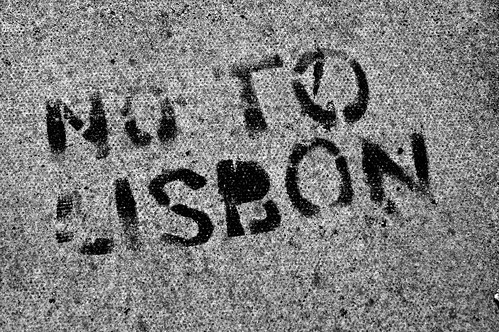
This morning sees early evidence of the difficulties David Cameron will face on Europe, if he ends up leading a minority government or has a very slim majority.
The Spanish presidency has set out proposals to amend the Lisbon Treaty in order to allow 18 additional MEPs to take up their seats (read Bruno Waterfield for background). The Conservative Party’s Eurosceptic wing sniffs an opportunity: maybe this will allow a new PM to throw the entire treaty back up in the air.
The Taxpayers’ Alliance leads the charge:
It has been widely assumed that the hope of a Lisbon Treaty referendum was dead and buried, but this development brings it back to the fore. David Cameron has always claimed that had he been in Government when the Lisbon Treaty passed through Parliament then he would have held a referendum. Will he now promise to hold a referendum on this new version of the Lisbon Treaty if he is in charge after the General Election? […]
Grasping this opportunity would be popular, strategically shrewd and – perhaps most importantly of all – honourable to the spirit as well as the letter of the Conservatives’ EU pledges. The failure to grasp it would not only be astonishingly shortsighted; it would be the final brutal betrayal of the pledges made to the British people in a general election – the election of 2005.
ConservativeHome weighs in, to great excitement in its comments, while England Expects mutters darkly about an entirely new Lisbon Treaty being ‘rammed’ through both Houses of Parliament.
This is a storm in a teacup, it seems to me – but it’s a sign, surely, of battles to come.
If he emerges from the election as PM, I expect David Cameron will need votes from Labour and Lib Dems if he is to avoid a series of fruitless rows with the UK’s European partners.
[Read the rest of our After the Vote series.]
by Michael Harvey | Nov 5, 2009 | Economics and development, Europe and Central Asia, North America
– The former British Governor of Hong Kong, Chris Patten, explains why he’s not grumpy about the current state of international politics – perhaps an outside candidate for the role of EU Foreign Minister? Le Monde diplomatique, meanwhile, suggests that the path to Lisbon has emphasised the gap between European governments and their citizens.
– John Gapper takes a look at Warren Buffett’s $27 billion deal to buy the railroad company BNSF, and explores what the “Sage of Omaha’s” latest move says about the basis of US economic recovery. Harold James, meanwhile, assesses the current state of monetary policy following the financial crisis, suggesting that we may be heading towards “international monetary chaos”.
– Elsewhere, the Daily Beast reproduces the “lost” victory and concession speeches that Sarah Palin never gave on election night one year ago – making for interesting reading indeed.
– Finally, over at Oxfam, Duncan Green laments the familiar refrain of NGOs, international institutions and governments alike to the need for “political will” and “good governance” when trying to achieve reform. Greater investment in “political literacy” and deeper “power analysis” instead, he suggests, should underpin attempts to bring about such change.
by David Steven | Oct 11, 2009 | Europe and Central Asia
What on earth does the German government think it’s doing? According to the Sunday Times, its diplomats are briefing journalists that it trying to ensure Czech President, Vaclav Klaus, is impeached for failing to ratify the Lisbon treaty.
In recent years, Klaus has carved out quite a niche for himself, trolling other governments on climate change, European integration and a host of other issues. His latest trick is declare that Lisbon will leave the Czech republic open to legal claims from 3.5 million ethnic Germans expelled at the end of the second world war – a red line he somehow forgot to mention before now.
As he clearly hoped, other European governments have responded furiously. But the German reaction must be beyond his wildest dreams – an insane suggestion that he should be impeached on the grounds of, wait for it, high treason.
The Times has even managed to find a German diplomat dumb enough to give the following quote (whose idiocy is such that I wonder whether the paper simply made it up)::
If the president is obstructing the democratic process and opposing the decision of parliament as well as the will of the people, he is moving beyond the law and will need to face the consequences.
Assuming the quote checks out, I can’t even begin to imagine why the Germans would allow themselves to be caught so obviously bullying a neighbour.
After all, it’s not as if they don’t have form. As the Times points out, “A comparison is being drawn in Prague [between Klaus and] Edvard Benes, the pre-war Czech leader who in 1938 had to flee to Britain after refusing to cede territory to Hitler under the Munich agreement.”
by Alex Evans | Oct 4, 2009 | Europe and Central Asia, UK

Now that ratification of Lisbon has moved a big step closer (not only with the Irish yes, but also the news that Czech President Vaclav Klaus is likely to bow to pressure not to hold it up), the idea of Tony Blair being the first permanent President of the European Council is looking a lot more likely. Predictably, a large strand of liberal opinion is furious about this. As an e-petition currently being circulated has it,
In violation of international law, Tony Blair committed his country to a war in Iraq that a large majority of European citizens opposed. This war has claimed hundreds of thousands of victims and displaced millions of refugees. It has been a major factor in today’s profound destabilisation of the Middle East, and has weakened world security. In order to lead his country into war, Mr Blair made systematic use of fabricated evidence and the manipulation of information …
The steps taken by Tony Blair’s government, and his complicity with the Bush administration in the illegal programme of “extraordinary renditions”, have led to an unprecedented decline in civil liberties.
All true. But for all that, Blair is far and away our best option for the job.
(more…)
