Global Dashboard

Posts Tagged ‘Canada’

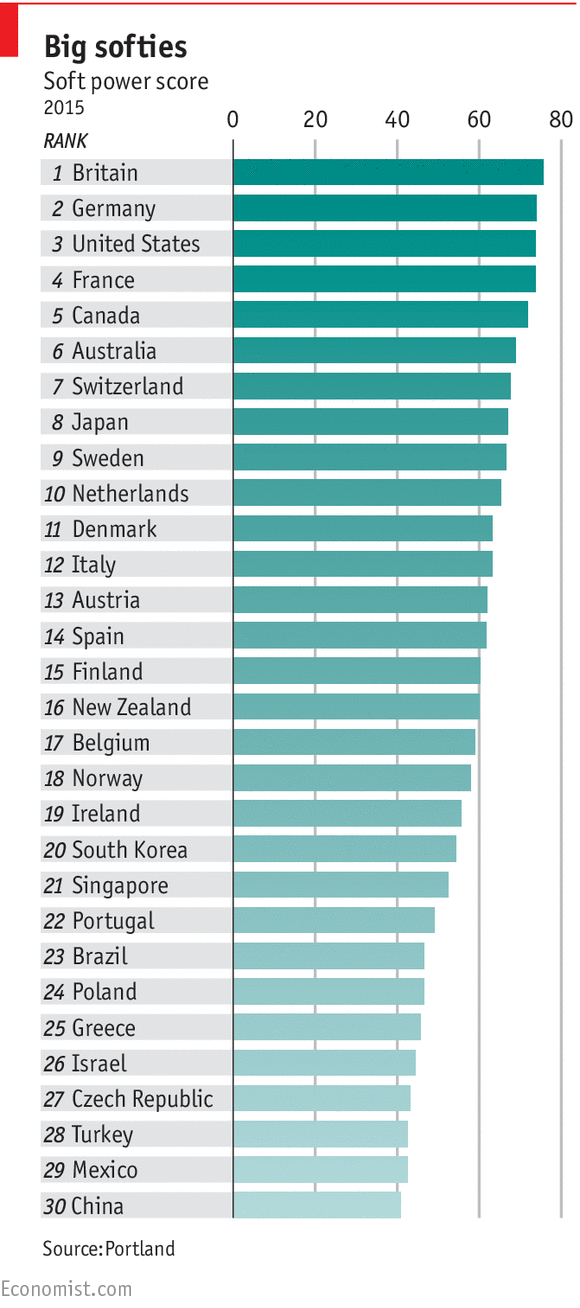
What is it with Canada?

February 13, 2010 | by David Steven | More on Cooperation and coherence, Influence and networks | 2 comments

Canadians used to think of themselves as global citizens, par excellence. Recently, though, this image has taken a battering.

Canada is now so obstructive in climate negotiations that even the Chinese government has had enough of its ‘conniving’ ways. In the midst of global economic turmoil, Canada’s main priority for the recent G7 summit was to force feed finance ministers seal meat.

And, at the Winter Olympics, it is so desperate to Own the Podium that it has  long planned to keep practise sessions for other countries to an absolute minimum in order to ensure its athletes get maximum home advantage. ”Skeleton racer Mellisa Hollingsworth will be flying down the fastest track in the world at Whistler with the benefit of 200-plus more practice runs than her rivals,” boasted one of its papers last week.

Canada was told that this policy could be disastrous, especially for the luge and for skeleton (a kind of tobogganing) where the Canadians have built a faster track than any in the world, making practise essential.  ”The speeds are going to be high up in the 100s,” warned the British performance manager. ” Therefore accidents are going happen and do happen in sports such as these. We’ve seen broken legs or even worse before for example.”

Sure enough the worst did happen, with Georgian luger, Nodar Kumaritashvili killed just hours before the opening ceremony. Charmingly, the Canadians have quickly wrapped up an investigation that blames the dead guy for the accident.

On Thursday, a BBC survey showed that Canada’s international image is beginning to take a battering:

Several countries saw sharp falls in positive ratings of Canada—in the USA the proportion rating Canadian influence as positive fell from 82 per cent to 67 per cent, in the UK from 74 per cent to 62 per cent, in Australia from 77 per cent to 72 per cent, and in China from 75 per cent to 54 per cent.  Overall, comparing views in 15 of the countries that were surveyed last year, the proportion rating Canadian influence in the world as mainly positive has fallen on average from 57 per cent to 53 per cent.

Even Canadians, the survey shows, believe the country has a less positive global influence than before. One wonders: do they care?


Eat like you’ve never heard of Alex Evans!

January 28, 2009 | by Richard Gowan | More on Climate and resource scarcity, Off topic | One comment

Alex has got a good deal of media attention for his excellent new Chatham House report on future of food crises but the Daily Telegraph got the real scoop – by making up a scare story about the death of the Sunday Roast:

Researchers at Chatham House, a think-tank, found that a recent fall in the price of butter, milk and bread was likely to be only a “temporary reprieve”.

The price hikes would hit the price of beef, pork and lamb harder because they are reared on proportionately more grain than “white meat” like chicken.

Alex Evans, the report’s author, said the likely effect would be to make Britons less reliant on beef as a core part of the nation’s diet.

“It will become more expensive,” said Mr Evans. “We are not saying people won’t be able to have a Sunday roast but we will be eating less red meat in future.”

Now, there are some kill-joys who might point out that Alex’s report doesn’t actually mention the Sunday Roast once, but Global Dashboard has an established track-record of commentary in defense of fine British food: check out Evans and Gowan on Bubble, Squeak and eels last July.  But the fact that pork prices are set to sky-rocket may explain an American internet phenomenon noted by the NYT today: a BBQ recipe going viral.

This recipe is the Bacon Explosion, modestly called by its inventors “the BBQ Sausage Recipe of all Recipes.” The instructions for constructing this massive torpedo-shaped amalgamation of two pounds of bacon woven through and around two pounds of sausage and slathered in barbecue sauce first appeared last month on the Web site of a team of Kansas City competition barbecuers. They say a diverse collection of well over 16,000 Web sites have linked to the recipe, celebrating, or sometimes scolding, its excessiveness. A fresh audience could be ready to discover it on Super Bowl Sunday.

Where once homegrown recipes were disseminated in Ann Landers columns or Junior League cookbooks, new media have changed — and greatly accelerated — the path to popularity. Few recipes have cruised down this path as fast or as far as the Bacon Explosion, and this turns out to be no accident. One of its inventors works as an Internet marketer, and had a sophisticated understanding of how the latest tools of promotion could be applied to a four-pound roll of pork.

Leaving aside the new media aspect of all this, I’d argue that Americans are wisely stuffing down bacon and sausage before the prices head back up.  If you want to make your own Bacon Explosion, the recipe’s here.  My own urge to start layering the bacon wrapping was reduced by the discovery that the outcome looks like, well, you know…


For those more interested in making a quick buck than a Bacon Copralite (google it yourself), switch over to Porkworld, Latin America’s leading swine-trade website, which naturally features quotations from one Alex Evans…


Who’ll bail out the IMF?

January 23, 2009 | by Jules Evans | More on Economics and development, Global system, Key Posts, London Summit | No comments

The IMF is in danger of running out of cash

David Cameron yesterday warned that the UK could be forced to go cap in hand to the IMF, as it did in 1976 under chancellor Denis Healey. (This, by the way, at the launch of a new programme at Demos about ‘progressive conservatism’. Et tu, Demos?)

The question is, would the IMF have the cash. Click on more to read a story I recently wrote for my mag, www.emeafinance.com, which looks at the risk of the IMF running out of money in the next 18 months, and asks what the chances are of it receiving more funds from cash-rich G20 governments (answer: slim).

(more…)


The Bush administration finally finds a treaty it likes

January 12, 2009 | by Richard Gowan | More on Climate and resource scarcity, Cooperation and coherence, Global system, North America | No comments

From the State Department (with some explanatory notes added by GD):

Statement by Secretary Condoleezza Rice
Washington, DC
January 9, 2009

January 11 marks the 100th anniversary of the Boundary Waters Treaty of 1909. We note with pride the century of cooperation with Canada in managing water quality, quantity, and environmental health along our 5,525-mile border. The Treaty also established the International Joint Commission, which has played a vital role as an independent steward of these shared resources. Comprised of Commissioners from both countries, the Commission has been an outstanding example of collaborative governance and stewardship *, facilitating cooperation, preventing and resolving water-related disputes, and approving and overseeing operation of several major dams and hydropower stations along the border.

Millions of Americans and Canadians depend on the Great Lakes-St. Lawrence River system for drinking water, trade, jobs, recreation, and more. Through the Great Lakes Water Quality Agreement and the International Joint Commission, our two nations are working diligently to restore and maintain the chemical, physical, and biological integrity of the Great Lakes Basin ecosystem.**

The Boundary Waters Treaty remains vibrant as it enters its second century. Recent International Joint Commission initiatives such as International Watershed Boards provide opportunities for local stakeholders to build networks that can prevent or resolve problems at the community level. The Treaty continues to be a model for managing shared resources***and a tribute to the enduring friendship between the United States and Canada.****

* The reference to “governance and stewardship” may signify a career State drafter trying out a few liberal, internationalist phrases so as to be ready for the next administration. Had this been drafted in 2003, it’d probably have referred to “the joint commitment of freedom-loving nations to God’s aquatic gift to mankind”.

** I’ve read this a number of times, but it does indeed appear to be a positive reference to international environmental regulation by the Bush administration. I assume they think Dick’s too busy burning stuff to get pissed about this one.

*** Well yes, it’d be easier to resolve resource conflicts if the opponent was always Canada.

**** This is most likely a coded reference to the fact that the Canadian Conservative government is one of the few regimes on earth that may actually be sorry to see the Republicans go…


Predictions for 2009: we count our chickens before they’re hatched. Literally.

January 3, 2009 | by Richard Gowan | More on Climate and resource scarcity, Global system, North America, Off topic | No comments

Charlie has got some debate going with his ten predictions for 2009, and I’m not going to try to rival it.  But after a year of following food prices unusually closely, I’ve decided to go where even Alex Evans has not gone before in an effort to tell the future: the official US Poultry Outlook Report – December 2008.  And no, this isn’t about avian flu.  It’s about how the global downturn is going to create a rift between increasingly internationalist turkey farmers and isolationist, America-first chicken and egg producers.  Feathers will fly!

Let’s start with chickens (to the initiated, “broilers”).  For the first nine months of last year, production was growing strongly.  But as food prices slumped over the last few months, so did the number of “chick placements” – which I assume is code for “fattening the little critters up in a big shed until they can’t walk”:

Over the last 5 weeks (8 November to 6 December, 2008), the number of chicks placed for growout averaged 7.4 per cent lower than for the same period in 2007. With uncertainties about the domestic and world economies, the trend of year-over-year declines in chick placement is expected to continue well into 2009. With smaller chick placements forecast, the estimates of broiler meat production have been adjusted downward in fourth-quarter 2008 and in the first three quarters of 2009.

Who are we going to blame for this? Foreigners. Unless they like brown meat:

All the uncertainties in the global economy have combined to sharply reduce the demand for broiler exports . . . but declining exports may be slightly mitigated by lower prices for leg quarters, the primary export.

So expect the chicken farming lobby to turn inwards. Their disinterest in foreign affairs will only be compounded by increasing imbalances in the egg market:

Shipments of all shell eggs and egg products in October totaled 17.9 million dozen, down 13 per cent from the previous year. Much of the decline is due to lower shipments to Mexico and Hong Kong.

But it’s all very different on the turkey front. There’s a glut of the damn things – more and more are being put into cold storage – and production is expected to slow  as a result. With supply higher than demand, the U.S. needs to offload large quantities of its national bird. Fortunately, there are proven markets available:

Turkey exports remained very strong in October, totaling 71.8 million pounds, up 36 per cent from the previous year. Much of the increase in October’s turkey exports was due to higher shipments to the largest markets — exports to Mexico, Canada, and the combined China/Hong Kong markets were all up considerably from the previous year.

So that’s good news… but wait a minute! Not only is China propping up the U.S. economy by buying vast quantities of American bonds, but now we discover that it will start underwriting the turkey industry? What if Beijing stopped buying? Even Mexico slapped a temporary ban on birds from some U.S. plants just before Christmas on health grounds.  And last Tuesday Russia demonstrated its resurgent nationalism by slashing its total poultry import quota from the U.S. by 1.25 million metric tons to 952,000 metric tons.  So here’s my first big question for 2009: can the U.S. poultry industry adapt to a multi-polar world?

Next week: a post in which I explain the new world order by tracking trends in the price of tea-leaves.


The Boyd Conference 2008

December 6, 2008 | by Charlie Edwards | More on Conflict and security, Key Posts | No comments

46°14′00″N 63°09′00″W Prince Edward Island, Canada.

I’m taking part in a roundtable on community resilience, 4&5GW and the decline of the state. The aim of the roundtable is to bring together individuals from a range of backgrounds to challenge current thinking and assumptions in our present political and societal systems.  Two presentations which I’ll be live blogging on will be Chet Richards on Mindsets and Character and John Robb on Community Resilience. There is no set agenda for the conference. This afternoon we will be running a series of open sessions… one of which is likley to be on community resilience.

If you have a question for Chet or John send me a tweet. Update: Thanks for the questions – answers will be tweeted soon. 

Update: Notes from John Robbs’ presentation after the jump + MP3 of Chet.

(more…)


A Bretton Woods II worthy of the name

November 13, 2008 | by Alex Evans | More on Climate and resource scarcity, Cooperation and coherence, Global system, London Summit | One comment

Ahead of this weekend’s G20 summit, David and I have published a short paper entitled A Bretton Woods II worthy of the name.  Key points:

- The summit is unlikely to be able to live up to its billing.  Leaders do not yet understand the nature of the problem well enough to be able to implement viable solutions.  However, the problem is more fundamental than a simple lack of shared awareness. 

 - History suggests that leaders will only think the unthinkable on institutional reform once the challenge they face has really hit rock bottom. But history also suggests that we are wrong to think that the worst of the crisis is now past, given that many past banking crises have taken five years or more to unravel.

 - Bretton Woods 1 looked across the whole international economic waterfront in 1944, while this weekend’s summit will be much more narrowly focused.  Leaders will make a big mistake if they try and tackle finance in isolation, given the growing impact of resource scarcity, and that 2009 is supposed to see another ambitious global deal – on climate.

 - We need to recalibrate what we expect from globalization through a serious debate about subsidiarity. Where has globalization gone too far, too fast? Where do we need more integration at a global level? These were exactly the questions that preoccupied Keynes in 1933, when he weighed the relative benefits of global versus local across a range of variables.  We need a similar debate today as a precursor to serious international economic reform.

 - Leaders need to extend their horizons in (at least) five directions: onto longer time scales; beyond financial regulation into wider resource scarcity challenges; into other international processes, especially climate; towards grand bargains with emerging powers; and beyond government, to non-governmental networks.

Full version after the jump, or better yet here’s the pdf.

(more…)


The financial crisis is no excuse for backtracking on climate change, au contraire

October 16, 2008 | by Leo Horn | More on Climate and resource scarcity, Global system | No comments

With a global recession looming, international efforts to curb greenhouse gas emissions may be in jeopardy, as concerns are voiced in the US, Canada and Europe about the wisdom of adopting measures that would impose an additional cost burden on already fragile economies. Such thinking is misguided, and it is dangerous. A recession may in fact ease the introduction of carbon emissions trading schemes.

At the recent EU summit in Brussels there was widespread reluctance to meet pledges all EU governments made last year to cut CO2 emissions by 20% by 2020. Eight Eastern European countries – including Poland, Hungary, Romania, Bulgaria, Slovakia, Latvia, Lithuania and Estonia — released a joint statement urging the EU to balance the wish for cleaner air against “the need for sustainable economic growth” at a time of “serious economic and financial uncertainties.” Italy threw its weight behind these countries, threatening to veto the proposed EU plans.

Likewise in the US, top power industry executives seized the opportunity to lobby for delaying carbon emissions legislation, at the recent New York Utility Conference. More dramatically in Canada, the Liberals were dealt an electoral defeat on Wednesday largely on the basis of their strong advocacy in favour of a carbon tax (see story here).

All this backtracking is akin to forfeiting the forest for the tree. Financial crises are short-term phenomena, global warming on the other hand is with us for the long haul, and the window of opportunity for addressing it is fast narrowing. The prospect of economic recession does not in any way reduce the magnitude or the urgency of the climate problem, nor does it provide any compelling reason for delaying action. Or as EU President Barroso put it:

“Saving the planet is not an after-dinner drink, a digestif that you take or leave. Climate change does not disappear because of the financial crisis.

Moreover, as David Wheeler of the Center for Global Development argues, smart carbon regulation will be easiest, not hardest, to introduce during a recession, since a slowing economy emits less, and smart cap-and-trade regulation can “lock in” this head start on emissions reduction at almost no cost during the recession. His proposal for the US is to:

• Immediately pass a cap-and-trade bill that sets the initial total limit at the pre-recession emissions level, and schedule a progressive decline in the overall limit that will achieve the needed long-run goal.
• Establish an annual auction for 100% of the emissions permits.
• Set aside a healthy share of the auction proceeds to provide a compensating rebate for every American

In this way the consumer is shielded from cost increases, and the power provider incentivised to develop less carbon-intensive energy options for the future.

It is amply clear that big emitting developing countries such as China and India will not make significant commitments to curb their greenhouse gas emissions unless the US and EU lead by example. With only about a year to go before the new global deal to replace the Kyoto Protocol is due to be reached in Copenhagen conference, the US and EU have no room to falter. More than ever, political courage and leadership is needed to ensure global efforts to address climate change are not jeopardized.


Is international trade next to seize up?

October 13, 2008 | by Alex Evans | More on Climate and resource scarcity, Conflict and security, Cooperation and coherence, Global system | One comment

Letters of Credit (LOCs) are the crucial lubricant without which the wheels of international trade cannot turn.  Here’s how John Mauldin explains them:

If you are a manufacturer of a product and want to sell to someone outside your borders, you typically require a letter of credit from the buyer before you load any cargo at a port. A letter of credit from a prime bank is considered to be proof of your ability to pay. It not only can be a source of ultimate payment, it can be a source of inventory financing while goods are in transit.

And if you are a business which is buying a product, you do not want to release money until you know the product is on the way. There are buyer’s and seller’s agents who make sure these things happen seamlessly, and world commerce had grown because of it.

Just one problem: it looks like LOCs may be no more immune from the credit crunch than any other form of credit. Here, for instance, is Canada’s Financial Post on Wednesday last week:

The credit crisis is spilling over into the grain industry as international buyers find themselves unable to come up with payment, forcing sellers to shoulder often substantial losses.

“There’s all kinds of stuff stacked up on docks right now that can’t be shipped because people can’t get letters of credit,” said Bill Gary, president of Commodity Information Systems in Oklahoma City. “The problem is not demand, and it’s not supply because we have plenty of supply. It’s finding anyone who can come up with the credit to buy.”

As Alan Beattie reported in the FT on Saturday, Brazil has now offered a blanked guarantee for all trade credit involving its companies, which will commit fully a tenth of its foreign exchange reserves.  WTO Director-General Pascal Lamy, meanwhile, has announced that he’ll convene a summit on the issue next month: here’s an excerpt from his speaking points on Friday -

The financial crisis may also be having an impact on developing country access to financing of imports and exports. As you know we have held a number of meetings on this issue at the WTO with both multilateral institutions and private banks, the last one last April, to check availability of trade financing at affordable rates. Up until then, the situation seemed to be stable with volumes and rates at normal levels. But just this week Brazil brought this issue to the forefront.

Given the deterioration of the financial landscape, and despite the welcomed announcement yesterday by the World Bank IFC of an increase in its trade financing programme by $ 500 million, I have today convened major providers of trade finance to a meeting on 12 November to examine this issue and find ways to alleviate the situation if it was to deteriorate.

Bottom line? Naked Capitalism quotes an email from “a well connected international investor not prone to alarm”:

At the end of the day, if every counterparty is bad then you don’t have a market and you don’t have an economy. I spoke to another friend of mine this afternoon, whose father has been in the shipping business forever. Pristine credit rating, rock solid balance sheet. He says if he takes his BNP Paribas letter of credit to Citi today for short term funding for his vessels, they won’t give it to him. That means he can’t ship goods, which means that within the next 2 weeks, physical shortages of commodities begins to show up.

(more…)


Virtual thirst

August 20, 2008 | by Alex Evans | More on Climate and resource scarcity | 3 comments

Full marks to WWF for their report on virtual water use today, which finds that when imports of virtual water – the water used to grow or manufacture goods that are then imported into the UK, sometimes from severely water-stressed countries – each Briton uses some 4,645 litres, making the UK the sixth largest net importer of water in the world.  Only 38% of the UK’s net water use actually comes from Britain’s own resources, the report adds.  (Press release; report.)

Virtual water’s a handy concept, not least in that it shows up where consumers’ real water impact takes place.  Turning off the tap while brushing one’s teeth is all very well, but if you really want to have an impact, go vegetarian: here’s the amount of water it takes to produce selected foods:

1 kg of potatoes – 500 litres

1 kg of wheat – 900 litres

1 kg of rice – 1,900 litres

1 kg of poultry – 3,500 litres

1 kg of beef – 15,000 litres

(Source: the excellent Atlas of Water. Buy one today.) Agriculture’s easily the world’s largest consumer of water, too: it accounts for 70% of global water use, compared to 20% for industry and 10% for the domestic sector.

In case you wondering, WWF says the top 5 net importers of virtual water are Brazil, Mexico, Japan, China and Italy.  And the top 5 exporters? The USA, Australia, Argentina, Canada and Thailand.  (Sixth is India, where water tables are plummeting.)


Beginning the reconstruction

August 14, 2008 | by Daniel Korski | More on Conflict and security, Cooperation and coherence, Europe and Central Asia, Influence and networks | One comment

Whilst the US has stolen a march on Europe by deciding to send aid with the US military, this will be palliative and humanitarian, rather than deal with the longer-term reconstruction requirements.

The EU has similarly released funds for humanitarian programmes – which will be needed to help and house the estimated 100.000 refugees. But for the longer-term, what’s needed is joint UN/World Bank Assesment Mission to survey the reconstruction requirements

Such a mission should then be followed up by a donor’s conference hosted by an EU state. There the US and EU can pledge aid and coordinate their contributions.

France, which has led mediation efforts and recently hosted similar events for the Palestinians and Afghanistan, are ideally prepared to lead the effort.

If the EU wants to play a larger role on the civilian side – given its likely subsidiary peacekeeping role – it would be logical to appoint an EU Special Envoy to lead a joint EU Council/Commission Reconstruction Mission with third-party participation ie the US (like ICO in Kosovo). Preferably UN-mandated but not strictly necessary as it could be by Tblisi’s invitation.

Adam Kobieracki, the Polish former NATO Assistant Secretary-General would be an ideal candidate unless the mandate of the current EUSR Peter Semneby is to be refocused from the South Caucasus (inc Armenia).

In most post-conflict scenarios, the host government is very weak and coordination therefore a task for the international community . This is patently not the case in Georgia and the sooner the Georgian president appoints someone to lead the reconstruction effort – or take the role himself – the better.

Two tricky questions, however, remain.

First, given the damage done to the Georgian security forces, it will be necessary to survey their state and propose an Security Sector Reform plan to rebuild these. Putting a plan together will require an assessment and a seperate donor conversation.

- although this will obviously be contentious with Russia. To start off, the US, Canada and the UK should field a joint mission which can report back to other donors.

Second, what to do about South Ossetia and Abkhazia? The fighting has clearly wrought considerable damage in the break-away republics and if the refugees are ever going to return, many of their houses will need to be rebuilt and the economy re-started.

But to what extent should this be Russia’s task as opposed to the EU’s? And if the EU gets involved – funding a large reconstruction programme – should this work be part of a quid pro quo over other issues, for example the role and independence of its peacekeepers? Any Assesment UN/World Bank mission should clearly spend time in the two break-away republics but the analyses should be seperate from the assesment of Georgia proper, not automatically be part of the donor’s conference and deal directly with the criminalised political economy of South Ossetia and Abkhazia.


From Gazprom to Foodprom

August 1, 2008 | by Alex Evans | More on Climate and resource scarcity, Europe and Central Asia, Global system, Influence and networks | No comments

Oh dear.  First the collapse of Doha, and now this:

Russia plans to form a state grain trading company to control up to half of the country’s cereal exports, intensifying fears that Moscow wants to use food exports as a diplomatic weapon in the same way as Gazprom has manipulated natural gas sales.

The move by Moscow, the world’s fifth-biggest exporter of cereals, has been sharply criticised by US agriculture diplomats as a “giant step back” to the Soviet era.

Morevoer, in the future Russia’s strategic importance as a grain producer is likely to grow as a result of climate change: higher average temperatures are likely to benefit Russia’s agricultural productivity, at least in the short term, as temperate latitudes are projected by the IPCC to see some carbon fertilisation effects between one and three degrees C of warming. (This said, Russia’s yields could still fall in absolute terms if extreme weather events, droughts and changes in water availability impact heavily – but it’s still likely that Russia’s importance as a producer would grow in relative terms.)

Russia (like Canada) looks set to be one of the big winners of the 21st century world of scarcity.  Massive investment in new oil production even as the price soars; the prospect of even more resource finds as the Arctic melts; relatively lower exposure to climate impacts; and Russia’s role as a breadbasket of the world (with all the influence that this entails) set to grow and grow.


The value of democracy?

July 23, 2008 | by Mark Weston | More on Africa, Economics and development | No comments

I was doing a little research for my upcoming book on West Africa yesterday, and came up with the following factoid: since 1960, the top five countries on the United Nations’ Human Development Index (that is, the countries with the best quality of life in the world – Iceland, Norway, Australia, Canada and Ireland) have had 44 changes of government following peaceful democratic elections. The total for the bottom five countries? Two. Yes, in a total of two hundred and forty years, there have been just two peaceful handovers of power that have respected the will of the people. One in Sierra Leone, one in Mali. Burkina Faso, Guinea-Bissau and Niger have had none. Doubters of the economic value of democracy, take note.


A plague on both your houses

July 1, 2008 | by Alex Evans | More on Conflict and security, Cooperation and coherence | No comments

What a depressing spectacle it is to watch the Church of England sinking into meme warfare with itself.  On Sunday came the news that conservative evangelicals representing half the world’s Anglicans were (in effect) breaking away from the main churches in the US and Canada to set up a new network called the Fellowship of Confessing Anglicans (FOCA).  Apparently they’re here to rescue us all from “militant secularism and pluralism”. 

Then, today, the news that more than 1,300 clergy (including 11 serving bishops) had written to Archbishop of Canterbury Rowan Williams to say that they’ll defect from the Church of England if women bishops are consecrated. “We will inevitably be asking whether we can, in conscience, continue to minister as bishops, priests and deacons in the Church of England which has been our home [if women bishops are allowed]“, the letter says.

Now, I’m not going to get stuck into the rights and wrongs of gay bishops, female bishops, red bishops, blue bishops or any other kind of bishops in this post.  Too much verbiage has already been expended on the issue, and in any case it’s not as if anyone actively involved in these debates hasn’t already made up their mind.

No, what annoys me is that the clergy involved in these quite fantastically acrimonious disputes are supposed to represent moral leadership.  An example to the rest of us.  At a point when meme warfare between rival values system is holding the world back from moving forward on any number of fronts, the Church – if it stands for anything – ought to be showing that unity in diversity is a realistic possibility; that dialogue can lead to consensus; that even the most apparently profound and fundamental differences can still be bridged.  Fat chance, apparently.

Interesting fact: the word religion comes from the Latin religare, meaning ‘to unite or bind together’.  Not that you’d be able to tell from watching this bunch of clowns.


The new public diplomacy and Afghanistan

June 12, 2008 | by David Steven | More on Global system, South Asia | No comments

Last week, I gave a talk at the Defence Academy on the new public diplomacy, focusing in particular on its implications for Afghanistan.

The full text is after the jump or read it as a pdf.

(more…)


Key Posts
Daily Mail lies about Facebook (updated x7)

Daily Mail lies about Facebook. Facebook sues. Exclusive.

Back to Realism

Transnational factors and threats should make state-centric approaches fall apart, in theory – but in practice, today’s statesment seem extraordinarily adept at sticking with “national interest”-based thinking.

Time to Stop Betting the House

Today, I launch a new paper on risk and resilience in the UK housing market. The report calls for a fundamental shift in the way in which the UK mortgage market is regulated and the how it operates.
The paper is published by the Long Finance Foundation, which is a counter to [...]

Read more » | Comments Off

Confronting the Long Crisis of Globalization

Brookings Institution report by Alex Evans, Bruce Jones and David Steven on how globalisation could fail – or be made more resilient. Published to coincide with the 40th anniversary World Economic Forum in Davos.

The best news on climate change for months. Maybe.

Bono endorses contraction and convergence – potentially kicking off a major (and long overdue) strategic rethink on climate change among NGOs and civil society

Copenfailure: a first analysis

A very rough first analysis of the Copenhagen Outcome, two hours after the summit finished.

How we talk about climate change

We’re kidding ourselves if we think that “green collar jobs” will persuade people to take serious action on climate change. A deeper narrative is required.

The window of opportunity on scarcity issues starts to close (updated x3)

With oil and food prices already back to July 07 levels, have policymakers missed the window of opportunity to take action when prices eased after the credit crunch?