Global Dashboard – Blog covering International affairs and global risks

Economics and development

The African Exodus: A View from the Ground

May 7, 2013 | by Mark Weston | More on Africa, Economics and development | No comments

 busstation

Sunday’s El País carried a surprising article detailing the increase in immigration from Africa to Spain in the past two years.

Although Spain is in the midst of a debilitating economic crisis, with an unemployment rate of over 27%, the number of would-be migrants crossing the Strait of Gibraltar from Morocco in the first quarter of 2013 has quadrupled compared with the corresponding period in 2012. Alarmingly, the proportion using inflatable rubber dinghies – the kind your kids play on at the beach – has risen from 15% to 90% in the past year. These dinghies are designed to be used by two people, but in the Strait they are often intercepted with up to ten on board (Spain’s coastguard has yet to hear of one that has completed the fourteen kilometre journey – the lucky ones are rescued before they sink). In Morocco, the market in these vessels is thriving – a 2-3 metre boat that can be had for €300 in the Spanish beach resorts will set you back over €600 in Tangiers.

This continued flow of migrants from Africa to Europe gives the lie to the “Africa Rising” story peddled by some Western media outlets of late. Although GDP is growing in many parts of the continent, most Africans see nothing of this. The millions who have migrated from villages to cities in search of a better life too often end up with nothing to do, and in their desperation are forced to look further afield, to Europe, for a way out of poverty (as the chief prosecutor in the Spanish port town of Algeciras noted, ‘many people would love to have our crisis’).

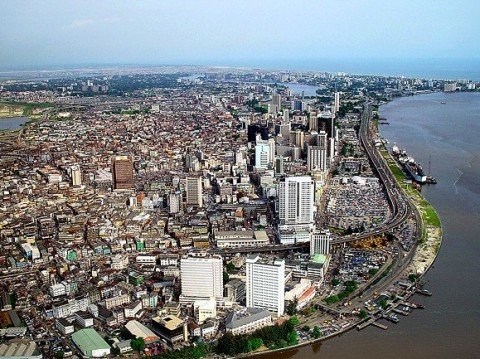
While researching my new book, The Ringtone and the Drum: Travels in the World’s Poorest Countries, which as well as analysing the great social upheavals the developing world is going through as it modernises is an attempt to give voice to the people experiencing these changes on the ground, I observed this frustration at first hand. The population of Bissau, the capital of the tiny West African nation of Guinea-Bissau which was the first stop on my trip, has quadrupled in the past thirty years. Whole villages in the interior have emptied out as the land has become too crowded to farm and the lure of modernity entices people to the cities. My wife Ebru and I spent a few weeks in one of Bissau’s poorest districts, where, as the excerpt below shows, urbanisation’s losers face a constant dilemma over whether they too should undertake the perilous journey to the West:

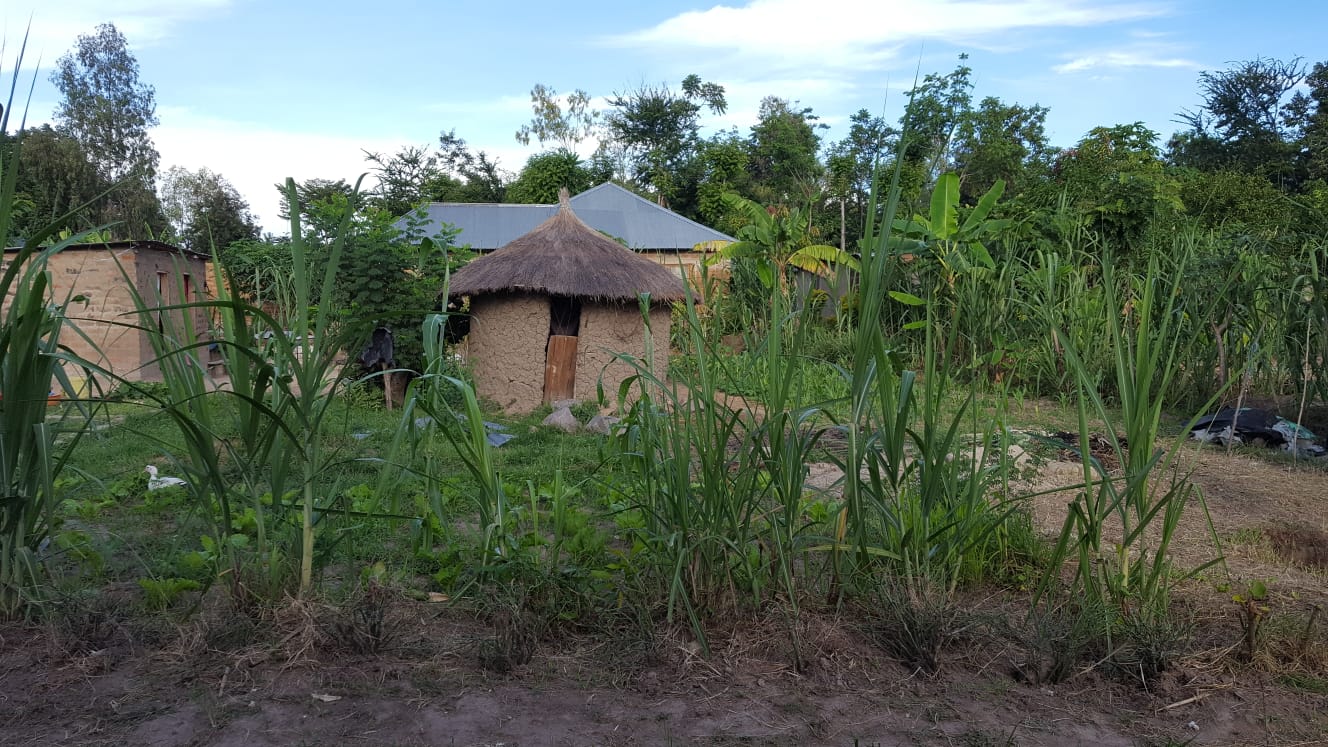
Since there is no power and the heat quickly rots anything perishable, Bissau’s residents must lay in a new supply of food each day. Every morning, therefore, we walk down the paved but potholed road that leads from our bairro to Bissau’s main market at Bandim. The market is a labyrinth, its narrow dark lanes winding between rickety wooden stalls whose tin roofs jut out threateningly at throat height. A press of brightly-dressed shoppers haggles noisily over tomatoes, onions, smoked fish and meat. The vendors know their customers – you can buy individual eggs, teabags, cigarettes, sugar lumps and chilli peppers; bread sellers will cut a baguette in half if that is all you can afford; potatoes are divided into groups of three, tomatoes into pyramids of four; matches are sold in bundles of ten, along with a piece of the striking surface torn from the box. In the days leading up to Christmas and New Year, which all Guineans celebrate regardless of their religious persuasion, the market is crowded and chaotic, but after the turn of the year, when all the money has been spent, it is empty and silent.

Only the alcohol sellers do a year-round trade. On a half-mile stretch of the paved road there are thirteen bars or liquor stores. They sell cheap Portuguese red wine, bottled lager, palm wine and cana, a strong rum made with cashew apples. Bissau has a drink problem. Its inhabitants’ love of alcohol is well-known throughout West Africa. Back in Senegal, a fellow passenger on one of our bush taxi rides had warned us that Guineans ‘like to drink and party but they don’t like to work.’ Later in our trip, on hearing we had spent time here, Sierra Leoneans would talk in awed tones of Guineans’ capacity for alcohol consumption. The liquor stores near our bairro are busy at all hours of the day and night. Christians and animists quaff openly, Muslims more discreetly.  (more…)


What the World Bank Does Not Understand About “Doing Business”

May 2, 2013 | by Seth Kaplan | More on Economics and development | No comments

World Bank Doing Business

In its 10-year history, the World Bank’s Doing Business Report has achieved enormous influence. The annual study, one of the flagship knowledge products of the World Bank, is the leading tool to judge the business environments of developing countries, generating huge coverage in the media every year. Several countries—such as Rwanda—have used it as a guide to design reform programs. For its part, the Bank has advised over 80 countries on reforms to regulations measured in the DB. Its influence stretches even to academia, with over 1,000 articles being published in peer-reviewed journals using data in the index.

But does it focus on the most important issues for companies in less developed countries?

Based on my own almost 20 years of experience doing business in places such as Nigeria, Turkey, and China, the answer is no. (more…)


Post-2015: is there any point?

May 1, 2013 | by Alex Evans | More on Economics and development, Global system, Influence and networks | 5 comments

This month, the UN High-level Panel on the Post-2015 Development Agenda moves in to the home straight, with its report due to be submitted to the Secretary-General on the 1st of June. So is it going to amount to anything? Well, Duncan Green certainly isn’t holding his breath:

The post-2015 discussion typifies the kind of ‘magical thinking’ that abounds in aid circles, in which well-intentioned developmentistas debate how the world should be improved. These discussions and the mountains of policy papers, blogs etc that accompany them, are often based on what I call ‘If I ruled the World’ (IRW) thinking. IRW, then I would do X, Y, Z – Rights for (disenfranchised group of your choice)! More Infrastructure! Better Data! Jobs!

Owen Barder, for his part, observed a month ago that “it would simplify my twitter timeline if people would tweet things they think should NOT be a central plank of the post 2015 framework”.

And it is indeed becoming increasingly apparent that in NGOs, UN agencies, foundations and, yes, governments all around the world, a coterie of aid industry hacks is having a lovely time playing ‘fantasy development goals’ without feeling any particular pressure to consider what exactly is supposed to happen as a result of a glossy new set of targets.

This irks Duncan, who observes acidly: ”What, after all, is the point of the post-2015 process, beyond creating (another) international forum for debating development?”

This is what the NGOs like to call ‘good challenge’, and this is the right moment to be asking it. The post-2015 agenda needs (more development jargon incoming) a theory of influence. So here for what they’re worth are five possible (and not mutually exclusive) answers to his question. (more…)


Wow (updated x2)

April 30, 2013 | by Alex Evans | More on Africa, Economics and development, UK | No comments

UK Secretary of State for International Development Justine Greening in a speech today:

“South Africa has made enormous progress over the past two decades, to the extent that it is now the region’s economic powerhouse and Britain’s biggest trading partner in Africa. We are proud of the work the UK has done in partnership with the South African government, helping the country’s transition from apartheid to a flourishing, growing democracy.

“I have agreed with my South African counterparts that South Africa is now in a position to fund its own development. It is right that our relationship changes to one of mutual co-operation and trade, one that is focused on delivering benefits for the people of Britain and South Africa as well as for Africa as a whole.”

Media release from South African Department for International Relations and Cooperation, a few hours later:

UK unilateral decision to terminate Official Development Aid to SA

The South African government has noted with regret the unilateral announcement by the government of the United Kingdom regarding the termination of the Official Development Aid to South Africa as from the year 2015.

This is such a major decision with far reaching implications on the projects that are currently running and it is tantamount to redefining our relationship.

Ordinarily, the UK government should have informed the government of South Africa through official diplomatic channels of their intentions and allowed for proper consultations to take place, and the modalities of the announcement agreed on. We have a SA/UK Bilateral Forum which is scheduled for some time this year and the review of the SA/UK strategy which includes the ODA, would take place there and decisions about how to move forward were expected to be discussed in that forum.

This unilateral announcement no doubt will affect how our bilateral relations going forward will be conducted.

What the hell happened?

Update: the Guardian has this from a DFID press officer:

Today’s announcement comes after months of discussions with the South African government. DfID ministers and senior officials have met with the South African government on many occasions to discuss our decision.

An observation: this looks like a retreat from the original wording of Greening’s speech: calling it “our decision” sounds rather different (read: unilateral) from Greening’s argument that she and her South African counterparts had “agreed” that SA was now in a position to fund its own development.

Update 2: Foreign Secretary William Hague has now entered the fray, intoning magisterially that ”I am not going to fling accusations” while making clear – in the same sentence, no less – that the whole kerfuffle is the result of “bureaucratic confusion, perhaps on the South African side”. But here’s the key quote:

“We don’t continue to give aid to countries that are raising their incomes, that have growing economies.”

Surely this bold new doctrine rules out most – or possibly even all – of the countries that DFID spends money on? I love policy made up on the hoof. It’s always such fun.


The future of global poverty: What if there were multiple horizons for aid post-2015?

April 30, 2013 | by Andy Sumner | More on Economics and development, Global system, Key Posts | No comments

future2

A Brookings paper out this week (here) does something a set of papers have sought to do recently – that is make projections about the future of global poverty.

These kind of papers have significant policy implications because it is only by understanding both the future scale and anticipated locations of poverty that properly informed debates can be had on the scale and objectives of future international aid. And of course the whole post-2015 debate is mushrooming (see the latest here).

In a new paper, we, meaning Peter Edward and myself, add to the debate by looking across a wide range of scenarios and methods to see the level of uncertainty and bias built in to these kind of forecasts.

We have three conclusions across a range of scenarios and approaches that somewhat tally with the Brookings paper but with some quite important differences.

First, ending extreme poverty is plausible but the level of uncertainty is enormous.

Across a wide range of scenarios, using different assumptions and methods, we find that it is plausible that $1.25 and $2 global poverty will reduce substantially by 2030. However this is by no means certain.

Different methods of calculating and forecasting poverty numbers give very different results as do an approach which takes account of changes in inequality.

Uncertainties over future, and even current, poverty levels are especially high for India and China (where half of the world’s poor people currently live).

While it is likely that poverty in those countries will reduce dramatically by 2030 it is difficult to have much certainty over just how large those reductions will be. Because of these uncertainties it is possible to conceive, under different growth scenarios and different assumptions about future inequality, that $2 poverty could be eradicated in India and China by 2030 or that it could be at or above current levels.

Second, don’t get too hung up on fragile states (at least not as the OECD defines them) because global poverty may well not be concentrated in such countries in the future – at least it is not a given.

Depending on what happens to inequality much of world poverty could still be in Middle Income Countries (MICs) but better still maybe it’s time to dump such aggregate classifications by income and fragility (both conflate so many different types of countries it raises questions about their usefulness).

If we take the groupings for a moment, currently most poverty is in middle income countries (MICs) and even when China and India are removed from the picture poverty is still more or less evenly divided between MICs and low income countries (LICs). Even with those two countries excluded the forecast poverty reductions in the remaining MICs are not so large, nor so certain, as to justify in themselves the view that poverty in the future will be a matter for LICs primarily.

In fact, once recategorisations are taken into account it seems that poverty outside India and China will remain roughly evenly distributed across MICs and LICs in 2030.

And looking to other possible classifications it may be that the World Bank’s shorter list of ‘fragile situations’ that emphasizes conflict/post-conflict countries is more useful but even then the UN’s widely used Least Developed Countries (LDCs) categorization might be just as useful or more so.

Further, we find certain kinds of method produce a bias towards moving global poverty into fragile states simply by the approach taken.

Third, it is startling just how much difference changes in national inequality could make – suggesting support for greater attention to this is the key implication of all these future projections.

Forecasts of global poverty are very sensitive to assumptions about inequality. In one scenario, we found that the difference between poverty estimated on current inequality trends versus a hypothetical return to ‘best ever’ inequality for every country could be an extra billion $2 poor people in 2030.

Taking a different scenario  - one of optimistic economic growth, $2 poverty could fall from around 2 billion today to 600m by 2030 – if every country returned to ‘best ever’ inequality.

However, if recent trends in inequality continue it could rise there could be an additional 400m $2 poor in 2030 compared to today.

In sum, despite all these uncertainties there is benefit in using the available data to attempt to estimate global poverty in the future.

What actually matters is recognizing the uncertainty and bias and taking the time to look across a wide range of scenarios, approaches and assumptions for commonalities in future projections and then to be informed by that rather than the next set of poverty projections.


“Within this Famine Pit lieth the unknown dead.”

April 28, 2013 | by Ben Phillips | More on Africa, Economics and development, Global system, UK | No comments

faminepitlong

At this year’s G8 summit in Loch Erne, Northern Ireland,  world leaders will meet to tackle the causes of global hunger. Sometimes the answer is right beside us. Close to the summit venue, in the grounds of a village church in Ardess, Fermanagh, a stone tribute reads simply “Within this Famine Pit lieth the unknown dead.” Perhaps the leaders should visit. Perhaps, too, they could consider the lessons of that history so they are not condemned to repeat it. Here are just a few:

  1. What is at stake is literally a matter of life and death. The million people who died in the Irish Famine in the Nineteenth Century, or the two million children dying every year from malnutrition globally in 2013, need to be remembered. They should be in leader’s minds when they ask themselves if something is “too difficult” or “will need more time”.
  2. Hunger is what happens when politicians fail. As the British Government acknowledged a century and a half after the Irish Famine,  ”those who governed in London at the time failed their people.” As Mo Ibrahim says, “When a child dies of hunger it is first and foremost a responsibility of government.” 
  3. To tackle hunger, politicians need to be bold – in Nineteenth Century Ireland landgrabs by powerful land owners exacerbated poverty and conflict. Now, in developing countries, land the size of London is being bought and sold every six days, and the people living on the land sometimes don’t find out it’s been sold till the bulldozers turn up. It will take courage to take it on such a big issue. But if it’s not taken on now it will only get worse.
  4. Everyone will remember what the politicians do about it. For generations to come people will remember them. Will another apology need to be issued by future leaders for those who failed on hunger in Fermanagh in June 2013? Or will there instead be a celebration of those who that month started us on the road to Hunger Zero?


A reply to Jeff Sachs and Johan Rockstrom on fair shares and planetary boundaries

April 22, 2013 | by Alex Evans | More on Climate and resource scarcity, Economics and development | 4 comments

Dear Jeff Sachs, Johan Rockstrom, Marcus Ohman and Guido Schmidt-Traub,

I’m a long-standing admirer of your work, especially Johan’s pioneering research on planetary boundaries and Jeff’s critical contributions to connecting the dots between environment and development. But I’m struggling a bit with a couple of aspects of your recent paper on Sustainable Development and Planetary Boundaries, and wondered if I could ask you a few quick questions for clarification.

First, some background. Back in November last year, I published a think piece on how sustainability issues, and especially planetary boundaries, might fit in to the post-2015 development agenda. Like you, I argued that it was essential that the successor framework to the MDGs should explicitly recognise the centrality of planetary boundaries - and the consequent need for future growth and development to take place in a fundamentally different way.

I also argued that the only way to start making this agenda real is to recognise explicitly that “no developing country will assent to goals on natural resource limits without explicit assurances about fair shares to environmental space, and protection of their right to develop”. In practice:

“at regional and global level … emphasis on fair shares within environmental limits would reframe equity discussions around how to share out entitlements or assets rather than – as now – burdens. This would nudge policy discussions towards clearer recognition of the need to protect fair shares of finite environmental space for developing countries and poor people – and of the need for all countries to bring (and then keep) their own consumption levels within their fair shares, or else pay others a fair price for the right to use some of their entitlement”.

As you will recognise, my argument is based on the principle of “contraction and convergence”, an idea first developed in the context of global climate policy by the London-based Global Commons Institute. In essence, C&C argues that global greenhouse gas emissions must contract to within sustainable limits; and, at the same time, that countries’ entitlements to emit carbon should converge to equal per capita shares of the atmosphere, for reasons of both justice and realpolitik.

So I was interested to see that your paper explicitly mentions C&C at the outset – summarising it as a policy whereby “rich countries need to substantially reduce their standard of living, and developing countries can grow until they converge at the lower income of high-income countries [at which point] economic growth would need to stop.”

This, you argue, is one of “three unattractive alternatives” for reconciling economic growth and planetary boundaries – the other two being for the rich world to “kick away the ladder” and keep poor countries poor; or for all of us to head over the environmental precipice together. Like the ‘kick away the ladder’ scenario, you suggest, C&C appears “politically impossible in HICs, MICs and LICs alike”, given that

“Developing countries around the world want to achieve economic progress, end extreme poverty in all its forms, and achieve higher per capita incomes. These aspirations are right and cannot be compromised on. An agenda that posits barriers to growth will not be supported by politicians and people around the world. Likewise, it seems impossible that politicians in rich countries would ever agree to drastically lower the standard of living. And why would developing countries agree to  stop economic growth at a level of income that is below the income enjoyed by rich countries today?”

However, this is where I started to get confused by your paper.

First of all, I’m unsure as to whom you have been reading to give you the impression that contraction and convergence was ever about ending growth, or about trying to equalise per capita income; certainly the Global Commons Institute, which as noted above applies C&C to the much more specific context of the need to cap and then find a way to share out global emissions, argues no such thing.

To be sure, the underlying logic of C&C can in principle be applied to other international level planetary boundaries besides carbon – as for example I did in my paper on post-2015 and sustainability. However, this remains a very far cry from calling for it to be applied to growth or income.

(Indeed, in a paper I wrote for Oxfam and WWF in 2011 on Scarcity, Fair Shares and Development, I argued explicitly that campaigners should resist the temptation to jump into the limits to growth argument, and should instead maintain a clear distinction between limits to growth on one hand – where the jury is still out – and limits to key resources and ecosystem services on the other hand, where the basis for action is already evident.)

In fact, I have yet to come across any paper that argues that the idea of contraction and convergence is about limiting and equalising per capita incomes – and would see any paper that does argue this point as being based on either a misunderstanding or a misrepresentation. I wonder if you could clarify where you got the impression that C&C was about this?

The second question I’d like to put to you is about the ‘Sustainable Development Trajectory’ that you posit as the desirable alternative to the ”three unattractive options” that you identify at the beginning of your paper.

In your first recommendation, you argue that:

“The science of planetary boundaries makes clear that are on an unsustainable trajectory. The world must reject the three baseline scenarios outlined in Section I (kick away the ladder, contract and converge, business as usual) and strive to achieve the Sustainable Development Trajectory.”

In your second recommendation, you then argue that (emphasis added):

“Achieving the Sustainable Development Trajectory will require an unprecedented effort by all countries – rich and poor – that will only be possible under a shared global framework for sustainable development. Such a global framework must have the following global features:

a) Provide an ethical foundation based on the principle of convergence and the “right to development”

As far as I can tell, what you are calling for here is more or less what I would understand by the logic of contraction and convergence: namely, explicit recognition that: (a) global problems need global solutions; (b) global consumption levels of key resources and environmental services must be brought within sustainable use limits; and (c) for reasons of both practicality and ethics, this has to be coupled with respect for the right to develop, and fair shares within finite environmental space.

So I wonder whether you would:

1) be happy to agree that the definition of C&C used in your paper is based on a misunderstanding – or, alternatively, point me towards the source for your definition?

2) concur that the logic of C&C as its advocates understand it (i.e. as defined above) is actually indispensable in reaching a viable synthesis of environment and development objectives at point when we risk overshooting planetary boundaries?

3) acknowledge that in cases where multilateral approaches based on quantified targets and timetables are needed - in the case of climate change, most obviously and urgently - then, by extension, the application of C&C must also be quantified, through the definition of (i) a global carbon budget and (ii) entitlements for all countries that are determined on the basis of convergence to equal per capita levels by some agreed date?

I should wrap up by saying again that I’m a huge admirer of your work, and agree very much with where I think you’re coming from – but since we all clearly agree on the crucial importance of the issues we’re discussing and their relevance to the post-2015 agenda, and since I think you may have got the wrong impression about contraction and convergence, I thought it would be helpful to write this note up to try to clarify.

Warm regards,

Alex Evans


Have NGOs gone soft on the Government?

April 22, 2013 | by Ben Phillips | More on Economics and development, Influence and networks, Key Posts, UK | One comment

“Non-Governmental Organisation” is a foolproof reminder to us of the one thing we are not: the Government. “Remember, we don’t work for them.” We must ward off the temptations of “access” just as Frodo must resist the temptations of the ring. If you work for an NGO and you never hear that the Government is angry with you, you should be angry with yourself.

So Richard Darlington’s challenge in a  recent well-argued piece in the New Statesman, asking whether NGOs have gone soft on the Government, is a vital one, and needs to be asked during every Government.

Well, have we? No.

Where we’ve been disappointed by government action, we have been very very frank. In response to the Welfare Uprating Bill, for example, that will effectively cut benefits for low-income families in the UK, we called the changes “Dickensian, cold-hearted and wrong-headed”.  We’ve demanded a clamp down on tax havens, and the cancellation of millionaires’ tax cuts. When the Government launched a legal action to prevent a Robin Hood Tax on financial transactions, we accused them of “rank hypocrisy”.  We can do tough.

We can also do happy. The recent 0.7% aid victory was a real one. It will help 16 million kids get to school. It makes Britain the first G8 country to meet the international promise on aid, and resonated around the world, with, for example, Canadian MPs asking questions demanding their government follow suit. It is a tribute, to people in this government, in the previous government, but most of all to the British public, that this has been achieved. We don’t do champagne at Oxfam, but we did celebrate with a home made “0.7” cake and a big thank you to all our supporters. And we did say well done.

YouTube Preview Image

I’m no fan of politicians, but I have seen for myself that the decisions politicians make can for people in poverty mean the difference between life and death.  And that sometimes they make the right ones. When they do, we say so.

At the G8 this year the UK government, as hosts, can ensure leaders tackle seriously the key root causes of poverty, including land grabbing and tax dodging.  If they deliver real results ,we’ll give praise where praise is due. If they let the world down, we will let the world know.

That warm feeling is us holding their feet to the fire.


A pogrom against bankers?

April 11, 2013 | by David Steven | More on Economics and development | One comment

What an appalling quote from Ambrose Evans-Pritchard in the Telegraph:

Let us all agree that top bankers behaved very badly. Let us agree too with Vince Cable that the fraternity operated like a cartel, rewarded far beyond ability or worth to society.

That said, the global crisis would have occurred even if bankers had been saints. The roots lie in the “China effect”, the world “savings glut”, and the whole way that globalisation has worked for 20 years.

The rising powers of Asia and the oil bloc accumulated $10 trillion of reserves, flooding bond markets with money. Japan put $1 trillion into play through the carry trade. Central banks in the West played their part by running negative real interest rates. They set the price of credit too low, especially in Club Med and Ireland.

All this combined into one colossal bubble. Bankers were the agents, not the cause. The witchhunt against them gathering force in this country has a nasty edge, and it has the character of a pogrom in much of Europe. We should be careful.

At a lunch in the City of London a couple of years ago, I was astounded to learn that many of those present felt that bankers were, indeed, the primary victims of the financial crisis – harried by a citizenry that had been happy to live off their taxes in the good times. This pushes the self-pity to an astounding level though.

Wikipedia:

A pogrom is a violent mob attack generally against Jews, and often condoned by the forces of law, characterized by killings and/or destruction of homes and properties, businesses, and religious centers.

Jaw-dropping.


Thatcher: The Facts (well, a few of them)

April 8, 2013 | by Mark Weston | More on Economics and development, UK | 9 comments

Unlike many of those who were still in their childhood or teens through most of her reign, I don’t have a very strong view about Margaret Thatcher. I wasn’t interested in politics at the time, and although generally viewing her in a negative light for what she did to the miners have never been sure that she wasn’t beneficial overall for the British economy.

I don’t intend to start spouting my opinions now, but since many others are doing so I thought I’d put forward a few statistics to help guide the discussion. What, I asked myself, would I have wanted to see happen during an eleven-year reign? I discarded foreign policy as it’s too vague an area for concrete data (Twitterites can’t even agree on whether or not she called Nelson Mandela a terrorist), and limited myself to the Iron Lady’s impact on quality of life in Britain. Where possible, I compared Britain’s progress between 1979 and 1990 with Europe’s and the world’s. I realise that some of her structural reforms might not be expected to bear fruit for many years, but 1990, when she stepped down, is the only clear and indisputable time threshold available, so 1990 is what I stuck with. I also didn’t have much time, so limited my search to five key quality of life indicators. Here’s the rub:

  • Life expectancy at birth:  Rose in the UK from 72.9 years to 75 years, a 2.8% increase. This compares with a European increase of 2.4% and a world increase of 4.8%. (Source: UN Population Division)
  • GDP per capita (at constant 2005 international $): Rose in the UK from $18153 in 1980 to $23348 in 1990, a 29% increase. This compares with a  European increase of 23% and a world increase of 15%.  (Source: World Bank)
  • Unemployment: Rose in the UK from 5.4% to 6.4%, and in the European Union from 5% to 8% (Source: Office for National Statistics)
  • Poverty: Rose in the UK from 13.4% to 22.2% (Source: Institute for Fiscal Studies report)
  • Crime: Hard to find concrete data, but this British Crime Survey report shows a rise in crime during the 1980s, at a rate slightly faster than population growth.

So there you have it – and this is of course far from an exhaustive list. Poverty, unemployment and crime all increased during Thatcher’s time in office, as did GDP per capita and life expectancy. Britain under Thatcher performed better than the European average in terms of life expectancy improvements, GDP per capita growth, and unemployment. I’ll leave it to others to draw conclusions, and would welcome any additional quality of life data to add to the list.


Being wrong, wrong wrong about migration: David Goodhart in the Guardian

April 1, 2013 | by Claire Melamed | More on Economics and development, Global system, UK | 2 comments

Migration is a notoriously divisive issue. Maybe David Goodhart, writing in the Guardian last week, should be commended for trying to say something new on the subject. But alas, his attempt to marry fairly standard right-wing anti-immigrant views with pro-welfare liberalism results in an article that is, to put it kindly, a little confused. Others have written well about the fact that he’s wrong on the evidence about the impact of immigration on the UK, and about how immigration policy is made. But he also makes some wild assertions about migration and development, which is what I know about, so let me start there.

First, he attributes some pretty extraordinary views to people like me who work in development and live in the UK. Apparently we think that UK policy should be just as much about people in Burundi as people in Birmingham (loving that alliteration, David). But, oh dear, he then tells us that in the UK, the apparent home of this hotbed of internationalist liberalism, we spend 25 times more every year on the NHS than on development aid. And, er, that most people see this as a ‘perfectly natural reflection of our layered obligations’ although ‘to a true universalist it must seem like a crime’. Spot the straw man. I have been working among these strange ‘universalist’ creatures for nearly 15 years now, and I have never met anyone, not one single person, who would argue to cut the NHS budget to spend more on overseas aid.

Tempting to say that there is no argument here since the people to whom the article is addressed do not exist, and the point of view he is rebutting is not one that anyone actually holds. Tempting to stop right there. But let’s plough on. (more…)


Social Covenants: The Missing Ingredient in State Building Efforts

March 31, 2013 | by Seth Kaplan | More on Conflict and security, Economics and development | No comments

Loya Jirga

Political theorists have for the most part focused on the state when thinking about how to make countries work better for their populations. This has naturally led to a concern with state-society relations, how governments are chosen and run, and institutions. There is wide consensus that social contracts play the central role in state building.

This thinking has heavily influenced how the international community approaches fragile states, post-conflict situations, and transitions as well as development in general. As the OECD/DAC explained in Concepts and Dilemmas of State Building in Fragile Situations:

Fragility arises primarily from weaknesses in the dynamic political process through which citizens’ expectations of the state and state expectations of citizens are reconciled and brought into equilibrium with the state’s capacity to deliver services. Reaching equilibrium in this negotiation over the social contract is the critical if not sole determinant of resilience, and disequilibrium the determinant of fragility. [page 7]

This focus on the state shapes responses to crises in places such as the Democratic Republic of the Congo, Libya, Syria, and Afghanistan, compelling the international community to prioritize the establishment of a transitional regime and fast track elections under the belief that this is the sole way to create legitimacy no matter the circumstances or the context.

But many of these countries have deeply-entrenched problems that a focus on the state cannot solve. Different religious, ethnic, and clan groups do not work together well, and see any competition for power as a zero sum game for exclusive control of the state. Government is weakly institutionalized, and unable to act as an independent, equitable arbitrator between different interests. Judges and officials are beholden to personal relationships, power politics, or money (and sometimes all three). In such places, winners of elections rarely see it as their duty to serve all their people, and often define their rights as whatever they can get away with—negating whatever social contract the process was supposed to establish. (more…)


10 things we missed or got wrong 5 years ago at the height of the credit crunch and food/fuel spike

March 22, 2013 | by Alex Evans | More on Climate and resource scarcity, Conflict and security, Economics and development, Global system, Influence and networks | No comments

This summer will mark five years since 2008, the year of both the first flush of the global financial crisis, and of the peak of the combined food and fuel spike.

As David Steven and I have observed in various papers, the last decade was bookended by shocks – 9/11 at one end, and these two at the other. And while the resource spike and the credit crunch lacked the visual vividness of September 11, they were arguably just as significant in the way that they shook assumptions about the stability or direction of globalisation.

But it’s also intesting to look back now at that strange year, and reflect on how many of the initial fears, hopes and assumptions about the twin crises have been proved wrong with the benefit of five years’ hindsight – as well as various shifts that have taken place since 2008 that no-one foresaw at the time. Here are ten things that lots of us (well, I, anyway) got wrong or missed altogether back in 2008 – adapted from a futures presentation I gave to Oxfam last week.

(more…)


On inequality, let’s do the Palma (because the Gini is so last century)

March 21, 2013 | by Andy Sumner | More on Cooperation and coherence, Economics and development, Global system | No comments

Corrado-Gini

There’s one measure of inequality that gets all the attention – the Gini index.

The Gini was developed in the early 1900s – in fact about 100 years ago – by Italian Statistician, Corrado Gini (see pic).

A century later it may be time for a rethink on measuring inequality.

Why?

(more…)


Can Obama bend it like Bono?

March 5, 2013 | by Andy Sumner | More on Cooperation and coherence, Economics and development, Global system | No comments

BUSH

What do Obama and Bono have in common?

Both have proposed that the world should seek to end extreme poverty over the next twenty years or so.

Obama said so in his annual state of the union address (here) and Bono said the same (here) in an interesting and nuanced TED talk in Los Angeles.

Are they mad or deluded? Actually, no. Under certain conditions it is feasible (and the numbers by various economic growth and inequality scenarios are here).

The idea of an end to extreme poverty is part of a broader discussion on the next generation of UN global poverty goals. There’s plenty on the subject on Global Dashboard from Claire, David and Alex and others.

The current set of goals, the Millennium Development Goals (MDGs), will expire in 2015 (here’s a brief history).

The MDGs aimed to halve income poverty and hunger and to reduce other forms of poverty so the big question for the UN and others is what sort of global goals are after 2015? (assuming you think global goals are good which not all do).

To answer that question we need first to know a bit about progress towards the current – 2015 – goals.

Charles Kenny and I crunched the numbers back in 2011 and concluded, in short, that the goals had contributed in notably more aid for the poorest countries and faster progress on poverty reduction in some areas – notably heath related, MDGs, 4 and 6.

Of course, quite a lot of the progress would have happened even if there hadn’t been any global goals. It seems unlikely, for example, that the MDGs had much to do with China’s and India’s and other emerging economies’ incredible economic take-off.

Still, the first MDG, to cut in half the share of the world’s population living in extreme poverty, has probably been met (see World Bank analysis here), though some have their doubts (see here).

So, what might be feasible in terms of poverty reduction in the next, say 15-20 years?

One idea that has evolved is that the MDGs were about halving global poverty and reducing other aspects of poverty so the post-MDGs should be about ‘finishing the job’ – meaning ‘getting to zero poverty’, to echo a World Economic Forum report on the matter.

Here we conclude too that it is entirely feasible to get close to ending extreme poverty – as measured by the World Bank at $1.25 per person per day – by around 2030 or so – but under certain conditions which I’ll come to in a moment.

(more…)


The Ted-O-Matic! How to Generate Your Own, Faux-Profound TED Talk | Vanity Fair
"The art of faux profundity: nine easy steps to your own audience-flattering ted talk."

Information Is Beautiful | How Many Gigatons of CO2?
One of the best infographics on climate change I've ever seen

The Scary Hidden Stressor: Climate Change and the Arab Spring - Thomas Friedman
“The Arab Spring and Climate Change” doesn’t claim that climate change caused the recent wave of Arab revolutions, but, taken together, the essays make a strong case that the interplay between climate change, food prices (particularly wheat) and politics is a hidden stressor that helped to fuel the revolutions and will continue to make consolidating them into stable democracies much more difficult.

Fabian Society » Green Social Democracy
Michael Jacobs, former climate & energy adviser to Gordon Brown at No. 10, on the other crisis of capitalism

Jared Diamond’s Guide to Reducing Life’s Risks - NYTimes.com
On the utility of "constructive paranoia"

Secret Lives of North Korea
What it's actually like to live there - by a former British ambassador

Equitable Access to Sustainable Development: An idea whose time has come? « Hiya Maya
Required reading for anyone interested in the sustainability nexus of limits and fairness

Resources Futures | Chatham House
Big new report from Chatham House, based on 12 million data points, no less. Key message: it's the volatility that kills you.

Australia May Join Europe With Extended Kyoto Climate Pledge - Bloomberg
Tantalising remarks from Australia's Parliamentary secretary on climate change

Obama breaks silence on climate change. Does this presage action in his second term? – Telegraph Blogs
Geoff Lean reads the tea leaves - interesting historical discussion of environment in past Republican policy

Pro Bono: How rockers change the world - FT.com
Sympathetic review of BBC doc on Bono and Geldof's journey so far

The scenarios on a (large) postcard
Good futures outlook to 2025 from the Challenge Network

ICTSD • ‘One Billion Hungry’ Peak Missing From New FAO Numbers
FAO addresses criticism of its methodology and comes up with new hunger total of 870 million

A Reader's Guide to the WEF Global Redesign Initiative
A detailed online companion to the most comprehensive proposal for global governance reform since WW2

Ethiopia: navigating through the emotive, outrageous, and the subtle but dangerous narratives on the demise of Meles | African Arguments
Comprehensive and fair assessment of Ethiopia after Meles.

Upwardly Mobile Pakistan on 66th Independence Day - Haq's Musings
A Pakistan optimist celebrates the country's progress.

Niger struggles against militant Islam - The Washington Post
Situated next to Mali, Nigeria, and Libya, all of which are spreading instability across the Sahel, Niger looks increasingly vulnerable.

Crafting State-Nations: India and Other Multinational Democracies by Alfred Stepan, Juan J. Linz, Yogendra Yadav
Helps reconfigure the debate on the relationship between ethnic diversity and political institutions.

Ex WB Chief Economist makes case for manufacturing in Africa
Justin Lin discusses his new book on light manufacturing in Africa with examples from Ethiopia.

Why is Nobody Freaking Out About the LIBOR Banking Scandal? | Matt Taibbi | Rolling Stone
If collusion took place between the Bank of England and Barclays, what might have happened between Hank Paulson and US banks in 2008?

Barclays Libor scandal: how can we change banking culture? | Business | The Guardian
Outstanding broadside from Aditya Chakrabortty - who knew that each one of us in the UK has given £19,271 to the banks...

The 'Busy' Trap - NYTimes.com
Great takedown of our addiction to busyness. Citizen's income now!

Will Civil War Hit Afghanistan When The U.S. Leaves? : The New Yorker
"“The Americans have failed to build a single sustainable institution here. All they have done is make a small group of people very rich. And now they are getting ready to go."

George Monbiot – The Mendacity of Hope
Monbiot at his furious best, on the failure of Rio 2012

The Battle Over Climate Science | Popular Science
Excellent reportage from both sides of the climate war's front line

Why Women Still Can’t Have It All - The Atlantic
Must-read reflection on her time as head of policy planning at the State Dept by Anne-Marie Slaughter

Rio Minus: The End of Post Cold-War Treaty Making?
Reflections on the failure of Rio from the former head of the Sierra Club

Neal Stephenson's Past,Present, and Future - Reason.com
Great interview with Neal Stephenson from just after he published the Baroque Cycle

Pope Benedict Focuses on Legacy While Ignoring Vatican Power Struggle - SPIEGEL ONLINE
"The mood at the Vatican is apocalyptic. Pope Benedict XVI seems tired, and both unable and unwilling to seize the reins amid fierce infighting and scandal."

Trust, Democracy and Diversity - Democracy In Africa
Good introduction to a book on a key challenge for fragile states and developed countries alike.

"The End of the World as We Know It"
Great euro-driven disaster scenario from Dani Rodrik on Project Syndicate

Have we arrived at a financial singularity? - Finance Addict : Finance Addict
Are the financial algorithms, models and computers taking over from their human creators? Have we reached a financial singularity?

Exclusive: EU floats worst-case plans for Greek euro exit: sources - chicagotribune.com
European finance officials have discussed as a worst-case scenario limiting the size of withdrawals from ATM machines, imposing border checks and introducing capital controls in at least Greece should Athens decide to leave the euro.

My break with the extreme right - Politics - Salon.com
Awesomely good take down of America's new right - by one of its old right

A new Europe of competing currencies - FT.com
A thoughtful take on one possible consequence of Grexit, from Samuel Brittan

An Arab Spring south of the Sahara? - Phil Clark in Juncture
Why didn't the Arab Spring reach sub-Saharan Africa? From the first edition of IPPR's new journal Juncture.

Ideas for a Sustainable Development Outlook | International Environmental Governance
Latest thinking on the idea of a Sustainability Outlook report (one of the few useful things that might yet emerge from Rio+20), from the Mexican Mission to the UN's Jorge Laguna Celis

Greeks apologise with huge horse
Left outside the European Central Bank in the dead of night, the horse has now been moved into the ECB’s central lobby where it is proudly on display.

Fascism rises from the depths of Greece's despair - Europe - World - The Independent
"Still half-asleep, Panayiotis Roumeliotis was surprised to be asked to show his identity card by two young men with shaved heads. It was his first direct contact with the vigilante groups that have become a feature of everyday life in some areas of the Greek capital."

If you're not worried yet... you should be
Reasons to be gloomy from ZeroHedge

Articles & Publications
The United States after the Great Recession

A paper by David Steven, Joshua Meltzer and Claire Langley, published by the Brookings Institution, supported by the FutureWorld Foundation, on how the United States should respond to the aftermath of the recession in order to promote growth and sustainability in the coming years.

Goals in a Post-2015 Development Framework

An options brief by David Steven, published by New York University’s Center on International Cooperation and funded by the UN Foundation, on the role that global goals can play after the Millennium Development Goals expire in 2015. Download Report

Climate, Scarcity and Sustainability in the Post-2015 Development Agenda

What should sustainability advocates aim for in the post-2015 international development agenda – and how should they go about it?

Resources, Risk and Resilience: Scarcity and Climate Change in Ethiopia

The first in a series of CIC case studies on the challenges that resource scarcity and climate change pose to poor countries – and how they, and their international partners, can build resilience to them. The report assesses both Ethiopia’s current policies on scarcity and climate, and a range of key gaps, vulnerabilities and exogenous risks that need to be taken account of in future planning.

Post-2015: What role for business?

There’s a consensus that any post-2015 global development framework should have more to say about the role of the private sector than the MDGs have done. But what does that actually mean in practice?  This new report from the Overseas Development Institute explores some options for how the private sector might be represented in and contribute to a new set of global goals for development.

Chill Out: Why Cooperation is Balancing Conflict Among Major Powers in the New Arctic

This report addresses the Arctic’s growing strategic relevance and conflict dynamic; offers background on, and assessment of, the existing institutions, and examines ongoing risks. Ultimately, the report concludes that the prospects for cooperation outstrip the potential for conflict, and that the Arctic offers lessons for tackling evolving challenges in other regions.

Best of Times, Worst of Times

An edited and expanded version of talk given to the ‘Lessons from the Economic Troubles’ panel at an international workshop on systemic lessons from the global economic crisis, hosted by the Global Futures Forum.

Beyond the Millennium Development Goals

Debate on what should follow the Millennium Development Goals after 2015 is now underway in earnest. This briefing paper by Alex Evans and David Steven, prepared for a closed session Brookings Institution meeting organised at the request of the US government, sets out an overview of the MDGs and their expected status in 2015; describes the background to, and options for, a post-2015 framework; and discusses the political challenges of agreeing a new framework and sets out considerations for governments and other stakeholders.

Putting inequality into the post-2015 picture

There’s a growing consensus among the countries, UN agencies and civil society organisations involved in discussions on the post-2015 development agenda that equity, or inequality, needs to be somehow integrated into any new framework.  This paper considers the pros and cons of some current proposals for integrating inequality  into a post-2015 framework, and offers a tentative [...]

Sustainable Development Goals – a useful outcome from Rio+20?

Recent months have seen increasing interest in the idea that Rio+20 could be the launch pad for a new set of ‘Sustainable Development Goals’ (SDGs).  But what would SDGs cover, what would a process to define and then implement them look like, and what would some of the key political challenges be? This short briefing [...]

Creating Consensus on a post-2015 framework for development

Any global framework for development which is agreed after 2015 will be a political deal between states. This paper looks at recent trends in policy and politics in emerging economies and traditional donors to assess where a consenus might lie. It suggests some principles for a post-2015 agreement which emerge from recent policy developments

A post-2015 Global Development Agreement: why, who what?

Paper from ODI and UNDP, authored by Claire Melamed and Andy Sumner, summarising the evidence on the impact of the MDGs, and looking at current trends in poverty and in global governance that will affect the shape and the scope of any future agreement on global development.

Resource Scarcity, Fair Shares and Development

Why resource scarcity will be a game changer for global justice agendas, and what aid donors, NGOs and other development opinion formers need to do about it. WWF / Oxfam report by Alex Evans.

Making Rio 2012 Work: Setting the stage for global economic, social and ecological renewal

The Rio 2012 sustainable development summit is at risk of being the latest in a long line of damp squibs on environmental multilateralism – but could still make real progress, if it focuses on greening growth and building resilience to shocks and stresses, and above all faces up to the issues of fair shares that arise in a world of limits.

Governance for a Resilient Food System

How national and international governance systems need to be reconfigured to meet the challenges of food security in a world of tighter supply and demand balances and increasing volatility. Report for Oxfam’s new Grow campaign by Alex Evans. (May 2011)

Running out of everything: how scarcity drives crisis in Pakistan

Article on scarcity of resources in Pakistan and what it means for the country.

Economics for a world with limits

Text of speech by Alex Evans to Institute for New Economic Thinking annual conference at Bretton Woods; the YouTube video is here. (April 2011) Download Speech

Unscrambling the price spike

Article published on China Dialogue on reasons for the new food price spike, including potential implications of the current drought in China. (February 2011) Download Article

2020 Development Futures

Eight critical uncertainties for development over the next decade, and ten recommendations for what ActionAid – who commissioned this report – should do to prepare for them

American Foreign Policy in an Age of Uncertainty

Article published in World Politics Review on current American foreign policy

The World in 2020 – Geopolitical and Trends Analysis

Report asking how organisations can prosper in what will be a turbulent period for world order

Globalization and Scarcity

Center on International Cooperation report on what forms of multilateral cooperation are needed to manage scarcity of resources

Resource Scarcity, Climate Change and the Risk of Violent Conflict

Background paper on whether resource scarcity and climate change will cause increased violent conflict

Organizing for Influence: UK Foreign Policy in an Age of Uncertainty

Chatham House report on how the UK’s new coalition government should upgrade and reform the way Britain conducts foreign policy

The Long Crisis Seminar

Introductory remarks by David Steven at a Brookings Institution seminar on risk and resilience in the global system (March 2010)

Stop Betting the House talk

Talk given by David Steven at Gresham College on risk and resilience in the UK housing market, as part of a Long Finance Roundtable meeting (March 2010)

Time to Stop Betting the House: a response to the FSA

Report by David Steven in response to the FSA’s Mortgage Market Review

Confronting the Long Crisis of Globalization: Risk, Resilience and International Order

Brookings Institution report by Alex Evans, Bruce Jones and David Steven on how globalisation could fail – and how it could be made more resilient. Published to coincide with the 40th anniversary World Economic Forum in Davos.

Hitting Reboot – where next for climate after Copenhagen

Report by Alex Evans and David Steven analysing the post-Copenhagen context on climate change, including a proposed 12 point action plan. Written for the Brookings Institution / NYU Center on International Cooperation Managing Global Insecurity programme.

Climate Change and Hunger: Responding to the challenge

World Food Programme report on the state of the science on what climate change means for hunger, plus policy recommendations. Authored by IPCC Impacts Chair Martin Parry with Mark Rosengrant, Tim Wheeler and Global Dashboard’s Alex Evans (December 2009)

Scarcity, security and institutional reform

Presentation by Alex Evans to a seminar organised for the UN Department of Political Affairs by the Geneva Centre for Security Policy (August 2009)

The Resilience Doctrine

Article on risk and resilience by Alex Evans and David Steven – part of a special in World Politics Review on risk and resilience in a globalized age (July 2009)

An Institutional Architecture for Climate Change

Report by Alex Evans and David Steven exploring the future international institutional requirements for managing climate change, and including three scenarios for climate institutions between now and 2030. Commissioned by the UK Department for International Development. (May 2009)

Risks and Resilience in the New Global Era

Article by Alex Evans and David Steven exploring resilience as a political agenda – part of a special edition of Renewal on the transformation of foreign policy (February 2009)

A Tale of Two Cities

Climate and cities think piece, co-authored by David Steven and the British Council’s Peter Upton (29 January 2009)

The Feeding of the Nine Billion

Chatham House pamphlet by Alex Evans on how scarcity issues will shape the outlook for global food production, and the actions that policymakers need to take at the international level and in developing countries to ensure food security in the 21st century

2009 – A Year for International Reform

Paper by David Steven, presented to “Reforming International Institutions – Meeting the Challenges of the 21st Century,” a conference organized by the United Nations University and the British Embassy in Tokyo (Jan 2009).

Food prices: what next?

Speech by Alex Evans at the Tomorrow Network (25 November 2008)

A Bretton Woods II Worthy of the Name

Paper by Alex Evans and David Steven on financial reform and wider multilateralism, published ahead of the G20 ‘Bretton Woods II’ Summit (November 2008).

The Future of Resilience

Speech by David Steven to RUSI Conference on UK Resilience (8 October 2008)

Towards a Theory of Influence

Chapter by Alex Evans and David Steven in the Foreign & Commonwealth Office publication, ‘Engagement: public diplomacy in a globalised world’ (July 2008). Download Chapter

Multilateralism for an Age of Scarcity

Draft report by Alex Evans exploring multilateral system reforms needed in order to manage resource scarcity issues more effectively. The final version will be published in early 2010 (July 2008)

Scarcity issues and conflict in Africa

Speech by Alex Evans at UK Parliament (8 July 2008)

A Low Carbon World – Pathways to a Global Deal

Speech by David Steven at the UNU G8 Symposium (4 July 2008)

Climate, scarcity and multilateralism

Speech by Alex Evans to United Nations Association UK (7 June 2008)

The new public diplomacy and Afghanistan

Speech by David Steven to the UK Defence Academy’s Advanced Research and Assessment Group seminar on Strategic Communications, Public Diplomacy and Afghanistan (4 June 2008).

Technology and Public Diplomacy

Speech by David Steven to the University of Westminster Symposium on Transformational Public Diplomacy (30 April 2008).

Rising Food Prices: Drivers and Implications for Development

Briefing paper by Alex Evans, published through Chatham House’s food programme (April 2008).

Looking Forward: how do we build resilience?

Speech by David Steven to RUSI Conference on Critical National Infrastructure (16 April 2008).

Shooting the Rapids: multilateralism and global risks

Paper by Alex Evans and David Steven, commissioned by Gordon Brown and presented to heads of state at the Progressive Governance Summit (April 2008).

Articles and Publications

Key Posts
“We’ll stop hurting our brothers and sisters” – What success at the G8 would look like0

  It has become to fashionable to say that G8 meetings never achieve anything. It is also incorrect. Civil society campaigners have made use of G8 meetings in the past to achieve major steps forward on debt, on access to HIV/AIDS treatment, and on maternal and child health. But whereas, in the past, campaigners have [...]

Nuclear war called off in Korea – time to relax?0

Something quite significant happened this week– though you may have missed it. It seems the US military doesn’t think there will be nuclear war with North Korea. A few weeks ago, you could have been forgiven for thinking we were on the brink of something similar to the Cuban Missile crisis of 1962. Pyongyang was [...]

The worst corporate scandal you never heard of0

Like many people, I have grown blasé about the successive waves of corporate scandal that have broken since the financial meltdown of 2008, but Fortune’s account of the crimes of Indian generic drug maker, Ranbaxy, is quite astonishing. Ranbaxy boasts that it ”is a research based international pharmaceutical company serving customers in over 150 countries… providing high quality, affordable [...]

How to Start Development’s Gutenberg Revolution2

As a schoolboy I was troubled to learn about medieval Europe where a narrow elite maintained unaccountable power by controlling access to information; and I delighted in the heroic story of how Johanes Gutenberg’s humble printing press began a revolution that brought an end to the unchecked control of knowledge and power by a few. [...]

Britain’s dirty secret – the island havens that make life hell for the world’s poor-

The G8 agenda on tax is getting increasingly radical, and much of the credit on that must go to to the UK Government hosts. Issues that were off the table months ago are now up not just for discussion but for decision. The agenda has moved beyond tax evasion to the kind of tax avoidance [...]

A Balkan success for EU soft power?-

Serbian leaders will make another attempt this week to convince Serbs in northern Kosovo to accept last month’s deal between Belgrade and Pristina to normalise relations between Serbia and its former province. The April 19th agreement was  hailed in the much of the western media as a great success for the EU’s soft power and [...]

The future of global poverty: What if there were multiple horizons for aid post-2015?-

A Brookings paper out this week (here) does something a set of papers have sought to do recently – that is make projections about the future of global poverty. These kind of papers have significant policy implications because it is only by understanding both the future scale and anticipated locations of poverty that properly informed [...]

Brazil & the US – never on the same page?-

Relations between the two giant democracies of the Americas, Brazil and the US, should be easy, but they never seem to be -  as the recent spat over recognising Nicolas Maduro’s victory in the Venezuelan election demonstrated again. Here’s a piece I’ve done for Yale Gobal on why they don’t see eye to eye despite [...]