Last week it was Gordon Brown’s first speech as PM on foreign policy; yesterday, his first on climate change and the environment. I went along to listen. An hour and a bit later, I emerged, having been duly told that “this is a challenge to which the human spirit, and our powers of ingenuity and enterprise, will rise”. Stirring stuff; Gordon was clearly taking detailed notes as he read from Al Gore’s Inconvenient Truth (“…when we rise, we will experience an epiphany as we discover that this crisis is not really about politics at all. It is a moral and spiritual challenge…”)
Looking at the papers this morning, it’s intriguing to see how the speech has polarised opinion. In the blue corner, here’s Polly Toynbee in the Guardian: “Yesterday’s speech heralded a seismic change in attitude. If Britain hits these targets for renewable energy and CO2 emissions, it will be a near miracle.” In the red corner, Charles Clover in the Telegraph: “it was extremely hard to see that what Mr Brown was proposing bore any relationship to Churchill’s ‘action this day’. It was more like ‘action by 2020’.” Peter Riddell in the Times agrees: ” Gordon Brown’s first big green speech was long on analysis and aspiration, but shorter on action.”
So what was there, really? By my tally, the list of genuinely new announcements goes like this:
– Confirmation of UK commitment to the EU target of 20 per cent of power from renewables by 2020, though admittedly with no detail on what the UK’s share would be (NGOs very waggy about this, as leaked documents last month suggested the Government might not support the target);
– European emissions trading scheme to be extended to service sector companies;
– An expansion of energy efficiency obligations on power supply companies;
– Smart meters offered to every household within a decade;
– A new one-stop public advice service on energy efficiency and micro-generation;
– Proposals for EU car emissions to be limited to 100g Co2 / km by 2020.
In fairness to Gordon Brown, this is a pretty good roster of ‘announceables’, as they go. Tradition dictates that a Prime Ministerial climate change speech should have one announceable in it, and that (say) fifty million quid for energy efficiency grants (or renewables R&D or whatever) will generally suffice. This went a lot further than that. On the other hand, the green crowd have rated Brown’s tenure so far a disappointment, and Brown will have known that he needed to do better than average in order to avoid losing ground to the Tories on what may yet become a key battleground issue for the next election. He achieved that yesterday: Greenpeace director John Sauven commented, “this time he really gets it.”
Well, maybe, maybe not. For my own part, my overriding impression was that this is still all about business energy use. There was precious little here about what real people need to do, and it left the listener with the sense that the Government still lacks a robust theory of influence on climate change.
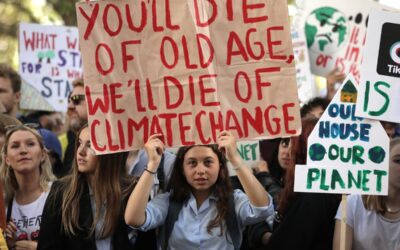
As David and I discuss in a paper we’re publishing next month on the state of the climate change debate, there’s lots of evidence that individual people feel a strong sense of dissonance between the “we’re all doomed” messages they hear about the problem of climate change and the “all you need to do is turn out lights and not leave your TV on standby” messages thay hear about solutions.
Brown’s speech yesterday fell straight into that trap. Despite all the rhetoric about how “the character and course of the coming century will be set by how we measure up to this challenge”, the reality was that very little was actually being asked of the public. No need to drive less; no need to fly less; no need even to answer the (entirely logical and legitimate, if still politically leftfield) question about whether meat consumption should be capped in view of the fact that (a) livestock are responsible for 18% of global greenhouse gas emissions and (b) consumption of meat and dairy products is forecast to rise 50% by 2030.
Of course, you may argue that we’re witnessing the first steps on what will be a long journey, and that business energy use is the right place to start. Well, maybe. On the other hand, you can also argue that by maintaining the dissonance between messages on the scale of the problem and messages on what needs to be done to solve it, you’re actually inviting the public to conclude one of two things: either (a) the problem isn’t actually as big as politicians say, or (b) it’s too late to solve it. The evidence on what actions people are taking on climate change, or are prepared to take, unfortunately seems to confirm the more pessimistic view.
None of this is to deride the substantive nature of what was on offer yesterday. But it’s hard to see how the UK is really going to manage a 60 to 80 per cent emissions reduction by 2050 without that elusive theory of influence.