Global Dashboard – Blog covering International affairs and global risks

Africa

Men and Development: Why gender should not just be about women

February 8, 2012 | by Mark Weston | More on Africa, Economics and development, Influence and networks | No comments

Last week I was asked to review a new book on gender and development. Since these things are usually turgid affairs, full of abstruse jargon (“registers of governmentality”, “idioms of sexualness” and “body reflexive practices” are just a few of the assaults on English perpetrated in this one) and nostalgia for the marxist utopias of yore, I was apprehensive. I envisaged long days of ploughing laboriously through paragraphs, trying heroically to decipher “essentially hetero-normative constructions”, “emergent rubrics”, and “positionalities”, and then having to pretend in my review that I’d both mastered this tangled tongue and maintained sufficient will to live to pass constructive comment on it.

But once you have hacked your way through the impenetrable forest of the introduction (which counts “decentring the traditionally unmarked male” and “normatively naturalizing potencies” among its most egregious language crimes), you emerge into a glade of sunny clarity. For Men and Development: Politicizing Masculinities is no ordinary gender book – reading it will give you a new perspective on the social problems of the developing world.

The idea that gender equality is important to development is not new – efforts to educate women and girls are among foreign aid’s few relatively uncontested success stories, and microfinance programs, the development fad du jour, also mostly target women. Men, however, have largely been overlooked by practitioners and policy-makers; reading Men and Development, you begin to see what catastrophic effects this has had.

The problem lies in the expectations society has of men. In West Africa, for example, men are expected to set up a home, marry at least one wife, and accumulate and provide for children and other dependents. Those who fail to perform these duties forfeit the respect of their elders, women and their peers; they cannot become “real men”.

When the breadwinner role becomes impossible to fulfil – as it did for millions of men across Africa during the economic crises of the 1980s and 1990s – men have other facets of masculinity on which to draw in order to recover their self-esteem. Some of these alternative masculinities are positive – think of the black South Africans who responded to economic emasculation by adopting the role of fighter against oppression and joining the liberation struggle.

But many traditional expressions of manliness are socially destructive. Physical violence is the most obvious of these. Economic insecurity, as one of the Men and Development authors Gary Barker notes in an earlier paper, can prompt men to turn to violence to reaffirm their power – many South African men have joined criminal gangs, for example, while domestic violence becomes more common as unemployment rises.

(more…)


An Agenda for the North, or How to Avert Civil War in Nigeria

January 27, 2012 | by Mark Weston | More on Africa, Conflict and security | One comment

Northern Nigeria is in turmoil. Last week’s attacks in the main northern city of Kano, which left at least 180 dead, are the latest in a series of bombings and shootings by the Islamist terror group Boko Haram, which demands the imposition of sharia law across the country.

There is a risk that the violence will spread southwards. A Boko  Haram assault on the United Nations building in Abuja killed 21. Southern Christians have avenged their northern counterparts by burning mosques and Islamic schools. A Yoruba militia group last month marched through Lagos threatening to fight back if the south is targeted. The writer Wole Soyinka has said the nation is heading for civil war.

Nigerian president Goodluck Jonathan has responded to the escalation in violence by declaring a state of emergency in the north and announcing a massive increase in the security budget. So far this has proved fruitless, for it is not just policing that the north needs – mistrust of the security forces is so entrenched, indeed, that a response based on strengthening their power is likely to aggravate discontent.

Young northerners’ anger, whose most extreme manifestations have fuelled the unrest, is rooted less in religious sentiment than lack of opportunity. A polytechnic student I talked to in Kano in 2009 said that ‘the violence in the north is not because of religion but frustration about poverty and corruption.’ A Kano University professor agreed. ‘If we have a crisis or violence that they call religious,’ he said, ‘it’s really about poverty. It’s the poor who are easily recruited.’

Northern Nigeria lags behind the south. All ten of the country’s poorest states are in the north. The north has the lowest school attendance, lowest vaccination rates, highest infant and child mortality, and highest maternal mortality. In some instances the differences are stark. Under-5 mortality in the North West region is double that in the South East. Vaccination rates in the South East are seven times higher than in the North East. And while 90 percent of births in the South East are attended by skilled personnel, only 12 percent of northern mothers receive such care. These disparities, as the recent violence has proved, are unsustainable. In the face of glaring regional inequality, a burgeoning northern youth population will not remain placid; even if Boko Haram is defeated, others will come forward to take its place.

To neutralise the threat and dilute the appeal of extremism, Nigeria’s government needs a program for northern development – only by closing the north-south divide will deep-seated resentments be quelled. Enhanced policing in the short-term must be combined with sustained commitment to social and economic reforms. A long view is important – decades of underdevelopment will not be reversed overnight – but quick wins are also needed, to show that the government means what it says and that new promises, unlike old ones, have substance. An Agenda for the North should be based on five principles:

  1. An honest assessment of the problem: Goodluck Jonathan must publicly admit that the north has been left behind. He must be candid about the gaps in wealth, education and access to services, and accept that his government and its predecessors have done too little for the region. Northerners, of course, know all this already, but their cynicism will only be blunted if past errors are acknowledged.
  2. A grand plan for change: To begin to regain ground in the propaganda war with Boko Haram, big and well publicised commitments are needed. Raising school attendance to southern levels, matching southern infrastructure, and equalising employment rates and incomes nationwide are daunting challenges, but nothing less will be acceptable to young northerners. The north needs its own Development Goals, with ambitious deadlines, milestones and concrete investment plans.
  3. Youth involvement: Development Goals in obvious improvement areas like transport and power can be announced immediately, but other objectives should be developed in consultation with northern youth. The latter too want electricity and roads, but what are their other priorities? Research among young people for the British Council and Harvard’s Next Generation Nigeria project threw up widely varying demands, from agricultural extension programmes to support for small businesses to teacher training and school toilets. But unless the government engages systematically with young northerners it will not know what the region needs. Nigerian politicians have cut themselves off from the wider society – giving angry young people an outlet other than violence will help diffuse tensions and make reforms relevant.
  4. Small wins: Northerners, understandably wearied by years of broken promises, will have no faith in grand Development Goals unless they quickly see their fruits. While the federal government announces overarching objectives, state governments must spell out which roads will be built and when, how many teachers will be trained, how they will engage with young people, and so on. Then they must take prompt action – begin work on that road, equip a hundred schools with fans, achieve small, quick wins to show that a start has been made.
  5. Accountability: When they make targets, federal and state governments must stick to them.  Those who fail to deliver must be held to account, making it clear that business as usual will not be tolerated. Next Generation Nigeria argued for the creation of a national youth forum that would hold regular discussions with policy makers. A Northern Forum could be charged with monitoring compliance with the Agenda for the North, and given free rein to demand action when progress slows.

Goodluck Jonathan is floundering – yesterday he feebly pleaded with Boko Haram to identify themselves and spell out their demands. He has run out of ideas. An Agenda for the North, desirable and necessary even without the emergence of the terror group to give it urgency, has the potential to break the impasse. It might be Mr Jonathan’s best hope of proving the doomsayers wrong.


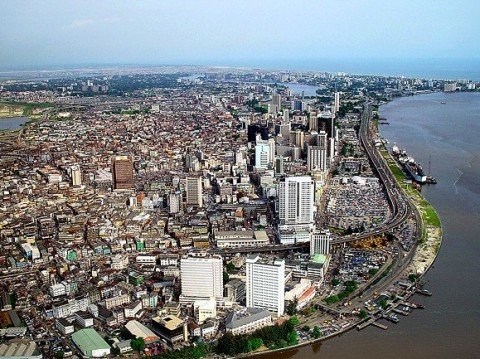
Is Lagos next?

January 26, 2012 | by Seth Kaplan | More on Africa, Conflict and security | No comments

Although it is extremely hard to predict the actions of a terrorist group such as Boko Haram, Lagos, Nigeria’s commercial capital, may be a looming target.

The organization’s capacity and ambition have grown swiftly, probably due to assistance from extremist groups in the Maghreb, Somalia, or farther afield.

And, as I wrote in December,

The country’s weak institutions make it ill-prepared to deal with threats like this. It is unlikely to have the capacity to meet the challenge. Expect more attacks in the coming months.

(more…)


South Sudan: time for the UN to take a stand

January 17, 2012 | by Richard Gowan | More on Africa, Conflict and security | No comments

The situation in South Sudan is very bad and getting worse, as the New York Times underlined in a lengthy and blunt analysis last week:

South Sudan, born six months ago in great jubilation, is plunging into a vortex of violence. Bitter ethnic tensions that had largely been shelved for the sake of achieving independence have ruptured into a cycle of massacre and revenge that neither the American-backed government nor the United Nations has been able to stop.

The United States and other Western countries have invested billions of dollars in South Sudan, hoping it will overcome its deeply etched history of poverty, violence and ethnic fault lines to emerge as a stable, Western-friendly nation in a volatile region. Instead, heavily armed militias the size of small armies are now marching on villages and towns with impunity, sometimes with blatantly genocidal intent.

But aren’t there UN peacekeepers in South Sudan?  There are, but with fewer than 5,000 troops in the country, the UN is struggling to cope.  This was emphasized by an attack by Nuer fighters on members of another tribe, the Murle, in the town of Pibor, which the UN made an effort to deter.  But the peacekeepers were outgunned:

As thousands of Nuer fighters poured into Pibor on Dec. 31, United Nations military observers watched them burn down Murle huts and then march off, in single file lines, into the bush, where many Murle civilians were hiding. Murle leaders have complained that they were abandoned in their hour of need. Neither government forces nor the United Nations peacekeepers left their posts in Pibor to protect the civilians who had fled, and it appears that many Murle were hunted down.

Hilde F. Johnson, head of the United Nations mission in South Sudan, said the peacekeepers had warned residents that the fighters were coming. But she argued that the United Nations troops had little choice but to stay on the sidelines. “Protection of civilians in the rural areas and at larger scale would only have been possible with significantly more military capacity,” she said.

Why are UN forces so thin on the ground?  Independent analysts repeatedly warned that South Sudan could slump into violence after independence in 2010 and 2011.  Although I claim no special knowledge of the country, it’s a theme that I’ve occasionally tried to highlight too.  In a December 2010 article on Sudan and the UN, I argued that Ban Ki-moon’s top priority should be to “offer the Security Council a compelling version of what the UN can achieve in the South.”  Last summer, I repeated rumors circulating in New York of UN turf wars over South Sudan:

More than 40 officials representing various agencies piled into an initial assessment mission. The U.N.’s “integrated” planning process, which has proved cumbersome in the past, was just as unwieldy in this case, and tempers frayed badly in New York.

After I wrote that, quite a few people inside the UN were in touch to say that I was off the mark.  While the UN planning process was a bit of a mess, the real problem was that the planners did not believe that the Security Council would accept a large military mission in South Sudan comparable to those in Liberia or the Congo.  European members of the Council in particular seemed to be fixated with keeping the costs of the mission down, part of larger austerity drive.  UN officials put together ideas for protecting civilians with a relatively small force, but Hilde Johnson’s statement to the NYT suggests that the level of anarchy in South Sudan has now passed the point that it can be handled through “peacekeeping lite”.  To make matters worse, troop contributors to the mission are getting (justifiably) nervous.  Russia, which provides military helicopters to the mission, seems to have had enough already:

Russia is likely to withdraw its military helicopters servicing the U.N. peacekeeping force in South Sudan after voicing alarm at attacks on Russian personnel there, a Russian official said on Tuesday.  Although Moscow has not made a final decision on its possible withdrawal , Deputy Foreign Minister Gennady Gatilov said the security situation for the 120 Russians aiding the U.N. peacekeepers “recently has not been satisfactory for us.”  “There is a likelihood that our unit will be withdrawn,” Russia’s RIA Novosti news agency quoted Gatilov as saying. He said Moscow had repeatedly asked the U.N. Secretariat and the South Sudan authorities to take measures to ensure the Russians’ security.

An anonymous UN official is reported as saying that Russia’s decision is “outrageous”.  But if the situation is as bad as it seems, then UN officials – up to and including the Secretary-General – are going to need to go further than that.  Last year, Ban Ki-moon took a stand over the crisis in Côte d’Ivoire and, as I point out in the current edition of Global Governance, demonstrated an unexpected degree of moral purpose and leadership.  He needs to repeat that feat over South Sudan.

Ban has already expressed concerns about the situation.  But he needs to make a huge push on this issue now: if he does not, he may find that the UN stands accused of overseeing massacres and crimes against humanity reminiscient of the 1990s.  That would not only sully his second term in office, but the institution’s standing as whole.


Piracy: the new aid

January 17, 2012 | by Alex Evans | More on Africa, Conflict and security, Economics and development | One comment

OK, OK, that’s not quite what Chatham House are saying in their new report Treasure Mapped: Using Satellite Imagery to Track the Developmental Effects of Somali Piracy. But check out some of what the report does say:

The data analysis indicates pirate incomes have widespread and significant positive impacts on the Somali economy. Although only a fraction of ransoms is exchanged into Somali shillings, the appreciation of the Somali shilling resulting from the injection of US dollars benefits people relying on imported food staples such as rice. There are clear trickle-down effects for casual labourers and pastoralists because of higher cattle prices.

Or this:

Piracy has created employment and considerable multiplier effects in the Puntland economy, even if a significant proportion of the proceeds is invested in foreign goods or channelled to foreign financiers. The distribution of ransoms follows traditional patterns in Somalia, involving considerable redistribution and investment in urban centres rather than coastal villages.

But here’s the real punchline:

The total cost of piracy off the Horn of Africa (including the counter-piracy measures) was estimated to be in the region of US$7–12 billion for 2010, while ransoms were said to be in the region of US$250 million. Even if Somali communities received all of the ransom money, replacing this source of income (for example with a combination of a foreign-funded security forces and development aid) would be considerably cheaper than continuing with the status quo.

A negotiated solution to the piracy problem should aim to exploit local disappointment among coastal communities regarding the economic benefits from piracy and offer them an alternative that brings them far greater benefits than hosting pirates does. A military crack-down on the other hand would deprive one of the world’s poorest nations of an important source of income and aggravate poverty.


Trickle Down Piracy

January 15, 2012 | by Seth Kaplan | More on Africa, Conflict and security, Economics and development | One comment

Readers could make a real contribution to the people of Somalia by taking their yachts over to the Horn of Africa:

Piracy off the coast of Somalia may be a global scourge costing $12bn a year, but a new report argues ransoms deliver much-needed development to the failed state.

The average hijacking ransom brings in the equivalent of the export of 1,650 heads of cattle, while keeping hostages – 1,016 were captured in 2010 – provides jobs for local cooks, producers and traders, according to the report by Chatham House. It calculates up to 100 people are needed to secure every hijacked ship.

“Piracy appears to lead to widespread economic development,” says the report’s author Anja Shortland, who argues the flow of ransom payments has helped to boost the local exchange rate, to raise real wages and to reduce inflation.In the absence of a functioning state that has failed to eliminate al-Qaeda-linked rebels further south, the report says pirates provide “local governance and stability”.

Seed money from ransoms, which garnered a record $135m last year, has helped set up dozens of trucking companies that have reduced transport costs of staples such as rice, even as global inflation bit hard and a regional food crisis helped plunge Somalia further south of pirate strongholds into famine. . . .

While the report acknowledges some piracy money goes into drugs and flashy cars, Ms Shortland, a development economist at Brunel University, argues instead that the benefits stretch far wider than a pirate financier elite. She says any abrupt military solution that stopped piracy would deprive thousands of people of jobs and “quite noticeable trickle-down”.

Source: Financial Times


Popular rage meets cute small animals

January 12, 2012 | by Richard Gowan | More on Africa, Conflict and security, Off topic | No comments

After all last year’s excitement about social media’s role in the Arab revolutions (“Think what Trotsky could have done if only he’d had a twitter feed rather than an armored train, blah, blah”), I’m delighted to see that protestors in Lagos are adopting a lower-tech but highly effective tactic.  To wit, spreading their message via cute animals:

(H/t Teju Cole’s always-excellent twitter feed.)


Another turbulent week in Guinea-Bissau

January 9, 2012 | by Mark Weston | More on Africa, Conflict and security | No comments

Guinea-Bissau is one of the world’s unluckiest countries. Ravaged by the slave trade, stifled by Portuguese colonisers (when the latter were forced out, only one in 50 Guineans could read), and then saddled with a series of inept, corrupt post-independence leaders, the decision of South American drug traffickers to use its offshore Bijagos islands as a staging post on the cocaine route to Europe was a devastating blow (for analysis of the latter, see here). The advent of the drug gangs brought chaos, as politicians, police and the military jostled for a share of the spoils. The assassination of Nino Vieira, who had ruled the country for much of the last thirty years, was the most visible of its impacts, but the repercussions show no signs of abating.

Last week saw the foiling of an alleged coup attempt by navy chief, Bubo Na Tchuto (for more on his colourful past, see here). Taking advantage of the president, Malam Bacai Sanha, being out of the country for medical treatment, Bubo had apparently resolved to take charge of the country – and by extension the cocaine trade – before army boss and former friend Antonio Indjai could lay his hands on it.

Some observers believe the arrest of Admiral Bubo was a positive development, as he has for long been suspected of being in cahoots with the South Americans (this analysis ignores the possibility that Indjai himself, who two years ago released Bubo from United Nations custody, is similarly implicated). But the death in hospital of Malam Bacai Sanha today has shaken things up yet again. Instead of settling down, there is now likely to be a new tussle for power. Indjai is likely to be either king or kingmaker, the prime minister Carlos Gomes, whom Indjai described two years ago as a “criminal” but who is now seemingly an ally (alliances in the cocaine era are extremely fluid), will want a slice of the pie, and former president, the disastrous Kumba Yala, may make another bid for the top job. The stakes are high, the power struggle unlikely to result in anything resembling stability as long as the traffickers remain in the country. The death of the president could barely have come at a worse time. Once again, fortune has frowned on Guinea-Bissau.


What can Southeast Asia teach Africa about development?

January 9, 2012 | by Seth Kaplan | More on Africa, East Asia and Pacific, Economics and development | 2 comments

Southeast Asia has consistently outperformed Sub-Saharan Africa in income growth. As the below chart indicates, its inhabitants were much poorer than Africans in 1960; today they are two and one-half times richer. In fact, over the past half-century, the region has been the most consistently successful in the developing world, growing almost continuously (apart from a brief hiatus after the 1997 Asian financial crisis).

Source: Tracking Development

Southeast Asia’s growth has also been much more inclusive than Africa’s. Whereas the latter’s two growth spurts since independence—in the 1960s and 2000s—have yielded little poverty reduction, Southeast Asia has produced spectacular reductions. Indonesia, for instance, reduced poverty from 60 percent in 1970 to 22 percent in 1984. Vietnam reduced it from 58 percent in 1993 to 14 percent in 2008.

Yet, the region does not meet the standard model for economic success, at least as defined by the World Bank and the rest of the Western development community. Governments have historically not been held in check by elections. Corruption is widespread. Governance has rated low on most indicators.

What then explains this success? (more…)


Boko Haram’s Christmas present to Nigeria

December 25, 2011 | by Seth Kaplan | More on Africa, Conflict and security, Economics and development | 2 comments

The radical Islamist group Boko Haram obviously does not like Christmas:

Five bombs exploded on Christmas Day at churches in Nigeria, one killing at least 27 people, raising fears that Islamist militant group Boko Haram – which claimed responsibility – is trying to ignite sectarian civil war.

Gun battles between security forces and the sect also killed at least 68 people in the last few days in northern Nigeria. Earlier this year, the Islamists struck the capital, Abuja, twice, including a suicide car bomb attack against the United Nations headquarters that killed 26 people.

Nigeria has stark ethnic and religious divisions and a history of Muslim-Christian violence. Such attacks are unlikely to improve matters.

Unfortunately, the country’s weak institutions make it ill-prepared to deal with threats like this. It is unlikely to have the capacity to meet the challenge. Expect more attacks in the coming months.


How big is the Congo? Very big!

December 6, 2011 | by Richard Gowan | More on Africa, Europe and Central Asia, Off topic | 2 comments

Few journalistic cliches are as irritating as the trope of describing some war-ridden country as “the size of Texas” or “three times the size of France”.  I recall being taught at school that an area of rain-forest “the same size as Wales” was being burned every year in Brazil.  Some wit asked if it would be possible to burn Wales instead.

Most of these comparisons are pretty meaningless because it’s reasonably hard to keep exact data on the size of France, etc., in your head.  Now, however, the BBC has come up with a useful graphic to prove that the Democratic Congo is “around two thirds the size of Western Europe.”  Nasty choice of color-scheme, though…


The DRC: is there a better way?

December 5, 2011 | by Seth Kaplan | More on Africa | One comment

What can you do with US$1.2 billion? Treat over one million HIV/AIDS patients in Africa for one year. Build 200 new university campuses in places such as Ghana. Provide core funding for hundreds of developing country think tanks. Or organize an election in the Democratic Republic of the Congo (DRC). Which is likely to improve the most number of lives?

The election in the DRC this week, the second since the end of the bloody civil war that ravaged central Africa in the 1990s, is supposed to bring greater stability and more accountable government to a country almost the size of western Europe. But progress since the first election in 2006 has been disappointing. The country ranks dead last of the 187 countries on the Human Development Index. The poverty rate is 71%. Only 9% of the DRC’s people have even intermittent access to electricity.

And as the New York Times reported recently:

Brutal rebel groups still haunt the hills [in the eastern region], pillaging minerals and killing and raping at will. . . . A witch doctor recently led a revolt in the northwest of the country. In February, rebels besieged the airport in Lubumbashi, in the south, thought to be Congo’s most promising city. Even here in Kinshasa, home to about 10 million people, bands of wiry, adolescent street children wielding iron bars routinely set up roadblocks and steal money from helpless motorists.

This election is unlikely to change much. The polls are widely believed to be rigged, will probably be contested, which will likely yield violence. In releasing a report that detailed abuses, the United Nations High Commissioner for Human Rights said, “The kind of intimidation, threats, incitement, arbitrary arrests and violence that we have documented is unacceptable and has a chilling effect on voters.”

There are few other places on the planet where politics are as disconnected from reality. Elections are more a fight to control the spoils of power between competing groups of elites then a mechanism likely to bring better government
to the country’s people.

(more…)


Gloom and doom at the Security Council

November 16, 2011 | by Richard Gowan | More on Africa, Conflict and security, Cooperation and coherence, Global system, Latin America and the Caribbean, Middle East and North Africa, South Asia | No comments

Syria is slipping further into chaos.  It’s sad to think that the Security Council has been debating the situation there for almost half a year to no effect.  Or, to be more accurate, the only effect has been to make lots of diplomats very unhappy, as I explain in the new edition of Pragati:

It’s hard to find a happy diplomat at the United Nations Security Council these days. Western officials grumble about the difficulty of negotiating with India, Brazil and South Africa (the IBSA countries) over the Syrian crisis, to say nothing of China and Russia. The non-Western powers, they suspect, are all plotting to frustrate the U.S. and Europe.

Piffle, reply the supposed plotters. The bleak mood in the Council is a result of the West’s distortion of the UN mandate to protect civilians in Libya. If NATO hadn’t used that as a basis for regime change, there might be real cooperation over Syria. Even the unhappiest European officials accept that other powers’ anger over Libya is genuine.

Does anyone gain anything from the stalemate? Russia arguably does. Earlier in the year it failed to halt Western interventions in not only Libya but also Côte d’Ivoire. As Russia’s main claim to leverage at the UN is its willingness to act as a spoiler, these set-backs made it look a shadow of itself. On Syria, its blocking power returned as it resisted – and in October vetoed – EU and US efforts to pass a resolution sanctioning Syria.

For China, the benefits have been less clear, as it prefers to look pragmatic on the Security Council. Nonetheless it felt obliged to side with Russia over Syria. But the real losers have been the IBSA countries, which have often looked trapped between the West and the Russo-Chinese axis as they have tried to respond to events in the Middle East.

But at least IBSA has emerged as a semi-credible diplomatic force in UN affairs, right?  I’m not so sure:

The fact that IBSA voted as a bloc can be interpreted as a success – it is generally recognised that the trio of powers have been significant swing voters in the Security Council this year. But this may only be a temporary phenomenon. Brazil is approaching the end of its two-year term on the Council, and South Africa continues to have a greater stake in acting as the leader of the African bloc than in aligning with India. IBSA’s brief moment of importance in the Council could soon be forgotten, and India’s leverage duly reduced.


Tony Blair on development and leadership

October 21, 2011 | by Claire Melamed | More on Africa, Economics and development, Global system, UK | 2 comments

On Wednesday ODI was host to Tony Blair, giving a speech on ‘leadership’ and the work of his Africa Governance Initiative

There were, of course, predictable howls of protest from people furious that ODI gave a platform to the man who sent troops into Iraq. My view, for what it’s worth, is that Iraq was terrible  but that Blair also did many good things: huge investments in the health service and education, the minimum wage, the Human Rights Act, the creation of DFID, the increases in aid.  I’m unwilling to get into a game of trying to trade these off against each other, and Iraq doesn’t cancel out the good stuff as far as I am concerned.  But anyway. 

Blair talked about the importance of effective leadership – his main argument (very much informed by his own time in government, he said) was that ‘without a strong centre, nothing gets done’.  I found this quite a refreshing challenge to the usual focus in the development canon on processes of governance and democracy.  Ideal processes won’t necessarily turn out leaders who can actually act (one might cite the American constitution and Obama’s current trials as exhibit A here), while some leaders can do considerable amounts of good while presiding over very far from ideal processes (some might argue that Kagame falls into this category – I find it very hard to judge).

One wouldn’t want to push this too far.  Being able to participate in a political process that you trust to deliver, and not being subject to opression and fear while you do so, is a good thing in itself.  But it was a useful reminder that people matter in history, and that having people who can get things done, and who want to do the right things, is a crucial part of making progress happen.  As a part of effective leadership, my former colleagues at ActionAid and Christian Aid will be pleased to know that he put a great focus on the importance of governments being able to raise their own money through tax, and the huge importance of getting investment deals right so that governments benefit. 

Rightly, most of development is focused on what happens in societies and economies at large.  But I found it quite useful to be reminded that what happens at the top of governments can be about making good stuff happen, and we should not always just focus on governments when they start doing things wrong.


Will the Euro crisis kill peacekeeping?

October 11, 2011 | by Richard Gowan | More on Africa, Conflict and security, Cooperation and coherence, Europe and Central Asia, North America | One comment

A year ago, I was worrying about the implications of the Euro crisis for UN operations:

Despite the financial crisis, the UN’s peacekeeping budget — running at between $7 billion and $8 billion a year — has not yet faced drastic cuts. The Obama Administration has made a point of paying its dues (now 27% of the total) on time, compensating for Bush-era arrears.

However, other big financial contributors — especially members of the European Union, who cover 40% of the costs combined — are looking for cuts as part of broader spending reductions.

In June [2010], Gérard Araud, France’s ambassador to the UN, told the Security Council that “in the context of budgetary austerity, the cost of peacekeeping was increasingly difficult to manage.”

You can find a longer version of this argument in a paper I wrote for ZIF, the German peacekeeping center, in August 2010.  Fourteen months later, my gloomy predictions are being vindicated.  Colum Lynch published a lengthy piece yesterday  on the FP website headlined “U.S. and Europe fight over cuts in peacekeeping”:

Susan Rice, the U.S. ambassador to the United Nations, fended off a push last month by European governments to press to consider cuts next year in U.N.-backed peacekeeping mission in Liberia, which costs upwards of $525 million a year, more than Liberia’s $459 million annual national budget. Rice has also resisted calls from other European governments, like Britain and France, to consider deeper cuts in U.N. peacekeeping missions in Haiti and in Sudan.

France and Britain are required to pay, respectively, 7.5 percent and 8.16 percent of all U.N. peacekeeping costs.

U.S. officials say that peacekeeping missions must be adequately funded to ensure their success, and that European governments, who each pay a far smaller share of the U.N. peacekeeping budget, are in some instances motivated by a desire to shift funding to their own “pet” missions, not the commitment to fiscal discipline that they claim.

“There is no country that has a greater interest in the economies, effectiveness, and efficiencies of U.N. peacekeeping missions [than the United States]. We pay 27 percent of the bill while the Europeans pay a smaller percentage,” Rice said in an interview with Turtle Bay. “For them to be holier than thou is a bit rich, to say the least.”

I’d like to say “I told you so”, though that’s not super-helpful…


URBEINGRECORDED » Discontinuity & Opportunity in a Hyper-Connected World
Great discussion of complexity and network theory and its relevance to global risks, from Chris Arkenberg

The Emissions Gap Report
This publication aims to assess the following questions: are countries’ pledges of action collectively consistent with and, if implemented, likely to achieve the 2˚C and 1.5˚C temperature goals? If not, how big is the gap between emission levels consistent with these temperature goals and the emissions expected as a result of the pledges?

The Spectator runs false sea-level claims on its cover
These claims rely on misinterpretations of scientific data so grave that even an arts graduate such as Fraser Nelson should have been able to spot them.

Europe’s Insult Diplomacy - Infographic
British Prime Minister David Cameron called French President Nicolas Sarkozy “a hidden dwarf” as part of a joke told to a journalist. German Chancellor Angela Merkel referred to Sarkozy as “Mr. Bean,” while Sarkozy called her “La Boche,” or the Kraut. Spanish Prime Minister José Zapatero is “too pink” because of the high proportion of women in his cabinet, said Italian Prime Minister Silvio Berlusconi. And Berlusconi’s opinion of the euro? “A disaster,” he said, that has “screwed everybody.”

Solar Power's Good News
The White House has challenged the solar industry to produce clean electricity at $1 per watt. It has also set a national goal to achieve 80 percent clean energy use by 2035…The good news is that researchers are racing toward that goal at an impressive rate.

BBC News - Viewpoint: Is the alcohol message all wrong?
"The effects of alcohol on behaviour are determined by cultural rules and norms, not by the chemical actions of ethanol."

Something's Happening Here - NYT - Tom Friedman
When you see spontaneous social protests erupting from Tunisia to Tel Aviv to Wall Street, it’s clear that something is happening globally that needs defining

Foreign Aid Set to Take Hit in U.S. Budget Crisis - NYTimes.com
America’s budget crisis at home is forcing the first significant cuts in overseas aid in nearly two decades

Israel - Adrift at Sea Alone - NYTimes.com
Tom Friedman bemoans "the most diplomatically inept and strategically incompetent government in Israel’s history"

Eurozone: A nightmare scenario - FT.com
How it could all go pear-shaped - your cut-out-and-keep flow chart guide

Sharp fall in poor countries' dependency on foreign aid says ActionAid report
Aid dependency among 54 of the world’s poorest countries has declined by a third over the last decade, according to a new report from ActionAid.

World environment programs in budget crosshairs | Reuters
Global conservation programs are prime targets for budget-cutting: they sit at the crossroads of two things Americans dislike spending money on, aid and environment.

Attack of the Superweed - BusinessWeek
widespread use of Roundup has led to the evolution of far-tougher-to-eradicate strains of weeds

Jon Stewart Says Rick Perry Is the Candidate Republicans Want, and Deserve
Laugh out loud funny

Global reach is the prize at Busan - Resources - Overseas Development Institute (ODI)
Jonathan Glennie and Andrew Rogerson on what you need to know ahead of the big aid effectiveness summit

When Bloggers Don’t Follow the Script, to ConAgra’s Chagrin - NYTimes.com
Ha ha ha - epic PR #fail

Obama backs down on tighter smog regulations | World news | The Guardian
In case you missed it. Yes we can...

Wikileaked cable: executions of children by US forces in Iraq
Wikileaked cable with harrowing reports of  US forces handcuffing and then killing 10 people - including children aged 5 years, 3 years and 5 months.

BBC News - Tests show fastest way to board passenger planes
The way airlines board planes turns out to be the least efficient

New sources of aid: Charity begins abroad | The Economist
"The establishment donors’ aid monopoly is finished."

Who Doomed Sarah Palin's Presidential Dream? | TPMDC
Where did it all go wrong for Sarah?

The Intergenerational Foundation
"We believe that each generation should pay its own way, which is not happening at present."

Should we have a land value tax? - MoneyWeek
Discussion of pros and cons for the UK, following an article by OECD's chief economist in Prospect

Toward a Post-2015 Development Paradigm | Centre for International Governance Innovation | Centre pour l'innovation dans la gouvernance internationale
12 new development goals are proposed to replace the MDGs from 2015 - the outcome of an IFRC / CIGI conference at Bellagio

China Gets (Needlessly) Defensive Over Famine in Africa - China Real Time Report - WSJ
Germany's Africa policy coordinator causes dispute by singling out Chinese landgrabs as a culprit in the Horn of Africa famine

Latin America: A toxic trade - FT.com
Must read broadside against probably the most stupid and avoidable public policy screw-up in recent memory: the war on drugs

The intellectual collapse of left and right - FT.com
Michael Lind on how the economic inclusion narratives of centre left and centre right are simultaneously imploding - must read

Julia Gillard back to rock-bottom: Newspoll | The Australian
Bad news for supporters of green taxes and decisive action on climate change

Oxfam’s looking for a new Head of Research
A plum role is up for grabs

The global crisis of institutional legitimacy | Felix Salmon
"Our hearts want government to come through and save the economy. But our heads know that it’s not going to happen."

UBS' George Magnus On Marxist Existential Crises And The "Convulsions Of A Political Economy" | ZeroHedge
Not every day you see investment banks publishing detailed analysis of Karl Marx

Food Prices Could Hit Tipping Point for Global Unrest | Wired Science | Wired.com
New quant research on thresholds over which high food prices cause riots

Ambassador Locke Picks Up His Own Coffee, Gains 'Hero' Status Among Chinese : The Two-Way : NPR
Some pictures of the brand new U.S. ambassador to China are causing quite a stir.

Jon Stewart | Ron Paul | Michele Bachmann | Mediaite
Jon Stewart breaks down the state of play on the Republican Presidential race

The Bucky-Gandhi Design Institution › When?
Some properly out of the box thinking from Vinay Gupta. Must-read.

England’s riots: If the UK were a fragile state… | Dan Smith's blog
By the head of a leading peacebuilding NGO

Post-Traumatic Stress Disorder From 9/11 Still Haunts - NYTimes.com
At least 10,000 New Yorkers still have PTSD from 9/11

The unlikely social network fuelling the Tottenham riots « The Urban Mashup Blog
Not Twitter, not Facebook but.... Blackberry Messenger

Mapping world food price volatility | Nourishing the Planet
Clickable map of global food price hotspots

Will the 2012 Earth Summit be a flop? > From Poverty to Power
Great summary of the state of play on Rio 2012 from Oxfam's Sarah Best

Articles & Publications
Sustainable Development Goals – a useful outcome from Rio+20?

Recent months have seen increasing interest in the idea that Rio+20 could be the launch pad for a new set of ‘Sustainable Development Goals’ (SDGs).  But what would SDGs cover, what would a process to define and then implement them look like, and what would some of the key political challenges be? This short briefing [...]

Creating Consensus on a post-2015 framework for development

Any global framework for development which is agreed after 2015 will be a political deal between states. This paper looks at recent trends in policy and politics in emerging economies and traditional donors to assess where a consenus might lie. It suggests some principles for a post-2015 agreement which emerge from recent policy developments

A post-2015 Global Development Agreement: why, who what?

Paper from ODI and UNDP, authored by Claire Melamed and Andy Sumner, summarising the evidence on the impact of the MDGs, and looking at current trends in poverty and in global governance that will affect the shape and the scope of any future agreement on global development.

Resource Scarcity, Fair Shares and Development

Why resource scarcity will be a game changer for global justice agendas, and what aid donors, NGOs and other development opinion formers need to do about it. WWF / Oxfam report by Alex Evans.

Making Rio 2012 Work: Setting the stage for global economic, social and ecological renewal

The Rio 2012 sustainable development summit is at risk of being the latest in a long line of damp squibs on environmental multilateralism – but could still make real progress, if it focuses on greening growth and building resilience to shocks and stresses, and above all faces up to the issues of fair shares that arise in a world of limits.

Governance for a Resilient Food System

How national and international governance systems need to be reconfigured to meet the challenges of food security in a world of tighter supply and demand balances and increasing volatility. Report for Oxfam’s new Grow campaign by Alex Evans. (May 2011)

Running out of everything: how scarcity drives crisis in Pakistan

Article on scarcity of resources in Pakistan and what it means for the country.

Economics for a world with limits

Text of speech by Alex Evans to Institute for New Economic Thinking annual conference at Bretton Woods; the YouTube video is here. (April 2011) Download Speech

Unscrambling the price spike

Article published on China Dialogue on reasons for the new food price spike, including potential implications of the current drought in China. (February 2011) Download Article

2020 Development Futures

Eight critical uncertainties for development over the next decade, and ten recommendations for what ActionAid – who commissioned this report – should do to prepare for them

American Foreign Policy in an Age of Uncertainty

Article published in World Politics Review on current American foreign policy

The World in 2020 – Geopolitical and Trends Analysis

Report asking how organisations can prosper in what will be a turbulent period for world order

Globalization and Scarcity

Center on International Cooperation report on what forms of multilateral cooperation are needed to manage scarcity of resources

Resource Scarcity, Climate Change and the Risk of Violent Conflict

Background paper on whether resource scarcity and climate change will cause increased violent conflict

Organizing for Influence: UK Foreign Policy in an Age of Uncertainty

Chatham House report on how the UK’s new coalition government should upgrade and reform the way Britain conducts foreign policy

The Long Crisis Seminar

Introductory remarks by David Steven at a Brookings Institution seminar on risk and resilience in the global system (March 2010)

Stop Betting the House talk

Talk given by David Steven at Gresham College on risk and resilience in the UK housing market, as part of a Long Finance Roundtable meeting (March 2010)

Time to Stop Betting the House: a response to the FSA

Report by David Steven in response to the FSA’s Mortgage Market Review

Confronting the Long Crisis of Globalization: Risk, Resilience and International Order

Brookings Institution report by Alex Evans, Bruce Jones and David Steven on how globalisation could fail – and how it could be made more resilient. Published to coincide with the 40th anniversary World Economic Forum in Davos.

Hitting Reboot – where next for climate after Copenhagen

Report by Alex Evans and David Steven analysing the post-Copenhagen context on climate change, including a proposed 12 point action plan. Written for the Brookings Institution / NYU Center on International Cooperation Managing Global Insecurity programme.

Climate Change and Hunger: Responding to the challenge

World Food Programme report on the state of the science on what climate change means for hunger, plus policy recommendations. Authored by IPCC Impacts Chair Martin Parry with Mark Rosengrant, Tim Wheeler and Global Dashboard’s Alex Evans (December 2009)

Scarcity, security and institutional reform

Presentation by Alex Evans to a seminar organised for the UN Department of Political Affairs by the Geneva Centre for Security Policy (August 2009)

The Resilience Doctrine

Article on risk and resilience by Alex Evans and David Steven – part of a special in World Politics Review on risk and resilience in a globalized age (July 2009)

An Institutional Architecture for Climate Change

Report by Alex Evans and David Steven exploring the future international institutional requirements for managing climate change, and including three scenarios for climate institutions between now and 2030. Commissioned by the UK Department for International Development. (May 2009)

Risks and Resilience in the New Global Era

Article by Alex Evans and David Steven exploring resilience as a political agenda – part of a special edition of Renewal on the transformation of foreign policy (February 2009)

A Tale of Two Cities

Climate and cities think piece, co-authored by David Steven and the British Council’s Peter Upton (29 January 2009)

The Feeding of the Nine Billion

Chatham House pamphlet by Alex Evans on how scarcity issues will shape the outlook for global food production, and the actions that policymakers need to take at the international level and in developing countries to ensure food security in the 21st century

2009 – A Year for International Reform

Paper by David Steven, presented to “Reforming International Institutions – Meeting the Challenges of the 21st Century,” a conference organized by the United Nations University and the British Embassy in Tokyo (Jan 2009).

Food prices: what next?

Speech by Alex Evans at the Tomorrow Network (25 November 2008)

A Bretton Woods II Worthy of the Name

Paper by Alex Evans and David Steven on financial reform and wider multilateralism, published ahead of the G20 ‘Bretton Woods II’ Summit (November 2008).

The Future of Resilience

Speech by David Steven to RUSI Conference on UK Resilience (8 October 2008)

Towards a Theory of Influence

Chapter by Alex Evans and David Steven in the Foreign & Commonwealth Office publication, ‘Engagement: public diplomacy in a globalised world’ (July 2008). Download Chapter

Multilateralism for an Age of Scarcity

Draft report by Alex Evans exploring multilateral system reforms needed in order to manage resource scarcity issues more effectively. The final version will be published in early 2010 (July 2008)

Scarcity issues and conflict in Africa

Speech by Alex Evans at UK Parliament (8 July 2008)

A Low Carbon World – Pathways to a Global Deal

Speech by David Steven at the UNU G8 Symposium (4 July 2008)

Climate, scarcity and multilateralism

Speech by Alex Evans to United Nations Association UK (7 June 2008)

The new public diplomacy and Afghanistan

Speech by David Steven to the UK Defence Academy’s Advanced Research and Assessment Group seminar on Strategic Communications, Public Diplomacy and Afghanistan (4 June 2008).

Technology and Public Diplomacy

Speech by David Steven to the University of Westminster Symposium on Transformational Public Diplomacy (30 April 2008).

Rising Food Prices: Drivers and Implications for Development

Briefing paper by Alex Evans, published through Chatham House’s food programme (April 2008).

Looking Forward: how do we build resilience?

Speech by David Steven to RUSI Conference on Critical National Infrastructure (16 April 2008).

Shooting the Rapids: multilateralism and global risks

Paper by Alex Evans and David Steven, commissioned by Gordon Brown and presented to heads of state at the Progressive Governance Summit (April 2008).

Beyond a Zero-Sum Game on Climate Change

Chapter by Alex Evans and David Steven, as part of the British Council’s Transatlantic Network 2020 book ‘Talking Trans-Atlantic’ (March 2008).

From Bali to Copenhagen: towards an endgame for global climate policy?

Article by Alex Evans for the Environmental Policy & Law Journal (January 2008).

Climate Change: The State of the Debate

Report by Alex Evans and David Steven, written for the London Accord (December 2007).

The Post-Kyoto Bidding War: bringing developing countries into the fold

New paper by Alex Evans on climate policy after 2012 from the Center on International Cooperation (October 2007).

Alternative CSR: the Foreign & Commonwealth Office

Chapter on the FCO from Manchester University Press’s Alternative Comprehensive Spending Review, by David Steven (September 2007).

Fixing the UK’s Foreign Policy Apparatus: A Memo to Gordon Brown

Note by Alex Evans and David Steven about how to restructure the UK’s foreign policy system in order to manage trans-boundary global risks better (April 2007).

Evaluation and the New Public Diplomacy

Talk given by David Steven at the Wilton Park conference: The Future of Public Diplomacy. Focuses on strategies to drive public diplomacy to the heart of the foreign policy armoury (March 2007).

Articles and Publications

YouTube Preview Image

Gabrielle Giffords to step down | 2 Comments

YouTube Preview Image

Oh to be in the president of Turkmenistan’s entourage… | 1 Comment

YouTube Preview Image

David Carr And Danah Boyd Share Insights | Comments Off

YouTube Preview Image

Edgar Mitchell on the Overview Effect | 1 Comment

YouTube Preview Image

Presidential debate fail | 2 Comments

More What we're watching

Key Posts
Cheap food: bad. Expensive food: terrible. Why the FAO’s glass is always empty8

It’s interesting to look back a few years – to when the world was worried that food was too cheap, not too expensive. In 2004, the UN Food and Agricultural Organization looked back on a long bear market for food: forty years in which real prices of agricultural commodities had fallen 2% per year, or [...]

How many people are hungry?3

The good news: poverty is in retreat. The bad news: hunger isn’t.  That’s the headline finding for the first Millennium Development Goal , which aims to halve the proportion of people living on less than $1.25 a day and the proportion of people living in hunger between 1990 and 2015. Great strides have been made [...]

“Freeing the entire human race from want”2

The MDGs are so over Having just been rude about one World Bank report, here’s a positive review of another – the Global Monitoring Report 2011, which the Bank produces jointly with the IMF. The GMR updates progress against the Millennium Development Goals – targets that were set as the culmination of a push throughout [...]

21 years ahead of its time5

A 1989 article on ‘the global teenager’ in Whole Earth Review was way ahead of its time in identifying the crux of what today’s youth bulge means for global change

Is it time for Sustainable Development Goals?5

The pros and cons of a new global set of Sustainable Development Goals (SDGs) – and how they might work in practice

The one book you must read over the summer9

Mark Lynas’s new book The God Species is a must-read for environmentalists

Fair shares in a world of limits: the new front line for development-

Thoughts after from a joint WWF / Oxfam seminar on resource scarcity, fair shares and development.

What the ‘powershift’ narrative overlooks on US-China relations-

The ‘powershift’ narrative about US-China relations obscures how much they have in common: unsustainable growth paths, shaky financial sectors, political sclerosis, massive inequality, reliance on imported resources and above all their status as the two principal obstacles to collective action on shared global risks.