Global Dashboard

Archives for the ‘Economics and development’ Category

Ten things you probably didn’t know about Burkina Faso

March 14, 2010 | by Mark Weston | More on Africa, Economics and development | 2 comments

We are now in Burkina Faso, the last stop on what has been a fascinating and somewhat challenging tour of West Africa. Here’s a beginner’s guide to one of the world’s poorest countries:

1. Located in the heart (and heat) of West Africa, between the Sahara desert and the forests of the south, Burkina Faso has one of the highest fertility rates in the world. The average Burkinabe woman has six children. As a consequence, the population has increased five-fold in the past half-century. At 15 million, however, it is still under-populated compared to Great Britain, which is of similar size but has four times more people. It’s still too crowded though for the 3.5 million Burkinabe who live and work in neighbouring Ivory Coast.

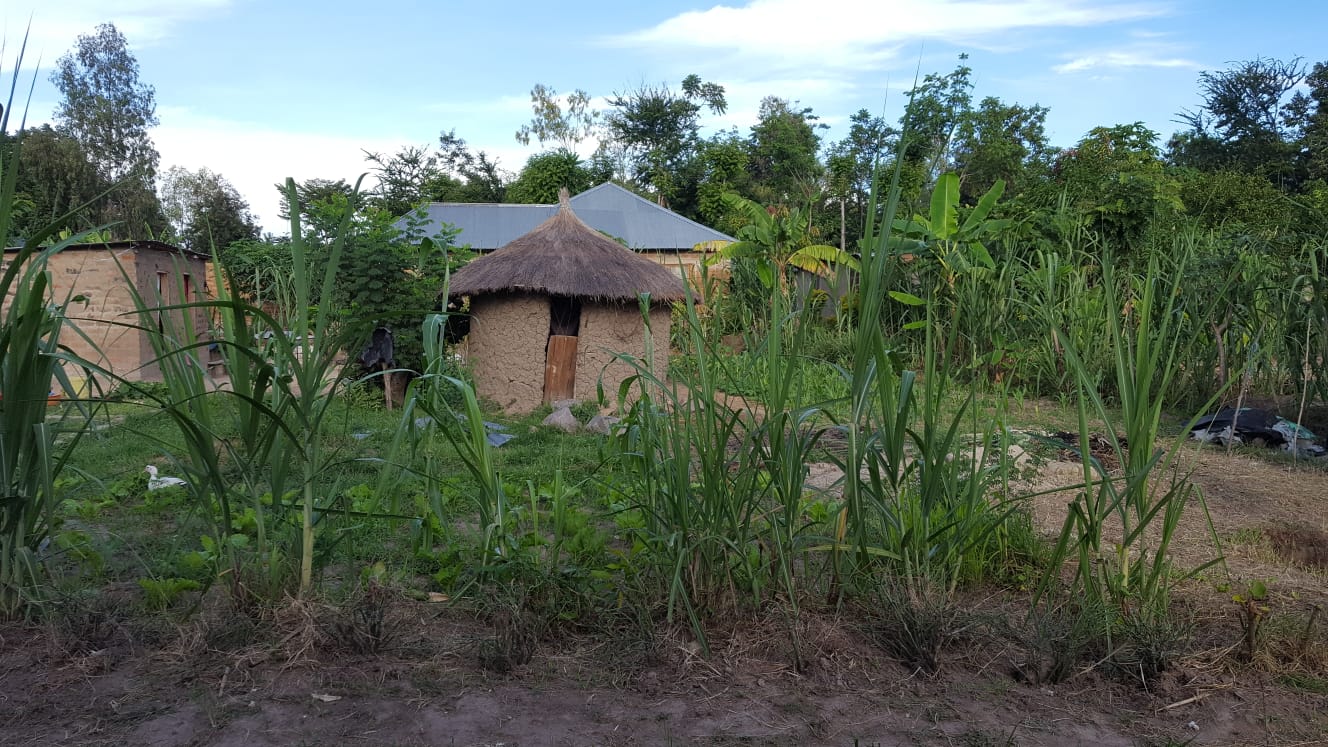
2. Known in colonial times as Upper Volta, Burkina Faso means ‘Land of the Honourable People.’ Burkinabes are known as among the most honest folk in Africa.

3. The country has arguably the world’s best place names. Its capital – one of the oldest cities on Earth – is Ouagadougou. Leafy Bobo-Dioulasso, from where I am writing this, is the second city. It also boasts the desert market town of Gorom-Gorom (so good they named it twice), Bouroum-Bouroum (ditto), Fada N’Gourma, Tin-Akof, Niangoloko and, er, Rambo.

4. Burkina has few natural resources. The French only colonised it because it was a bridge between their coastal territories of Benin and Ivory Coast and their desert holdings in modern-day Mali and Niger. It even stopped being a country for 15 years from 1932, when it was carved up between its more important neighbours. The French made good use of Upper Volta’s human resources, however, forcing hundreds of thousands to build railways, farm cocoa and fight in the First World War trenches.

5. The country is dominated by the Mossi ethnic group. A tribe of brilliant horsemen (which may account for the profusion of betting shops in Bobo), the Mossi repelled slave raiders and other rivals and remained intact for 400 years until their kingdom fell to the French. Captain Paul Voulet, who led the French expedition, was a real-life Kurtz figure, who stuck victims’ heads on poles, roasted children over fires, and strung up soldiers who displeased him at a height where their feet could be reached by hyenas’ hungry jaws. When his superiors tried to rein him in, he told his troops he was no longer French but a “black chief,” who would found his own empire. After he was killed, the French, embarrassed that their civilising mission in their colonies had gone awry, attributed Voulet’s activities to the maddening heat of Africa.

6. Burkina Faso is one of Africa’s least urbanised societies. Despite plagues of locusts, catastrophic droughts, desertification, and the fatal effects of US cotton subsidies (Burkina produces cotton at one-quarter the cost of American cotton, but subsidies mean US producers can undercut Burkinabe farmers), over three-quarters still live in the countryside. The French colonial administrator R Delavignette wrote in 1946 that, ‘We came from an industrialised Europe where factories are joyless affairs, and found people who worked to music. Communal labour had its drums and tom-toms, its orchestras to cheer the workers on.’ Drummers still accompany farmers at planting and harvesting times today.

7. Burkina hosts Africa’s most important film festival, the biennial Fespaco (the next one is in 2011). Cinema attendances are falling, however, because of the proliferation of pirated DVDs.

8. Burkina was home to the ill-fated revolutionary Thomas Sankara, who as president alienated the French by calling them neo-colonialists, told the country’s creditors he wouldn’t pay them back (‘you played the game, you lost,’ he explained), slated African leaders for their corruption, and practised what he preached by ditching the ministerial Mercedes for a Renault 4, taking out a $2,000 mortgage to buy a house, and cycling around Ouagadougou on a rusty old bicycle (is David Cameron a secret fan?). Cheques he wrote often bounced. Sankara was killed in 1987 by soldiers close to his friend Blaise Compaore, who many suspect ordered the assassination. Frequently described as Africa’s Che Guevara, Sankara, who unlike most African revolutionaries died before he could sully his reputation, remains a hero to young idealists from all over the continent.

9. Blaise Compaore is still the Presdient of Burkina Faso today. Something of an eminence grise, as well as being linked to Sankara’s death he was also implicated in civil wars in Liberia and Sierra Leone, and is a longstanding supporter of the vicious Liberian warlord Charles Taylor (currently on trial in The Hague for war crimes). On the other hand, Compaore has also helped broker peace, for now, in Guinea. In the 2005 election, judged ‘free and fair’ by the 1500 (count ‘em) international observers who were flown in to watch, he gained 80% of the vote.

10. Burkina’s main cities saw violent street protests in 2008, as food and fuel prices climbed beyond the reach of most urbanites. As Compaore has loosened his dictatorial grip on the country, protests of all kinds have increased. One year, the authorities in Ouagadougou tried to force motorcycle riders to wear helmets. Vigorous rioting forced them to back down.


On the web: London’s global financial standing, EU security and defence policy, China and the West…

March 12, 2010 | by Michael Harvey | More on Cooperation and coherence, East Asia and Pacific, Economics and development, Europe and Central Asia, North America, UK | No comments

- The FT has news that London’s position as the dominant global financial hub is slipping, with the UK capital now tied with New York for top spot in the latest rankings. Elsewhere Barry Eichengreen and Kevin H. O’Rourke examine the latest economic data comparing the present crisis with the Great Depression across a range of indicators (including global output, world trade, and equity markets). Robert Shiller, meanwhile, explains the difficulties of using past experience to predict the course of the current crisis.

- European Geostrategy suggests that EU security and defence policy is like a jazz band and explains why a White Paper providing a “grand strategy” is needed. EUobserver, meanwhile, has news on the emerging shape of the European diplomatic service – its structure and staffing – as member states gear up to secure the important EEAS secretary general post.

- Elsewhere, Constanze Stelzenmüller takes an in-depth look at the travails of German security policy, offering insights into how it might evolve. Highlighting the lack of strategy, she argues that “fundamental decisions regarding German security policy have been repeatedly forced into the Procrustean bed of moral necessity, domestic imperatives, or the demands of external alliances.”

- Finally, over at openDemocracy, Andy Yee explores the “hedgehog’s dilemma” between China and the West, highlighting a gradual acceptance of different core values. TIME magazine, meanwhile, assesses the slow progress toward democracy in Hong Kong and the possible wider implications from Beijing’s perspective.


On the web: Obama’s enforcer, the EEAS and climate, the politics of natural disasters, and nuclear negotiations…

March 5, 2010 | by Michael Harvey | More on Climate and resource scarcity, Conflict and security, Economics and development, Europe and Central Asia, Latin America and the Caribbean, North America | No comments

- The New Republic’s Noam Scheiber has an in-depth profile of President Obama’s under fire right-hand man, Rahm Emanuel, explaining why “laboring as chief of staff during the first year or two of a presidency can be a prolonged form of torture”. Over at The Daily Beast Richard Wolffe gets perspectives from three former presidential enforcers. Elsewhere, Robert Kagan explores the growing bipartisan consensus in US foreign policy.

- Writing in Der Spiegel, Sascha Müller-Kraenner and Martin Kremer assess how the new European External Action Service (EEAS) might help the EU exert greater influence over climate governance post-Copenhagen. The new diplomatic corps will offer “a unique opportunity to increase analytical capacity and to design the right instruments and institutions for confronting climate change”, they suggest. Reuters meanwhile reports on the failure of EU member states to meet their commitments on development aid, and the implications for climate funding.

- Over at World Politics Review, Frida Ghitis explores how natural disasters can shape the national political narrative, with last weekend’s Chilean earthquake proving only the most recent example.

“No matter where disaster strikes”, she argues, “the script opens with shock, heartbreak and compassion. Then, it inexorably moves towards a cold political calculus about the performance of political leaders responsible for managing the aftermath.”

- Finally, in the midst of ongoing nuclear negotiations and two months before the crucial NPT Review Conference, the Moscow Times assesses the Kremlin’s “stubborn” approach to talks. British Ambassador John Duncan offers his perspective on UK-Russian nuclear cooperation here.


Betting the House – Gresham talk

March 3, 2010 | by David Steven | More on Economics and development, UK | No comments

Thomas Gresham

Yesterday, I was at the wonderful Gresham College for a seminar on housing – I posted some highlights earlier. But here’s a lightly edited version of my talk.

It explores the risks posed by the UK’s partially deflated housing bubble and sets out some radical options for reform (elucidated in more detail in the Long Finance paper from the talk is drawn).

And for those of you don’t know Gresham, I recommend Michael Mainelli’s brief history

Sir Thomas Gresham (1519 to 1579) traded cloth and linens between England and the Low Countries at a time when Cambridge and Oxford had a duopolistic hold on higher education in England. A Cambridge man himself (Caius College), if Gresham’s skippers had visited an Oxbridge College they would, at best, have had the door of a college opened to them and then been laughed at in Latin for their ignorance.

If you’re going to backstab some one properly, do it from the front. Sir Thomas died of apoplexy in 1579 bequeathing one moiety of the Royal Exchange to the Corporation of London and the other moiety to the Mercers’ Company, charging them with the nomination of seven Professors to lecture in Astronomy, Divinity, Geometry, Law, Music, Physic and Rhetoric. He required the lectures to be in Latin and, horror horribilis, English. In effect, Sir Thomas, who pursued monopolies himself, used his will of 1575 anti-monopolistically to crack the Oxbridge oligopoly by bribing seven professors to give lectures to the public, in English.

Gresham College is about ‘new learning’. Sir Thomas felt strongly that the ‘new learning’ should be available to those who worked – merchants, tradesmen and ships’ navigators – rather than solely gentlemen scholars. In the 17th century, the Royal Society was founded to explore “natural philosophy”, new learning through experimentation. So, it is no surprise that the Royal Society was founded and housed at Gresham College for half a century (1660 to 1710) and numbered among its associates Gresham Professors Petty, Boyle and Evelyn.


On housing – Gordon Brown, Mervyn King, asleep at the wheel

March 3, 2010 | by David Steven | More on Economics and development, UK | No comments

I gave a talk at Gresham College yesterday, drawing on my paper for the Long Finance Foundation on risk and resilience in the UK housing market.

Also on the panel was Channel 4’s Economics correspondent, Faisal Islam. He had a couple of great quotes. This from Gordon Brown’s first budget speech in 1997 (click through to admire the retro styling of the last 1990s Treasury website):

For most people the acquisition of a house is the biggest single investment they will make. Homeowners rightly expect their investment to be protected by sensible policies pursued by Government.

I am determined that as a country we never return to the instability, speculation, and negative equity that characterised the housing market in the 1980s and 1990s. Volatility is damaging both to the housing market and to the economy as a whole.

So stability will be central to our policy to help homeowners. And we must be prepared to take the action necessary to secure it. I will not allow house prices to get out of control and put at risk the sustainability of the recovery.

When Brown spoke, the average house cost £75k  - about £10k above the early 1990s nadir. A long long boom was just beginning. Prices would peak in February 2008 at an average of… £232k!!!

In other words, Brown promised not to let house prices spiral out of control and then allowed them to treble, during a period when household disposable income increased by only 30% or so.

The second quote is a more recent one – from Mervyn King, the Governor of the Bank of England. Last month, Faisal asked King whether the current re-inflation of the housing bubble was sustainable. Prices are currently only around 7% below their peak and seem overvalued by every measure.  Only cheap money – pumped into the markets by the government – and very low interest rates is keeping the market afloat.

Isn’t the market going to deflate very rapidly once government funding is withdrawn? King’s response:

No one can forecast asset prices, so I don’t think you can predict that asset prices will fall back. I don’t see why that should in and of itself lead to a change in asset prices, because we all know this problem is there and that’s already reflected in to current asset prices.

As Faisal points out, this shows confidence in the efficient market hypothesis that is breathtaking given a global financial crisis that was driven by an asset price bubble. In King’s fantasy world, buyers know that there will be much less credit available in the future – so this concern is already included in current market prices.

King’s insouciance – and Brown’s negligence – both beggar belief.


The Sierra Leone Guide to Prevention of Tourism

March 1, 2010 | by Mark Weston | More on Africa, Economics and development | 6 comments

When I arrived in Sierra Leone six weeks ago and encountered its friendly people, spectacular beaches, lively nightlife and mysterious traditions, I wondered why the country has so few tourists (in our six weeks we have met a total of three, with three or four other possible but unconfirmed sightings).

It didn’t take long to find out. A nation that should be eager to attract tourists seems to be making systematic efforts to keep them out. If you were trying to make it as difficult as possible for foreigners to visit your country, I could recommend the following measures, which all work brilliantly for Sierra Leone:

- Charge an exorbitant sum for visas (£50 for a month, compared to, say, £10 for three months in Turkey, a much more tourist-friendly destination)

- Make obtaining the visa more complicated than for any of your neighbours by forcing applicants to produce a letter of invitation from a Sierra Leone national

- Encourage customs officials in the airport to be as surly as possible, and fail to punish them for extracting bribes from new arrivals for performing the simplest of procedures

- Build your airport thirty miles away from the capital city, on the opposite side of a giant river mouth, forcing visitors to cross either by helicopter, which regularly crashes, or ferry, which often breaks down or sinks. Make sure, too, that the ferry departure times do not coincide with incoming flights, so that your visitors will have to wait for hours in the burning sun (you will of course already have ensured there is no shade at the dock)

- Allow dozens of hustlers to converge on new arrivals as they exit the airport, giving preference to pickpockets and con merchants

- Refuse to harness the torrential rain in the rainy season to provide water and electricity to visitors at any time of year. This will ensure they cannot take respite from the heat with the help of fans, cold drinks, air-conditioning or showers. It will also mean restaurants and food stores will be unable to refrigerate food, thereby increasing the risk that your visitor will fall sick

- In the event that he does fall sick, make sure you spend none of the billiions of pounds of aid you receive on building effective hospitals or recruiting competent doctors to treat him

- Make your public transport system as slow and uncomfortable as possible, by failing to maintain vehicles so that they break down often, waiting until they are full before departing hours behind schedule, and packing two people into seats designed for one

- Enhance the effect of the above by allowing roads paid for by foreign donors to deteriorate and then failing to fill in the hundreds of resultant potholes

- Should a tourist somehow manage to shrug off these obstacles and apply for a visa extension (you have no psychiatric hospitals to house him, of course), redouble your efforts to force him out. To do this, hire the least friendly, most corrupt people to work in your immigration department. Extort money from your visitor for a visa extension that is officially free, then smile smugly at his distress

- As a final punishment for having the cheek to visit your country despite all your efforts to stop him, charge the departing, browbeaten tourist a £50 airport tax

NB: For foreign investors, multiply your efforts tenfold.


Pay restraint in Germany

March 1, 2010 | by David Steven | More on Economics and development, Europe and Central Asia | No comments

According to the FT, the German government is proud that it is keeping pay down in both the public and private sectors, and hopes this will provide an example to less prudent Eurozone economies.

But surely Greece, Italy, Spain and Ireland (and the UK as well) would prefer Germany to push wages up – putting more money in the pockets of German consumers and helping reduce Europe’s trade balances?


Prefabricated multilateralism

February 25, 2010 | by Richard Gowan | More on Climate and resource scarcity, Cooperation and coherence, Economics and development, Global system, North America | One comment

I have a new paper out, published by FRIDE in Madrid, on the Obama administration’s approach to multilateralism. It points out that – contrary to our pleas for joined-up thinking on what international institutions should look like – the U.S. has pushed reform in a pretty ad hoc fashion:

Senior figures in the new administration had advocated a wide array of potentially incompatible options: their ideas included a stronger UN, a “global NATO”, a concert of democracies and “network diplomacy” transcending specific international institutions. The President had written of the need to boost the United Nations, but he had also praised NATO and the EU as important allies.

The administration could not continue without a hierarchy of institutional priorities for too long. It needed to find a framework for coordinating the international response to the still-boiling financial crisis – and there was a shared sense among administration members that this must fully involve emerging economic powers like China and India. In this context, one mechanism stood out as the focus for American policy: the Group of Twenty (G20).

The G20 already had momentum.  President Bush had convened its first heads-of-government summit to discuss the financial crisis in November 2008. Gordon Brown was preparing a sequel for London in April 2009. British officials grumbled that the new administration was initially ill-prepared for this, but Obama was a dominant (if deliberately not too dominant) figure at the London talks.

Although the US announced that it would host the next G20 meeting in Pittsburgh in September, this success did not convince all administration officials that the forum should be their priority. Some had been irritated by the long-winded bickering of other participants, or viewed it as a crisis mechanism that would lose steam.

Nonetheless, there was a growing recognition that serious alternatives were in short supply. The administration was unimpressed by Italy’s preparations for the July 2009 meeting of the G8. Susan Rice was making significant diplomatic headway at the UN, but its flaws as a decision-making forum remained clear.

There were enthusiasts in the administration for at least mooting reforms to the Security Council and the dysfunctional UN Human Rights Council, but these options were put on hold (although US officials at least indicated a new level of openness to discussing Security Council reform seriously). Promoting the G20 took priority. The US showed its hand in September, announcing immediately prior to the Pittsburgh summit that the G20 would act as the “premier” forum for economic discussions, displacing the G8.

To summarize: the new administration came into office, looked at what was lying about, and picked up the institution that looked most useful. Bad news for the multilat-nerds, but not that surprising. While writing this paper, I read Mary Elise Sarotte’s brilliant 1989, which probes the decisions around the reordering of Europe at the Cold War’s end. Sarotte points out that there were lots of ideas for rebuilding multilateral cooperation in Europe – Gorbachev was pushing a “common European home” embracing East and West. Yet the U.S. and West Germany went for what she calls the “prefabricated” option of sticking with NATO and the EC. There were lots of reasons for this, but one was NATO was just there already (Sara Batmanglich and I recently wrote a book chapter on how this logic continued in Europe in the 1990s).

I’m not saying that we should give up thinking bold ideas for reforming multilateralism (I’m waiting for David to respond to this post, after our jolly debate on realism…) or just hoping for a bit of policy coherence someday.  But I think that there’s lots of interesting work to be done looking at the dynamics of “prefabricated multilateralism”. Or should that be its absence of dynamism?


Betting the House

February 24, 2010 | by David Steven | More on Economics and development, UK | No comments

On Tuesday (March 2nd), I am speaking at a seminar on resilience in the UK housing market.

The seminar picks up on my recent paper for the Long Finance Foundation (download it here). The argument in a nutshell:

(1) Housing is probably the biggest economic risk facing the UK – more important even than the deficit; (2) Houses are overpriced – and the fiscal stimulus appears to have reinflated the housing bubble; (3) Mortgages are sold in such a way as to play on borrowers’ cognitive biases – this is bad for many individuals, and systemically disastrous; (4) The FSA’s proposals for reform are half hearted – we’re missing a huge opportunity to rethink how people make long-term financial decisions.

On the panel to discuss the paper, Long Finance’s Michael Mainelli, BrightonRock’s Con Keating, and Channel 4’s Faisal Islam.

It’s at Gresham College at 2.30 – please come along if you can.


Bloodless Diamonds?

February 20, 2010 | by Mark Weston | More on Africa, Conflict and security, Economics and development | One comment

“It’s not diamonds that are the problem,” says Ali, a Lebanese diamond dealer in eastern Sierra Leone. “Diamonds are just stones. It’s people that are the problem.”

Sierra Leone has some of the highest quality diamonds in the world. Like a lottery winner who wastes his fortune and sinks into misery, however, the country has been unable to cope with its windfall. “Blood diamonds” have been blamed for causing its horrific civil war, which saw rebel militias, Liberian thugs, mercenaries, Sierra Leone’s army, and UN and Nigerian “peacekeepers” killing and maiming in a desperate struggle to gain control of the gem trade.

Since the war finished in 2002, Sierra Leone has languished among the world’s poorest countries, with nothing to show for its rich treasure trove of minerals. Economists see it as a classic example of the resource curse, which plagues many poor nations endowed with valuable natural commodities: mineral wealth allows governments to neglect the rest of the economy, enrich themselves, and ignore those outside their circles, forcing the excluded to resort to violence to obtain a share of the loot.

But the failure of resource-rich nations is not inevitable. Botswana has thrived on the back of its diamond mines. South Africa, brimming with gold and diamonds, is Africa’s largest economy. Australia, another diamond producer, doesn’t do too badly.

Earlier this week we spent the day at a diamond mine near Kenema. Johnny, a Sierra Leonean who has spent most of his life in England, has come back with his wife Suzy to dig for diamonds. Using borrowed money, they have leased an acre of land deep in the jungle and hired fifty men from surrounding villages to dig a forty-foot-deep pit and sift through the mud and gravel it throws up.

It is easy to see the allure. When we arrive, Johnny shows me yesterday’s haul of eight small stones. The first looks like an undistinguished lump of glass, but the second, flawless, looks like a diamond and, although rough (it will be cut in India or Antwerp), its different facets glitter as I turn it around in the sun. It is worth about £1,000. On the neighbouring plot last year, a Lebanese found a thirty-carat diamond worth £4 million. From one moment to the next, Johnny could get rich.

Or die trying. Another nearby plot was mined for two years by some Americans. They didn’t find a single gem. Prices fell by 80% in the recession, prompting many miners and dealers to switch to gold, which provides a steadier, less risky income. Ali’s business partner almost bankrupted him by giving him a fake cheque for £100,000-worth of diamonds. “We say the profit from diamonds reaches from your toes to your knees, but the losses reach up to your throat,” he says, making a strangling gesture. He is currently pursuing the man through Interpol.

(more…)


Dong… dong…

February 19, 2010 | by Alex Evans | More on Economics and development, UK | No comments

Ask not for whom the bell tolls: it tolls for the UK, as Jennifer Hughes has it…

A UK newspaper is said to have once run the headline “Fog over Channel, Continent Isolated”.

British attitudes may have changed since, but there will be some in London watching the eurozone wrangles over Greece and thanking the UK’s monetary isolation. But this would not reflect the market reality: while headlines have focused on Greece and the other weak eurozone members, investors have been steadily selling UK debt.

On Thursday this reached some milestones; 10-year gilt yields hit 15-month highs and the spread, or premium the UK pays over German borrowing costs, reached a full percentage point for the first time in four years. The UK now pays as much to borrow as Italy, considered one of the more vulnerable eurozone members and – at best – rated two notches below Britain.


The Dollar Boys of Freetown

February 15, 2010 | by Mark Weston | More on Africa, Economics and development | 2 comments

The leone, Sierra Leone’s currency, is not highly prized abroad. Nor is it especially strong compared to more established currencies: in 1978 when it broke from its sterling peg, the leone was worth 50p; buying 50p today would set you back 3,000 leones.
Sierra Leoneans with cash, therefore, along with importers of goods and those travelling overseas, are eager to get their hands on dollars, pounds or euros. Foreign diamond dealers, the legions of UN and NGO workers, local people who receive remittances from abroad, and the country’s dribble of masochistic travellers need leones in cash because there are no ATMs and nobody accepts credit cards.

If you don’t mind the 250-leone to the dollar spread, you can change money at foreign exchange bureaus or banks. But whereas the latter buy dollars for 3850 leones and sell them for 4100, the spread with Freetown’s Dollar Boys is a much more generous 4000-4050.

You can’t move more than a few yards in downtown Freetown without hearing the words, “Hello sir, change?” as a Dollar Boy accosts you, brandishing a large wad of leones or dollars. Dollar Boys are illegal, but their clients include government officials and ministers, big businesses and even banks in need of a liquidity top-up. The governor of the Central Bank sends someone onto the streets every day to find out how much his currency is worth. When I mention to Ahmed, a Dollar Boy of my acquaintance, that I’ve been to the Ministry of Foreign Affairs, he tells me he knows the building well as he provides a delivery service to ministry officials. “Even if they wanted to, the police couldn’t stop us,” he says. “We have too many customers.”

Ahmed makes around 20,000 leones (£3.30) a day – a decent sum by local standards. On his best day ever, someone (probably a diamond dealer but he doesn’t ask questions) changed $15,000 into leones – lacking that much cash himself, he had to bring in other Dollar Boys to make up the shortfall. He delivered the money in a huge box that he carried on his head through the streets of Freetown.
Although illegal, the Dollar Boys are well organised. Each one has his own patch, or “Base” – Ahmed loiters outside a bank – and each area has its own “committee,” with one central committee overseeing all the others.

The committees, which were set up on police advice after a Dollar Boy was murdered by Nigerians a few years ago, protect their members against violence and fraud (according to Ahmed, most of those who try to exchange counterfeit money are women). They also run an insurance pool, into which all members make regular payments so that if one is cheated for a large sum or suffers a family disaster, he has a cushion against bankruptcy.

The committees have two other important roles. The first is to protect the industry’s image, by investigating customer complaints, punishing bad behaviour and weeding out bad apples. The second is to vet new entrants to the market. As in the formal sector in Sierra Leone, you can only become a Dollar Boy if you have the right connections. Incumbents collude to keep out potential competitors (too many Dollar Boys, of course, would reduce each individual’s profits). Unwanted newbies – and Ahmed reports that competition to enter the fray is fierce – are told to keep away. If they refuse, the committees take them to the police and report them for acting illegally (yes, really). The police respect the committees – many of them use Dollar Boys’ services themselves – so they are usually sympathetic.


On the web: hung parliaments, Iran, the Euro’s plight, and the Queen as horizon scanner…

February 12, 2010 | by Michael Harvey | More on Cooperation and coherence, Economics and development, Europe and Central Asia, Middle East and North Africa, UK | No comments

- With the UK election campaign under way in all but name, the FT’s Martin Wolf explains why he doesn’t fear a hung parliament – arguing that it might be just what’s needed to achieve fiscal restraint. “So poorly has single-party despotism governed the UK”, he suggests, “that I would welcome a coalition or, at worst, a minority government.” The Institute for Government, meanwhile answers all your hung parliament-related questions here, placing things in international and historical perspective.

- The Cable highlights the Obama administration’s key people on Iran. Richard Haass, meanwhile, suggests that the West’s strategy must do more to help the Iranian people – with the US and EU acting to “energise and lend rhetorical support to the opposition, helping it to communicate with the outside world”.

- Elsewhere, Der Spiegel profiles the five main risks to the Euro – namely Greece, Portugal, Spain, Ireland, and Italy – assessing their economic woes. Charlemagne, meanwhile, interviews Cathy Ashton. And The Economist also has news that Dominique Strauss-Khan, current IMF head, is considering running against Nicolas Sarkozy in France’s 2012 presidential elections.

- Finally, this week saw a group of British Academy experts writing to the Queen about the failure to foresee the credit crunch – a follow-up to a question from the monarch at the LSE last summer. Their suggestion: the need for a better-coordinated government horizon scanning capacity – something that could take the form of a monthly economics briefing to the Queen, which would serve – as Professor Peter Hennessy has commented – to “sharpen minds” of officials. Read the full letter here (pdf).


The UN: sending laziness viral

February 12, 2010 | by Richard Gowan | More on Conflict and security, Economics and development, Off topic | No comments

“Meandering” is an excellent new-ish blog on peacekeeping and its discontents by Ed Rees, who works for the Peace Dividend Trust.  Ed recently asked readers with UN experience to contribute anonymously to a “working list of what host communities ‘pick up’ from peacekeepers” (with the important qualification that “STDs don’t count”).  Here’s a sample of the answers he’s got so far:

• A taste for double standards
• Disrespect for rule of law & due process
• Poor morals
• Poor discipline
• A poor work ethic
• A ID card fetish
• A propensity towards meaningless platitudes – ie “this is the year of development”
• A lack of accountability
• A Big Car fetish
• Having a driver to ferry one to important meetings in one’s Big Car
• Obsession with titles and status
• Posters announcing important initaitives that are adorned with many logos
• Long lunches
• Organograms
• The inability to fire people, rather selecting a move them up option
• Making “decisions by committee”, resulting in no decision
• An understanding that money derives not from labor but from being at the right place at the right time
• Keen understanding of the micro-gradations in classiness cocktail party venues
• Precise knowledge of per diem rates for international organizations

This one will run and run…


Is China dumping US assets?

February 10, 2010 | by David Steven | More on East Asia and Pacific, Economics and development, North America | No comments

There are disturbing reports floating around today that the Chinese government has “ordered its reserve managers to divest itself of riskier securities and hold only Treasuries and US agency debt with an implicit or explicit government guarantee.”

The FT, and the city analysts it has spoken to, are speculating that the move may be in retaliation for US arms sales to Taiwan and Obama’s decision to meet the Dalai Lama.

In other cheery news, Iran is promising the ‘demise’ of the liberal capitalist system. But that’s supposed to be tomorrow.


14/03 11:38 Nicolas Sarkozy 'angry at David Cameron over dwarf jibe' They're calling it dwarfgate.
14/03 11:27 Bogus TV report of Russian invasion panics Georgia "Although the broadcast was introduced as a simulation of possible events, the warning was lost on many Georgians."
13/03 16:38 Glenn Beck Denounces "Born In The USA" as Anti-American Twenty-six years after the release of Bruce Springsteen's hit song, conservative talk show host/performance artist Glenn Beck finally got around to listening to the lyrics.
13/03 13:31 On the Spot with Kim Jong-il Photos of the North Korean leader making "on-the-spot" guidance visits.
13/03 13:31 A History of Obama Feigning Interest in Mundane Things Photos of the US President trying to look interested.
12/03 18:54 The amazing true story of Zeitoun Katrina and the War On Terror - mixed together in the injustice done to a New Orleans' hero.
12/03 16:43 I am not afraid of my Toyota Prius Could Toyota's problems simply be a case of modern hysteria?
12/03 14:01 Wolfgang Schauble’s torture chamber "The German government is essentially proposing chucking weaklings out of the euro."
12/03 09:54 It’s In the Bag! Teenager Wins Science Fair, Solves Massive Environmental Problem | Discover Magazine Canadian schoolkid's science experiment figures out how to dispose of plastic bags in 6 weeks instead of a thousand years
11/03 13:27 State Department plans 7 new posts in public diplomacy | Washington Times Officials to be assigned to the department's regional bureaus in effort to integrate public diplomacy into the policy process
10/03 17:22 The Foreign Policy Framework of a New Conservative Government | William Hague Shadow Foreign Secretary calls for "Britain to work harder to exert her influence rather than to accept a decline in it. "
10/03 15:45 Cathy Ashton speech to the European Parliament | europa.eu EU High Representative outlines her vision for the future of European foreign policy
10/03 15:11 South African tourism minister nominated for top UN climate job Marthinus van Schalkwyk nominated to replace Yvo de Boer.
10/03 13:05 Time to stock up on "survival seeds"! Seeds are the new gold.
10/03 09:37 Tories plan fast-track review of defence | FT Hague: defence review likely to be complete by November 2010 and to encompass national security and foreign policy
09/03 15:26 Think Progress » Palin Admits To Travelling To Canada For Health Care "We used to hustle over the border for health care we received in Canada. And I think now, isn’t that ironic?"
09/03 09:46 Why Europe needs its own IMF | FT Giancarlo Corsetti and Harold James: a European Monetary Fund is needed "through which support operations can be calmly negotiated without exciting political passions."
08/03 08:59 Interview with Dambisa Moyo | New Statesman Moyo: "Standard models of economic development have three ingredients: capital, labour and technology. I'm looking at how government policies on these have yielded bad outcomes."
05/03 11:19 Hacking human gullibility with social penetration The easiest way into a computer network is by tricking the people who use it.
05/03 10:02 EU faces bitter battle over control of foreign policy | FT David Miliband and Swedish Foreign Minister, Carl Bildt, voice concerns in a letter to Cathy Ashton about the European External Action Service (EEAS)
05/03 09:01 Theatre of war | The Times Ten questions the Chilcot Inquiry should ask Gordon Brown
04/03 12:49 Hassan touted by supporters as best choice for climate post Indonesians want their ex-foreign minister to take over from Yvo de Boer at the UNFCCC.
04/03 12:39 Romney’s ‘No Apology’ Outlines Foreign Policy for Fantasy World Frontrunner for the 2012 Republican nomination for President loves his zero-sum geopolitics.
03/03 18:34 Fractional-reserve banking - Wikipedia, the free encyclopedia If you don't understand this stuff, then you should
03/03 16:11 Fog Catchers Bring Water to Parched Villages - National Geographic With a few thousand dollars and some volunteer labor, a village can set up fog-collecting nets that gather hundreds of gallons of water a day—without a single drop of rain
03/03 11:12 Cathy Ashton interviewed on the Today programme | BBC Radio 4 Ashton addresses critics, saying "i've not yet developed the capacity for time-travel"
28/02 16:48 Could Britain Re-Take The Falkland Islands Again? Probably not - too few ships, military over-stretched in Iraq and Afghanistan, not much money to spare.
27/02 23:55 A parable about how one nation came to financial ruin. - By Charles Munger - Slate Magazine Why the US and the UK are screwed, by Warren Buffett's deputy at Berkshire Hathaway
27/02 22:25 100 Items to Disappear First Your supermarket looting list, in order of priority, should you find yourself facing the end of the world as you know it.
27/02 22:23 The World Without Us - Alan Weisman Q: Which part of our legacy will last forever? A: The TV and radio waves making their way through space.
27/02 22:18 Swiss face 'holy war' with Gadhafi's Libya - washingtonpost.com Switzerland unsure how seriously to take El Jefe's declaration of jihad in retaliation for their brief detention of his son in 2008
27/02 22:15 Subjects of UN Security Council Vetoes - Global Policy Forum Interesting factoid: the only times the UK has EVER used its Security Council veto on its own (without US or France) have been on S Rhodesia / Zimbabwe.
27/02 22:11 Freedom Ship - the City at Sea Cruise ship meets tax haven meets aircraft carrier
27/02 17:44 Congressman Tom Perriello On The Senate Stalling On Climate Change Legislation What happens when one of the founders of Avaaz.org gets elected to Congress
27/02 15:15 Kids' Center — Central Intelligence Agency Hi kids! Want to hear a story about our network of secret prisons?
27/02 14:08 Tyranny of the Alphabet The sad fate of academics with surnames that come from the nether regions of the alphabet...
27/02 11:41 British Tea Party Movement to launch on Saturday Posted without comment.
27/02 11:38 How one woman can cause economic boom or bust The media pushes stats well beyond their margin of error to get economic doom stories. And the stories themselves make economic doom more likely. Hey ho.
26/02 23:41 The Making of an Agent Training to protect the President. Or how to be a 'meat shield'.
26/02 18:11 Catherine Ashton: 'My Job Is to Keep Traffic Moving' | TIME Contra Miliband, the EU Foreign Minister outlines her role in foreign capitals
Source: GLOABL Dashboard Reading List Pipes
Articles & Publications
Stop Betting the House talk

Talk given by David Steven at Gresham College on risk and resilience in the UK housing market, as part of a Long Finance Roundtable meeting (March 2010)

Time to Stop Betting the House: a response to the FSA

Report by David Steven in response to the FSA’s Mortgage Market Review

Confronting the Long Crisis of Globalization: Risk, Resilience and International Order

Brookings Institution report by Alex Evans, Bruce Jones and David Steven on how globalisation could fail – and how it could be made more resilient. Published to coincide with the 40th anniversary World Economic Forum in Davos.

Hitting Reboot – where next for climate after Copenhagen

Report by Alex Evans and David Steven analysing the post-Copenhagen context on climate change, including a proposed 12 point action plan. Written for the Brookings Institution / NYU Center on International Cooperation Managing Global Insecurity programme.

Climate Change and Hunger: Responding to the challenge

World Food Programme report on the state of the science on what climate change means for hunger, plus policy recommendations. Authored by IPCC Impacts Chair Martin Parry with Mark Rosengrant, Tim Wheeler and Global Dashboard’s Alex Evans (December 2009)

Scarcity, security and institutional reform

Presentation by Alex Evans to a seminar organised for the UN Department of Political Affairs by the Geneva Centre for Security Policy (August 2009)

The Resilience Doctrine

Article on risk and resilience by Alex Evans and David Steven – part of a special in World Politics Review on risk and resilience in a globalized age (July 2009)

An Institutional Architecture for Climate Change

Report by Alex Evans and David Steven exploring the future international institutional requirements for managing climate change, and including three scenarios for climate institutions between now and 2030. Commissioned by the UK Department for International Development. (May 2009)

Risks and Resilience in the New Global Era

Article by Alex Evans and David Steven exploring resilience as a political agenda – part of a special edition of Renewal on the transformation of foreign policy (February 2009)

A Tale of Two Cities

Climate and cities think piece, co-authored by David Steven and the British Council’s Peter Upton (29 January 2009)

The Feeding of the Nine Billion

Chatham House pamphlet by Alex Evans on how scarcity issues will shape the outlook for global food production, and the actions that policymakers need to take at the international level and in developing countries to ensure food security in the 21st century

2009 – A Year for International Reform

Paper by David Steven, presented to “Reforming International Institutions – Meeting the Challenges of the 21st Century,” a conference organized by the United Nations University and the British Embassy in Tokyo (Jan 2009).

Food prices: what next?

Speech by Alex Evans at the Tomorrow Network (25 November 2008)

A Bretton Woods II Worthy of the Name

Paper by Alex Evans and David Steven on financial reform and wider multilateralism, published ahead of the G20 ‘Bretton Woods II’ Summit (November 2008).

The Future of Resilience

Speech by David Steven to RUSI Conference on UK Resilience (8 October 2008)

Towards a Theory of Influence

Chapter by Alex Evans and David Steven in the Foreign & Commonwealth Office publication, ‘Engagement: public diplomacy in a globalised world’ (July 2008).
Download Chapter

Multilateralism for an Age of Scarcity

Draft report by Alex Evans exploring multilateral system reforms needed in order to manage resource scarcity issues more effectively. The final version will be published in early 2010 (July 2008)

Scarcity issues and conflict in Africa

Speech by Alex Evans at UK Parliament (8 July 2008)

A Low Carbon World – Pathways to a Global Deal

Speech by David Steven at the UNU G8 Symposium (4 July 2008)

Climate, scarcity and multilateralism

Speech by Alex Evans to United Nations Association UK (7 June 2008)

The new public diplomacy and Afghanistan

Speech by David Steven to the UK Defence Academy’s Advanced Research and Assessment Group seminar on Strategic Communications, Public Diplomacy and Afghanistan (4 June 2008).

Technology and Public Diplomacy

Speech by David Steven to the University of Westminster Symposium on Transformational Public Diplomacy (30 April 2008).

Rising Food Prices: Drivers and Implications for Development

Briefing paper by Alex Evans, published through Chatham House’s food programme (April 2008).

Looking Forward: how do we build resilience?

Speech by David Steven to RUSI Conference on Critical National Infrastructure (16 April 2008).

Shooting the Rapids: multilateralism and global risks

Paper by Alex Evans and David Steven, commissioned by Gordon Brown and presented to heads of state at the Progressive Governance Summit (April 2008).

Beyond a Zero-Sum Game on Climate Change

Chapter by Alex Evans and David Steven, as part of the British Council’s Transatlantic Network 2020 book ‘Talking Trans-Atlantic’ (March 2008).

From Bali to Copenhagen: towards an endgame for global climate policy?

Article by Alex Evans for the Environmental Policy & Law Journal (January 2008).

Climate Change: The State of the Debate

Report by Alex Evans and David Steven, written for the London Accord (December 2007).

The Post-Kyoto Bidding War: bringing developing countries into the fold

New paper by Alex Evans on climate policy after 2012 from the Center on International Cooperation (October 2007).

Alternative CSR: the Foreign & Commonwealth Office

Chapter on the FCO from Manchester University Press’s Alternative Comprehensive Spending Review, by David Steven (September 2007).

Fixing the UK’s Foreign Policy Apparatus: A Memo to Gordon Brown

Note by Alex Evans and David Steven about how to restructure the UK’s foreign policy system in order to manage trans-boundary global risks better (April 2007).

Evaluation and the New Public Diplomacy

Talk given by David Steven at the Wilton Park conference: The Future of Public Diplomacy. Focuses on strategies to drive public diplomacy to the heart of the foreign policy armoury (March 2007).

Articles and Publications

YouTube Preview Image

Natalia Shakhova: permafrost failing | Comment

YouTube Preview Image

Ku Klux Klan 2010 Rally in South Georgia | Comment

YouTube Preview Image

1st accurate model of cause/effect in the global economy | Comment

YouTube Preview Image

Taiwan’s take on Gordon (FF to 35 seconds in; h/t Dizzy Thinks) | Comments Off

YouTube Preview Image

Tangerinegate (alas, the story isn’t true) | Comments Off

More What we're watching

Key Posts
Daily Mail lies about Facebook (updated x7)

Daily Mail lies about Facebook. Facebook sues. Exclusive.

Back to Realism

Transnational factors and threats should make state-centric approaches fall apart, in theory – but in practice, today’s statesment seem extraordinarily adept at sticking with “national interest”-based thinking.

Time to Stop Betting the House

Today, I launch a new paper on risk and resilience in the UK housing market. The report calls for a fundamental shift in the way in which the UK mortgage market is regulated and the how it operates.
The paper is published by the Long Finance Foundation, which is a counter to [...]

Read more » | Comments Off

Confronting the Long Crisis of Globalization

Brookings Institution report by Alex Evans, Bruce Jones and David Steven on how globalisation could fail – or be made more resilient. Published to coincide with the 40th anniversary World Economic Forum in Davos.

The best news on climate change for months. Maybe.

Bono endorses contraction and convergence – potentially kicking off a major (and long overdue) strategic rethink on climate change among NGOs and civil society

Copenfailure: a first analysis

A very rough first analysis of the Copenhagen Outcome, two hours after the summit finished.

How we talk about climate change

We’re kidding ourselves if we think that “green collar jobs” will persuade people to take serious action on climate change. A deeper narrative is required.

The window of opportunity on scarcity issues starts to close (updated x3)

With oil and food prices already back to July 07 levels, have policymakers missed the window of opportunity to take action when prices eased after the credit crunch?