Global Dashboard – Blog covering International affairs and global risks

Bhutan’s well-being measurements (or ‘how Buddhist are you?’)

April 6, 2012 | More on Economics and development | 2 comments

The UN Happiness Conference last week looks to have been a fascinating event. The Prime Minister of Bhutan sent me a giant Willy Wonka-esque invitation, for which I’m grateful, but wouldn’t pay my air-fare, for which I’m lingeringly resentful (not really). Anyway, I didn’t go, but have spent this morning reading through some of the material that came out of it.

The main event was the publication of The World Happiness Report, edited by Jeffrey Sachs, Richard Layard and John Helliwell. Interesting that Sachs, once a champion of ‘shock therapy’ and the neo-liberal Washington Consensus, should have climbed on-board the happy train.

In fact, Sachs seems to be making a bid to be the train-driver – he wrote the intro to the report, which seems odd, seeing as he’s quite a recent convert to well-being economics, while Layard’s been banging on about it for over a decade. Anyway, Sachs (who says he’s an Aristotelian) has clearly reigned in Layard’s ultra-utilitarianism. There are five or so references to Aristotle and the Stoics in the report, many more to the Buddha, and not one to Layard’s beloved Jeremy Bentham. Sachs opines loftily in the introduction that western economists’ pursuit of GDP is “completely at variance with the wisdom of the sages”. Oh really Jeff? Do we need shock cognitive therapy?

Despite Sachs’ attempt to put himself forward as the global guru of love, the conference really marks another huge success for Richard Layard, who to my mind is by far the most influential British intellectual today – partly because of his success in British mental health policy and the spread of CBT, but also because of the global influence of the happiness agenda he has pushed.

Although there are many aspects of Layard’s agenda that I welcome (its support for CBT in particular) I remain wary of the agenda because I think utilitarianism and positivism can be too monist and authoritarian: they force an entire country to follow one particular philosophy of the good life, which they insist is ‘scientific fact’. That’s what John Stuart Mill warned in On Liberty, where he spoke of the danger of a ‘tyranny of the majority’, and insisted we need to encourage diversity, experimentation, non-conformity, and the right of people to pursue their own good in their own way. Layard, I suspect, would see all that as rank individualism.

The happiness movement often seems a bit bullying to me: the happy / extrovert / optimistic majority telling the introvert / pessimistic minority to get with the programme…or else! Like Tali Sharot, author of The Optimism Bias, saying that the 25% of the population who aren’t naturally optimistic are, basically, sick. Look, for example, at this cartoon, The Pig of Happiness, made by David Cameron’s former room-mate after he had a breakdown (no, really). Notice in the video how the entire farm converts to the pig’s vision of happiness. It’s the utilitarian version of Animal Farm.

The warning about too monist an approach to well-being was made well by Martin Seligman, father of Positive Psychology, in his little presentation at the UN conference. He writes that his own well-being theory is plural: he puts forward five different definitions of well-being (he calls it PERMA: Positive emotion, Engagement, Relationships, Meaningfulness, Achievement), and adds: “This plurality of well-being is why economist Richard Layard’s important argument that “happiness” is the final common path and the gold standard measure for all policy decisions does not work.”

I welcome Seligman’s more pluralist approach to well-being. But I disagree with him that meaningful happiness, achievement, engagement etc can be objectively and scientifically measured using simple automated questionnaires, as he thinks it can. What the Greeks called eudaimonia is quite a subtle concept – it takes a lifetime to think about it and learn to practice it in one’s life. If you think that governments can easily measure it using computer questionnaires, then you’re opening the door to a quite intrusive, bureaucratic and coercive politics of well-being, which forces people to fit into boxes rather than encouraging them to think for themselves.

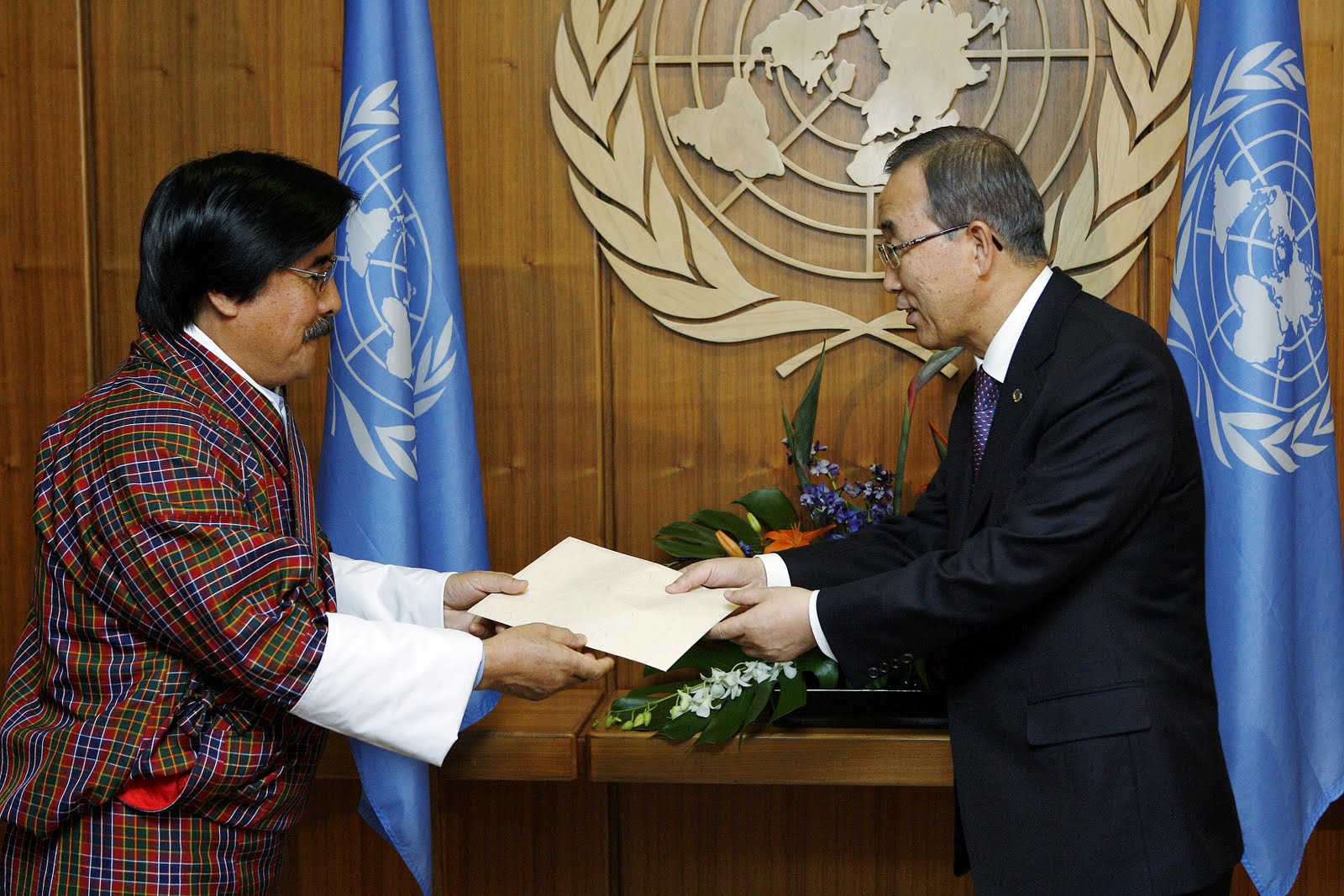
Look at the example of Bhutan, the host of the UN Happiness Project conference. Bhutan has, since the 1970s, measured Gross National Happiness (GNH). A paper in the World Happiness Report from the Centre for Bhutan Studies explains to us how Bhutan has defined and measured GNH.

We discover that a third of Bhutan’s ‘psychological well-being’ indicator is constituted by measurements of a person’s spirituality: ‘The spirituality indicator is based on four questions – they cover the person’s self-reported spirituality level, the frequency with which they consider karma, engage in prayer recitation and meditate. The indicator identified 53% of Bhutanese people as adequate in terms of spirituality level.’

This is obviously problematic. Firstly, there’s the practical question of whether you can accurately measure a person’s genuine level of spiritual attainment simply by asking them how spiritual they are (the same problem applies to measuring the meaningfulness of their life by asking them how meaningful it is). Such a measurement rewards the smug and complacent – how would Socrates score on such a questionnaire?

Secondly, there’s a liberal problem: Bhutan’s GNH measures people’s well-being according to how far they accept Buddhism. If you don’t accept Buddhism, you’re unwell.

We also read that Bhutan’s GNH includes measurements of Bhutanese people’s ‘cultural diversity and resilience’. This measurement is reached by measuring to what extent the interviewee speaks the mother tongue, to what extent they agree with ‘good values, eg Buddhism’, and to what extent they agree with Driglam Namzha, or The Way of Harmony, which is the majority culture’s ‘expected behaviour of consuming, clothing, moving’ etc. So it’s not a measure of cultural diversity at all – quite the opposite!

Around one eighth of the population, the Nepalese ethnic minority, failed to speak the mother tongue fluently and failed to follow the Way of Harmony, and they were forced into refugee camps in the 1970s and 1980s – many of them are still there. That’s a clear example of how utilitarianism can lead to a tyranny of the majority, as John Stuart Mill warned.

And before we declare that ‘we’d all be happier in Bhutan’, as the Guardian did rather exuberantly, let’s remember that only a third of Bhutan’s population has had even six years of schooling. This is a rural, semi-educated, semi-literate monoculture (well, it is now the ethnic minority has been kicked out). You will never get an entire western, liberal, educated country to sign up to one philosophy of well-being – not without using the army anyway.

We need a more pluralist approach to well-being, one that balances the science of well-being with the philosophy of well-being, which recognises it’s not enough simply to have ‘meaning’ in your life – the question is whether the meaning you have is worthwhile. It’s not enough to have relationships – are they good relationships? It’s not enough to have ‘engagement’ – is it worthwhile engagement? This is what philosophy can teach us – how to exercise the practical reasoning to arrive at appropriate ethical life-decisions.

I’ve been reading the Pragmatist philosophers this week – John Dewey, William James, Charles Sanders Pierce and others – and they really understood the need to find the right balance between experimental psychology and ethical philosophy (or practical reasoning, done alone and especially in groups or ‘communities of inquiry’). Dewey wrote:

A moral situation is one in which judgment and choice are required antecedently to overt action. The practical meaning of the situation–that is to say the action needed to satisfy it–is not self-evident. It has to be searched for. There are conflicting desires and alternative apparent goods. What is needed is to find the right course of action, the right good. Hence, inquiry is exacted: observation of the detailed make-up of the situation; analysis into its diverse factors.

Matthew Lipman, the father of Philosophy for Children (P4C), wrote:

it was Dewey who, in modern times, foresaw that education had to be defined as the fostering of thinking rather than as the transmission of knowledge… reasoning is sharpened and perfected by disciplined discussion as by nothing else and that reasoning skills are essential for successful reading and writing; and that the alternative to indoctrinating students with values is to help them reflect effectively on the values that are constantly being urged on them.

That’s why I think Positive Psychology, and the ‘happiness agenda’ in general, really needs more philosophy in it. Well-being can’t be ‘transmitted’. It has to be reasoned towards.

I honestly think the evidence-based science of well-being from CBT and Positive Psychology can be balanced with more practical / communal reasoning in the model of Dewey and Lipman. That’s what I argue in my book (out in less than a month!) As a great example, here is a new course from Yale’s Open University, which combines ancient philosophy with insights from cognitive and positive psychology.

I’d love to see this kind of course freely available for all undergraduates (in fact, we just pitched for pilot funding to do that at Queen Mary).

2 comments »


  1. I really enjoyed this piece and think it's a sensible antidote to the sometimes flowery thinking that comes out of the happiness camp (I too was invited to the UN conference but couldn't go). You're quite right about Bhutan. Now that they've kicked out the Nepalese it's a rather monist culture, and the chances of replicating a similar model in Europe or elsewhere appear slim.

    I was in Thimphu last year during a conference on happiness where Layard and Sachs spoke, amongst others. I was quite surprised to see Sachs jump aboard this particular bandwagon. He truly does seem to have an eye for the latest trend.

    Another interesting thing about Bhutan is that most GDP (yes, they do measure it) and tax revenues, not to mention a lot of employment, comes from an old-fashioned industrial estate in Phuentsoling on the Indian border. The various factories, producing low-grade industrial products, pollute the river downstream in West Bengal. We saw some pretty horrendous working conditions. Not exactly your image of a harmonious environmentally-sustainable nation where happiness is paramount.

    This isn't remotely to suggest that wellbeing should be jettisoned as a concept or that we can't learn from Bhutan. I admire their collective independence of mind and think it's a great country. I look forward to your book.


  2. Thanks Dan. I've never been there, but would like to go.
    I find it weird that so many great economists have jumped on the happiness measurements bandwagon. I wish Amartya Sen (whose report with Stiglitz and Fitoussi helped spark this whole thing) would be clearer about what he thinks about it – I think he's sceptical.
    Daniel Kahneman, who is on the US govt board advising them on happiness measurements, is also pretty sceptical about what governments can do to lift national happiness.
    Because there is not a single instance of a government carrying out a policy which aims and succeeds at raising national happiness. In which case…whats the point of the measurements?

The Ted-O-Matic! How to Generate Your Own, Faux-Profound TED Talk | Vanity Fair
"The art of faux profundity: nine easy steps to your own audience-flattering ted talk."

Information Is Beautiful | How Many Gigatons of CO2?
One of the best infographics on climate change I've ever seen

The Scary Hidden Stressor: Climate Change and the Arab Spring - Thomas Friedman
“The Arab Spring and Climate Change” doesn’t claim that climate change caused the recent wave of Arab revolutions, but, taken together, the essays make a strong case that the interplay between climate change, food prices (particularly wheat) and politics is a hidden stressor that helped to fuel the revolutions and will continue to make consolidating them into stable democracies much more difficult.

Fabian Society » Green Social Democracy
Michael Jacobs, former climate & energy adviser to Gordon Brown at No. 10, on the other crisis of capitalism

Jared Diamond’s Guide to Reducing Life’s Risks - NYTimes.com
On the utility of "constructive paranoia"

Secret Lives of North Korea
What it's actually like to live there - by a former British ambassador

Equitable Access to Sustainable Development: An idea whose time has come? « Hiya Maya
Required reading for anyone interested in the sustainability nexus of limits and fairness

Resources Futures | Chatham House
Big new report from Chatham House, based on 12 million data points, no less. Key message: it's the volatility that kills you.

Australia May Join Europe With Extended Kyoto Climate Pledge - Bloomberg
Tantalising remarks from Australia's Parliamentary secretary on climate change

Obama breaks silence on climate change. Does this presage action in his second term? – Telegraph Blogs
Geoff Lean reads the tea leaves - interesting historical discussion of environment in past Republican policy

Pro Bono: How rockers change the world - FT.com
Sympathetic review of BBC doc on Bono and Geldof's journey so far

The scenarios on a (large) postcard
Good futures outlook to 2025 from the Challenge Network

ICTSD • ‘One Billion Hungry’ Peak Missing From New FAO Numbers
FAO addresses criticism of its methodology and comes up with new hunger total of 870 million

A Reader's Guide to the WEF Global Redesign Initiative
A detailed online companion to the most comprehensive proposal for global governance reform since WW2

Ethiopia: navigating through the emotive, outrageous, and the subtle but dangerous narratives on the demise of Meles | African Arguments
Comprehensive and fair assessment of Ethiopia after Meles.

Upwardly Mobile Pakistan on 66th Independence Day - Haq's Musings
A Pakistan optimist celebrates the country's progress.

Niger struggles against militant Islam - The Washington Post
Situated next to Mali, Nigeria, and Libya, all of which are spreading instability across the Sahel, Niger looks increasingly vulnerable.

Crafting State-Nations: India and Other Multinational Democracies by Alfred Stepan, Juan J. Linz, Yogendra Yadav
Helps reconfigure the debate on the relationship between ethnic diversity and political institutions.

Ex WB Chief Economist makes case for manufacturing in Africa
Justin Lin discusses his new book on light manufacturing in Africa with examples from Ethiopia.

Why is Nobody Freaking Out About the LIBOR Banking Scandal? | Matt Taibbi | Rolling Stone
If collusion took place between the Bank of England and Barclays, what might have happened between Hank Paulson and US banks in 2008?

Barclays Libor scandal: how can we change banking culture? | Business | The Guardian
Outstanding broadside from Aditya Chakrabortty - who knew that each one of us in the UK has given £19,271 to the banks...

The 'Busy' Trap - NYTimes.com
Great takedown of our addiction to busyness. Citizen's income now!

Will Civil War Hit Afghanistan When The U.S. Leaves? : The New Yorker
"“The Americans have failed to build a single sustainable institution here. All they have done is make a small group of people very rich. And now they are getting ready to go."

George Monbiot – The Mendacity of Hope
Monbiot at his furious best, on the failure of Rio 2012

The Battle Over Climate Science | Popular Science
Excellent reportage from both sides of the climate war's front line

Why Women Still Can’t Have It All - The Atlantic
Must-read reflection on her time as head of policy planning at the State Dept by Anne-Marie Slaughter

Rio Minus: The End of Post Cold-War Treaty Making?
Reflections on the failure of Rio from the former head of the Sierra Club

Neal Stephenson's Past,Present, and Future - Reason.com
Great interview with Neal Stephenson from just after he published the Baroque Cycle

Pope Benedict Focuses on Legacy While Ignoring Vatican Power Struggle - SPIEGEL ONLINE
"The mood at the Vatican is apocalyptic. Pope Benedict XVI seems tired, and both unable and unwilling to seize the reins amid fierce infighting and scandal."

Trust, Democracy and Diversity - Democracy In Africa
Good introduction to a book on a key challenge for fragile states and developed countries alike.

"The End of the World as We Know It"
Great euro-driven disaster scenario from Dani Rodrik on Project Syndicate

Have we arrived at a financial singularity? - Finance Addict : Finance Addict
Are the financial algorithms, models and computers taking over from their human creators? Have we reached a financial singularity?

Exclusive: EU floats worst-case plans for Greek euro exit: sources - chicagotribune.com
European finance officials have discussed as a worst-case scenario limiting the size of withdrawals from ATM machines, imposing border checks and introducing capital controls in at least Greece should Athens decide to leave the euro.

My break with the extreme right - Politics - Salon.com
Awesomely good take down of America's new right - by one of its old right

A new Europe of competing currencies - FT.com
A thoughtful take on one possible consequence of Grexit, from Samuel Brittan

An Arab Spring south of the Sahara? - Phil Clark in Juncture
Why didn't the Arab Spring reach sub-Saharan Africa? From the first edition of IPPR's new journal Juncture.

Ideas for a Sustainable Development Outlook | International Environmental Governance
Latest thinking on the idea of a Sustainability Outlook report (one of the few useful things that might yet emerge from Rio+20), from the Mexican Mission to the UN's Jorge Laguna Celis

Greeks apologise with huge horse
Left outside the European Central Bank in the dead of night, the horse has now been moved into the ECB’s central lobby where it is proudly on display.

Fascism rises from the depths of Greece's despair - Europe - World - The Independent
"Still half-asleep, Panayiotis Roumeliotis was surprised to be asked to show his identity card by two young men with shaved heads. It was his first direct contact with the vigilante groups that have become a feature of everyday life in some areas of the Greek capital."

If you're not worried yet... you should be
Reasons to be gloomy from ZeroHedge

Articles & Publications
The United States after the Great Recession

A paper by David Steven, Joshua Meltzer and Claire Langley, published by the Brookings Institution, supported by the FutureWorld Foundation, on how the United States should respond to the aftermath of the recession in order to promote growth and sustainability in the coming years.

Goals in a Post-2015 Development Framework

An options brief by David Steven, published by New York University’s Center on International Cooperation and funded by the UN Foundation, on the role that global goals can play after the Millennium Development Goals expire in 2015. Download Report

Climate, Scarcity and Sustainability in the Post-2015 Development Agenda

What should sustainability advocates aim for in the post-2015 international development agenda – and how should they go about it?

Resources, Risk and Resilience: Scarcity and Climate Change in Ethiopia

The first in a series of CIC case studies on the challenges that resource scarcity and climate change pose to poor countries – and how they, and their international partners, can build resilience to them. The report assesses both Ethiopia’s current policies on scarcity and climate, and a range of key gaps, vulnerabilities and exogenous risks that need to be taken account of in future planning.

Post-2015: What role for business?

There’s a consensus that any post-2015 global development framework should have more to say about the role of the private sector than the MDGs have done. But what does that actually mean in practice?  This new report from the Overseas Development Institute explores some options for how the private sector might be represented in and contribute to a new set of global goals for development.

Chill Out: Why Cooperation is Balancing Conflict Among Major Powers in the New Arctic

This report addresses the Arctic’s growing strategic relevance and conflict dynamic; offers background on, and assessment of, the existing institutions, and examines ongoing risks. Ultimately, the report concludes that the prospects for cooperation outstrip the potential for conflict, and that the Arctic offers lessons for tackling evolving challenges in other regions.

Best of Times, Worst of Times

An edited and expanded version of talk given to the ‘Lessons from the Economic Troubles’ panel at an international workshop on systemic lessons from the global economic crisis, hosted by the Global Futures Forum.

Beyond the Millennium Development Goals

Debate on what should follow the Millennium Development Goals after 2015 is now underway in earnest. This briefing paper by Alex Evans and David Steven, prepared for a closed session Brookings Institution meeting organised at the request of the US government, sets out an overview of the MDGs and their expected status in 2015; describes the background to, and options for, a post-2015 framework; and discusses the political challenges of agreeing a new framework and sets out considerations for governments and other stakeholders.

Putting inequality into the post-2015 picture

There’s a growing consensus among the countries, UN agencies and civil society organisations involved in discussions on the post-2015 development agenda that equity, or inequality, needs to be somehow integrated into any new framework.  This paper considers the pros and cons of some current proposals for integrating inequality  into a post-2015 framework, and offers a tentative [...]

Sustainable Development Goals – a useful outcome from Rio+20?

Recent months have seen increasing interest in the idea that Rio+20 could be the launch pad for a new set of ‘Sustainable Development Goals’ (SDGs).  But what would SDGs cover, what would a process to define and then implement them look like, and what would some of the key political challenges be? This short briefing [...]

Creating Consensus on a post-2015 framework for development

Any global framework for development which is agreed after 2015 will be a political deal between states. This paper looks at recent trends in policy and politics in emerging economies and traditional donors to assess where a consenus might lie. It suggests some principles for a post-2015 agreement which emerge from recent policy developments

A post-2015 Global Development Agreement: why, who what?

Paper from ODI and UNDP, authored by Claire Melamed and Andy Sumner, summarising the evidence on the impact of the MDGs, and looking at current trends in poverty and in global governance that will affect the shape and the scope of any future agreement on global development.

Resource Scarcity, Fair Shares and Development

Why resource scarcity will be a game changer for global justice agendas, and what aid donors, NGOs and other development opinion formers need to do about it. WWF / Oxfam report by Alex Evans.

Making Rio 2012 Work: Setting the stage for global economic, social and ecological renewal

The Rio 2012 sustainable development summit is at risk of being the latest in a long line of damp squibs on environmental multilateralism – but could still make real progress, if it focuses on greening growth and building resilience to shocks and stresses, and above all faces up to the issues of fair shares that arise in a world of limits.

Governance for a Resilient Food System

How national and international governance systems need to be reconfigured to meet the challenges of food security in a world of tighter supply and demand balances and increasing volatility. Report for Oxfam’s new Grow campaign by Alex Evans. (May 2011)

Running out of everything: how scarcity drives crisis in Pakistan

Article on scarcity of resources in Pakistan and what it means for the country.

Economics for a world with limits

Text of speech by Alex Evans to Institute for New Economic Thinking annual conference at Bretton Woods; the YouTube video is here. (April 2011) Download Speech

Unscrambling the price spike

Article published on China Dialogue on reasons for the new food price spike, including potential implications of the current drought in China. (February 2011) Download Article

2020 Development Futures

Eight critical uncertainties for development over the next decade, and ten recommendations for what ActionAid – who commissioned this report – should do to prepare for them

American Foreign Policy in an Age of Uncertainty

Article published in World Politics Review on current American foreign policy

The World in 2020 – Geopolitical and Trends Analysis

Report asking how organisations can prosper in what will be a turbulent period for world order

Globalization and Scarcity

Center on International Cooperation report on what forms of multilateral cooperation are needed to manage scarcity of resources

Resource Scarcity, Climate Change and the Risk of Violent Conflict

Background paper on whether resource scarcity and climate change will cause increased violent conflict

Organizing for Influence: UK Foreign Policy in an Age of Uncertainty

Chatham House report on how the UK’s new coalition government should upgrade and reform the way Britain conducts foreign policy

The Long Crisis Seminar

Introductory remarks by David Steven at a Brookings Institution seminar on risk and resilience in the global system (March 2010)

Stop Betting the House talk

Talk given by David Steven at Gresham College on risk and resilience in the UK housing market, as part of a Long Finance Roundtable meeting (March 2010)

Time to Stop Betting the House: a response to the FSA

Report by David Steven in response to the FSA’s Mortgage Market Review

Confronting the Long Crisis of Globalization: Risk, Resilience and International Order

Brookings Institution report by Alex Evans, Bruce Jones and David Steven on how globalisation could fail – and how it could be made more resilient. Published to coincide with the 40th anniversary World Economic Forum in Davos.

Hitting Reboot – where next for climate after Copenhagen

Report by Alex Evans and David Steven analysing the post-Copenhagen context on climate change, including a proposed 12 point action plan. Written for the Brookings Institution / NYU Center on International Cooperation Managing Global Insecurity programme.

Climate Change and Hunger: Responding to the challenge

World Food Programme report on the state of the science on what climate change means for hunger, plus policy recommendations. Authored by IPCC Impacts Chair Martin Parry with Mark Rosengrant, Tim Wheeler and Global Dashboard’s Alex Evans (December 2009)

Scarcity, security and institutional reform

Presentation by Alex Evans to a seminar organised for the UN Department of Political Affairs by the Geneva Centre for Security Policy (August 2009)

The Resilience Doctrine

Article on risk and resilience by Alex Evans and David Steven – part of a special in World Politics Review on risk and resilience in a globalized age (July 2009)

An Institutional Architecture for Climate Change

Report by Alex Evans and David Steven exploring the future international institutional requirements for managing climate change, and including three scenarios for climate institutions between now and 2030. Commissioned by the UK Department for International Development. (May 2009)

Risks and Resilience in the New Global Era

Article by Alex Evans and David Steven exploring resilience as a political agenda – part of a special edition of Renewal on the transformation of foreign policy (February 2009)

A Tale of Two Cities

Climate and cities think piece, co-authored by David Steven and the British Council’s Peter Upton (29 January 2009)

The Feeding of the Nine Billion

Chatham House pamphlet by Alex Evans on how scarcity issues will shape the outlook for global food production, and the actions that policymakers need to take at the international level and in developing countries to ensure food security in the 21st century

2009 – A Year for International Reform

Paper by David Steven, presented to “Reforming International Institutions – Meeting the Challenges of the 21st Century,” a conference organized by the United Nations University and the British Embassy in Tokyo (Jan 2009).

Food prices: what next?

Speech by Alex Evans at the Tomorrow Network (25 November 2008)

A Bretton Woods II Worthy of the Name

Paper by Alex Evans and David Steven on financial reform and wider multilateralism, published ahead of the G20 ‘Bretton Woods II’ Summit (November 2008).

The Future of Resilience

Speech by David Steven to RUSI Conference on UK Resilience (8 October 2008)

Towards a Theory of Influence

Chapter by Alex Evans and David Steven in the Foreign & Commonwealth Office publication, ‘Engagement: public diplomacy in a globalised world’ (July 2008). Download Chapter

Multilateralism for an Age of Scarcity

Draft report by Alex Evans exploring multilateral system reforms needed in order to manage resource scarcity issues more effectively. The final version will be published in early 2010 (July 2008)

Scarcity issues and conflict in Africa

Speech by Alex Evans at UK Parliament (8 July 2008)

A Low Carbon World – Pathways to a Global Deal

Speech by David Steven at the UNU G8 Symposium (4 July 2008)

Climate, scarcity and multilateralism

Speech by Alex Evans to United Nations Association UK (7 June 2008)

The new public diplomacy and Afghanistan

Speech by David Steven to the UK Defence Academy’s Advanced Research and Assessment Group seminar on Strategic Communications, Public Diplomacy and Afghanistan (4 June 2008).

Technology and Public Diplomacy

Speech by David Steven to the University of Westminster Symposium on Transformational Public Diplomacy (30 April 2008).

Rising Food Prices: Drivers and Implications for Development

Briefing paper by Alex Evans, published through Chatham House’s food programme (April 2008).

Looking Forward: how do we build resilience?

Speech by David Steven to RUSI Conference on Critical National Infrastructure (16 April 2008).

Shooting the Rapids: multilateralism and global risks

Paper by Alex Evans and David Steven, commissioned by Gordon Brown and presented to heads of state at the Progressive Governance Summit (April 2008).

Articles and Publications

Key Posts
“We’ll stop hurting our brothers and sisters” – What success at the G8 would look like0

  It has become to fashionable to say that G8 meetings never achieve anything. It is also incorrect. Civil society campaigners have made use of G8 meetings in the past to achieve major steps forward on debt, on access to HIV/AIDS treatment, and on maternal and child health. But whereas, in the past, campaigners have [...]

Nuclear war called off in Korea – time to relax?0

Something quite significant happened this week– though you may have missed it. It seems the US military doesn’t think there will be nuclear war with North Korea. A few weeks ago, you could have been forgiven for thinking we were on the brink of something similar to the Cuban Missile crisis of 1962. Pyongyang was [...]

The worst corporate scandal you never heard of0

Like many people, I have grown blasé about the successive waves of corporate scandal that have broken since the financial meltdown of 2008, but Fortune’s account of the crimes of Indian generic drug maker, Ranbaxy, is quite astonishing. Ranbaxy boasts that it ”is a research based international pharmaceutical company serving customers in over 150 countries… providing high quality, affordable [...]

How to Start Development’s Gutenberg Revolution2

As a schoolboy I was troubled to learn about medieval Europe where a narrow elite maintained unaccountable power by controlling access to information; and I delighted in the heroic story of how Johanes Gutenberg’s humble printing press began a revolution that brought an end to the unchecked control of knowledge and power by a few. [...]

Britain’s dirty secret – the island havens that make life hell for the world’s poor-

The G8 agenda on tax is getting increasingly radical, and much of the credit on that must go to to the UK Government hosts. Issues that were off the table months ago are now up not just for discussion but for decision. The agenda has moved beyond tax evasion to the kind of tax avoidance [...]

A Balkan success for EU soft power?-

Serbian leaders will make another attempt this week to convince Serbs in northern Kosovo to accept last month’s deal between Belgrade and Pristina to normalise relations between Serbia and its former province. The April 19th agreement was  hailed in the much of the western media as a great success for the EU’s soft power and [...]

The future of global poverty: What if there were multiple horizons for aid post-2015?-

A Brookings paper out this week (here) does something a set of papers have sought to do recently – that is make projections about the future of global poverty. These kind of papers have significant policy implications because it is only by understanding both the future scale and anticipated locations of poverty that properly informed [...]

Brazil & the US – never on the same page?-

Relations between the two giant democracies of the Americas, Brazil and the US, should be easy, but they never seem to be -  as the recent spat over recognising Nicolas Maduro’s victory in the Venezuelan election demonstrated again. Here’s a piece I’ve done for Yale Gobal on why they don’t see eye to eye despite [...]