Global Dashboard – Blog covering International affairs and global risks

Archive for September, 2011

Does the UN suck? And if so, how badly? An in-depth report…

September 27, 2011 | by Richard Gowan | More on Conflict and security, Cooperation and coherence, Europe and Central Asia, Global system, Middle East and North Africa, North America | One comment

Trying to navigate around the special security cordon for the UN General Assembly last week, I got stuck behind a fellow with closely-cropped hair, a massive American flag and a tee-shirt with “THE UN SUCKS” written on it by hand.  That got me thinking, and I have summarized my thoughts in a new op-ed for E!Sharp:

Quite a few U.S. and European officials might have liked to march with the “UN SUCKS” guy. The Palestine debate appeared to confirm that UN diplomacy is weighted against Western interests.

Developing countries backed the Palestinians. The Obama administration stuck with Israel, but was vilified at home for not heading off the issue altogether. The Europeans, failing to declare a single position in advance, looked conciliatory but rather confused.

So is it finally time to give up on the UN?  I don’t think so…

China and Russia – the West’s usual foes in the Security Council – have looked uneasy. Although the two powers have a reputation for defending sovereignty and opposing Western interventionism, both proved ready to compromise on these principles in 2011.

China approved tough measures to deal with the crisis in Côte d’Ivoire and let the U.S., France and Britain have their way over Libya. In the Libyan case in particular, Beijing calculated that grand-standing against the West would do its economic interests harm.

Russia, generally more pugilistic, seemed weak. It tried to defend the defeated Ivorian president Laurent Gbagbo from Western pressure, but eventually backed down. It failed to follow through on threats to block any UN action over Libya. When they lack China’s support, the Russians appear to be an increasingly hollow power in the Security Council.

China and Russia have united in defence of the Syrian regime, heading off even the mildest Western resolutions condemning Assad’s crackdown on protestors. Brazil, India and South Africa – all holding temporary seats on the Security Council – followed along.

Yet in August, increasingly concerned for their international image, the Brazilians and Indians fixed a compromise deal to condemn Syria’s behavior. The agreed text was still extraordinarily mild. Yet the appearance of cracks among the non-Western powers holds out the possibility, however uncertain, that the Europeans and U.S. may be able to pull together unexpected coalitions of allies to push for action through the UN in future crises.

The problem, as the op-ed goes on to say, is that both the U.S. and EU have internal problems (looming elections in one case, a lack of political cohesion and the Euro crisis in the other) that may well prevent them from seizing this moment.

Nonetheless, a lot of recent coverage of UN affairs has been simplistic, with pundits applying a simple “with us or against us” test to countries like India, and concluding that they will be in the “against” column forever.  The art of diplomacy is a bit more complicated that, and there are potential openings to reshape the UN (if gradually).

For a more detailed mapping of those openings, check out my latest report with Franziska Brantner on the UN and human rights for ECFR, published last week.


Nigeria struck by plague of special advisers

September 27, 2011 | by Richard Gowan | More on Africa, Influence and networks, Off topic, UK | No comments

When the current British government took office, it decreed a limit on the number of special advisers that each minister was allowed to appoint.  Recent figures show that David Cameron has sixteen “spads”, Nick Clegg has eleven, and most other ministers have just one or two.  Overall, there are still fewer than eighty advisers wandering around Whitehall today.  Some civil servants probably think that’s still many too many.

Governor Isa Yuguda of Bauchi State, Nigeria, would beg to differ.  Today he announced the appointment of a modest 924 special aides…

Governor Isa Yuguda of Bauchi State, on Monday, approved the appointment of 94 Senior Special Assistants (SSAs), 20 Special Advisers (SAs) and 810 Special Assistants.

A statement signed by the Secretary to the State Government, Ahmed Dandija, also announced the appointment of 24 Directors-General in charge of various sectors of the state.

Yuguda also approved the appointment of 20 Deputy Chairmen and 82 members for the Local Councils in the state.

The statement added that all the appointments were with immediate effect.

One can only imagine that the administration of Bauchi State is about to make a great leap forward.  [H/T Teju Cole.]


Can you measure eudaimonia?

September 26, 2011 | by Jules Evans | More on Economics and development, Influence and networks | 11 comments
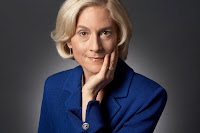
Martha Nussbaum has another book out. Does she never sleep? This one is called Creating Capabilities: The Human Development Approach, and looks at the necessity of moving beyond GDP by measuring a broader range of human ‘capabilities’, such as education, health etc. Professor Nussbaum developed the ‘capabilities approach’ together with the Cambridge economist Amartya Sen, who then went on to advise the French government on its launch of national well-being measurements in 2009. But, unlike her former colleague, Nussbaum seems determinedly sceptical about the value or point of national measurements of subjective well-being. She says, in an interview on the Freakonomics podcast:

It’s all a question of what you think happiness is. And this is a question that philosophers have asked for centuries. And the minute that Jeremy Bentham said that we should look at happiness in terms of pleasure and satisfaction, John Stuart Mill immediately said, “Now wait a minute, it’s better to be Socrates dissatisfied than a pig satisfied.” And so he then insisted that we had to think about happiness as containing many different kids of experiences, many different kinds of activity. And well, Mill wasn’t the first to say that. He was really getting all of that from Aristotle. So I’m with Mill, and I think that the Benthamite approach, where we just think of happiness as a single feeling, has got very little going for it. If you just think about a daily experience, the pleasure I get from writing is very different from the pleasure that I get from going out and buying a very nice dress. They’re just very different things. And the pleasure that somebody might get from bringing up a child is different again. So I think that’s not a good idea. And I think we should have a much more Millian rather than Benthamite conception of happiness.

Very well, I agree so far. Others – like Charles Seaford of the New Economics Foundation, have noted this contemporary clash in well-being policy between Benthamite and Aristotelian definitions of well-being. The question for Nussbaum is, does she think this more Aristotelian definition of well-being can be measured in individuals or nations using social science? If you look at the list of capabilities Nussbaum came up with, it includes some rather intangible things like ‘play’, ‘practical reason’, ‘senses / imagination’, ‘emotional attachment’, ‘control over one’s environment’. When I say they’re intangible, I’m not denying they exist. But does Nussbaum think these capabilities can be measured for an individual, or for a society? Or does she think this more Aristotelian idea of human flourishing simply isn’t readily measurable using social statistics?
(more…)


What is resilience?

September 24, 2011 | by Andy Sumner | More on Climate and resource scarcity, Conflict and security, Cooperation and coherence, Economics and development, Global system | No comments

Just back from a lot of discussion on scarcity, resilience and crises at a conference convened by the Development Studies Association and European Association of Development Institutes.

The basic rationale for the conference are outlined well here and here. Crudely – lots of interlinked crisis and a need to think how to build adaptive institutions, ideas, and political coalitions. The conference blog is worth a look (here).

In short – global shocks in economics, food security and fuel prices, together with chronic stressors relating to demographic pressure, climate change and resource scarcity – aka ‘the long crisis of globalisation’ or the ‘perfect storm’ of problems – are combining to produce complex, shifting configurations of vulnerability as experienced by households and communities. And all of this is leading to more interest in the ideas of resilience.

Understanding these complexities and vulnerabilities in global development, and navigating global volatility for resilience-building purposes, is not straightforward (surprise). Together with Rich Mallet at the Overseas Development Institute, we review (and published by UNDP’s International Policy Centre for Inclusive Growth in Brasilia) represents one attempt to make sense of this problem. Reviewing the inter-disciplinary literature on vulnerability, we found that existing definitions of the concept largely fail to capture the multidimensional and complex nature of vulnerability in the twenty-first century. Vulnerability tends to be viewed narrowly by discipline or sector, which obstructs the kind of broad, holistic analysis needed to understand how patterns of vulnerability occur, how they shift, and what can be done to strengthen people’s capacities to respond. We call for a new analytical approach that is able to manage complexity and recognise the many faces of vulnerability…

(more…)


The Centre for Climate Change and National Secrecy

September 24, 2011 | by Jules Evans | More on Climate and resource scarcity | One comment

Two years ago, the CIA set up a Centre for Climate Change and National Security. The Centre would “do more than bring together in a single place expertise on an important national security topic. It will also be aggressive in outreach to academics and think tanks working the issue. The goal is a powerful asset recognized throughout our government, and beyond, for its knowledge and insight.”

Two years later, and the Centre responded to a Freedom of Information request by National Security Archive scholar Jeffrey Richelson with a letter saying: ““We completed a thorough search for records responsive to your request and located material that we determined is currently and properly classified and must be denied in its entirety.” Yes, the Centre’s entire research, if it has any, is classified. How’s that for aggressive outreach!

Set up a year after president Obama’s election, in a brief moment of euphoria when it appeared the US might do something (anything!) about climate change, the Centre rapidly found itself under attack from a resurgent Republican party, including Senator John Barrasso, who tried to get the Centre’s funding scrapped in 2010, declaring “The CIA’s resources should be focused on monitoring terrorists in caves—not polar bears on icebergs”. The Centre’s response, alas, appears to have been to bunker down and keep schtum. Climate change? Shhhh.


Security Council debate on preventive diplomacy gets undiplomatic

September 23, 2011 | by Richard Gowan | More on Conflict and security, Cooperation and coherence, Global system, Middle East and North Africa, UK | No comments

Yesterday, I posted a preview of Thursday’s Security Council debate on preventive diplomacy, and predicted that it would be boring.  The meeting certainly generated a fair bit of blather, but it wasn’t all diplomatic consensus-building:

“When conflict looms, the world looks to the U.N. for a decisive response,” said British Foreign Minister William Hague. “In Libya… our swift action prevented a human catastrophe and saved the lives of thousands of civilians.”

Hague went on to say that the British government viewed U.N. Security Council action as “long overdue” on Syria. “The consequences of inaction would weigh heavily upon us if we turn a blind eye to murder and oppression,” he said.

German Foreign Minister Guido Westerwelle called on the Security Council to “send a strong message to the government in Damascus to stop the killing of its people.”

Not all Security Council members were on the same page when it came to international intervention, however. The representatives from India, Brazil, and South Africa criticized what they saw as overreaching by the United Nations in Libya. South African President Jacob Zuma was particularly critical of the United Nations for ignoring the peacemaking efforts of the African Union.

“Such blatant acts of disregard of regional initiatives have the potential to undermine the confidence regional organizations have in the U.N. as an impartial and respected mediator in conflicts,” he said.

Indian Minister for External Affairs S.M. Krishna said that the international community needs to let peaceful processes play out longer before resorting to the use of force.

“The use of force also leads to collateral damage,” he said. “In many places, the use of force has prolonged conflicts and the cure has turned out to be worse that the disease itself.”

Ouch.  It’s a sign of the ill-temper engendered Libya and Palestine at the UN that a debate on the motherhood-and-apple-pie issue of prevention got so tetchy…


Kissinger finally has Europe’s phone number

September 23, 2011 | by Richard Gowan | More on Europe and Central Asia, Off topic | 4 comments

EU President Herman Van Rompuy has managed to pull off a nice little joke by giving Henry Kissinger his phone number.  Get it?


Is the Security Council serious about preventive diplomacy?

September 22, 2011 | by Richard Gowan | More on Conflict and security, Cooperation and coherence, Global system, Middle East and North Africa | One comment

This afternoon, taking the briefest of breaks from arguing over Palestine, leaders are gathering in the Security Council to talk about preventive diplomacy.  Josh Rogin of FP’s Cable blog will be there.  He’s excited by the turnout:

The meeting will be chaired by the President of Lebanon Michel Sleiman. Other heads of state in attendance will be Bosnia and Herzegovina, Brazil, Colombia, Gabon, Nigeria and South Africa. Portugal will be represented by its prime minister, while the remaining council members will be represented at the level of foreign minister.

Oddly enough, I haven’t been invited.  But my colleague Emily O’Brien and I have published a brief preview of the event over at World Politics Review.  We’re not convinced it’s going to be a thriller:

The Security Council session is unlikely to generate anything more than well-aged truisms: Prevention is better than reaction; diplomacy is better than force, and so on.

That may sound cynical, but last month I somehow guessed that a similar (if lower-level) Security Council debate on peacekeeping would be stunningly dull, and I was right.  But, just like peacekeeping, preventive diplomacy matters:

Officials at the U.N. have been working hard to frame a clearer picture of how and why preventive diplomacy succeeds and fails. The current thinking on the issue is summarized in a report from U.N. Secretary-General Ban Ki-moon with the pithy title, “Preventive Diplomacy: Delivering Results,” which will serve as the backgrounder for Thursday’s debate.

As the report states at the outset, Ban has been interested in boosting the U.N.’s role in preventive diplomacy ever since he took office in 2007 following a long career in South Korea’s foreign service. Ban felt that the U.N. was too heavily invested in large-scale, high-cost military peace operations and had given too little attention to diplomacy.

This was a huge oversimplification, one that failed to capture the stabilizing if imperfect role of hefty U.N. peace operations in places like Haiti and Liberia. But it contained a kernel of truth. So it is welcome that Ban and his undersecretary-general for political affairs, American diplomat B. Lynn Pascoe, set about retooling the U.N. secretariat’s preventive capacities.

Over the past four years, U.N. officials have scored some noteworthy successes, as the new report describes. These include helping resolve the crisis in the eastern Democratic Republic of Congo in 2008 that forced more than 200,000 civilians into flight; assisting Guinea emerge from a long political crisis in 2009-2010 to hold credible elections; and working with European diplomats to contain the horrific violence in Kyrgyzstan.

These successes have underlined the value of the U.N. Secretariat’s roster of experienced mediators, facilitators and diplomats. Still, Ban’s report emphasizes the need to boost the caliber of U.N. officials further and make their work easier by overcoming the phalanx of budgetary and staffing rules that can delay the U.N.’s efforts interminably.

These budgetary constraints and unwieldy hiring processes might seem irrelevant to anyone not immersed in the minutiae of the U.N.’s bureaucracy. But they matter. The organization’s attempts to engage meaningfully with the Arab Spring were held up by a lack of financial resources and a lack of experts in the region. The new report outlines options for increasing the U.N.’s readiness for future crises, like expanding its small network of regional political offices.

To be honest, I think that the UN report could have been a bit bolder in its proposals for boosting conflict prevention, but at least it will get some high-level attention this afternoon.  Hopefully some UN members will be motivated to follow up with related policy initiatives.  Nonetheless, Emily and I aren’t convinced that all the big powers on the Security Council are 100% committed to preventive diplomacy…

The actors most likely to stop an escalating crisis in its tracks remain the world’s great powers. But after the crises of the past year, it is hard to argue that these powers have a coherent grasp of this responsibility. Take the example of Syria. China and Russia have opposed even mild condemnations of the Syrian regime, while other emerging powers on the Security Council — notably Brazil, India and South Africa — have only been marginally more flexible. The U.S. and its European partners have also struggled to find a mix of economic, diplomatic and moral pressure to affect decisions in Damascus. The confusion reflects the many political, security and economic interests all the powers have in Syria.

So it’s nice that the Council’s talking about the importance of prevention.  But treat its pronouncements on the topic with caution.  I look forward to Josh Rogin’s take.


A moment of perfect cognitive dissonance

September 20, 2011 | by Alex Evans | More on Cooperation and coherence, Global system, Influence and networks | 2 comments

Earlier today, I was reading the transcript of an interview that my brother (GD contributor Jules Evans) conducted earlier this year with Apollo 14 astronaut Edgar Mitchell. En route back from the moon, Mitchell recounted to Jules, he had the following experience:

“Every two minutes, a picture of the Earth, Moon and Sun, and a 360 degree panorama of the heavens, appeared in the spacecraft window as I looked. And from my training in astronomy at Harvard and MIT, I realized that the matter in our universe was created in star systems, and thus the molecules in my body, and in the spacecraft, and in my partners’ bodies were prototyped or manufacted in some ancient generation of stars. And I had the recognition that we’re all part of the same stuff, we’re all one. Now in modern quantum physics you’d call that interconnectedness. It triggered this experience of saying wow, those are my stars, my body is connected to those stars. And it was accompanied by a deep ecstatic experience, which continued every time I looked out of the window, all the way home.”

Nor was he the only astronaut to have an experience of this kind:

Other astronauts have had comparable experiences – a ‘wow’ at seeing Earth in the larger scheme of things. We have talked about it over the years, and there’s even been a book written about it by Frank White, called The Overview Effect, which describes all our experiences. We have all said over the years, if we could get our political leaders to have a summit meeting in space, life on Earth would be markedly different, because you can’t continue living that way once you have seen the bigger picture.

I read this during a break in an all-day meeting of senior policymakers at the United Nations, on the subject of ’global sustainability’. Know what? The room had no windows.


“In the event of moon disaster…”

September 18, 2011 | by Alex Evans | More on Off topic | No comments

To: H. R. Haldeman

From: Bill Safire

In the event of moon disaster

Fate has ordained that the men who went to the moon to explore in peace will stay on the moon to rest in peace.

These brave men, Neil Armstrong and Edwin Aldrin, know that there is no hope for their recovery. But they also know that there is hope for mankind in their sacrifice.

These two men are laying down their lives in mankind’s most noble goal: the search for truth and understanding.

They will be mourned by their families and friends; they will be mourned by their nation; they will be mourned by the people of the world; they will be mourned by a Mother Earth that dared send two of her sons into the unknown.

In their exploration, they stirred the people of the world to feel as one; in their sacrifice, they bind more tightly the brotherhood of man.

In ancient days, men looked at stars and saw their heroes in the constellations. In modern times, we do much the same, but our heroes are epic men of flesh and blood.

Others will follow and surely find their way home. Man’s search will not be denied. But these men were the first, and they will remain the foremost in our hearts.

For every human being who looks up at the moon in the nights to come will know that there is some corner of another world that is forever mankind.

Prior to the President’s Statement:

The president should telephone each of the widows-to-be.

After the President’s Statement, at the point when NASA ends communications with the men:

A clergyman should adopt the same procedure as a burial at sea, commending their souls to “the deepest of the deep,” concluding with the Lord’s Prayer.

An extract from an actual memo from William Safire, then one of Richard Nixon’s speechwriters, setting out remarks to be read by the President if the Apollo 11 astronauts got stuck on the moon. Via the excellent Lapham’s Quarterly.


The Chinese government: paranoid, or hanging by a thread?

September 18, 2011 | by Alex Evans | More on East Asia and Pacific | No comments

China is not Egypt, Libya or Tunisia. As the Pew Global Attitudes project noted in March this year, only 28% of Egyptians were then ‘satisfied’ with their country’s direction, down from 47% a few years earlier; whereas in China the figure was 87% in March, up from 83%.

So why, asks James Fallows in last month’s The Atlantic, is the Chinese government so clearly freaking out about protests this year and the risk of a “Jasmine Revolution” – when the protests clearly don’t add up to a national movement? As he puts it,

Why … has the government reacted as if the country were on the brink of revolt? Do the Chinese authorities know something about their country’s realities that groups like Pew have missed, and therefore understand that they are hanging by a thread? Or, out of reflex and paranoia, are they responding far more harshly than circumstances really require, in ways that could backfire in the long run?

Fallows sets out the pros and cons for each view. Here are some snippets to set out the first camp’s rationale:

Those who think the government has good reason to be worried say that the accumulated tensions—political, economic, environmental, and social—of China’s all-out growth have reached an unbearable extreme. By this interpretation, the seeming satisfaction of the Chinese public is a veneer that could easily crack. “If one were to read only the Party-controlled media, one might get the impression that China is prosperous, stable, and headed for an age of ‘great peace and prosperity,’” Liu Xiaobo himself wrote, in an essay shortly before he was arrested. (The English version, translated by Perry Link of Princeton, will appear this fall in a collection of Liu’s essays and poems, No Enemies, No Hatred.) He continued:

Not only from the Internet, but from foreign news sources as well as the internal documents of the regime itself—its ‘crisis reports’—we know that more and more major conflicts, often involving violence and bloodshed, have been breaking out between citizens and officials all across China. The country rests at the brink of a volcano.

By June of this year, a wave of bombings, riots, and violent protests at widely dispersed sites across the country illustrated what Liu was warning about. The trigger of the uprisings varied city by city—ethnic tensions in some areas, beatings by police or chengguan in others—but they added to a mood of nationwide tension. “With rampant official corruption, inflation, economic disparity, and all sorts of social injustice and political tensions, the threat to the CCP rule is very much real,” Cheng Li, who grew up in Shanghai and is now a specialist in Chinese politics at the Brookings Institution, told me this summer.

The second camp’s rationale, on the other hand, which Fallows tends towards himself:

…that the situation in China is indeed tense—but that it has always been tense, and that so many people have so much to lose from any radical change, that the country’s own buffering forces would contain a disruption even if the government weren’t cracking down so hard. The main reason is that for all the complaints and dissatisfactions with today’s Communist rule, there is no visible alternative—in part, of course, because the government has worked so hard to keep such alternatives from emerging. This is a less satisfying side of the argument to advance. You look worse if you turn out to be wrong, and it seems unimaginative to say that an uneasy status quo might go on indefinitely. Still, it is what I would guess if forced to choose.

I asked Chas Freeman what he made of China’s current turmoil. He is a former diplomat who served as Richard Nixon’s interpreter during his visit to China in 1972 … Freeman said that he takes seriously the complaints about economic inequality, ethnic tension, and other potential sources of instability. But, he said, they remind him of conversations he had when living in Taiwan in the 1970s, before Chiang Kai-Shek’s Kuomintang party had moved from quasi-military rule to open elections. “People would say they are corrupt, they have no vision, they have a ridiculous ideology we have to kowtow to, but that no one believes in practice,” he told me. “And I would say, ‘If they’re so bad, why don’t you get rid of them?’ That would be greeted with absolute incredulity.” Taiwanese of that era would tell him that, corrupt or not, the party was steadily bringing prosperity. Or that there was no point in complaining, since the party would eliminate anyone who challenged its rule. The parallel with mainland China was obvious. A generation later, Taiwan had become democratized.

Of course, Freeman’s analogy only holds up if you think that China will indeed manage to follow Taiwan’s record of “steadily bringing prosperity”. And that’s why, unlike Fallows, I tend towards the first camp. I noted last month that there are already weak signals of the arrival of “jobless growth” in China. And more broadly, I think China looks in bad shape to manage a whole range of global threats that will shape its outlook – just like the United States.

I’m not an expert on Chinese internal politics, so I won’t attempt to guess how all this will play out domestically. But I do see good reasons to question the wisdom of relying on steadily increasing prosperity. As for the lack of a “visible alternative” - surely we’re not going to assume that as a guarantee of stability after the year so far in the Middle East?


Our unspoken bet on climate change: we’re going to wing it, and to hell with the poor (and our kids)

September 17, 2011 | by Alex Evans | More on Climate and resource scarcity | 3 comments

Simon Kuper in this weekend’s FT Magazine about where the state of the climate change debate now stands:

When someone offered me a trip to India, I said, “Definitely.” A couple of years ago I’d have fretted about the carbon emissions. But like almost everyone else, I have given up trying to prevent climate change. We in the west have recently made an unspoken bet: we’re going to wing it, run the risk of climatic catastrophe, and hope that it is mostly faraway people in poor countries who will suffer …

Rich countries now have a semi-conscious plan: whatever happens, we’ll have the money to cope. We’ll build dikes, or pipe in more water from somewhere else, or turn up the aircon if it gets too hot. Our model is the Netherlands: the country below sea level protects itself against flooding through a network of dams, sluices and barriers. This costs about €45 per Dutch person per year. The Dutch think that even as climate change raises sea levels, their defences can cope for another four centuries. By then there’ll be new technologies.

In short, rich countries will buy protection. If they need to abandon vulnerable cities like New Orleans or Venice, they will. The bigger problem is for poor countries. If Bangladesh floods or Nigeria dries up, they probably won’t cope well. But then our mental health in the west is built on not worrying too much about what happens to Bangladeshis or Nigerians.

Pretty much the long and the short of it – except that he should have added that we’ve decided to screw our children as well as the poor.


Highbrow analysis on Sky News

September 15, 2011 | by Alex Evans | More on What we're watching | One comment

YouTube Preview Image


What is the population problem?

September 14, 2011 | by Claire Melamed | More on Climate and resource scarcity, Economics and development | 20 comments

Just before I went off on my long summer break (very nice thank you), I did a podcast on the Guardian website about population.  It’s well worth listening to – there’s more than just me on there,  including some clips from a family in Uganda which set out very clearly the pros and cons of having lots of children from the individuals’ point of view. But these were my main points for the discussion:

  • Even if you do think that population growth is a problem (which I don’t necessarily), then it’s one that is quietly solving itself.  In 1960 the average woman had about 5 children, while in 2005 she had less than 3 (data from UN).  Nearly half the world’s population now live in countries where the population is steady.   
  • There’s absolutely no evidence that future population growth will be a problem for humanity as a whole.  Of course collecting evidence about things that haven’t happened yet is problematic. to say the least.  But, unusually, history is on the side of the optimists here.  People have been regularly predicting doom and gloom from population growth since Thomas Malthus first wrote about it in 1798.  They have all been proved conclusively wrong.  People today are healthier, happier and longer lived than Malthus could possibly have imagined.  There is no reason to think that today’s doom-mongers on population will fare any better. 
  • Climate change is not a population problem.  It’s a consumption problem.  People in rich countries, where population is static or falling, consume many hundreds of times more carbon than people in the poor countries where population is still rising.  Let’s start with the problem we have now – consumption in rich countries - rather than worrying about some hypothetical future when everyone in Mali has a washing machine and two cars.  I can’t wait for that day.  But I am also sure by then that the technological landscape will look quite different (driven partly by changing market incentives resulting from high oil prices).  Really, if you’re worried about climate change there’s quite enough real problems to tackle now rather than agonising about hypotheticals long into the future. 
  • Population growth doesn’t cause famines.  Lack of food is a political problem – it’s not too many people in Somalia that’s causing the famine, it’s apalling government, violence and corruption.  In fact, globally per capita food production has been rising steadily since the 1960s, and in Africa since the 1980s (according to the FAO’s data). It’s true that sometimes individual regions become unable to support their populations – because of drought or even, sometimes, local population pressures.  But then people up sticks and move, as they have always done through many centuries.  Global population policies really aren’t the point here.
  • Population growth doesn’t cause poverty.  All the talk about rapid population growth in poor countries might make you think that they are more populated than rich countries. In fact, most poorer countries have much lower population densities than rich ones (World Bank data), even if their population might be growing more rapidly.  And it’s when people move to cities, to areas of high population density, that development really takes off.  Changing demographics do affect development – but not necessarily negatively.  In some countries falling fertility rates are potentially allowing for a boost in growth as there’s a large number of young adults without too many dependent children to care for, while in others falling population is a problem, leaving large numbers of old people with too few younger relatives to care for them.  It all depends.

This debate makes me pretty angry.  Arguments that go on and on in the complete absence of any evidence or data have that effect.  And sometimes there’s a nasty tinge of blaming people for their own poverty.  But – there is a huge problem with population growth, and that’s if it’s not wanted by the people who are actually having the children.  Population is a women’s rights issue.  If women don’t have access to contraception and abortion to control their fertility then individual lives can be limited and blighted by unwanted and dangerous pregancies and by the financial and practical difficulties of caring for a big family. So there are some very good reasons to worry about population, and to scale up aid for family planning – but, really, a coming population apocalypse is not one of them.


Are the world poverty goals for 2015 on-track? It depends when you ask…

September 12, 2011 | by Andy Sumner | More on Africa, Economics and development, Global system | 3 comments

The Millennium Development Goals (MDGs) – the UN Poverty Targets – are just a few years away from judgment day – 2015 – so it’s a pretty good time to ask how are they doing – especially as people start to think about a new generation of MDGs or MDGs 2.0. In fact how the world fares on the current MDGs may well determine if there is even a second set.

A new report out this week from Ben Leo and Ross Thuotte using the latest available data  (see interactive maps here and data excel here and paper here and country-by-country graphs here) outlines where countries are. The key findings this year are:

- Overall, low-income countries’ progress toward the highly ambitious MDGs improved modestly this year while middle-income countries’ performance declined slightly because of a deterioration in the Middle East and North Africa.

- Low-income countries improved this year, on average, on four core MDG target indicators: extreme poverty, hunger, HIV/AIDs, and water. Performance declined modestly for three core MDG indicators: education, gender equality, and child mortality.

- Among low-income countries, Sri Lanka, Bangladesh, and Niger produced the most dramatic improvements this year. For middle-income countries, Mexico and Uruguay exhibited the most dramatic improvements. Honduras and Ecuador remain tied for the best performing countries. Others in the top 10 achievers include – not surprisingly - Brazil, China, and Vietnam and surprisingly (perhaps?) are - Cambodia, Egypt (erm… and Tunisia did well last year on the MDGs), El Salvador and Sri Lanka.

However, the authors note that:

- Widespread data revisions or retractions affected a number of countries’ MDG Progress Index scores, particularly in relation to the education indicator. This effect highlights the practical limitations of attempting to track annual MDG progress and the sensitivity of performance trends to often poor, non-static data sources.

Erm… oh dear – just a few years away from judgment day (2015) and the data is subject to ‘widespread revisions’ ? eg 31 of 67 countries with data revised their data for the education MDG.

And about a quarter of countries countries don’t have a baseline to judge if specific MDGs are met.

As debates on MDGs 2.0 begin what are the implications of the above? Maybe chose targets for data that exists at the outset (ie the baseline) so one can judge if the targets are met?

All of this is a bit worrying of course because data matters not only to wonky geeks – but how can one judge any kind of results without a full set of data? (and one that isn’t subject to substantial revisions year-to-year…).


URBEINGRECORDED » Discontinuity & Opportunity in a Hyper-Connected World
Great discussion of complexity and network theory and its relevance to global risks, from Chris Arkenberg

The Emissions Gap Report
This publication aims to assess the following questions: are countries’ pledges of action collectively consistent with and, if implemented, likely to achieve the 2˚C and 1.5˚C temperature goals? If not, how big is the gap between emission levels consistent with these temperature goals and the emissions expected as a result of the pledges?

The Spectator runs false sea-level claims on its cover
These claims rely on misinterpretations of scientific data so grave that even an arts graduate such as Fraser Nelson should have been able to spot them.

Europe’s Insult Diplomacy - Infographic
British Prime Minister David Cameron called French President Nicolas Sarkozy “a hidden dwarf” as part of a joke told to a journalist. German Chancellor Angela Merkel referred to Sarkozy as “Mr. Bean,” while Sarkozy called her “La Boche,” or the Kraut. Spanish Prime Minister José Zapatero is “too pink” because of the high proportion of women in his cabinet, said Italian Prime Minister Silvio Berlusconi. And Berlusconi’s opinion of the euro? “A disaster,” he said, that has “screwed everybody.”

Solar Power's Good News
The White House has challenged the solar industry to produce clean electricity at $1 per watt. It has also set a national goal to achieve 80 percent clean energy use by 2035…The good news is that researchers are racing toward that goal at an impressive rate.

BBC News - Viewpoint: Is the alcohol message all wrong?
"The effects of alcohol on behaviour are determined by cultural rules and norms, not by the chemical actions of ethanol."

Something's Happening Here - NYT - Tom Friedman
When you see spontaneous social protests erupting from Tunisia to Tel Aviv to Wall Street, it’s clear that something is happening globally that needs defining

Foreign Aid Set to Take Hit in U.S. Budget Crisis - NYTimes.com
America’s budget crisis at home is forcing the first significant cuts in overseas aid in nearly two decades

Israel - Adrift at Sea Alone - NYTimes.com
Tom Friedman bemoans "the most diplomatically inept and strategically incompetent government in Israel’s history"

Eurozone: A nightmare scenario - FT.com
How it could all go pear-shaped - your cut-out-and-keep flow chart guide

Sharp fall in poor countries' dependency on foreign aid says ActionAid report
Aid dependency among 54 of the world’s poorest countries has declined by a third over the last decade, according to a new report from ActionAid.

World environment programs in budget crosshairs | Reuters
Global conservation programs are prime targets for budget-cutting: they sit at the crossroads of two things Americans dislike spending money on, aid and environment.

Attack of the Superweed - BusinessWeek
widespread use of Roundup has led to the evolution of far-tougher-to-eradicate strains of weeds

Jon Stewart Says Rick Perry Is the Candidate Republicans Want, and Deserve
Laugh out loud funny

Global reach is the prize at Busan - Resources - Overseas Development Institute (ODI)
Jonathan Glennie and Andrew Rogerson on what you need to know ahead of the big aid effectiveness summit

When Bloggers Don’t Follow the Script, to ConAgra’s Chagrin - NYTimes.com
Ha ha ha - epic PR #fail

Obama backs down on tighter smog regulations | World news | The Guardian
In case you missed it. Yes we can...

Wikileaked cable: executions of children by US forces in Iraq
Wikileaked cable with harrowing reports of  US forces handcuffing and then killing 10 people - including children aged 5 years, 3 years and 5 months.

BBC News - Tests show fastest way to board passenger planes
The way airlines board planes turns out to be the least efficient

New sources of aid: Charity begins abroad | The Economist
"The establishment donors’ aid monopoly is finished."

Who Doomed Sarah Palin's Presidential Dream? | TPMDC
Where did it all go wrong for Sarah?

The Intergenerational Foundation
"We believe that each generation should pay its own way, which is not happening at present."

Should we have a land value tax? - MoneyWeek
Discussion of pros and cons for the UK, following an article by OECD's chief economist in Prospect

Toward a Post-2015 Development Paradigm | Centre for International Governance Innovation | Centre pour l'innovation dans la gouvernance internationale
12 new development goals are proposed to replace the MDGs from 2015 - the outcome of an IFRC / CIGI conference at Bellagio

China Gets (Needlessly) Defensive Over Famine in Africa - China Real Time Report - WSJ
Germany's Africa policy coordinator causes dispute by singling out Chinese landgrabs as a culprit in the Horn of Africa famine

Latin America: A toxic trade - FT.com
Must read broadside against probably the most stupid and avoidable public policy screw-up in recent memory: the war on drugs

The intellectual collapse of left and right - FT.com
Michael Lind on how the economic inclusion narratives of centre left and centre right are simultaneously imploding - must read

Julia Gillard back to rock-bottom: Newspoll | The Australian
Bad news for supporters of green taxes and decisive action on climate change

Oxfam’s looking for a new Head of Research
A plum role is up for grabs

The global crisis of institutional legitimacy | Felix Salmon
"Our hearts want government to come through and save the economy. But our heads know that it’s not going to happen."

UBS' George Magnus On Marxist Existential Crises And The "Convulsions Of A Political Economy" | ZeroHedge
Not every day you see investment banks publishing detailed analysis of Karl Marx

Food Prices Could Hit Tipping Point for Global Unrest | Wired Science | Wired.com
New quant research on thresholds over which high food prices cause riots

Ambassador Locke Picks Up His Own Coffee, Gains 'Hero' Status Among Chinese : The Two-Way : NPR
Some pictures of the brand new U.S. ambassador to China are causing quite a stir.

Jon Stewart | Ron Paul | Michele Bachmann | Mediaite
Jon Stewart breaks down the state of play on the Republican Presidential race

The Bucky-Gandhi Design Institution › When?
Some properly out of the box thinking from Vinay Gupta. Must-read.

England’s riots: If the UK were a fragile state… | Dan Smith's blog
By the head of a leading peacebuilding NGO

Post-Traumatic Stress Disorder From 9/11 Still Haunts - NYTimes.com
At least 10,000 New Yorkers still have PTSD from 9/11

The unlikely social network fuelling the Tottenham riots « The Urban Mashup Blog
Not Twitter, not Facebook but.... Blackberry Messenger

Mapping world food price volatility | Nourishing the Planet
Clickable map of global food price hotspots

Will the 2012 Earth Summit be a flop? > From Poverty to Power
Great summary of the state of play on Rio 2012 from Oxfam's Sarah Best

Articles & Publications
Sustainable Development Goals – a useful outcome from Rio+20?

Recent months have seen increasing interest in the idea that Rio+20 could be the launch pad for a new set of ‘Sustainable Development Goals’ (SDGs).  But what would SDGs cover, what would a process to define and then implement them look like, and what would some of the key political challenges be? This short briefing [...]

Creating Consensus on a post-2015 framework for development

Any global framework for development which is agreed after 2015 will be a political deal between states. This paper looks at recent trends in policy and politics in emerging economies and traditional donors to assess where a consenus might lie. It suggests some principles for a post-2015 agreement which emerge from recent policy developments

A post-2015 Global Development Agreement: why, who what?

Paper from ODI and UNDP, authored by Claire Melamed and Andy Sumner, summarising the evidence on the impact of the MDGs, and looking at current trends in poverty and in global governance that will affect the shape and the scope of any future agreement on global development.

Resource Scarcity, Fair Shares and Development

Why resource scarcity will be a game changer for global justice agendas, and what aid donors, NGOs and other development opinion formers need to do about it. WWF / Oxfam report by Alex Evans.

Making Rio 2012 Work: Setting the stage for global economic, social and ecological renewal

The Rio 2012 sustainable development summit is at risk of being the latest in a long line of damp squibs on environmental multilateralism – but could still make real progress, if it focuses on greening growth and building resilience to shocks and stresses, and above all faces up to the issues of fair shares that arise in a world of limits.

Governance for a Resilient Food System

How national and international governance systems need to be reconfigured to meet the challenges of food security in a world of tighter supply and demand balances and increasing volatility. Report for Oxfam’s new Grow campaign by Alex Evans. (May 2011)

Running out of everything: how scarcity drives crisis in Pakistan

Article on scarcity of resources in Pakistan and what it means for the country.

Economics for a world with limits

Text of speech by Alex Evans to Institute for New Economic Thinking annual conference at Bretton Woods; the YouTube video is here. (April 2011) Download Speech

Unscrambling the price spike

Article published on China Dialogue on reasons for the new food price spike, including potential implications of the current drought in China. (February 2011) Download Article

2020 Development Futures

Eight critical uncertainties for development over the next decade, and ten recommendations for what ActionAid – who commissioned this report – should do to prepare for them

American Foreign Policy in an Age of Uncertainty

Article published in World Politics Review on current American foreign policy

The World in 2020 – Geopolitical and Trends Analysis

Report asking how organisations can prosper in what will be a turbulent period for world order

Globalization and Scarcity

Center on International Cooperation report on what forms of multilateral cooperation are needed to manage scarcity of resources

Resource Scarcity, Climate Change and the Risk of Violent Conflict

Background paper on whether resource scarcity and climate change will cause increased violent conflict

Organizing for Influence: UK Foreign Policy in an Age of Uncertainty

Chatham House report on how the UK’s new coalition government should upgrade and reform the way Britain conducts foreign policy

The Long Crisis Seminar

Introductory remarks by David Steven at a Brookings Institution seminar on risk and resilience in the global system (March 2010)

Stop Betting the House talk

Talk given by David Steven at Gresham College on risk and resilience in the UK housing market, as part of a Long Finance Roundtable meeting (March 2010)

Time to Stop Betting the House: a response to the FSA

Report by David Steven in response to the FSA’s Mortgage Market Review

Confronting the Long Crisis of Globalization: Risk, Resilience and International Order

Brookings Institution report by Alex Evans, Bruce Jones and David Steven on how globalisation could fail – and how it could be made more resilient. Published to coincide with the 40th anniversary World Economic Forum in Davos.

Hitting Reboot – where next for climate after Copenhagen

Report by Alex Evans and David Steven analysing the post-Copenhagen context on climate change, including a proposed 12 point action plan. Written for the Brookings Institution / NYU Center on International Cooperation Managing Global Insecurity programme.

Climate Change and Hunger: Responding to the challenge

World Food Programme report on the state of the science on what climate change means for hunger, plus policy recommendations. Authored by IPCC Impacts Chair Martin Parry with Mark Rosengrant, Tim Wheeler and Global Dashboard’s Alex Evans (December 2009)

Scarcity, security and institutional reform

Presentation by Alex Evans to a seminar organised for the UN Department of Political Affairs by the Geneva Centre for Security Policy (August 2009)

The Resilience Doctrine

Article on risk and resilience by Alex Evans and David Steven – part of a special in World Politics Review on risk and resilience in a globalized age (July 2009)

An Institutional Architecture for Climate Change

Report by Alex Evans and David Steven exploring the future international institutional requirements for managing climate change, and including three scenarios for climate institutions between now and 2030. Commissioned by the UK Department for International Development. (May 2009)

Risks and Resilience in the New Global Era

Article by Alex Evans and David Steven exploring resilience as a political agenda – part of a special edition of Renewal on the transformation of foreign policy (February 2009)

A Tale of Two Cities

Climate and cities think piece, co-authored by David Steven and the British Council’s Peter Upton (29 January 2009)

The Feeding of the Nine Billion

Chatham House pamphlet by Alex Evans on how scarcity issues will shape the outlook for global food production, and the actions that policymakers need to take at the international level and in developing countries to ensure food security in the 21st century

2009 – A Year for International Reform

Paper by David Steven, presented to “Reforming International Institutions – Meeting the Challenges of the 21st Century,” a conference organized by the United Nations University and the British Embassy in Tokyo (Jan 2009).

Food prices: what next?

Speech by Alex Evans at the Tomorrow Network (25 November 2008)

A Bretton Woods II Worthy of the Name

Paper by Alex Evans and David Steven on financial reform and wider multilateralism, published ahead of the G20 ‘Bretton Woods II’ Summit (November 2008).

The Future of Resilience

Speech by David Steven to RUSI Conference on UK Resilience (8 October 2008)

Towards a Theory of Influence

Chapter by Alex Evans and David Steven in the Foreign & Commonwealth Office publication, ‘Engagement: public diplomacy in a globalised world’ (July 2008). Download Chapter

Multilateralism for an Age of Scarcity

Draft report by Alex Evans exploring multilateral system reforms needed in order to manage resource scarcity issues more effectively. The final version will be published in early 2010 (July 2008)

Scarcity issues and conflict in Africa

Speech by Alex Evans at UK Parliament (8 July 2008)

A Low Carbon World – Pathways to a Global Deal

Speech by David Steven at the UNU G8 Symposium (4 July 2008)

Climate, scarcity and multilateralism

Speech by Alex Evans to United Nations Association UK (7 June 2008)

The new public diplomacy and Afghanistan

Speech by David Steven to the UK Defence Academy’s Advanced Research and Assessment Group seminar on Strategic Communications, Public Diplomacy and Afghanistan (4 June 2008).

Technology and Public Diplomacy

Speech by David Steven to the University of Westminster Symposium on Transformational Public Diplomacy (30 April 2008).

Rising Food Prices: Drivers and Implications for Development

Briefing paper by Alex Evans, published through Chatham House’s food programme (April 2008).

Looking Forward: how do we build resilience?

Speech by David Steven to RUSI Conference on Critical National Infrastructure (16 April 2008).

Shooting the Rapids: multilateralism and global risks

Paper by Alex Evans and David Steven, commissioned by Gordon Brown and presented to heads of state at the Progressive Governance Summit (April 2008).

Beyond a Zero-Sum Game on Climate Change

Chapter by Alex Evans and David Steven, as part of the British Council’s Transatlantic Network 2020 book ‘Talking Trans-Atlantic’ (March 2008).

From Bali to Copenhagen: towards an endgame for global climate policy?

Article by Alex Evans for the Environmental Policy & Law Journal (January 2008).

Climate Change: The State of the Debate

Report by Alex Evans and David Steven, written for the London Accord (December 2007).

The Post-Kyoto Bidding War: bringing developing countries into the fold

New paper by Alex Evans on climate policy after 2012 from the Center on International Cooperation (October 2007).

Alternative CSR: the Foreign & Commonwealth Office

Chapter on the FCO from Manchester University Press’s Alternative Comprehensive Spending Review, by David Steven (September 2007).

Fixing the UK’s Foreign Policy Apparatus: A Memo to Gordon Brown

Note by Alex Evans and David Steven about how to restructure the UK’s foreign policy system in order to manage trans-boundary global risks better (April 2007).

Evaluation and the New Public Diplomacy

Talk given by David Steven at the Wilton Park conference: The Future of Public Diplomacy. Focuses on strategies to drive public diplomacy to the heart of the foreign policy armoury (March 2007).

Articles and Publications

YouTube Preview Image

Gabrielle Giffords to step down | 2 Comments

YouTube Preview Image

Oh to be in the president of Turkmenistan’s entourage… | 1 Comment

YouTube Preview Image

David Carr And Danah Boyd Share Insights | Comments Off

YouTube Preview Image

Edgar Mitchell on the Overview Effect | 1 Comment

YouTube Preview Image

Presidential debate fail | 2 Comments

More What we're watching

Key Posts
Cheap food: bad. Expensive food: terrible. Why the FAO’s glass is always empty8

It’s interesting to look back a few years – to when the world was worried that food was too cheap, not too expensive. In 2004, the UN Food and Agricultural Organization looked back on a long bear market for food: forty years in which real prices of agricultural commodities had fallen 2% per year, or [...]

How many people are hungry?3

The good news: poverty is in retreat. The bad news: hunger isn’t.  That’s the headline finding for the first Millennium Development Goal , which aims to halve the proportion of people living on less than $1.25 a day and the proportion of people living in hunger between 1990 and 2015. Great strides have been made [...]

“Freeing the entire human race from want”2

The MDGs are so over Having just been rude about one World Bank report, here’s a positive review of another – the Global Monitoring Report 2011, which the Bank produces jointly with the IMF. The GMR updates progress against the Millennium Development Goals – targets that were set as the culmination of a push throughout [...]

21 years ahead of its time5

A 1989 article on ‘the global teenager’ in Whole Earth Review was way ahead of its time in identifying the crux of what today’s youth bulge means for global change

Is it time for Sustainable Development Goals?4

The pros and cons of a new global set of Sustainable Development Goals (SDGs) – and how they might work in practice

The one book you must read over the summer9

Mark Lynas’s new book The God Species is a must-read for environmentalists

Fair shares in a world of limits: the new front line for development-

Thoughts after from a joint WWF / Oxfam seminar on resource scarcity, fair shares and development.

What the ‘powershift’ narrative overlooks on US-China relations-

The ‘powershift’ narrative about US-China relations obscures how much they have in common: unsustainable growth paths, shaky financial sectors, political sclerosis, massive inequality, reliance on imported resources and above all their status as the two principal obstacles to collective action on shared global risks.