Global Dashboard – Blog covering International affairs and global risks

Archive for August, 2011

Not waving but clowning

August 31, 2011 | by Alex Evans | More on Global system, Off topic | 4 comments

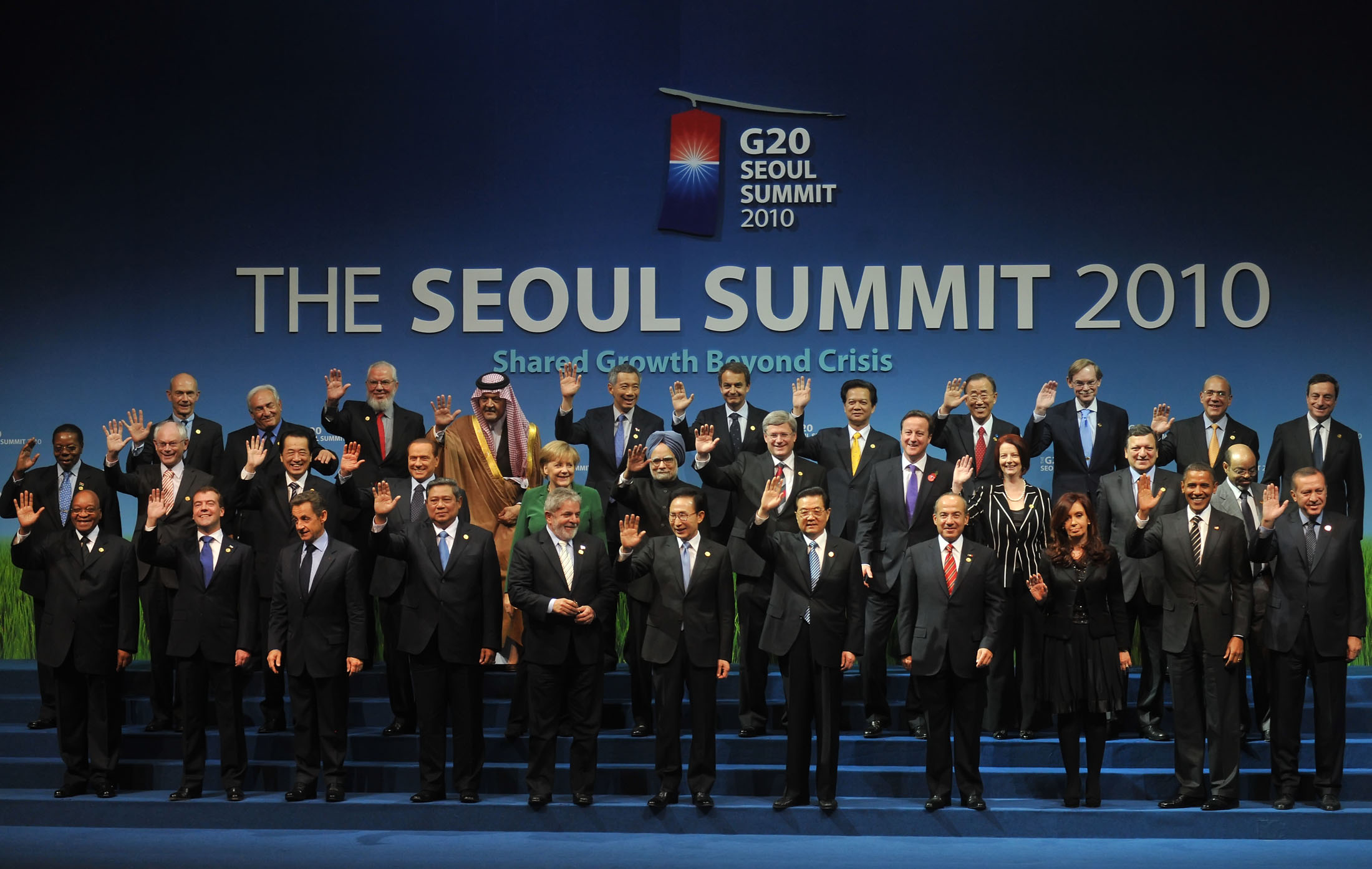
What on earth was with this painfully cringeworthy waving at the Seoul G20? Heavens above – this is supposed to be a summit, not a school outing. If you look closely at the big version (click on photo), you can see that the world’s leaders fall into 4 categories:

1) Those who are waving and – horror of horrors – think that the whole thing is not only acceptable, but great fun. Ban Ki-moon, Silvio Berlusconi, Herman Van Rompuy – fire your PR advisers and get new ones immediately. (Especially you, Van Rompuy – I just had to look you up on Wikipedia to confirm your first name. That’s how much impact you’ve had, that is.)

2) Those who are waving, but dying inside as they do so. Look at Hu Jintao or Recep Tayyip Erdogan. Fellas - we feel your pain, but we’re a bit alarmed that you felt the need to go with the crowd and wave anyway. Your citizens pay you to lead.

3) Those who refuse to wave, but give embarrassed rictus smiles instead. David Cameron and Jose Barroso, you get modest props for not going with the crowd. But those sheepish looks tell a different tale. You pass, but without distinction.

4) Those who not only refuse to wave, but make no secret of their amused contempt for everyone else for going along with what some duff photographer is demanding of them. Meles Zenawi, Angela Merkel, Lula da Silva, Nicolas Sarkozy – we salute you. Go set up a G4 together. You have my vote.


The most boring peacekeeping debate ever?

August 29, 2011 | by Richard Gowan | More on Africa, Conflict and security, Cooperation and coherence, Global system, South Asia | No comments

Last Thursday, I published a grumpy post over on the blog of the Takshashila Institution, an excellent Indian think-tank. Why was I in a bad mood?

On Friday, India will use its month-long presidency of the United Nations Security Council to convene a discussion on the state of peacekeeping.  This is timely, as UN operations have been through a turbulent year, navigating crises in Côte d’Ivoire and Sudan.  There is talk of a new mission in Libya.  But this meeting is likely to be a bore.

And why did I think that the debate would be a snooze-fest?  Demonstrating a remarkable degree of foresight, I guessed that “Security Council diplomats will be thinking of how to beat the traffic from New York to Long Island’s beach resorts once the debate is finished.”  Er, no.  With Hurricane Irene almost literally on the horizon, everyone was probably wondering when they could go and stock up on bottled water and black truffles, or whatever ambassadors consume during hurricanes.

The debate was also overshadowed by the tragic attack on the UN offices in Nigeria.  Nonetheless, a quick read of the summary of the discussions suggests that they were every bit as tedious as I had predicted. Let’s get a quick taster:

Most speakers in the ensuing discussion stressed the continuing importance of United Nations peacekeeping and the need for increased engagement by the partners involved.  In that context, many welcomed more regularized consultations with troop- and police-contributing countries and urged continuous improvement in cooperation among all stakeholders.  Many also called for innovative thinking in closing resource gaps, particularly in supplying such enablers as helicopters, and in implementing the recommendations of previous peacekeeping reviews.

Enough already!  When multiple speakers are highlighting the  importance of “implementing the recommendations of previous peacekeeping reviews”, you know that “innovative thinking” is probably in short supply.  I’m afraid that I fault the Indian conveners for not shaking up the discussions:

A background paper prepared for the Security Council’s meeting contains a solid but all-too-familiar litany of diplomatic statements about how peace operations are resourced and managed.  It fails to grapple seriously with the hardest cases facing the UN or offer a serious framework for resolving them.

As I’ve argued before, peacekeeping is an issue on which New Delhi can show global leadership, but holding debates in New York in which everyone says more or less exactly what they’ve always said isn’t the way to achieve that.


Ducks, Gyms and Chinese foreign aid

August 26, 2011 | by Andy Sumner | More on Cooperation and coherence, Economics and development, Global system | No comments

Foreign aid from ‘new donors’ (aka emerging economies) now makes up around $10bn/year.

And this has doubled in the last five years as the Economist noted last week in a piece on ‘aid 2.0′ triggered by the news that India is to set up its own aid agency with a budget of at least US$1.5-$2bn/year (or triple the annual value of UK aid to India leading to the appearance UK aid is being subcontracted).

One might well ask what if most of the world’s poor live in new donor countries – does it suggest the poor overseas are more deserving than the poor at home?

So, what might aid 2.0 looks like?

One way to take a look is with Chinese foreign aid now that there’s a fascinating dataset on Chinese aid projects (here) that has been painstakingly put together by the Aid Data guys. (By the way a health warning: I am not a Chinese aid expert – read a good read here or the new Chinese government aid white paper here or search Duncan Green’s blog for various China pieces).

The Aid Data dataset of Chinese aid projects covers some 500 Chinese foreign aid projects from 1990-2005 by the year, project description and country recipient and in a very few cases the financial value. For example, in 1991 Chinese aid funded a duck breeding farm in Ecuador breeding 70,000 ducklings a year (wonder if it’s had a Randomised Evaluation yet?).

Of course this is just the project aid declared by the Chinese Ministry of Commerce and data only runs up to 2005 but it makes fascinating reading if you’ve ever wondered what ‘new’ donor’s aid looks like and how different or not it is from ‘traditional’ donors aid (meaning the OECD countries).

So what does Chinese project aid look like based on the Aid Data dataset?

A quick scan suggests: (i) About a half of the projects listed have a direct relation to standards of living via social investments in health equipment or education facilities or via economic growth and production or income generation; (ii) As is well known there’s lots of infrastructure spending (aka aid as concrete) – about a quarter of the projects listed relate to infrastructure – water and power infrastructure in particular; and (iii) Perhaps surprisingly, a quarter or so of all the projects listed relate to leisure and sport – there are numerous new or renovated gymnasiums in Africa (eg Niger, Rwanda and Benin to name a few) and new sports stadiums – one of the biggest being a 30,000 seater stadium in Togo ‘covering an area of 36,000 square metres and including, one Olympic track, an electronic scoreboard, quality pitches and a giant screen’.

So, how different is all this from ‘traditional’ aid or aid 1.0? Much bilateral aid in recent years might well fit into the first grouping of social investments and income generation; some would fit into infrastructure but perhaps less so and probably little ‘traditional’ aid would be leisure or sport related I’m guessing…

And, more importantly perhaps is all of this is probably not where the big money is given the package aid deals of trade and investment from China, the real value probably lies in those non-aid, trade and investment aspects of the deal than in gyms and duck farms (even if they do breed 70,000 ducklings a year which sounds pretty impressive to me).


Dick Cheney has written my book of the year (and I haven’t even read it yet)

August 25, 2011 | by Richard Gowan | More on Conflict and security, Influence and networks, North America, Off topic | One comment
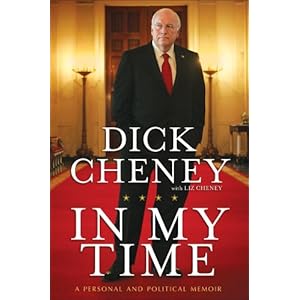
I am an exceptionally excited man.  Next week brings the publishing event of 2011: the appearance of Dick Cheney’s memoirs.  The NYT has seen an advance copy, and highlights the former Veep’s claim that he advised President Bush to bomb Syria in 2007.  Prescient, huh?  But it looks like In My Time: a Personal and Political Memoir is going to be utterly jam-packed with enjoyable nuggets:

He [writes] that George J. Tenet, the director of the Central Intelligence Agency, resigned in 2004 just “when the going got tough,” a decision he calls “unfair to the president.” He wrote that he believes that Secretary of State Colin L. Powell tried to undermine President Bush by privately expressing doubts about the Iraq war, and he confirms that he pushed to have Mr. Powell removed from the cabinet after the 2004 election. “It was as though he thought the proper way to express his views was by criticizing administration policy to people outside the government,” Mr. Cheney writes. His resignation “was for the best.”

I literally don’t know what I’m going to do with myself until I get my hands on a copy of this tome.  Cheney has predicted that there “will be heads exploding all over Washington” when it comes out.  The book is #3 on the Amazon best-sellers list.  I only wish that the publishers had picked a more suitable cover design, like this:


The crises of capitalism

August 25, 2011 | by Alex Evans | More on Economics and development, Global system, Influence and networks | One comment

YouTube Preview Image


Want some illicit tin ore? Ask the UN!

August 24, 2011 | by Richard Gowan | More on Africa, Climate and resource scarcity, Conflict and security, Cooperation and coherence, Economics and development | No comments

While I am not a regular reader of Creamer Media’s Mining Weekly, I know people who are.  And they are not happy about this story from the Congo

Congolese security forces have seized a jeep belonging to the United Nations peacekeeping operation and arrested a UN employee suspected of trying to smuggle over tonne of minerals out of the country, the government said on Monday.

The incident will embarrass the UN force, MONUSCO, which has helped prop up Democratic Republic of Congo’s weak armed forces but is also often accused of not doing enough to protect civilians and has been involved in sexual abuse scandals.

What happened?

Congolese Information Minister Lambert Mende said the incident took place on Sunday evening at the border crossing in the eastern city of Goma.

“Border police … and other security services … have seized a load consisting of 24 packages of cassiterite (tin ore) each weighing 50kg, on board a MONUSCO jeep,” he said.

A police investigation is under way and two people, including a Congolese U.N. staff member, have been arrested, Mende said.

As the lovely portrait of a lump of cassiterite at the top of this post suggests, trying to move a tonne of the stuff around by jeep might not to be the most subtle plan ever.   For good discussions of how to monitor, rather than exploit, the DRC’s extractive industries, look at the papers from CIC collected here.


The European crisis in 3 minutes

August 24, 2011 | by Alex Evans | More on What we're watching | One comment

YouTube Preview Image


The EU can’t even stop you drinking yourself to death

August 23, 2011 | by Richard Gowan | More on Economics and development, Europe and Central Asia, Global system, Influence and networks, Off topic | 2 comments

Readers of academic journal Addiction will have become rampant eurosceptics after perusing a recent article by Rebecca Gordon and Peter Anderson entitled “Science and alcohol policy: a case study of the EU Strategy on Alcohol”.   I didn’t know that the EU had a strategy on booze, but the bloc has a habit of launching “strategies” with variable amounts of substance.  In this case, the EU Council asked the European Commission to devise a strategy on reducing alcohol-related harm.  The Commission published a Communication on the subject in 2006.  Is it any good?

Although the Communication acknowledges and supports existing interventions which have high evidence for effectiveness, such as enforcing blood alcohol concentration (BAC) limits for drivers, it extensively promotes other interventions which have been shown to be ineffective; for example, recommending education and persuasion strategies as a measure across all its five priority areas.

In other words, dear readers, the Commission is boosting policies that don’t work.

Measures to influence price are mentioned only once in relation to sales in drinking venues limiting two-for-one drinks offers. Measures to control physical availability are mentioned infrequently.

It doesn’t really sound like the Commission’s heart was in it…

It also focuses its efforts more on mapping member state actions and coordinating knowledge exchange than on providing concrete recommendations for action or developing Europe-wide policy measures. This may be a compromise between the rights of Member States to develop national policy and legislation and the obligation of the European Union as a collaborative body to protect health.

So this is all about sovereignty and subsidiarity?  Not quite…

Furthermore, it has been suggested that the European Union’s roots as a trading block emphasizes collaboration with industry stakeholders and this influences the ability to prioritize health over trade considerations.

Who might these powerful “industry stakeholders” be?  I have a faint idea, as I once had a brush with them myself.   Late last year, I co-authored a piece in the European Voice with Sushant K. Singh on the EU’s relations with India.  We noted that efforts to sign off on an EU-India free trade agreement had been held up by disputes over liquor tariffs, and expressed surprise that a potentially important strategic relationship was being complicated by the price of booze.  Soon afterwards, a representative of the European Spirits Organisation wrote a sniffy letter to the European Voice arguing that “that spirits are the EU’s most important agri-food export (worth €5.7 billion in 2009).”

I am told that EU-China relations are similarly complicated by the interventions of the, er, liquid lobbyists in Brussels on liquor tariff issues.    I’m all for boosting agri-food exports, of course.  But one would think that the EU could at least set aside “trade considerations” when it comes to stopping its citizens drinking themselves to death.


Gaddafi: guilty of crimes against good taste as well as humanity?

August 23, 2011 | by Richard Gowan | More on Middle East and North Africa, Off topic | No comments

The New York Times reports that this sculpture of a golden fist crushing a U.S. jet was one of Colonel Gaddafi’s favorite works of art.  What is the point of being a tyrant if you surround yourself with such rubbish?

A further thought on the Gaddafis’ style choices: there has been much excitement about Gaddafi’s son Seif al-Islam marauding around Tripoli after he had reportedly been captured.  A number of journalists have noted that he was sporting “a full beard and wearing an olive-green T-shirt and camouflage trousers.”  This has been read as evidence of his willingness to fight on.  But this overlooks the fact that Seif notoriously undertook postgraduate study at the LSE.  In my experience, a high percentage of LSE students can be found with “a full beard and wearing an olive-green T-shirt and camouflage trousers” at almost any time, and it is usually a sign that they are going to tell you something complicated about Habermas, not fight to the death.


Securing Libya: the next steps

August 22, 2011 | by Richard Gowan | More on Conflict and security, Cooperation and coherence, Europe and Central Asia, Middle East and North Africa, North America | No comments

So, it’s all over in Libya.  Or is it?  I tend to concur with Stephen Walt’s nervous take:

The danger is that we will have another “Mission Accomplished” moment, when French President Nicolas Sarkozy, NATO head Anders Fogh Rasmussen, President Obama, and their various pro-intervention advisors give each other a lot of high-fives, utter solemn words about having vindicated the new “Responsibility to Protect” (R2P) doctrine, and then turn to some new set of problems while Libya deteriorates. And as an anonymous “senior American military officer” told the New York Times: “The leaders I’ve talked to do not have a clear understanding how this will all play out.”

What is to be done?  I have published a short post over on the ECFR blog, arguing that it’s not clear that the Libyan rebels can restore stability and normality on their own:

Luckily, outside help is forthcoming.  The next weeks will see international officials (and no doubt a lot of spooks) hurry to Tripoli with offers of assistance. Months ago, UN Secretary-General Ban Ki-moon appointed a Special Adviser on Post-Conflict Planning on Libya to prepare for this moment.  The adviser, Ian Martin (who I previously had the privilege of working with on a review of the UN’s political missions) has had time to make detailed preparations. While European governments and EU officials will want to play a part in reconstructing Libya, the UN is best-placed to coordinate the overall international effort.

But the next few weeks may well be chaotic, with regime die-hards and criminal opportunists on the loose, and it will be necessary to ensure that UN and other civilian officials are sufficiently well-protected to do their job properly. It’s unlikely that Libya will turn into another Iraq, but it’s certainly conceivable that someone might try to repeat the attack on the UN’s Baghdad headquarters in 2003 that killed its chief Sergio Viera de Mello.

In this context, the EU could help Libya’s transition to stability by resurrecting a proposal that failed to work out earlier this year. Back in April, the EU Council approved an EU military mission (EUFOR Libya) to help get humanitarian aid into Libya if UN aid officials requested help. As I pointed out in an op-ed in June, the proposal wasn’t very well thought-out, and the mission never got off the ground.

But now the idea’s time may have come. If the EU Council wants to help speed up the Libyan transition, it should declare its willingness to offer one or two of the EU’s Battle Groups to protect and assist UN and other civilian officials for up to three months.  This wouldn’t be full-scale peacekeeping, but a narrower job of guarding compounds and convoys and providing secure communications while Libya moves towards stability.

What happens after that?  It’s worth checking out this new piece by Daniel Serwer on stabilizing Libya and (with apologies for the immoderate self-advertising) a piece that I wrote with Bruce Jones and Jake Sherman on the same topic back in April.  Long-time hawk Max Boot also deserves credit for persistently raising the subject but I find his solution - a big Western operation comparable to that in Kosovo in 1999 - incredible.


Why academics aren’t politicians

August 21, 2011 | by Richard Gowan | More on Economics and development, Influence and networks, North America | One comment

The New York Times has done a series of mini-interviews with “leaders in fields other than politics”, asking them what they would do if they were President.  Their answers underline that many very clever people would make very bad politicians.  Danny Meyer, for example, is an entrepreneur who has created some of New York’s best restaurants.  But his presidential proposal sounds like something cooked up by undergraduates:

If I were president, I’d appoint a blue-ribbon committee of 14 accomplished citizens — one each representing these nonpolitical walks of American life: arts, science, sports, big business, entrepreneurs, tech, medicine, law, education, environment, defense, religion, farming and philanthropy — and charge them with imagining innovative industries that put Americans to work and add value to our world. I’d prioritize among the committee’s ideas, then advocate for a tax code rewarding sustainable job-rich industries, especially those that liberate us from imported oil.

Yeah man, it’s just like if only we didn’t listen to all the squares in suits, we’d totally realize that America’s woes can be resolved by a better dialogue between farmers, defense analysts and David Beckham.  Without that, we’ll never be able to produce a new generation of robots able to kill people with soccer balls entirely powered by excess corn starch and pig excrement.  Or something like that.

Or perhaps not.  But what am I saying?  As the NYT underlined in a very enjoyable recent profile, Mr. Meyer is devoted to perfecting the beef burger, and that’s more than good enough for me.  I’d expected a slightly surer political touch from James Q. Wilson, one of the academic godfathers of neoconservatism (if you’re into social policy, you’ll know he’s the brain behind the “broken windows” theory of policing) and an alumnus of any number of White House advisory groups.  What does he suggest?

With my staff, I would decide what my administration was for. Once I had clarified that, I would write several speeches on how to cope with a stagnant economy, how to deal with countries (such as Iran and Syria) that harass their own populations, and how the United States is committed to the survival of Israel. These speeches would not attack the other party or previous presidents but would describe the views I supported. On the economy: do I favor tax cuts or increases, expenditure reductions or increases? On terrorist regimes: what sanctions will I support? On Israel: under what circumstances would an attack on Israel be regarded as an attack on the United States? People would disagree with some of what I said, but they would know where I stand. After delivering the speeches, I would submit to Congress my specific proposals, on which I would ask them to vote.

Seriously?  “Write several speeches”?  Not just one or two?  Is that it?

I guess that Wilson is trying to imply that the current U.S. President has not always been 100% clear about his beliefs and not been tough enough with Congress.  Fair enough.  But can Professor Wilson really think that the essence of wielding power is so simple?  I sincerely doubt it.  Nonetheless, the NYT‘s exercise is a good reminder that great political thinkers aren’t necessarily great guides to how to do politics.

(PS: for those with any time left for summer reading, I thoroughly recommend going out and getting a copy of Jan-Werner Müller’s outstanding new book Contesting Democracy.  It’s a history of European political thought in the twentieth century, and it deals with hard political questions about what leaders like Mussolini actually thought they were doing.  It starts out with a fine dissection of Max Weber’s lecture “Politics as a Vocation”, which is still the best explanation of what it takes to be a serious politician.)


US-China relations boil over

August 20, 2011 | by Jules Evans | More on What we're watching | No comments

YouTube Preview Image


The UN’s not-so-rapid rebuttal mechanism

August 19, 2011 | by Richard Gowan | More on Africa, Conflict and security, Influence and networks | No comments

This Wednesday (17 August) Foreign Policy published a piece by Ban Ki-moon’s Chief of Staff, Vijay Nambiar, rebutting an earlier article by former South African President Thabo Mbeki in FP about the crisis in Côte d’Ivoire. It’s worth a look.

Mbeki argued that the international community was “fundamentally wrong” to insist that Côte d’Ivoire hold elections for which it was not ready in 2010.  Nambiar says that Mbeki offers an “inaccurate account” of the crisis.

This is heated stuff.  But one can’t help noticing that Mbeki’s article appeared on, er, 29 April.   It’s good that the UN is standing up for its principles.  But did it really need the best part of four months to draft a rebuttal?


Jeff Sachs on how OECD countries can get their act together

August 18, 2011 | by Alex Evans | More on Economics and development, UK | No comments

Jeff Sachs in the FT on how OECD countries could finally get their acts together:

An improved fiscal policy in the transatlantic economies would therefore be based on three realities. First, it would expand investments in human and infrastructure capital [especially, Sachs makes clear elsewhere in the article, low carbon energy]. Second, it would cut wasteful spending, for instance in misguided military engagements in places such as Iraq, Afghanistan, and Yemen. Third, it would balance budgets in the medium term, in no small part through tax increases on high personal incomes and international corporate profits that are shielded by loopholes and overseas tax havens.

All sounds good and sensible to me. Now read it again and reflect on the fact that Britain’s coalition flunks on all three counts. Hope Ed Miliband subscribes to the FT.


The perfect global governance metaphor

August 18, 2011 | by Alex Evans | More on Economics and development, Global system | 3 comments

Never mind deckchairs on the Titanic. Vinay Gupta (find him here on Twitter) has come up with the perfect metaphor to describe governance breakdown in the face of systemic global risks:

When is soon, probably. We could keep rolling sixes and spin it out another 22 years, but we’re getting to the point where relatively small system shocks could propagate uncontrollably like a fat man falling through ice on a pond. I can’t tell you when, but I can tell you that the US is in trouble, Europe is in trouble, they’ve printed insane amounts of money and it hasn’t stabilized things, assets are being devalued in complex processes which hide inflation and still there are no new jobs. People kick around terms like “stagflation” but what’s happening is simple and subtle: nothing.

We’re treading water. We’re like a shark that’s stopped swimming. We’re a cartoon character, all flailing legs, hovering above the abyss.

And at the bottom of it are those poor bastards in Africa, in rural India, South America, Asia, eating rice and bugs because there’s nothing else to eat. And you’ve ignored them your entire life as the money poured from “we know not where” into the First World Lifestyle, which squandered the wealth which could have fed and housed every human being on earth on an extractive economy which wastes 40% of the food produced and has a billion fat people, including me.


URBEINGRECORDED » Discontinuity & Opportunity in a Hyper-Connected World
Great discussion of complexity and network theory and its relevance to global risks, from Chris Arkenberg

The Emissions Gap Report
This publication aims to assess the following questions: are countries’ pledges of action collectively consistent with and, if implemented, likely to achieve the 2˚C and 1.5˚C temperature goals? If not, how big is the gap between emission levels consistent with these temperature goals and the emissions expected as a result of the pledges?

The Spectator runs false sea-level claims on its cover
These claims rely on misinterpretations of scientific data so grave that even an arts graduate such as Fraser Nelson should have been able to spot them.

Europe’s Insult Diplomacy - Infographic
British Prime Minister David Cameron called French President Nicolas Sarkozy “a hidden dwarf” as part of a joke told to a journalist. German Chancellor Angela Merkel referred to Sarkozy as “Mr. Bean,” while Sarkozy called her “La Boche,” or the Kraut. Spanish Prime Minister José Zapatero is “too pink” because of the high proportion of women in his cabinet, said Italian Prime Minister Silvio Berlusconi. And Berlusconi’s opinion of the euro? “A disaster,” he said, that has “screwed everybody.”

Solar Power's Good News
The White House has challenged the solar industry to produce clean electricity at $1 per watt. It has also set a national goal to achieve 80 percent clean energy use by 2035…The good news is that researchers are racing toward that goal at an impressive rate.

BBC News - Viewpoint: Is the alcohol message all wrong?
"The effects of alcohol on behaviour are determined by cultural rules and norms, not by the chemical actions of ethanol."

Something's Happening Here - NYT - Tom Friedman
When you see spontaneous social protests erupting from Tunisia to Tel Aviv to Wall Street, it’s clear that something is happening globally that needs defining

Foreign Aid Set to Take Hit in U.S. Budget Crisis - NYTimes.com
America’s budget crisis at home is forcing the first significant cuts in overseas aid in nearly two decades

Israel - Adrift at Sea Alone - NYTimes.com
Tom Friedman bemoans "the most diplomatically inept and strategically incompetent government in Israel’s history"

Eurozone: A nightmare scenario - FT.com
How it could all go pear-shaped - your cut-out-and-keep flow chart guide

Sharp fall in poor countries' dependency on foreign aid says ActionAid report
Aid dependency among 54 of the world’s poorest countries has declined by a third over the last decade, according to a new report from ActionAid.

World environment programs in budget crosshairs | Reuters
Global conservation programs are prime targets for budget-cutting: they sit at the crossroads of two things Americans dislike spending money on, aid and environment.

Attack of the Superweed - BusinessWeek
widespread use of Roundup has led to the evolution of far-tougher-to-eradicate strains of weeds

Jon Stewart Says Rick Perry Is the Candidate Republicans Want, and Deserve
Laugh out loud funny

Global reach is the prize at Busan - Resources - Overseas Development Institute (ODI)
Jonathan Glennie and Andrew Rogerson on what you need to know ahead of the big aid effectiveness summit

When Bloggers Don’t Follow the Script, to ConAgra’s Chagrin - NYTimes.com
Ha ha ha - epic PR #fail

Obama backs down on tighter smog regulations | World news | The Guardian
In case you missed it. Yes we can...

Wikileaked cable: executions of children by US forces in Iraq
Wikileaked cable with harrowing reports of  US forces handcuffing and then killing 10 people - including children aged 5 years, 3 years and 5 months.

BBC News - Tests show fastest way to board passenger planes
The way airlines board planes turns out to be the least efficient

New sources of aid: Charity begins abroad | The Economist
"The establishment donors’ aid monopoly is finished."

Who Doomed Sarah Palin's Presidential Dream? | TPMDC
Where did it all go wrong for Sarah?

The Intergenerational Foundation
"We believe that each generation should pay its own way, which is not happening at present."

Should we have a land value tax? - MoneyWeek
Discussion of pros and cons for the UK, following an article by OECD's chief economist in Prospect

Toward a Post-2015 Development Paradigm | Centre for International Governance Innovation | Centre pour l'innovation dans la gouvernance internationale
12 new development goals are proposed to replace the MDGs from 2015 - the outcome of an IFRC / CIGI conference at Bellagio

China Gets (Needlessly) Defensive Over Famine in Africa - China Real Time Report - WSJ
Germany's Africa policy coordinator causes dispute by singling out Chinese landgrabs as a culprit in the Horn of Africa famine

Latin America: A toxic trade - FT.com
Must read broadside against probably the most stupid and avoidable public policy screw-up in recent memory: the war on drugs

The intellectual collapse of left and right - FT.com
Michael Lind on how the economic inclusion narratives of centre left and centre right are simultaneously imploding - must read

Julia Gillard back to rock-bottom: Newspoll | The Australian
Bad news for supporters of green taxes and decisive action on climate change

Oxfam’s looking for a new Head of Research
A plum role is up for grabs

The global crisis of institutional legitimacy | Felix Salmon
"Our hearts want government to come through and save the economy. But our heads know that it’s not going to happen."

UBS' George Magnus On Marxist Existential Crises And The "Convulsions Of A Political Economy" | ZeroHedge
Not every day you see investment banks publishing detailed analysis of Karl Marx

Food Prices Could Hit Tipping Point for Global Unrest | Wired Science | Wired.com
New quant research on thresholds over which high food prices cause riots

Ambassador Locke Picks Up His Own Coffee, Gains 'Hero' Status Among Chinese : The Two-Way : NPR
Some pictures of the brand new U.S. ambassador to China are causing quite a stir.

Jon Stewart | Ron Paul | Michele Bachmann | Mediaite
Jon Stewart breaks down the state of play on the Republican Presidential race

The Bucky-Gandhi Design Institution › When?
Some properly out of the box thinking from Vinay Gupta. Must-read.

England’s riots: If the UK were a fragile state… | Dan Smith's blog
By the head of a leading peacebuilding NGO

Post-Traumatic Stress Disorder From 9/11 Still Haunts - NYTimes.com
At least 10,000 New Yorkers still have PTSD from 9/11

The unlikely social network fuelling the Tottenham riots « The Urban Mashup Blog
Not Twitter, not Facebook but.... Blackberry Messenger

Mapping world food price volatility | Nourishing the Planet
Clickable map of global food price hotspots

Will the 2012 Earth Summit be a flop? > From Poverty to Power
Great summary of the state of play on Rio 2012 from Oxfam's Sarah Best

Articles & Publications
Sustainable Development Goals – a useful outcome from Rio+20?

Recent months have seen increasing interest in the idea that Rio+20 could be the launch pad for a new set of ‘Sustainable Development Goals’ (SDGs).  But what would SDGs cover, what would a process to define and then implement them look like, and what would some of the key political challenges be? This short briefing [...]

Creating Consensus on a post-2015 framework for development

Any global framework for development which is agreed after 2015 will be a political deal between states. This paper looks at recent trends in policy and politics in emerging economies and traditional donors to assess where a consenus might lie. It suggests some principles for a post-2015 agreement which emerge from recent policy developments

A post-2015 Global Development Agreement: why, who what?

Paper from ODI and UNDP, authored by Claire Melamed and Andy Sumner, summarising the evidence on the impact of the MDGs, and looking at current trends in poverty and in global governance that will affect the shape and the scope of any future agreement on global development.

Resource Scarcity, Fair Shares and Development

Why resource scarcity will be a game changer for global justice agendas, and what aid donors, NGOs and other development opinion formers need to do about it. WWF / Oxfam report by Alex Evans.

Making Rio 2012 Work: Setting the stage for global economic, social and ecological renewal

The Rio 2012 sustainable development summit is at risk of being the latest in a long line of damp squibs on environmental multilateralism – but could still make real progress, if it focuses on greening growth and building resilience to shocks and stresses, and above all faces up to the issues of fair shares that arise in a world of limits.

Governance for a Resilient Food System

How national and international governance systems need to be reconfigured to meet the challenges of food security in a world of tighter supply and demand balances and increasing volatility. Report for Oxfam’s new Grow campaign by Alex Evans. (May 2011)

Running out of everything: how scarcity drives crisis in Pakistan

Article on scarcity of resources in Pakistan and what it means for the country.

Economics for a world with limits

Text of speech by Alex Evans to Institute for New Economic Thinking annual conference at Bretton Woods; the YouTube video is here. (April 2011) Download Speech

Unscrambling the price spike

Article published on China Dialogue on reasons for the new food price spike, including potential implications of the current drought in China. (February 2011) Download Article

2020 Development Futures

Eight critical uncertainties for development over the next decade, and ten recommendations for what ActionAid – who commissioned this report – should do to prepare for them

American Foreign Policy in an Age of Uncertainty

Article published in World Politics Review on current American foreign policy

The World in 2020 – Geopolitical and Trends Analysis

Report asking how organisations can prosper in what will be a turbulent period for world order

Globalization and Scarcity

Center on International Cooperation report on what forms of multilateral cooperation are needed to manage scarcity of resources

Resource Scarcity, Climate Change and the Risk of Violent Conflict

Background paper on whether resource scarcity and climate change will cause increased violent conflict

Organizing for Influence: UK Foreign Policy in an Age of Uncertainty

Chatham House report on how the UK’s new coalition government should upgrade and reform the way Britain conducts foreign policy

The Long Crisis Seminar

Introductory remarks by David Steven at a Brookings Institution seminar on risk and resilience in the global system (March 2010)

Stop Betting the House talk

Talk given by David Steven at Gresham College on risk and resilience in the UK housing market, as part of a Long Finance Roundtable meeting (March 2010)

Time to Stop Betting the House: a response to the FSA

Report by David Steven in response to the FSA’s Mortgage Market Review

Confronting the Long Crisis of Globalization: Risk, Resilience and International Order

Brookings Institution report by Alex Evans, Bruce Jones and David Steven on how globalisation could fail – and how it could be made more resilient. Published to coincide with the 40th anniversary World Economic Forum in Davos.

Hitting Reboot – where next for climate after Copenhagen

Report by Alex Evans and David Steven analysing the post-Copenhagen context on climate change, including a proposed 12 point action plan. Written for the Brookings Institution / NYU Center on International Cooperation Managing Global Insecurity programme.

Climate Change and Hunger: Responding to the challenge

World Food Programme report on the state of the science on what climate change means for hunger, plus policy recommendations. Authored by IPCC Impacts Chair Martin Parry with Mark Rosengrant, Tim Wheeler and Global Dashboard’s Alex Evans (December 2009)

Scarcity, security and institutional reform

Presentation by Alex Evans to a seminar organised for the UN Department of Political Affairs by the Geneva Centre for Security Policy (August 2009)

The Resilience Doctrine

Article on risk and resilience by Alex Evans and David Steven – part of a special in World Politics Review on risk and resilience in a globalized age (July 2009)

An Institutional Architecture for Climate Change

Report by Alex Evans and David Steven exploring the future international institutional requirements for managing climate change, and including three scenarios for climate institutions between now and 2030. Commissioned by the UK Department for International Development. (May 2009)

Risks and Resilience in the New Global Era

Article by Alex Evans and David Steven exploring resilience as a political agenda – part of a special edition of Renewal on the transformation of foreign policy (February 2009)

A Tale of Two Cities

Climate and cities think piece, co-authored by David Steven and the British Council’s Peter Upton (29 January 2009)

The Feeding of the Nine Billion

Chatham House pamphlet by Alex Evans on how scarcity issues will shape the outlook for global food production, and the actions that policymakers need to take at the international level and in developing countries to ensure food security in the 21st century

2009 – A Year for International Reform

Paper by David Steven, presented to “Reforming International Institutions – Meeting the Challenges of the 21st Century,” a conference organized by the United Nations University and the British Embassy in Tokyo (Jan 2009).

Food prices: what next?

Speech by Alex Evans at the Tomorrow Network (25 November 2008)

A Bretton Woods II Worthy of the Name

Paper by Alex Evans and David Steven on financial reform and wider multilateralism, published ahead of the G20 ‘Bretton Woods II’ Summit (November 2008).

The Future of Resilience

Speech by David Steven to RUSI Conference on UK Resilience (8 October 2008)

Towards a Theory of Influence

Chapter by Alex Evans and David Steven in the Foreign & Commonwealth Office publication, ‘Engagement: public diplomacy in a globalised world’ (July 2008). Download Chapter

Multilateralism for an Age of Scarcity

Draft report by Alex Evans exploring multilateral system reforms needed in order to manage resource scarcity issues more effectively. The final version will be published in early 2010 (July 2008)

Scarcity issues and conflict in Africa

Speech by Alex Evans at UK Parliament (8 July 2008)

A Low Carbon World – Pathways to a Global Deal

Speech by David Steven at the UNU G8 Symposium (4 July 2008)

Climate, scarcity and multilateralism

Speech by Alex Evans to United Nations Association UK (7 June 2008)

The new public diplomacy and Afghanistan

Speech by David Steven to the UK Defence Academy’s Advanced Research and Assessment Group seminar on Strategic Communications, Public Diplomacy and Afghanistan (4 June 2008).

Technology and Public Diplomacy

Speech by David Steven to the University of Westminster Symposium on Transformational Public Diplomacy (30 April 2008).

Rising Food Prices: Drivers and Implications for Development

Briefing paper by Alex Evans, published through Chatham House’s food programme (April 2008).

Looking Forward: how do we build resilience?

Speech by David Steven to RUSI Conference on Critical National Infrastructure (16 April 2008).

Shooting the Rapids: multilateralism and global risks

Paper by Alex Evans and David Steven, commissioned by Gordon Brown and presented to heads of state at the Progressive Governance Summit (April 2008).

Beyond a Zero-Sum Game on Climate Change

Chapter by Alex Evans and David Steven, as part of the British Council’s Transatlantic Network 2020 book ‘Talking Trans-Atlantic’ (March 2008).

From Bali to Copenhagen: towards an endgame for global climate policy?

Article by Alex Evans for the Environmental Policy & Law Journal (January 2008).

Climate Change: The State of the Debate

Report by Alex Evans and David Steven, written for the London Accord (December 2007).

The Post-Kyoto Bidding War: bringing developing countries into the fold

New paper by Alex Evans on climate policy after 2012 from the Center on International Cooperation (October 2007).

Alternative CSR: the Foreign & Commonwealth Office

Chapter on the FCO from Manchester University Press’s Alternative Comprehensive Spending Review, by David Steven (September 2007).

Fixing the UK’s Foreign Policy Apparatus: A Memo to Gordon Brown

Note by Alex Evans and David Steven about how to restructure the UK’s foreign policy system in order to manage trans-boundary global risks better (April 2007).

Evaluation and the New Public Diplomacy

Talk given by David Steven at the Wilton Park conference: The Future of Public Diplomacy. Focuses on strategies to drive public diplomacy to the heart of the foreign policy armoury (March 2007).

Articles and Publications

YouTube Preview Image

Gabrielle Giffords to step down | 2 Comments

YouTube Preview Image

Oh to be in the president of Turkmenistan’s entourage… | 1 Comment

YouTube Preview Image

David Carr And Danah Boyd Share Insights | Comments Off

YouTube Preview Image

Edgar Mitchell on the Overview Effect | 1 Comment

YouTube Preview Image

Presidential debate fail | 2 Comments

More What we're watching

Key Posts
Cheap food: bad. Expensive food: terrible. Why the FAO’s glass is always empty8

It’s interesting to look back a few years – to when the world was worried that food was too cheap, not too expensive. In 2004, the UN Food and Agricultural Organization looked back on a long bear market for food: forty years in which real prices of agricultural commodities had fallen 2% per year, or [...]

How many people are hungry?3

The good news: poverty is in retreat. The bad news: hunger isn’t.  That’s the headline finding for the first Millennium Development Goal , which aims to halve the proportion of people living on less than $1.25 a day and the proportion of people living in hunger between 1990 and 2015. Great strides have been made [...]

“Freeing the entire human race from want”2

The MDGs are so over Having just been rude about one World Bank report, here’s a positive review of another – the Global Monitoring Report 2011, which the Bank produces jointly with the IMF. The GMR updates progress against the Millennium Development Goals – targets that were set as the culmination of a push throughout [...]

21 years ahead of its time5

A 1989 article on ‘the global teenager’ in Whole Earth Review was way ahead of its time in identifying the crux of what today’s youth bulge means for global change

Is it time for Sustainable Development Goals?4

The pros and cons of a new global set of Sustainable Development Goals (SDGs) – and how they might work in practice

The one book you must read over the summer9

Mark Lynas’s new book The God Species is a must-read for environmentalists

Fair shares in a world of limits: the new front line for development-

Thoughts after from a joint WWF / Oxfam seminar on resource scarcity, fair shares and development.

What the ‘powershift’ narrative overlooks on US-China relations-

The ‘powershift’ narrative about US-China relations obscures how much they have in common: unsustainable growth paths, shaky financial sectors, political sclerosis, massive inequality, reliance on imported resources and above all their status as the two principal obstacles to collective action on shared global risks.