by Richard Gowan | Apr 29, 2011 | Conflict and security, Cooperation and coherence, Europe and Central Asia, Middle East and North Africa
In a New York Times op-ed earlier this week, retired U.S. general James Dubik reiterated the need for some sort of post-conflict peacekeeping force in Libya:
If Colonel Qaddafi falls, the United States and NATO will have a responsibility to help shape the postwar order, including providing security to prevent a liberated Libya from sinking into chaos.
The responsibility for security, reconstruction and nation-building will likely fall to the United Nations, which would mean deploying a multinational peacekeeping force in Libya, including troops from the United States, NATO and Arab nations.
The case for a peacekeeping force is hard to argue with, as Bruce Jones, Jake Sherman and I pointed out on the Foreign Policy website earlier in April. But I doubt that Leon Panetta wants to begin his time at the Pentagon by ordering U.S. ground troops into Libya. And while I did suggest at the start of the war that European peacekeepers might be an option, the EU’s proposals for sending a small humanitarian force have stalled. The idea that relatively impartial non-European powers like Brazil and India could deploy excites more objections than enthusiasm.
So who’s left? One idea that is kicking around, as I note in a new article for Abu Dhabi’s The National, is an all-Muslim or all-Arab peacekeeping force. It’s not a 100% original notion:
In 1987, Muammar Qaddafi had one of his many bold strategic ideas. As the Iran-Iraq war dragged on, he proposed the dispatch of an Islamic peacekeeping force to end the conflict. He suggested that Algeria, Indonesia and Nigeria could supply troops.
The Iranians dismissed the idea, which promptly died. But nearly quarter of a century later, with Qaddafi and his foes locked in indecisive combat, some strategists are asking if Arab and/or Muslim peacekeepers could now be deployed in Libya.
While French, American and British aircraft have led Nato’s campaign over Libya – and the European Union has approved military operations to deliver aid – Western officials fear that a follow-on stabilisation mission would be costly, open-ended and dangerous. Islamist terrorists have killed Spanish peacekeepers in Lebanon and UN staff in Algeria, while French commandos have skirmished with Al Qaeda in the Maghreb. Sending sizeable Western forces to Libya could look like an invitation to further attacks.
By contrast, a largely Arab or Muslim force might have greater legitimacy – or at least present a politically problematic target to Al Qaeda and its affiliates. This view isn’t confined to worried Western analysts either. Last month Farhan Bokhari, a Pakistani commentator, argued that Libya shows the need for the formation of a “pan-Islamic peacekeeping force” ready to intervene in emergencies in Muslim countries.
Is there a real chance of such a force deploying to Libya?
Read the rest of the article to find out…
by Claire Melamed | Apr 28, 2011 | Economics and development, Global system
Which is the title of a presentation I’ve just given at a conference on global health and the MDGs in Copenhagen. The powerpoint’s not up yet, but the main points were:
 1. The MDGs should not be confused with an ‘8 commandments of development’. They’re criticised for not saying everything there is to say about development, but this is missing the point. They represent an international agreement on some joint actions and responsibilities which reflect an understanding of what the main problems were in the late 1990s and where international cooperation could usefully be part of the solution. A post-2015 agreement should do the same, for a different era of development.
2. The MDGs have created a new incentive structure for donor governments in particular, and so have distorted behaviour. Some would argue, for example, that the focus on increasing the numbers of children in school has been at the cost of the quality of education – but numbers were the MDG target, so that’s where the money and the attention went (to be fair, it’s not just the MDGs that focused on quantity over quality – just about every other education campaign and report did the same). Any post-2015 agreement would do this too – that’s the point of it. The question is what actions, and by who, we want to incentivise.
3. A post-2015 agreement will be delivered through different aid architecture. The world can’t be divided into rich donor countries and poor recipient countries any more – most poor people live in countries that are both donor and recipient, or neither. So the politics of agreeing it, and the structure for implementing it, would have to be different.
4. And the problems we face are different. To take just two examples, poverty is increasingly urban, so development’s rural bias will have to go, and diseases are increasingly of the non-communicable kind (heart disease, diabetes and the like), rather than the infectious diseases that were the focus of the MDGs (not that these have gone away).
5. And our understanding of what ‘development’ is and how to measure it has changed, informed by the ideas of ‘wellbeing’ or of ‘multidimensional poverty’, among others. We have new ideas about instruments to help bring it about – with social protection perhaps the most current example. The importance of politics looms much larger in development thinking than in the 1990s – though we probably still don’t quite know what to do with that insight.
 So it’s complicated. It was always complicated, but the more we know the more complicated it seems. Out of this tangle (hence the string – I’m feeling rather literal today), a post-2015 agreement would need to have the same simplicity and political power as the MDGs, if it’s to be an agreement that governments can use with electorates, NGOs with governments, journalists to their editors and so on.
A tough call. What are the choices?
– keep the MDGs with an extended timeline (not appealing – rather a missed opportunity to reframe the ideas and incentives for a different world)
– keep the structure, but with (some) different targets and a new timeline (this would all depend on keeping the targets within manageable limits – a shopping list approach wouldn’t work for anyone)
– a new structure – possibly framed around global public goods or some other principle (the least likely politically, though in some ways the most apprppriate)
Or of course, nothing at all. It’s perfectly likely that attempts to reach international consensus around shared responsiblity for a set of defined poverty problems will be too difficult and will be quitely dropped. Before we get too deeply into a technical discussion on the what and the how of any new agreement, maybe we should remember that any agreement at all may well be the real prize.
by Alex Evans | Apr 25, 2011 | Climate and resource scarcity, Economics and development
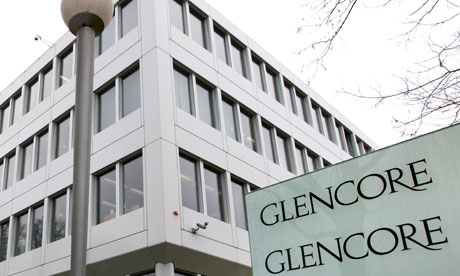
Finally, campaigners have found the villain they’ve been looking for on speculation and food prices. Watching them saddle up and prepare for battle is likely to be reminiscent of the air cavalry scene in Apocalypse Now.
Throughout the rollercoaster ride on food prices of the last few years, one of the most hotly contested issues has been that of the role of financial speculators in driving higher food prices or in catalysing greater price volatility. Some politicians (especially French ones – see this year’s G20 agenda) have jumped at the chance to paint the financial sector as the baddie; campaign groups like WDM have also jumped on the issue. Unfortunately, though, most of the evidence is far from conclusive. Homi Kharas at Brookings puts it like this:
Almost all serious studies have come to the same conclusion: the volatility inherent in the food marketplace causes speculation, not the other way around.
Similarly, when the International Food Policy Research Institute did an analysis of the issue, their results weren’t exactly decisive: the strongest they felt able to put it was that speculative activities “might have been influential” in pushing prices up. Among independent analysts, the broad consensus has been that financial speculation can add some ‘froth’ to the market, and perhaps cause a degree of additional volatility at the margins – but it’s a long way from being the main driver of food price inflation or volatility.
Which is disappointing, if you’re an NGO, because speculators and financial traders make for a great campaigns bad guy. But now something pretty interesting has emerged.
Over the last few weeks, Glencore – a Swiss-based commodity trading firm – has been preparing for its initial public offering (i.e. the public floatation of its shares). Although you may not have heard of Glencore – it’s pretty publicity-shy – it’s a huge player in the sector. With revenues last year of $145 bn and a potential market cap after the IPO of $73 bn, Glencore will be the largest public offering on record in London, and once public it’ll be one of the largest companies in the FTSE 100.
Over the weekend, Glencore disclosed to UBS, one of the banks underwriting its floatation, that it made a major speculative bet on rising wheat and corn prices during the early stages of last summer’s Russian drought – which was in many ways the starting gun on the current, post-financial crisis food spike. So what? Here’s the key point, from the FT’s write-up this morning:
As it bet on rising prices, senior traders at the Swiss-based company publicly urged Russia to impose a grain export ban. Moscow acted a few days later, triggering a grain rally.
Now that, if true, is a whole different story. For while the evidence isn’t conclusive that speculation causes food inflation or spikes, no-one is in any doubt about how damaging export bans are. Back at the height of the 2008 spike, export bans were the factor that turned widespread unease into outright panic, and sent prices to record highs in a vicious positive feedback loop. The Russian export ban last summer, meanwhile, fired the starting gun on the current food spike, which took food prices to new record levels – and once again hammered nearly a billion poor people around the world.
So does the charge stick? Here’s the key passage from an August 3 briefing note last year from Glencore:
“From our point of view the [Russian] government has all the reasons to stop all exports.”
Is that “urging”, as the FT has it? I don’t think the FT’s charge is unreasonable. Glencore is a major player in commodities markets. Its analyses get noticed, and acted on – including by governments. And the fact that it hasn’t until now disclosed its own major long position in wheat at the time looks dubious at best – at worst, like straight-up market manipulation, with undernourished people picking up the bill.
Glencore itself is now saying that that the note was just the personal view of its author, not a formal company position. It also claims that Russia’s export ban “did not particularly help our business”, since grain it had already bought got stuck in the embargo, meaning it had to buy more grain elsewhere to meet its obligations, at higher prices.
But arguments like these are unlikely to cut much ice with campaigners (and note that Glencore’s form of words doesn’t say that they actually made a loss). And with Glencore very much in the spotlight ahead of the IPO, and both speculation and export bans firmly on the 2011 G20 agenda, there’s hardly a shortage of campaigning opportunities…
by Andy Sumner | Apr 24, 2011 | Africa, Cooperation and coherence, East Asia and Pacific, Global system

I’ve been struck by a lot of thought provoking stuff in the Economist over the last couple weeks on China suggesting greater global risks in the near future due to three things (health warning – I am not a China expert):
1. China’s reserves (aka 50% of the global imbalances)
These continue to grow: China now has $3 trillion which enough to buy the debt of struggling debt-laden, Portugal, Ireland, Greece and Spain AND have enough left over to buy Microsoft, Google, IBM and Apple AND all the real estate in Manhattan and Washington AND the 50 most valuable sports teams or alternatively China could buy all the gold in the world plus all US military equipment and have a $1trillion to spare.
(more…)

