by Andy Sumner | Feb 17, 2011 | Conflict and security, Cooperation and coherence, Economics and development, South Asia, UK

UK aid to India is in the news again following a speech on emerging powers by UK Aid’s Secretary of State, Andrew Mitchell at Chatham House which was carried in a range of the UK media and in the Guardian today and trailed in the FT before the speech. The temperature is rising in some parts of the UK media such the Daily Express and Daily Mail. The later probably outraged more so because 6 months ago they were presumably briefed by aides on the axing of the India programme.
Mitchell’s take is now this – focus aid in India on the poor and poorest (side-stepping the various diplomatic elephants in the room – on the one hand aid is peanuts to India versus India is home to 450m or one in three of the world’s poor which sits uneasily with the image of an emerging world power).
Basically Mitchell’s line is ignore the contradictions and focus on the poor and poorest:
Some people – in both the UK and India – have been asking whether the time has come to end British aid to India. In my view, we are not there yet. The whole rationale for my Department is, eventually, to work ourselves out of a job. But having discussed this with the Government of India, I believe that, for the next few years, it is in both India’s interest and in Britain’s interest for us to continue our highly successful collaboration on development, not least so we can support the Government of India’s own successful programmes in the poorest priority areas.
If India doesn’t need the money why does the UK give aid to India and why does India accept?
(more…)
by Jules Evans | Feb 17, 2011 | Cooperation and coherence, Economics and development
Daniel Batson, the social psychologist, has recently brought out what is probably his defining work on the topic he has studied for 30 years, Altruism In Humans. I bought it after hearing Martha Nussbaum rave about it when she spoke at the RSA in December. She says on the dust jacket that it’s “simply one of the most important books in our time for anyone who wants to ponder the problems and prospects of our species”. Casting my eye around Google, I think this might actually be the first review of the book. Woohoo, first! (more…)
by Richard Gowan | Feb 16, 2011 | Africa, Conflict and security, Europe and Central Asia
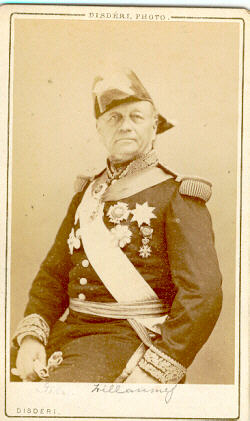
Who is he? Louis Edouard Bouët-Willaumez, of course.
In 2009, French President Nicolas Sarkozy announced his intention to found a new history museum in Paris. In recent weeks, he may have been cursing the memories of two of France’s lesser-known historical figures, Louis Edouard Bouët-Willaumez and Jules Ferry. Both men died over a century ago, but they are still causing Sarkozy trouble.
Bouët-Willaumez was a French naval hero who began the colonisation of what is now Côte d’Ivoire in the 1840s. Ferry was the prime minister who authorised an invasion of Tunisia in 1881. Although France renounced control over Tunisia in 1957 and Côte d’Ivoire in 1960, officials in Paris have always viewed them as important elements of the French sphere of influence in Africa. Now that sphere of influence seems to be falling apart – a strategic challenge for France that has been overshadowed by events in Egypt.
Read more about this challenge here.
by Alex Evans | Feb 16, 2011 | Cooperation and coherence, North America

Sure, everyone talks about policy coherence, joined-up thinking, connecting the dots, overcoming silos and all the rest of it. But if you want to see the real deal, form an orderly queue at the door of Canada’s Department of Foreign Affairs and International Trade. They organised a Valentine’s Day party for junior diplomats, with ‘policy speed dating’ and a chocolate fondue to lubricate the evening’s proceedings. And diplomats were only allowed to attend if they brought with them two friends from other government departments.
by Casper ter Kuile | Feb 15, 2011 | Africa, Global system, Influence and networks
As campaigners start to chase down the billions that Mubarak took with him, many outsiders are trying to figure out how the Egyptian revolution came to be. During the heady three-week protests, cameras naturally focused on large crowds full of anger and hope. But were they missing something?
Creative, humorous protest.
Activists in Tahrir Square released fake press releases to major news outlets, to give them a voice in the rolling coverage. (They didn’t have highly placed Washington lobbyists of course, unlike the regime.) Before the protests started, viral jokes about Mubarak were spreading through social networks and eliminating the problem that Steven Pinker calls ‘individual knowledge vs mutual knowledge‘.
This subversive protest can’t have been too much of a secret though – even CNN had a comment.
h/t Eric Stoner

And for the 80’s fans amongst you – this classic by Chicago get’s a thematic overhaul.
http://www.funnyordie.com/videos/c82d846e46/president-mubarak-apologizes-through-song?rel=player
