Global Dashboard

NGOs and climate change: shall we all just go home? Alex Evans

August 28, 2009 | More on Climate and resource scarcity, Influence and networks | 5 comments

And so to TckTckTck.org, the most pointless NGO campaign of the year, upon whom I heaped ridicule earlier this month for their fabulously vague policy position that Copenhagen should produce “an ambitious, fair and binding climate change agreement”. After a period of silence, TckTckTck have now been in touch via email, and have explained that

We’d been waiting for our site to officially launch so that we could point you and your readers to a resource that specifically addresses your questions. The site launched earlier this week, and we’ve put this page together for that purpose.

And so (drum roll), here’s the real policy platform.

Fair

- Reduce developed country emissions by at least 40% by 2020.

- Enable and support poor countries to adapt to the worst consequences of the climate crisis, reduce their emissions and ensure technology sharing including through the provision of sufficient public funds.

- Protect marginalized communities in rich and poor countries.

Ambitious

- Ensure that global greenhouse emissions peak no later than 2017.

- Create a pathway to clean jobs and clean energy for all.

- Establish necessary conditions for a sustainable and prosperous future for people, flora and fauna.

Binding

- Agree to a legally binding international agreement that can be verified and enforced

Saints preserve us - that’s the detailed policy position?

OK, we do have two pieces of specificity here in the 40% 2020 target (though they forgot to stipulate 1990 as the baseline – a schoolboy error that the Japanese and others will have immense fun with in a few months’ time), and the 2017 peaking date. But where the hell is the global context – the definition of some kind of overarching objective, like a ppm stabilisation target? Where is it explained how we will achieve stabilisation at any level without quantified targets for developing countries – a subject not even alluded to here via the usual unspecific platitudes about common but differentiated responsibilities?

This “policy position” is no more specific than what we had before; instead, it’s simply more verbose.  We have a call for “sufficient public funds” for developing countries, but no number attached to it.  A reference to “a pathway to clean jobs and clean energy for all”, but no tests so that policymakers or members of the public can determine whether any given set of actions is adequate. The motherhood and apple pie of “necessary conditions for a sustainable and prosperous future for people, flora and fauna”, followed a moment later – with no discernible sense of irony – with calls for an agreement “that can be verified and enforced”.

Um, guys, this isn’t any better. TckTckTck will doubtless say in their defence that they’re trying to communicate a highly complex area in a way that will resonate with the public. But the obvious rejoinder to that is that surely the point of this campaign – if there is a point - is to influence negotiators at Copenhagen. And if the policy asks are so vague that negotiators themselves can’t tell whether they’re meeting NGOs’ headline asks, then you can bet your bottom dollar that those NGOs are failing to influence the process in any meaningful way.

I wasn’t the greatest fan of the Make Poverty History campaign.  But at least MPH made damn sure that politicians were aware at every stage exactly what they wanted. Yes, their headline asks were broad brush narratives (“more and better aid”, etc.) – but beneath those headline asks were detailed papers with highly specific, concrete demands. All of us understood that if the Government failed to deliver them, then that fact would be crystal clear to everyone – which, in turn, gave the NGOs’ mass mobilisation real leverage.

If, by contrast, MPH’s policy platform had been this vague, then there would have been nothing to stop any government from doing exactly what it was planning to do anyway, all while claiming to be delivering MPH’s asks. Which, alas, is exactly what will happen at Copenhagen – and why policymakers think the NGOs are irrelevant.  Sure, ministers will meet campaigners to accept their petitions and have their photos taken with them.  But let’s not for one second mistake that for influence.


5 comments »


  1. I didn’t get it at first. I thought TckTckTck was your attempt to put in printed form the tetchy expression of irritation you felt as you wrote. Silly me! It’s their name. Good choice.


  2. Alex

    I think some of this is fair, some of it not. There’s no excuse for tck tck tck not mentioning the baseline year. And I am surprised they do not articulate a headline figure for public climate finance. Climate Action Network, which coordinates climate advocacy across NGOs, has certainly managed to achieve sufficient consensus among its members to do so.

    Whilst getting your asks right should be easy, specifying a single over-arching objective is difficult. MPH didn’t have one – unless you consider Make Poverty History sufficiently specific – which, judging from your post above, I’m guessing you do not. To focus, as you suggest, on a mitigation objective would exclude adaptation, just as to focus only on debt would have excluded aid and trade from MPH. And 350ppm, whilst certainly appealing, runs into trouble further down the line: whilst most NGOs would support such an objective in principle, the fact that there has been no emissions pathway calculated for this stabilisation level makes it impossible to articulate consistent, robust asks for mid-term emissions targets – which of course is where the negotiations are at.

    And to be fair to them, the NGOs behind tck tck tck have extremely detailed policy positions of which policymakers are well aware. If you want to see how nose-bleedingly detailed, check out Treaty 1.0 at http://www.panda.org/about_our_earth/all_publications/?uNewsID=166281. It includes a draft legal text with NGO asks on all aspects of the negotiations and represents a more comprehensive policy position than those of many parties to the convention. There has certainly been a tremendous amount of lobby into negotiators and policymakers on the back of this document and others like it.

    As you may have guessed by now, I work on climate at an NGO. And myself and my colleagues have regular meetings with negotiators, policymakers, special advisers and ministers across whitehall, and not just to hand over petitions. Over the course of these meetings, whilst I have certainly at times felt that I am an irritant, I’ve never felt that I’m considered an irrelevance!


  3. Hi Rob

    I’m not saying that *individual* NGOs don’t have credible policy positions on climate and energy. As you say, WWF’s legal text is a case in point: it’s extremely specific, a superb piece of work, and if it were only TckTckTck’s position too, then I woulnd’t be writing tetchy blog posts like this one. Similarly, among the development NGOs Tearfund’s pioneering work on climate comes immediately to mind (as I’ve said here before – http://www.globaldashboard.org/2009/03/26/come-on-ngos-raise-your-game/); Oxfam has been way ahead of the game on biofuels, to take another example.

    My critique is instead about the collective positions that underpin coalitions. TckTckTck is falling into the same old trap that Stop Climate Chaos fell into before it – the NGOs involved can’t agree their position, so they go for verbiage instead, and forfeit their policy edge in the process. And whatever you say, no-one thought SCC was relevant on international climate policy; how could they, when no-one (least of all SCC itself) could articulate what it wanted?

    So take for example the question of a stabilisation target (which is what I meant by an overarching objective). You refer to the methodological difficulties in translating 350 ppm to a medium term emissions target. But what you don’t say is that after lengthy dust-ups on this, TckTckTck members were actually unable to agree on one – because 350.org and various others wouldn’t back down on 350ppm, whereas another faction felt that only 450ppm would be seen as credible by policymakers.

    And if the main global NGO coalition on climate can’t even agree on the level at which we should be aiming to stabilise the climate, then it’s hard to see how they can claim to be holding policymakers to account on same.

    A


  4. Wonder what the male:female ratio is at TckTckTck?


  5. I completely disagree that the point of TckTckTck is to have the policy edge.

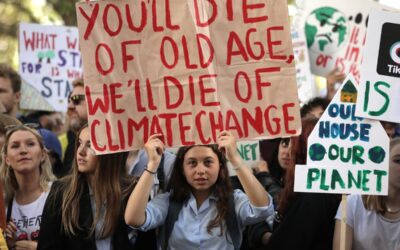
    It should be the main coalition for mobilising the voices of the public – it should mobilise grannies, families, young people, and people many who have never demonstrated before into saying that we want urgent and ambitious action. That is what MPH did, it is what the Stop the War coalition did, it is what the Democracy for Scotland alliance did. Each of these were principle based, non-exclusive and made a big noise. They opened a space for many voices to be heard – all building to one bug voice for action.

    The more detailed the policy, the more you alienate much of the public. I am not saying the policy as stated is perfect, but he in-fighting between NGOs to have their specific issue included or arguing over small detail are counter productive for such alliances.

    As stated already, behind the TckTckTck campaign are a number of NGOs who are working together to put the policy detail to the people who need to hear it. In the UK the BOND Development and Environment group does a fantastic job of co-ordinating NGO voices to government. There is a great deal of coherence in the UK NGO messaging (largely in line with CAN messaging) to government, but also space for individual NGOs to get their points across. The NGOs are developing policy red lines against which the Copenhagen outcome will be judged.

    TckTckTck should be the rallying cry, opening space for many voices. Not the dictator of policy.

    The Green movement has failed so far to bring the public out together in force on climate change – I am not yet sure if TckTckTck will either but I hope to goodness that it does.

08/02 18:14 Cathy Ashton's speech to the 46th Munich Security Conference "We must mobilise all our levers of influence — political, economic, plus civil and military crisis management tools — in support of a single political strategy. "
08/02 16:00 Cabinet Office publishes quango figures Civil Service Network: "spending by non-departmental bodies reached £46.5bn in 2008/09, up from £37bn in 2006/7,"
07/02 18:36 Ashton names team to advise on EEAS | European Voice Full list of the senior officials who'll be advising Cathy Ashton on the EU's new diplomatic service
05/02 10:27 My heart refuses to race to this cross-Channel love-in | The Guardian Martin Kettle: "A combination of cultural mistrust and divergent national interest means it [Anglo-French defence cooperation] isn't going to happen."
04/02 11:52 France and Germany to unveil 10-year plan | EUobserver Merkel and Sarkozy "set to unveil their own economic and political strategy document, the 'Franco-German Agenda 2020' "
02/02 13:49 Plane Crash Survival Guide You're six miles up, alone and falling without a parachute. Though the odds are long, a small number of people have found themselves in similar situations—and lived to tell the tale.
02/02 11:34 Digital doomsday: the end of knowledge - New Scientist If our civilisation runs into trouble, like all others before it, how much of our current knowledge would survive?
02/02 09:47 China Records Its Climate Actions By Copenhagen Accord Deadline Useful breakdown of China's domestic climate and energy programs
01/02 14:14 Africa's continental divide: land disputes / The Christian Science Monitor - CSMonitor.com "Land is at the core of almost everything. It's the means for livelihood. It's power; it's status; it's security. It's the most powerful asset people have."
01/02 13:47 African Union picks new leader as Gadhafi exits - CNN.com Malawian President is new head of the AU
31/01 13:11 Afraid of the Dark in Afghanistan Torture, it appears, continues to be commonplace in Afghanistan.
31/01 10:53 Why did Lady Ashton take the EU's foreign policy job? | The Economist "People across the whole EU foreign policy machine are asking the same question: why did she take this huge job, when her instinct seems to be to make it as low key as possible?"
31/01 10:51 Energy and climate in Obama’s SOTU speech | FT Energy Source | FT.com Climate did get a few mentions, contrary to some expectations - but cap-and-trade didn't
31/01 10:51 Peak oil: Oh yes it is. Oh no it isn’t. Etc. | FT Energy Source | FT.com What people said about peak oil at the Davos energy security session
31/01 10:44 The Politics of Well-Being: Facing death stoically Interview with a US Marine Corps officer who served in Afghanistan and Iraq, by GD's Jules Evans
27/01 22:29 Climate change: Chinese adviser calls for open mind on causes | Environment | guardian.co.uk China's most senior negotiator on climate change said today he was keeping an open mind on whether global warming was man-made or the result of natural cycles.
27/01 22:16 Fox most trusted news channel in US, poll shows | World news | guardian.co.uk Almost half of all Americans surveyed in the poll of 1,151 registered voters said they trusted Fox News, as compared to the 39% for CNN
26/01 22:06 British Newspapers Make Things Up | Psychology Today Why all British newspapers are tabloids, says Satoshi Kanazawa
26/01 19:28 The Press Association: Davos security boss kills himself The police commander in charge of security for the Davos World Economic Forum has killed himself on the eve of the conference
25/01 11:24 The UK's world role: Great Britain's greatness fixation | The Guardian "No longer the greatest. Just one great among others. Good enough ought to be good enough. The people get it. If only the politicians did too."
25/01 11:22 Pedestrian footsteps, converted into energy - Springwise "Each rubber slab from UK-based Pavegen Systems gets depressed by about 5 mm each time it gets stepped on. Using just that small movement, it can convert the kinetic energy used into electricity"
19/01 19:14 No way to run a government 177 members of Obama's administration are still not confirmed. Many of them are destined for key foreign policy jobs. It's a monumentally stupid way to run a government.
19/01 11:35 Eurozone seeks political voice at G20 | FT Tony Barber: there is a "determination [among] European policymakers to boost the eurozone’s international profile and strengthen its internal cohesion under the provisions of [Lisbon]"
15/01 14:59 Rory Stewart's awfully big adventure | Guardian Stewart: "The world isn't one way or ­another. Things can be changed very, very rapidly and can be changed by someone with sufficient confidence, sufficient knowledge and sufficient ­authority."
14/01 17:19 President Obama, the CIA and the Master of the Cover-Up - Truthout "In relying on those individuals who have circled the wagons to protect themselves and the agency, the president has deprived himself of an opportunity to understand intelligence failures"
13/01 23:40 How to reform the British Foreign Office | FT Mark Malloch-Brown: "A modern diplomat needs to be an alliance builder and often a social campaigner, not a solitary John Bull."
12/01 10:36 Nine meals from anarchy | Guardian Andrew Simms: "When Gordon Brown meets Cobra, the civil contingencies committee, this week, item one should be the transition to a more sustainable food and energy system.."
12/01 09:48 The tug of war over Britain’s economic policy | FT Philip Stephens on the shifting relationship between politicians and the Bank of England
11/01 15:24 Meg Whitman's climate change strategy - LATimes.com In what may be a risky political move, the GOP candidate for governor of California has come out strongly against the state's law on regulating greenhouse gas emissions.
08/01 11:57 New Treaty for EU but Same Jostling for Power - NYTimes.com Madrid said its EU Presidency is transitional and will be the last of its kind. But some analysts worry that Spain’s assertive stance will provoke turf wars and set a precedent for other nations to. […]
07/01 18:39 Rahm Emanuel's White House future bleak - NYPOST.com "DC clairvoyants say Rahm Emanuel will leave as President Obama's chief-of-staff in the not-too-distant future" - Valerie Jarrett suggested as front runner to replace
07/01 16:22 APAC 2020 | The decade ahead Useful hub site covering Asian countries and regional issues
07/01 11:01 As USAID awaits its fate, Clinton lays out new U.S. development agenda | The Cable Josh Rogin: "Clinton has made it clear that she wants the elevation of the development mission to be a key part of her legacy"
05/01 17:31 Hackers Attack Ahmadinejad’s Web site - The Lede Blog - NYTimes.com “Someone seems to have had their way with Ahmadinejad’s web servers.”
04/01 22:30 FT.com / Gideon Rachman - America is losing the free world Four of the biggest and most strategically important democracies in the developing world – Brazil, India, South Africa and Turkey – are increasingly at odds with US foreign policy.
04/01 17:54 Afghanistan: What Could Work - The New York Review of Books Rory Stewart assesses Obama's poker face
04/01 13:56 Smiths lifted by airport scanner surge after failed Christmas bombing | Business Signs of the times - following attempted terrorist attack in US, world's biggest manufacturer of airport detection devices sees shares up 3.7 per cent as soon as markets open
04/01 13:33 FT.com / Europe - Russia stops oil shipments to Belarus Hey, I think I already saw this movie
04/01 11:05 Bruce Schneier on TSA Absurdity and the Need for Resilience | The Atlantic Schneier discusses aviation security and our response to terrorism with Jeffrey Goldberg
02/01 23:33 Why Twitter Will Endure - NYTimes.com “There have been cool Web sites that go in and out of fashion and then there have been open standards that become plumbing... Twitter is looking more and more like plumbing.”
Source: GLOABL Dashboard Reading List Pipes
Articles & Publications
Time to Stop Betting the House: a response to the FSA

Report by David Steven in response to the FSA’s Mortgage Market Review
Download Report

Confronting the Long Crisis of Globalization: Risk, Resilience and International Order

Brookings Institution report by Alex Evans, Bruce Jones and David Steven on how globalisation could fail – and how it could be made more resilient. Published to coincide with the 40th anniversary World Economic Forum in Davos.

Hitting Reboot – where next for climate after Copenhagen

Report by Alex Evans and David Steven analysing the post-Copenhagen context on climate change, including a proposed 12 point action plan. Written for the Brookings Institution / NYU Center on International Cooperation Managing Global Insecurity programme.

Climate Change and Hunger: Responding to the challenge

World Food Programme report on the state of the science on what climate change means for hunger, plus policy recommendations. Authored by IPCC Impacts Chair Martin Parry with Mark Rosengrant, Tim Wheeler and Global Dashboard’s Alex Evans (December 2009)

Scarcity, security and institutional reform

Presentation by Alex Evans to a seminar organised for the UN Department of Political Affairs by the Geneva Centre for Security Policy (August 2009)

The Resilience Doctrine

Article on risk and resilience by Alex Evans and David Steven – part of a special in World Politics Review on risk and resilience in a globalized age (July 2009)

An Institutional Architecture for Climate Change

Report by Alex Evans and David Steven exploring the future international institutional requirements for managing climate change, and including three scenarios for climate institutions between now and 2030. Commissioned by the UK Department for International Development. (May 2009)

Risks and Resilience in the New Global Era

Article by Alex Evans and David Steven exploring resilience as a political agenda – part of a special edition of Renewal on the transformation of foreign policy (February 2009)

A Tale of Two Cities

Climate and cities think piece, co-authored by David Steven and the British Council’s Peter Upton (29 January 2009)

The Feeding of the Nine Billion

Chatham House pamphlet by Alex Evans on how scarcity issues will shape the outlook for global food production, and the actions that policymakers need to take at the international level and in developing countries to ensure food security in the 21st century

2009 – A Year for International Reform

Paper by David Steven, presented to “Reforming International Institutions – Meeting the Challenges of the 21st Century,” a conference organized by the United Nations University and the British Embassy in Tokyo (Jan 2009).

Food prices: what next?

Speech by Alex Evans at the Tomorrow Network (25 November 2008)

A Bretton Woods II Worthy of the Name

Paper by Alex Evans and David Steven on financial reform and wider multilateralism, published ahead of the G20 ‘Bretton Woods II’ Summit (November 2008).

The Future of Resilience

Speech by David Steven to RUSI Conference on UK Resilience (8 October 2008)

Towards a Theory of Influence

Chapter by Alex Evans and David Steven in the Foreign & Commonwealth Office publication, ‘Engagement: public diplomacy in a globalised world’ (July 2008).
Download Chapter

Multilateralism for an Age of Scarcity

Draft report by Alex Evans exploring multilateral system reforms needed in order to manage resource scarcity issues more effectively. The final version will be published in early 2010 (July 2008)

Scarcity issues and conflict in Africa

Speech by Alex Evans at UK Parliament (8 July 2008)

A Low Carbon World – Pathways to a Global Deal

Speech by David Steven at the UNU G8 Symposium (4 July 2008)

Climate, scarcity and multilateralism

Speech by Alex Evans to United Nations Association UK (7 June 2008)

The new public diplomacy and Afghanistan

Speech by David Steven to the UK Defence Academy’s Advanced Research and Assessment Group seminar on Strategic Communications, Public Diplomacy and Afghanistan (4 June 2008).

Technology and Public Diplomacy

Speech by David Steven to the University of Westminster Symposium on Transformational Public Diplomacy (30 April 2008).

Rising Food Prices: Drivers and Implications for Development

Briefing paper by Alex Evans, published through Chatham House’s food programme (April 2008).

Looking Forward: how do we build resilience?

Speech by David Steven to RUSI Conference on Critical National Infrastructure (16 April 2008).

Shooting the Rapids: multilateralism and global risks

Paper by Alex Evans and David Steven, commissioned by Gordon Brown and presented to heads of state at the Progressive Governance Summit (April 2008).

Beyond a Zero-Sum Game on Climate Change

Chapter by Alex Evans and David Steven, as part of the British Council’s Transatlantic Network 2020 book ‘Talking Trans-Atlantic’ (March 2008).

From Bali to Copenhagen: towards an endgame for global climate policy?

Article by Alex Evans for the Environmental Policy & Law Journal (January 2008).

Climate Change: The State of the Debate

Report by Alex Evans and David Steven, written for the London Accord (December 2007).

The Post-Kyoto Bidding War: bringing developing countries into the fold

New paper by Alex Evans on climate policy after 2012 from the Center on International Cooperation (October 2007).

Alternative CSR: the Foreign & Commonwealth Office

Chapter on the FCO from Manchester University Press’s Alternative Comprehensive Spending Review, by David Steven (September 2007).

Fixing the UK’s Foreign Policy Apparatus: A Memo to Gordon Brown

Note by Alex Evans and David Steven about how to restructure the UK’s foreign policy system in order to manage trans-boundary global risks better (April 2007).

Evaluation and the New Public Diplomacy

Talk given by David Steven at the Wilton Park conference: The Future of Public Diplomacy. Focuses on strategies to drive public diplomacy to the heart of the foreign policy armoury (March 2007).

Articles and Publications

YouTube Preview Image

Carne Ross on how the Chilcot Inquiry blew it with Blair | 2 Comments

YouTube Preview Image

Charlie Brooker explains the news | Comment

YouTube Preview Image

We can forget about cap and trade now | Comments Off

YouTube Preview Image

What Obama should be watching today | Comments Off

YouTube Preview Image

Is France a country? | 4 Comments

More What we're watching

Key Posts
Time to Stop Betting the House

Today, I launch a new paper on risk and resilience in the UK housing market. The report calls for a fundamental shift in the way in which the UK mortgage market is regulated and the how it operates.
The paper is published by the Long Finance Foundation, which is a counter to [...]

Confronting the Long Crisis of Globalization

Brookings Institution report by Alex Evans, Bruce Jones and David Steven on how globalisation could fail – or be made more resilient. Published to coincide with the 40th anniversary World Economic Forum in Davos.

The best news on climate change for months. Maybe.

Bono endorses contraction and convergence – potentially kicking off a major (and long overdue) strategic rethink on climate change among NGOs and civil society

Copenfailure: a first analysis

A very rough first analysis of the Copenhagen Outcome, two hours after the summit finished.

How we talk about climate change

We’re kidding ourselves if we think that “green collar jobs” will persuade people to take serious action on climate change. A deeper narrative is required.

The window of opportunity on scarcity issues starts to close (updated x3)

With oil and food prices already back to July 07 levels, have policymakers missed the window of opportunity to take action when prices eased after the credit crunch?

The Pentagon’s new spiritual fitness programme

Exclusive interview with Brigadier-General Rhonda Cornum on the Pentagon’s new spiritual fitness training programme, which uses Stoic techniques.

Read more » | Comments Off

Down with collapse!

Enough already with all the talk of ‘collapse’, ‘descent’, ‘powerdown’. How about talking about ‘renewal’, ‘transformation’, ‘renaissance’?