Talk given by David Steven at Gresham College on risk and resilience in the UK housing market, as part of a Long Finance Roundtable meeting (March 2010)
Report by David Steven in response to the FSA’s Mortgage Market Review
Brookings Institution report by Alex Evans, Bruce Jones and David Steven on how globalisation could fail – and how it could be made more resilient. Published to coincide with the 40th anniversary World Economic Forum in Davos.
Report by Alex Evans and David Steven analysing the post-Copenhagen context on climate change, including a proposed 12 point action plan. Written for the Brookings Institution / NYU Center on International Cooperation Managing Global Insecurity programme.
World Food Programme report on the state of the science on what climate change means for hunger, plus policy recommendations. Authored by IPCC Impacts Chair Martin Parry with Mark Rosengrant, Tim Wheeler and Global Dashboard’s Alex Evans (December 2009)
Presentation by Alex Evans to a seminar organised for the UN Department of Political Affairs by the Geneva Centre for Security Policy (August 2009)
Article on risk and resilience by Alex Evans and David Steven – part of a special in World Politics Review on risk and resilience in a globalized age (July 2009)
Report by Alex Evans and David Steven exploring the future international institutional requirements for managing climate change, and including three scenarios for climate institutions between now and 2030. Commissioned by the UK Department for International Development. (May 2009)
Article by Alex Evans and David Steven exploring resilience as a political agenda – part of a special edition of Renewal on the transformation of foreign policy (February 2009)
Climate and cities think piece, co-authored by David Steven and the British Council’s Peter Upton (29 January 2009)
Chatham House pamphlet by Alex Evans on how scarcity issues will shape the outlook for global food production, and the actions that policymakers need to take at the international level and in developing countries to ensure food security in the 21st century
Paper by David Steven, presented to “Reforming International Institutions – Meeting the Challenges of the 21st Century,” a conference organized by the United Nations University and the British Embassy in Tokyo (Jan 2009).
Speech by Alex Evans at the Tomorrow Network (25 November 2008)
Paper by Alex Evans and David Steven on financial reform and wider multilateralism, published ahead of the G20 ‘Bretton Woods II’ Summit (November 2008).
Speech by David Steven to RUSI Conference on UK Resilience (8 October 2008)
Chapter by Alex Evans and David Steven in the Foreign & Commonwealth Office publication, ‘Engagement: public diplomacy in a globalised world’ (July 2008).
Download Chapter
Draft report by Alex Evans exploring multilateral system reforms needed in order to manage resource scarcity issues more effectively. The final version will be published in early 2010 (July 2008)
Speech by Alex Evans at UK Parliament (8 July 2008)
Speech by David Steven at the UNU G8 Symposium (4 July 2008)
Speech by Alex Evans to United Nations Association UK (7 June 2008)
Speech by David Steven to the UK Defence Academy’s Advanced Research and Assessment Group seminar on Strategic Communications, Public Diplomacy and Afghanistan (4 June 2008).
Speech by David Steven to the University of Westminster Symposium on Transformational Public Diplomacy (30 April 2008).
Briefing paper by Alex Evans, published through Chatham House’s food programme (April 2008).
Speech by David Steven to RUSI Conference on Critical National Infrastructure (16 April 2008).
Paper by Alex Evans and David Steven, commissioned by Gordon Brown and presented to heads of state at the Progressive Governance Summit (April 2008).
Chapter by Alex Evans and David Steven, as part of the British Council’s Transatlantic Network 2020 book ‘Talking Trans-Atlantic’ (March 2008).
Article by Alex Evans for the Environmental Policy & Law Journal (January 2008).
Report by Alex Evans and David Steven, written for the London Accord (December 2007).
New paper by Alex Evans on climate policy after 2012 from the Center on International Cooperation (October 2007).
Chapter on the FCO from Manchester University Press’s Alternative Comprehensive Spending Review, by David Steven (September 2007).
Note by Alex Evans and David Steven about how to restructure the UK’s foreign policy system in order to manage trans-boundary global risks better (April 2007).
Talk given by David Steven at the Wilton Park conference: The Future of Public Diplomacy. Focuses on strategies to drive public diplomacy to the heart of the foreign policy armoury (March 2007).
Articles and Publications
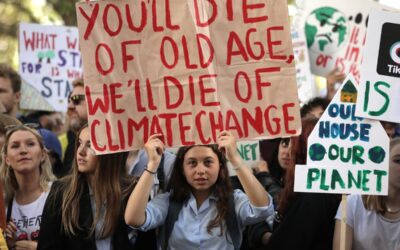
Alex: your wrath against the NGOs leads you to overlook the fact that drivers of this campaign include the big unions (and, er, the Musician’s Union). A quick look at the website reinforces the impression that it’s in large part a union initiative. The sloganeering makes more sense when read in those terms: i.e. this is all about the various strands of the British Soft Left (post-Thatcher unions and post-Blair NGO community) struggling to find a common narrative about Social Democracy in the current crisis, rather than actual policy stuff. It’d be interesting to know if the Hard Left, anarcho mob is planning something around the London Summit too – this initiative may also be an effort to reduce the risks of that by offering a low-intensity demo…
Au contraire, I do understand that the unions were involved. But that’s part of the reason why it’s so hazardous for the NGOs to get involved in this platform in the absence of a clear policy position.
Let’s remind ourselves what the unions are all fired up about at the moment: http://is.gd/joLP. When the unions tell their members to join this march, a great number of those members will interpret it as a ‘British jobs for British workers’ march. Some of them will attempt to persuade the media to report it as such. Lots of the media probably will.
The question then is where that will leave the development and environment NGOs in positioning terms. If there had been a clear statement of what the march was for, then the fact that the NGOs are junior partners in all this wouldn’t matter; it would be a well thought-through tactical alliance, and who knows, maybe it would deliver some actual results.
But as it is, this march is all things to all people – with, as I say, a pretty good chance that it will be reported in heavily protectionist terms. In the background, the larger questions remain: What is this march asking for? Who is it trying to influence?
As you say, “this is all about the various strands of the British Soft Left struggling to find a common narrative”. Too bloody right…
Check out http://www.bond.org.uk/pages/economic-crisis-campaign.html, particularly the bit below
“The platform is united by three linked calls: Decent jobs and public services for all, end poverty and inequality, build a green economy.
More specific demands on the UK government are to:
- Create a ‘Green New Deal’ to create jobs in the environmental sector
- Invest in essential services including social housing
- Provide emergency funding to countries that need it to protect jobs and provide social protection
- Tackle tax havens – especially those linked to the UK
- Insist on democratic reform of the World Bank and IMF
- Make all financial institutions and multinational corporations transparent and accountable
- Ensure that poorer states are allowed to take responsibility for managing their own economies rather than having liberalisation measures forced upon them
- Introduce robust regulatory requirements and financial incentives at national level and push for them at international level to stop climate chaos
- Commit to substantial new resource transfer from North to South to support low carbon development”
The march is part of a bigger thing NGOs are doing around the G20 reminding leaders not to forget the world’s poor.
Any big march bringing different groups together has to agree something sufficiently vague to be universally acceptable but that isn’t all that NGOs like Oxfam are doing.
For example I’m going to Sierra Leone next week to do a case study on the impact of the Financial Crisis on the world’s poorest country to inform lobbying and media work around the G20. I’ll also be working with Oxfam’s programmes and trying to use twitter from upcountry Sierra Leone!
No one’s got all the answers to how to respond to the credit crunch but bringing new perspectives to the debate is a start.
Jasper – The text you put in your comment only appears on the BOND website; not on that of Put People First, and certainly not on any of the unions involved. So in that sense, while it may be BOND’s interpretation of what the march is about, there’s no indication that it’s the interpretation of the other constituencies involved – which is exactly what I was concerned about in the post.
Zander – I don’t dispute that Oxfam and other development NGOs are doing plenty of other useful stuff. What I DO dispute is that this march is useful. As you say, the platform for this march is “sufficiently vague to be universally acceptable”, and that’s just the problem with it. An illustration: the government announced today that it was imposing tougher curbs on non-EU migrant workers (http://is.gd/kttA). Presumably, the unions think this is great, while development NGOs think it’s pretty bad. But since the platform’s so vague, they can still go on the same march! That’s not a campaigning win in my book…
13 Feb: @putpeoplefirst tells another Twitter user that “more detailed putpeoplefirst policy asks will be going up on the site next week”.
25 Feb: still waiting.
Apparently the policy position will now be published on 13 March